AI Overview
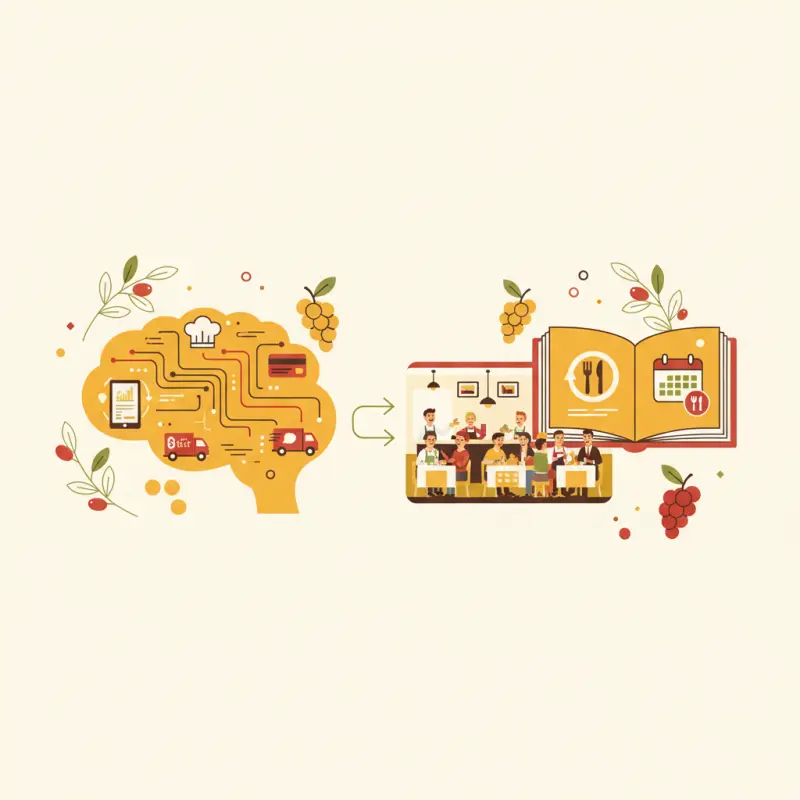
The best CRM for restaurants is an integrated POS-CRM system that captures actual transaction data, not a standalone reservation tool. Most restaurant CRMs are glorified contact databases that can't track what customers order, spend, or prefer. Integrated systems like Toast, Lightspeed, and OCHI connect purchase behavior with customer profiles automatically. This creates actionable intelligence: which dishes drive repeat visits, customer lifetime values by acquisition channel, and automated marketing triggers based on spending patterns. Reservation-only CRMs cost $200-500 monthly but lack purchase data. Standalone CRMs require manual data entry and miss behavioral insights. Integrated POS-CRM systems cost $0-150 monthly and eliminate data silos. Look for systems that segment customers by actual spending, not just visit frequency, and trigger automated campaigns based on purchase behavior.
Table of Contents
What is the best CRM for restaurants?
The best CRM for restaurants is an integrated system that turns transaction data into repeat business, not a glorified reservation book. Most "restaurant CRMs" are actually reservation systems with basic contact storage — true CRM means actionable customer intelligence that drives revenue through automated marketing, purchase-based segmentation, and real-time behavioral triggers.
| CRM Type | Monthly Cost | Key Limitation |
|---|---|---|
| Reservation-based CRM | $200-500 | No purchase data |
| Standalone CRM | $100-300 | Manual data entry |
| Integrated POS-CRM | $0-150 | None |
Restaurant owners waste thousands on CRM tools that can't answer basic questions. Which dishes drive the highest lifetime value? When do your best customers typically return? What's the average order value of customers acquired through Instagram versus walk-ins?
Traditional CRMs fail restaurants because they weren't built for restaurants. They're sales tools retrofitted for hospitality. The result? You get a fancy contact database that can't tell you why your Tuesday regulars stopped coming or which menu items turn first-time visitors into weekly customers.
Stack audit
What do you currently use?
Tick what you have. We’ll show what OCHI replaces or connects to.
Why most restaurant CRM comparisons miss the point
Search for "best CRM for restaurants" and you'll find lists packed with reservation systems masquerading as customer intelligence platforms. These comparisons treat CRM like a standalone purchase when the real question is integration depth.
Your CRM is only as smart as the data it receives. If it can't see what customers actually order, how they pay, or when they visit, it's just an expensive address book.
The reservation vs. transaction data problem
Reservation systems know when someone books a table. They don't know what they ordered, how much they spent, or whether they tipped well. This data blindness creates a cascade of problems.
You can't segment customers by spending patterns. You can't identify dishes that create repeat visits. You can't track which servers generate the highest customer lifetime value. You're flying blind with a dashboard full of vanity metrics.
OCHI's integrated approach captures every transaction detail automatically. When a customer orders the chef's special three weeks in a row, then suddenly stops, you know. When weekend brunch customers start ordering delivery on Tuesdays, you can capitalize on the behavior shift.
What restaurant owners actually need from CRM
Restaurant owners need three things from CRM: automated marketing that actually works, customer intelligence that drives menu decisions, and revenue attribution that justifies marketing spend.
Automated marketing means sending the right message at the right time without manual work. Not "Happy Tuesday" blasts to your entire list. A customer who orders vegetarian dishes gets notified about your new plant-based menu. A family that orders kids meals every Sunday gets a bounce-back offer for next weekend.
Customer intelligence means understanding purchase patterns at the item level. Which appetizers lead to the highest total checks? Which desserts create repeat visits? What's the correlation between delivery frequency and in-restaurant dining?
Revenue attribution means knowing exactly which marketing channels drive profitable customers. Not just "this campaign got clicks" but "customers acquired through this Instagram campaign have 40% higher lifetime value than our average."
Why integrated POS data beats standalone CRM tools
Standalone CRMs require constant manual updates. Your staff won't do it. They're too busy serving customers to log interaction notes or update preference fields.
Integrated systems capture data automatically. Every order, every payment, every interaction flows into your customer profiles without staff involvement. The result? Complete data that actually reflects customer behavior.
This integration depth enables features impossible with standalone tools. Real-time alerts when a VIP walks in. Automatic loyalty tier upgrades. Server notes that follow customers across locations. These aren't nice-to-haves — they're the difference between 15% and 30% of revenue from repeat customers.
Restaurant CRM pricing: what you'll actually pay in 2026
CRM pricing for restaurants ranges from free to $2,000+ monthly, but the sticker price tells half the story. Hidden costs kill budgets and ROI.
Monthly costs by restaurant size (1-5 locations)
| Restaurant Size | Typical CRM Cost | Hidden Fees | True Monthly Cost |
|---|---|---|---|
| Single location | $100-300 | $150-400 | $250-700 |
| 2-3 locations | $300-700 | $300-800 | $600-1,500 |
| 4-5 locations | $500-1,200 | $500-1,500 | $1,000-2,700 |
These hidden fees include per-user charges ($10-50 per staff member), SMS marketing credits ($0.01-0.05 per message), email overage fees, API access charges, and data export fees. Some vendors charge $500+ just to access your own customer data.
Integration and setup fees most vendors hide
Setup fees range from $500 to $10,000 depending on complexity. POS integration typically costs $1,000-3,000 if your systems aren't pre-integrated. Custom fields or workflows? Add another $2,000-5,000.
Ongoing integration costs hurt more. Many CRMs charge $200-500 monthly for POS connectivity. Data sync delays mean running campaigns on stale information. API rate limits prevent real-time triggers.
Training costs compound the problem. Budget $100-200 per employee for initial training, plus ongoing costs when staff turnover hits. Most restaurants see 75% annual turnover — that's a constant training expense.
The commission trap: when "free" CRM costs 3% per order
Delivery platforms offer "free" CRM tools that cost more than premium alternatives. They take 15-30% commission per order while locking your customer data in their ecosystem.
A restaurant doing $50,000 monthly delivery volume pays $7,500-15,000 in commissions. The "free" CRM costs more than hiring a full-time marketing manager. Worse, you can't export customer data when you leave.
OCHI charges zero commission and includes CRM features in the platform subscription. Your customer data stays yours. Export it anytime. Connect any tool. No lock-in, no surprise fees.
Built-in vs. bolt-on: why your POS choice determines your CRM success
Your POS system choice determines 80% of your CRM effectiveness. Choose wrong and no amount of bolt-on software fixes the foundation.
Why bolt-on CRMs fail at scale
Bolt-on CRMs work for 10 customers. They break at 10,000. The manual processes that seem manageable during setup become overwhelming at scale.
Data sync delays compound over time. What starts as a five-minute lag becomes hours or days. Your Saturday night rush data doesn't appear until Monday. By then, your weekend campaign opportunity passed.
Staff adoption drops as complexity increases. Servers skip steps. Managers forget logins. The detailed customer profiles you envisioned become sparse records missing critical data. The theoretical ROI never materializes because the system never gets fully used.
The data integration nightmare
Restaurant tech stacks average seven different systems. POS, online ordering, delivery tablets, reservation system, inventory, accounting, and payroll. Each stores customer data differently.
Integrating these systems requires matching customer records across platforms. John Smith with phone 555-0123 in your POS might be J Smith with email [email protected] in your reservation system. Without perfect matching, you get duplicate profiles and broken customer journeys.
API limitations make real-time integration impossible. Most restaurant systems offer batch exports at best. You're always working with yesterday's data, sometimes last week's. Real-time triggers and behavioral automation become fantasy.
How OCHI's integrated approach solves the fragmentation problem
OCHI combines POS, online ordering, reservations, and CRM in one platform. No integration needed — it's all one system. Customer data flows seamlessly because there's only one source of truth.
Every transaction updates customer profiles instantly. Order lunch through the website? Your waiter sees it when you arrive for dinner. Build loyalty points via delivery? They work at the register. Leave a review? Your server gets notified before your next visit.
This integration enables automation impossible with separate systems. Abandoned cart recovery for online orders. Automatic win-back campaigns for lapsed customers. Real-time upsell prompts based on current basket contents. These features print money when they work — and they only work with true integration.
Five CRM features that actually drive restaurant revenue
Most CRM features sound impressive but don't move the needle. These five capabilities generate measurable ROI for restaurants that implement them properly.
Automated win-back campaigns for lapsed customers
Customers don't announce when they stop visiting. They just disappear. Automated win-back campaigns catch them before they're gone forever.
Set triggers based on normal visit frequency. A weekly regular who hasn't ordered in three weeks gets a personalized message. Include their favorite dish or a bounce-back offer. Timing matters — too early seems pushy, too late and they've found somewhere else.
OCHI's marketing automations track visit patterns automatically. When behavior changes, campaigns trigger without manual oversight. A 20% discount to win back a customer who spends $50 weekly pays for itself in two visits.
Purchase-based customer segmentation
Demographics tell you who customers are. Purchase data tells you what they want. The latter drives revenue.
Segment by order history, not age brackets. Weekend brunch customers get different messages than weekday lunch crowds. Vegetarian diners hear about new plant-based options. Big spenders get VIP perks.
Dynamic segments update automatically as behavior changes. A lunch-only customer who starts ordering dinner moves segments without manual intervention. Your campaigns stay relevant without constant list management.
Real-time upselling triggers
The best upselling happens in the moment. Real-time triggers catch opportunities while customers are still deciding.
A customer who always orders wine gets a pairing suggestion with their entrée selection. Someone browsing desserts for 30 seconds sees a limited-time offer. These micro-moments add $3-10 to average checks.
Server-side prompts work too. When a regular's favorite dessert is 86'd, suggest their second-favorite before they ask. When a big spender hasn't ordered drinks, flag it for the server. Small touches that feel like exceptional service but run on data.
Cross-location customer tracking
Multi-location restaurants often treat each site as an island. Customers who visit multiple locations get fragmented experiences and duplicate marketing.
Unified profiles across locations reveal true customer value. That occasional downtown visitor might be a suburban regular. Their lifetime value is 5x what single-location data suggests.
Cross-location tracking enables group-wide loyalty programs. Points earned downtown work in the suburbs. VIP status travels. Birthday offers are valid anywhere. The result? Higher visit frequency and increased customer lifetime value.
Revenue attribution by marketing channel
Most restaurants can't answer: "Which marketing channels drive profitable customers?" They track campaign clicks, not customer value.
True attribution tracks customers from first touch through lifetime value. That Instagram campaign might drive traffic, but do those customers return? Email might show lower response rates but higher average checks.
Channel-specific insights optimize marketing spend. Double down on channels driving high-value regulars. Cut spending on one-time visitor sources. The data pays for the CRM investment in better allocation alone.
The best CRM for restaurants isn't the one with the most features or the biggest brand name. It's the one that captures complete transaction data automatically and turns it into revenue through intelligent automation. In 2026, that means choosing an integrated platform over cobbled-together solutions. Your customers expect personalization — give them what they want with tools that actually work.
See how OCHI combines POS, ordering, and CRM into one commission-free platform at ochi.ma/partners.
Frequently Asked Questions
What makes a CRM system best for restaurants specifically?
The best restaurant CRM integrates with your POS system to capture transaction data automatically. It tracks what customers order, how much they spend, and when they visit, not just contact information.
How much should restaurants spend on CRM software?
Integrated POS-CRM systems cost $0-150 monthly and provide the most value. Standalone CRMs cost $100-300 monthly but require manual data entry. Reservation-based systems cost $200-500 monthly but lack purchase data.
Can reservation systems work as restaurant CRMs?
Reservation systems are limited CRMs because they only capture booking data, not actual purchase behavior. They can't segment customers by spending patterns or identify which menu items drive repeat visits.
What CRM features do restaurants need most?
Restaurants need automated customer segmentation based on purchase data, behavioral triggers for marketing campaigns, and integration with POS systems. Contact storage alone isn't sufficient for restaurant CRM.
Do small restaurants need CRM software?
Small restaurants benefit most from integrated POS-CRM systems that automate customer intelligence without additional overhead. These systems turn every transaction into customer data automatically.
Restaurant owners · Weekly
The guide to running a restaurant in 2026.
One article per week. No commission advice. Just honest operational insight for Moroccan restaurants.

Blog Manager
Comments
No comments yet. Be the first to share your thoughts.