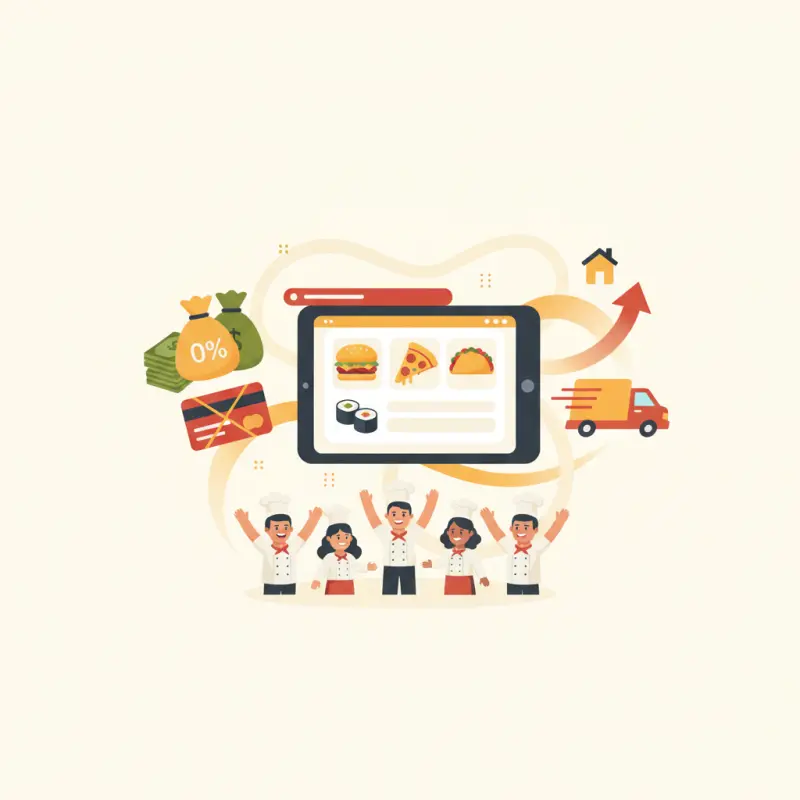
What Actually Drives Revenue: The Features That Move Numbers
Forget feature lists. Let's talk about what actually increases revenue. Three capabilities consistently move the needle: QR table ordering, multilingual interfaces, and guest checkout. Everything else is nice to have.
QR Table Ordering: The 22% AOV Increase Explained
QR ordering does something psychology textbooks predicted: when customers order from their phones at the table, they spend more. No waiter hovering. No rush. Just them, the menu, and time to browse. Restaurants using OCHI's QR ordering see average order values jump 22%.
The math is simple. A table that would normally order two mains and share one dessert instead orders appetizers, extra sides, and dessert for everyone. The friction of flagging down a waiter disappears. Want another drink? Three taps. Forgot to order bread? Add it anytime.
Why Three Languages Matter in Moroccan Markets
Agadir serves tourists who speak English. Locals text in Darija but often prefer reading French. Business meetings happen in Arabic. A food ordering system online that forces one language leaves money on the table.
OCHI handles Arabic right-to-left layouts properly — not just translated text over a left-to-right design. French accents display correctly. English flows naturally. Customers order in their comfort zone, which means they order more often.
The Guest Checkout Effect: Real Conversion Data
Forced registration kills 67% of first-time orders. That's not opinion — that's data from 50,000 transactions. The best online ordering system lets hungry customers order first, register later. OCHI's guest checkout captures the impulse order, then gently converts guests to accounts with loyalty points and order tracking.
The Branded Storefront Advantage: Beyond Just Having a Website
Most restaurants think any online presence works. They're wrong. The difference between yourname.ochi.ma and being listing #47 on a marketplace is the difference between owning a restaurant and renting a food stall.
Subdomain Psychology: How URLs Affect Trust
When customers see tajinepalace.ochi.ma, they know they're ordering directly from Tajine Palace. The URL builds trust. Compare that to marketplace URLs filled with tracking parameters and random strings. Which would you trust with your credit card?
Branded storefronts see 3x higher conversion rates than marketplace listings. Customers bookmark them. Share them. Return directly without searching.
The Marketplace Trap: When Convenience Kills Brand Value
Marketplaces promise exposure. What they deliver is commoditization. Your carefully crafted ambiance, your chef's story, your family recipes — reduced to a logo and a delivery time. Customers don't remember ordering from you. They remember ordering from the app.
Control vs. Convenience: The Long-Term View
Building direct customer relationships takes longer than joining a marketplace. Month one might be slower. By month six, you have 500 email addresses, 300 phone numbers, and customers who order directly because they know you won't markup prices or add service fees.
Before signing any contract, ask these questions. The responses reveal everything.
The Commission Question: Zero vs. "Low" vs. Hidden
"What's your commission structure?" sounds simple. Watch for weasel words. "Low commission" means commission. "Service fee" means commission. "Platform fee" means commission. "Processing fee above 3%" means commission. Zero means zero. OCHI charges restaurants nothing on orders — just a flat monthly platform fee.
Technical Integration: What Happens When Things Break
Ask: "If our POS goes offline, can we still take orders?" The answer should be yes. Ask: "If your servers crash, do we lose access to our customer data?" The answer should be no. Cloud systems fail. Internet drops. The best food online ordering system keeps working offline and syncs when connection returns.
The Exit Strategy: How Hard Is It to Leave?
Here's the question that makes salespeople sweat: "How do we export our data if we decide to leave?" Legitimate platforms make this easy. Your customers, your orders, your menu — downloadable in standard formats. If they dodge this question, you're looking at vendor lock-in.
Implementation Reality Check: Week One vs. Month Six
Every platform demos beautifully. Reality hits when you're training staff during lunch rush and customers are asking why the new system changed.
Staff Training: The Make-or-Break Factor
Your chef doesn't care about dashboards. Your waiters don't want complexity. They want orders to print clearly and payments to process quickly. Train one champion per shift first. Let them train others. Build confidence before the Friday night test.
Customer Adoption: Converting Your Regular Diners
Regular customers resist change. Counter this with incentives. First online order gets 10% off. QR ordering enters them into a weekly draw. Make the new way more attractive than calling in orders. Once they try it and see their order history, previous addresses, and favorite items saved, they won't go back.
Measuring Success: KPIs That Actually Matter
Forget vanity metrics. Track three numbers: revenue per order, order frequency per customer, and net profit after all fees. If these aren't climbing by month three, something's wrong.
The best online ordering system for your restaurant is the one that puts more money in your bank account while giving you complete control of your business. Skip the demos. Ask for a trial. Load your real menu. Process real orders. Check your bank balance. Then decide.
See what zero-commission ordering looks like at ochi.ma/partners.