AI Overview
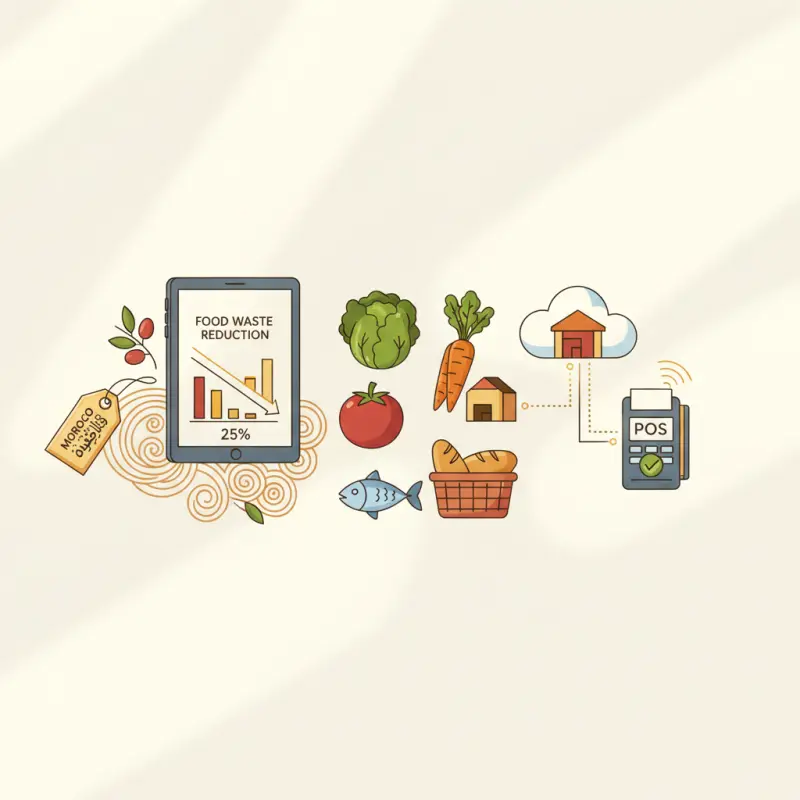
The best restaurant inventory software cuts food waste by 25% through gram-level tracking, real-time integration, and automated reorder alerts. Moroccan restaurants using advanced inventory systems save an average of 360,000 MAD annually by eliminating the 25-30% ingredient waste typical in manual tracking operations. Systems like OCHI's inventory module integrate with POS data to track usage patterns across menu items, preventing the disconnect between recorded and actual stock levels that plague paper-based systems. Real-time tracking eliminates emergency supplier runs that cost triple during service hours, while automated alerts prevent stockouts that damage customer trust. The most effective systems require zero manual entry — they pull sales data automatically and adjust inventory levels in real time. Start by tracking your three highest-cost ingredients for one month to establish baseline waste percentages.
Table of Contents
A restaurant in Casablanca throws away 8,000 MAD worth of produce every month. The owner thinks it's normal — industry standard even. It's not.
The best restaurant inventory software transforms this waste into profit through gram-level tracking and automated alerts. Here's how Moroccan restaurants cut food costs by 25% without changing suppliers or raising prices.
The Real Cost of Poor Inventory Control in Moroccan Restaurants
Most restaurant owners know they're losing money on waste. Few know the exact numbers. In Morocco, restaurants typically waste 25-30% of purchased ingredients due to poor tracking.
Take a mid-size restaurant in Marrakech serving 200 covers daily. With average food costs of 100,000 MAD monthly, they're throwing away 30,000 MAD. That's 360,000 MAD annually — enough to open a second location.
Why Manual Tracking Fails in High-Volume Kitchens
Paper inventory sheets work until the Friday dinner rush hits. Your chef needs tomatoes but the clipboard is in the office. The supplier arrives during peak lunch service. Nobody updates the stock levels.
By Sunday, you're out of lamb despite showing 15 kilos on paper. The disconnect between recorded and actual inventory grows daily. Manual systems fail because they require perfect execution when restaurants operate in controlled chaos.
The Hidden Costs Beyond Spoiled Food
Spoiled ingredients are visible waste. The invisible costs hurt more. Emergency supplier runs during service cost triple. Menu items marked unavailable lose customer trust. Staff overtime to conduct monthly counts adds 5,000 MAD to payroll.
Poor inventory control affects menu pricing too. Without knowing true food costs per dish, restaurants either underprice and lose money or overprice and lose customers.
Stack audit
What do you currently use?
Tick what you have. We’ll show what OCHI replaces or connects to.
What Makes Restaurant Stock Management Software Actually Work
Skip the feature lists. Three capabilities determine whether inventory software saves money or wastes time.
Real-Time Integration vs. Manual Entry Systems
Restaurant software inventory must connect to your POS. When a customer orders tagine, the system deducts lamb, vegetables, and spices automatically. No manual entry. No end-of-day reconciliation.
Systems requiring separate data entry fail within two weeks. Your staff already enters orders once. Making them enter twice guarantees abandoned software.
Gram-Level Precision vs. Rough Estimates
Professional kitchens measure in grams, not "portions." Your restaurant inventory program must match this precision. A pizza uses 250g dough, 80g sauce, 120g cheese. Tracking "one pizza worth" means nothing.
Precision tracking reveals surprising losses. One Agadir restaurant discovered their pizza cheese usage exceeded recipes by 40%. Simple portion control training saved 12,000 MAD monthly.
Automated Alerts vs. "Check When You Remember"
The best systems alert before problems occur. Low stock warnings arrive 48 hours before depletion. Unusual usage patterns trigger immediate notifications. Price variance alerts flag supplier changes.
Manual checking fails because it competes with immediate kitchen demands. Automated alerts arrive on phones, ensuring action.
Implementation Reality Check: Timeline and True Costs
Software demos show perfect scenarios. Real implementation takes planning. Here's what actually happens in month one.
Week-by-Week Setup Process
| Week | Tasks | Time Required | Staff Involved |
|---|---|---|---|
| Week 1 | Initial setup, supplier list, categories | 8-10 hours | Manager + Admin |
| Week 2 | Recipe building, portion mapping | 15-20 hours | Chef + Manager |
| Week 3 | Staff training, trial runs | 2 hours/person | All kitchen staff |
| Week 4 | Full launch, daily adjustments | 1 hour daily | Kitchen manager |
Total setup requires 40-50 hours over one month. Rushing this process guarantees failure. Successful restaurants dedicate proper time upfront.
Staff Training Requirements (Hours and Resistance)
Kitchen staff resist new systems. They've worked without computers for years. Training must show personal benefits — less overtime counting stock, fewer supplier emergencies, consistent ingredients.
Effective training happens during quiet afternoon hours. Two-hour sessions with five staff members work better than all-hands meetings. Hands-on practice with real scenarios ensures adoption.
True Monthly Costs: Software + Time + Learning Curve
Restaurant inventory management software costs vary wildly. Basic systems start at 500 MAD monthly. Enterprise solutions reach 5,000 MAD. The real cost includes setup time and efficiency losses during the learning phase.
Month one typically shows negative ROI. Month two breaks even. By month three, waste reduction covers all costs. Restaurants abandoning systems before month three never see benefits.
OCHI's Inventory Module: Built for Moroccan Restaurant Operations
OCHI's inventory module tracks ingredients down to the gram. Your kitchen staff receives automatic low-stock alerts through the same dashboard that manages orders and POS.
Every sale automatically deducts ingredients. Order a burger through OCHI — the system removes 150g beef, 80g bun, 20g sauce, 30g vegetables. No manual entry needed. Our blog details how integration reduces errors by 90%.
Real Scenario: Cutting Food Waste by 25% in Casablanca
Brasserie Palmier in Casablanca connected OCHI's inventory to their existing POS in January 2026. Before OCHI, monthly food costs averaged 180,000 MAD with estimated 30% waste.
Three months later, food costs dropped to 135,000 MAD. The difference? Real-time depletion tracking revealed over-portioning in salads and grilled items. Kitchen staff didn't realize their "generous" portions exceeded recipes by 35%.
Simple portion training plus daily variance reports maintained quality while cutting waste. The restaurant now saves 45,000 MAD monthly — paying for OCHI hundreds of times over.
Integration with Your Existing OCHI Dashboard
Restaurants already using OCHI for ordering access inventory through the same login. No separate systems. Your morning routine: check last night's sales, review low-stock alerts, approve suggested purchase orders.
The unified dashboard means training happens once. Staff comfortable with OCHI orders adapt to inventory tracking in days, not weeks.
Measuring Success: The Numbers That Actually Matter
Most restaurants never measure whether their inventory software pays for itself. Track these three metrics to know if you're winning.
Food Cost Percentage: Before and After
Calculate food cost percentage weekly: (Cost of Ingredients Used ÷ Total Food Sales) × 100. Moroccan restaurants average 35-40%. Good inventory control drops this to 28-32%.
Track by category for better insights. Proteins might run 45% while beverages stay at 15%. Knowing category performance guides menu engineering.
Inventory Turnover Rate by Category
Turnover rate = Cost of Goods Sold ÷ Average Inventory Value. Fresh produce should turn 25-30 times monthly. Dry goods turn 4-6 times. Low turnover signals over-ordering or dead stock.
One Rabat restaurant discovered their seafood turnover dropped to twice monthly. Investigation revealed a menu change nobody communicated to purchasing. Quick adjustment saved 20,000 MAD in spoilage.
When to Switch Systems (Red Flag Indicators)
Three signs indicate your current system isn't working: staff bypasses the software and uses paper, variance reports show 10%+ discrepancies consistently, or you still run out of key ingredients weekly despite "tracking inventory."
If two indicators appear, switching systems costs less than continuing with broken processes. The right software pays for itself through waste reduction alone.
Smart inventory management isn't about perfection — it's about visibility. When you see where every gram goes, waste becomes a choice, not an accident.
Test OCHI's inventory module at votrenom.ochi.ma — gram-level tracking included with your restaurant management platform. Learn more about our complete restaurant operations suite.
Frequently Asked Questions
What features should the best restaurant inventory software include?
The best restaurant inventory software requires real-time POS integration, automated reorder alerts, and gram-level ingredient tracking. Manual entry systems fail during busy service periods when staff can't update inventory levels.
How much can restaurants save with proper inventory software?
Moroccan restaurants typically save 25-30% on food costs using inventory software, averaging 360,000 MAD annually for mid-size establishments. This eliminates waste from spoilage, emergency supplier runs, and menu stockouts.
Why do manual inventory systems fail in restaurants?
Manual systems require perfect execution during controlled chaos. When the dinner rush hits, staff can't update clipboards, creating disconnect between recorded and actual stock levels that grows daily.
Does restaurant inventory software work for small establishments?
Yes, inventory software benefits restaurants of all sizes. Even small cafes waste 8,000-15,000 MAD monthly on spoiled ingredients due to poor tracking, making the software investment worthwhile within 60 days.
Can inventory software integrate with existing restaurant systems?
Modern inventory software integrates with POS systems, supplier catalogs, and kitchen display systems. OCHI's platform combines inventory management with ordering, POS, and analytics in one dashboard at ochi.ma/partners.
Restaurant owners · Weekly
The guide to running a restaurant in 2026.
One article per week. No commission advice. Just honest operational insight for Moroccan restaurants.

Blog Manager
Comments
No comments yet. Be the first to share your thoughts.