AI Overview
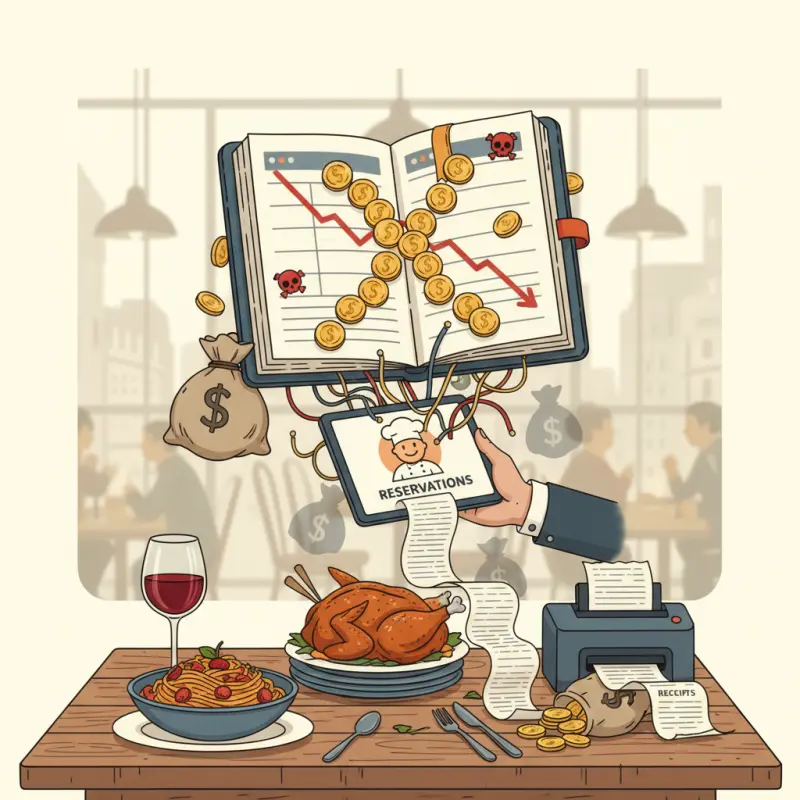
The best restaurant reservation system eliminates commission fees, transaction charges, and data ownership restrictions that can cost restaurants 15% of their reservation revenue. Traditional platforms like OpenTable and Resy charge 2-5% commission per booking, plus payment processing fees of 2.9%, monthly subscriptions up to 2,000 MAD, and per-cover charges of 5-20 MAD per guest. The best restaurant reservation system gives you full data ownership, allowing direct customer communication without platform mediation. Hidden costs include commission structures, payment processing, subscription fees, and marketing charges to reach your own customers. Commission-free platforms like OCHI eliminate these fees while providing branded booking pages, QR table ordering, and complete customer data ownership. Calculate your current reservation costs by multiplying monthly bookings by average spend, then apply your platform's commission rate plus processing fees.
Table of Contents
Why Most Restaurant Reservation Systems Cost You Money You Don't See
Your restaurant in Casablanca accepts 200 reservations this month through a popular booking platform. You're paying 120 MAD per cover in hidden costs — and you don't even know it. Finding the best restaurant reservation system means understanding these invisible expenses before comparing features.
Restaurant owners focus on the booking button. They compare calendar interfaces and confirmation emails. Meanwhile, the real costs accumulate in commission structures, transaction fees, and data ownership clauses buried in service agreements. The "free" reservation platforms aren't free. They're funded by your future revenue.
The Commission Trap That Kills Profit Margins
Traditional reservation platforms charge between 2% and 5% commission on every order placed by customers who book through their system. A table of four spending 800 MAD means 40 MAD disappears before you serve the first course. Add payment processing fees (another 2.9%), monthly subscription costs (500-2,000 MAD), and per-cover charges (5-20 MAD per guest), and that "free" booking costs you 15% of revenue.
The math gets worse during peak season. Your busiest Friday night in Marrakech generates 50,000 MAD in reservations. The platform takes 7,500 MAD. That's your entire profit margin on those tables — gone to a middleman who never cooked a meal or served a guest.
Who Actually Owns Your Customer Data
Check the terms of service on your current restaurant booking software. Most platforms claim ownership or "joint custody" of customer data collected through their system. You built the restaurant. You created the experience. But they own the relationship with your guests.
This matters when you want to send a birthday promotion or announce a new menu. Without data ownership, you're paying to reach your own customers through the platform's marketing tools. One Agadir seafood restaurant discovered they couldn't export their 3,000-customer email list when switching providers. Three years of customer relationships, locked behind a paywall.
Integration Costs They Don't Mention Upfront
The reservation system costs 500 MAD monthly. The POS integration? That's another 300 MAD. Want to sync with your inventory? Add 200 MAD. Table management features? Premium tier only, 800 MAD extra. By the time you build a functional system, you're paying 2,500 MAD monthly before accepting a single booking.
| Hidden Cost Category | Monthly Impact (MAD) | Annual Loss (MAD) |
|---|---|---|
| Platform commission (3% average) | 4,500 | 54,000 |
| Payment processing (2.9%) | 4,350 | 52,200 |
| Integration fees | 800 | 9,600 |
| Premium features | 1,200 | 14,400 |
| Per-cover charges | 2,000 | 24,000 |
| Total Hidden Costs | 12,850 | 154,200 |
Food cost calculator
What’s your real margin?
Food cost
29.2%
Gross margin
70.8%
Profit / dish
85 MAD
Healthy · under 30%
Digitize your menu with OCHIWhat Actually Matters in Table Reservation Software (The Features That Drive Revenue)
Every restaurant reservation software shows a calendar and sends confirmation emails. These basic features don't differentiate systems anymore. What separates revenue-driving platforms from simple booking widgets comes down to three capabilities most comparison guides treat as afterthoughts.
Revenue Protection: No-Show Management That Works
A 20% no-show rate on weekend reservations costs your Rabat bistro 40,000 MAD monthly. The best restaurant reservation system prevents this through smart deposit collection and automated reminder sequences. Not just "your table is at 8pm" texts, but behavioral nudges that reduce no-shows by 70%.
Look for systems that take card authorizations (not charges) at booking, send reminders at psychologically optimal times (24 hours and 2 hours before), and automatically release tables after 15-minute delays. One Fès restaurant using these features dropped no-shows from 18% to 5% in two months.
Table Turn Optimization vs. Just Filling Seats
Basic reservation systems fill tables. Smart restaurant table reservation software maximizes revenue per seat hour. The difference? Understanding that a two-top at 6pm generates different revenue than the same table at 8:30pm.
Advanced systems analyze your historical data to suggest optimal booking slots and party sizes. They'll automatically offer 7:45pm instead of 8pm if it allows another full table turn. This dynamic scheduling increases nightly revenue by 15-25% without adding tables or extending hours.
Real-Time Capacity Management for Walk-Ins
Your restaurant isn't just reserved tables. It's bar seats, terrace spots, and VIP sections — each with different revenue potential. Restaurant reservation software that treats all seats equally leaves money on the table.
Modern systems like OCHI's integrated platform manage multiple dining areas with different rules. Reserve 70% of main dining, keep the bar open for walk-ins, and dynamically adjust based on actual arrivals. This hybrid approach captures both reservation security and walk-in spontaneity.
The Casablanca Restaurant That Increased Reservations 340% Without Commissions
La Mamounia (name changed) ran a successful 80-seat restaurant in Casablanca's Gauthier district. Their problem wasn't getting reservations — it was keeping the profits from them. Here's how switching to commission-free restaurant booking software transformed their business.
The Problem: Losing 15% Revenue to Platform Fees
Monthly reservation revenue: 450,000 MAD. Platform fees and commissions: 67,500 MAD. La Mamounia was essentially running a second restaurant just to pay their booking platform. The owner calculated that commission fees equaled the salary of three full-time servers.
Worse, they couldn't track which reservations actually showed up without manually cross-referencing the reservation system with their POS. Double-entry meant errors. Errors meant lost revenue. The technology designed to help was actively hurting profitability.
The Solution: Integrated POS and Reservation Management
La Mamounia switched to OCHI's zero-commission model in January 2024. Instead of separate systems, reservations flow directly into the POS. Table 12 reserves for 8pm? The system automatically blocks it in the floor plan, assigns the preferred waiter, and loads their past order history.
No manual entry. No synchronization delays. No commission fees. The integration eliminated 2 hours of daily administrative work while capturing 100% of reservation revenue. The saved commission fees funded a complete dining room renovation.
The Results: More Bookings, Zero Commission Loss
Six months later: 340% increase in direct reservations. How? La Mamounia promoted their new direct booking link (lamam.ochi.ma) on every receipt, table tent, and social post. Customers loved booking without downloading another app. The restaurant loved keeping every dirham.
The integrated data revealed insights hidden by separate systems. Thursday 7pm tables averaged 40% higher checks than Friday 9pm. Early bird promotions shifted demand, increasing Thursday revenue by 60,000 MAD monthly. Total impact: 2.4 million MAD in additional annual profit from the same number of seats.
Restaurant Booking Software Integration: POS First, Everything Else Second
Most restaurants choose reservation systems like they're buying a calendar app. They compare booking interfaces, then struggle to connect them to their actual operations. This backwards approach creates the dual-system nightmare plaguing 80% of Moroccan restaurants.
Why Standalone Reservation Systems Create Double Work
Watch your host on a busy Saturday. Phone rings, they check the reservation tablet. Guest arrives, they manually enter the party into the POS. Table status changes? Update both systems. It's 2024, and restaurants still manage operations like it's 1995 with digital Post-it notes.
This duplication isn't just inefficient — it's expensive. Staff spend 20% of their shift synchronizing systems instead of serving guests. Errors between platforms lead to double-bookings, lost reservations, and angry customers. The technology multiplies problems instead of solving them.
The Real Cost of Managing Two Separate Systems
Calculate your true operational cost: staff time (3 hours daily at 50 MAD/hour), error rates (5% of reservations), and customer dissatisfaction (one bad review costs 10 future bookings). Add subscription fees for both systems. The typical 100-seat restaurant wastes 180,000 MAD annually on system redundancy.
Beyond money, separate systems fragment your data. Reservation patterns live in one database. Order history in another. Customer preferences scattered across both. You can't personalize service when customer intelligence sits in disconnected silos.
OCHI's Unified Approach: One Dashboard, Complete Control
The best restaurant reservation system isn't a standalone product — it's native functionality within your operational platform. OCHI's approach treats reservations as one feature of complete restaurant management, not a separate service requiring integration.
One login manages everything. Reservation arrives, table auto-assigns, waiter gets notified, kitchen sees party size, order history loads. When the bill closes, loyalty points calculate automatically. Customer data builds naturally. No synchronization because there's nothing to sync — it's one unified system from the start.
Getting Started: Your Restaurant's Reservation System Checklist
You've evaluated the costs and understood the integration requirements. Now comes implementation. Here's your tactical roadmap for launching restaurant table reservation software that actually drives revenue.
Week One Setup Priorities
Day 1-2: Map your dining areas accurately. Not just table count — actual sections, server stations, and capacity variations. Include bar seating, terrace tables, and private dining.
Day 3-4: Configure your availability rules. Standard systems use basic open/close times. Smart configuration sets different rules for different areas. Terrace closes at sunset. Bar stays open until midnight. VIP section requires manager approval.
Day 5-7: Build your no-show prevention flow. Set up card authorization (not charging), customize reminder timing, and create your late arrival policy. Test every scenario before going live.
Testing Your System Before Going Live
Run 50 test reservations before accepting real bookings. Include edge cases: large parties, special requests, dietary restrictions, VIP handling. Have staff make bookings from customer perspective. Time every step. If booking takes over 90 seconds, simplify the flow.
Test integrations under load. Can your system handle 20 simultaneous bookings during Friday rush? Does table status update instantly across all devices? What happens when internet drops for 30 seconds? Stress test now, not on your busiest night.
Measuring What Matters: Beyond Just Booking Numbers
Track three metrics from day one: reservation conversion rate (visitors who complete booking), no-show percentage, and average check per reservation channel. These numbers reveal whether your reservation system drives revenue or just fills seats.
| Metric | Target | Why It Matters |
|---|---|---|
| Booking conversion rate | Above 60% | Low rates indicate friction in booking flow |
| No-show rate | Below 5% | Direct revenue impact, staff planning accuracy |
| Direct booking percentage | Above 70% | Reduces commission dependence |
| Repeat reservation rate | Above 40% | Indicates customer satisfaction |
The best restaurant reservation system for your restaurant isn't the one with the most features or the biggest marketing budget. It's the one that integrates with your operations, respects your margins, and gives you control over your customer relationships. In Morocco's competitive restaurant market, keeping 100% of your revenue isn't just smart — it's survival.
See what commission-free reservations look like at ochi.ma/partners.
Frequently Asked Questions
What makes a restaurant reservation system the best choice?
The best restaurant reservation system eliminates commission fees, gives you full customer data ownership, and integrates with your POS system. Look for platforms that charge zero commission on bookings and let you keep 100% of your revenue.
How much do restaurant reservation platforms typically cost?
Traditional reservation platforms cost 2-5% commission per booking, plus 2.9% payment processing fees, monthly subscriptions of 500-2,000 MAD, and per-cover charges of 5-20 MAD per guest. This can total 15% of reservation revenue.
Why is customer data ownership important in reservation systems?
Most platforms claim ownership of customer data, meaning you pay to market to your own guests through their tools. Data ownership lets you send direct promotions, birthday offers, and menu updates without platform fees.
Can I integrate a reservation system with my existing restaurant POS?
Yes, the best restaurant reservation systems integrate seamlessly with POS systems, allowing automatic table management, order syncing, and unified reporting. This eliminates double data entry and reduces errors.
What are the hidden costs in restaurant reservation platforms?
Hidden costs include commission fees on every booking, payment processing charges, monthly subscription fees, per-cover charges, and marketing fees to reach customers who booked through the platform.
Restaurant owners · Weekly
The guide to running a restaurant in 2026.
One article per week. No commission advice. Just honest operational insight for Moroccan restaurants.

Blog Manager
Comments
No comments yet. Be the first to share your thoughts.