AI Overview
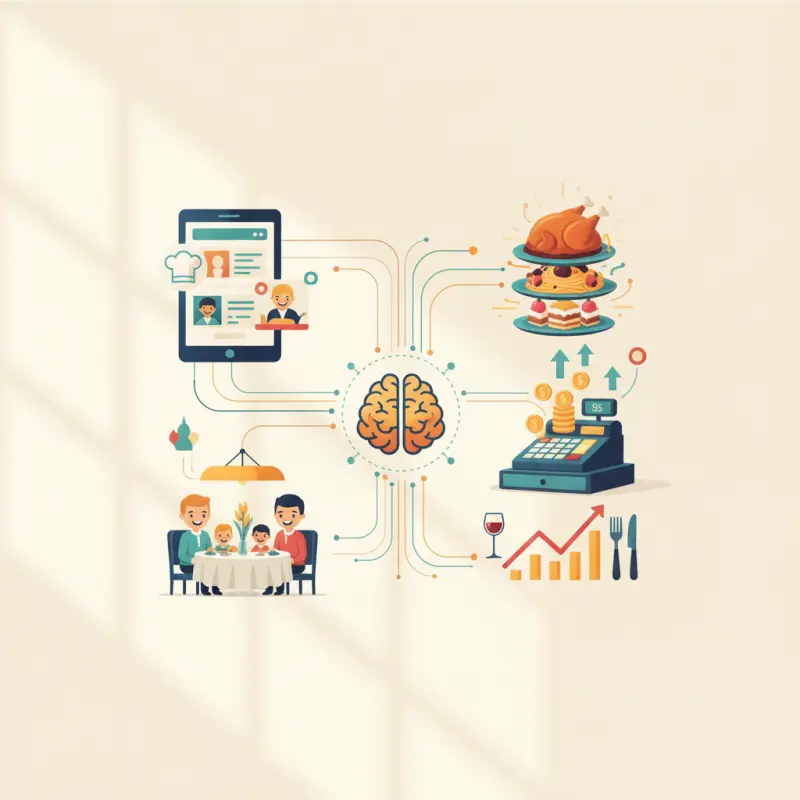
A restaurant CRM system transforms scattered transaction data into predictable revenue growth by connecting all customer touchpoints. Most Moroccan restaurants collect data on 400 customers monthly but engage with fewer than 20 because their systems don't communicate. A proper crm system for restaurants integrates POS transactions, delivery orders, reservation history, and loyalty programs into one unified view. Restaurants using connected CRM systems grow 30% year-over-year by automating personalized engagement based on customer behavior patterns. Tier-based loyalty programs create status anxiety that drives repeat visits more effectively than simple points or cashback systems. The key difference between successful restaurants and struggling ones isn't the amount of data collected — it's how that data connects across every customer interaction. Start by auditing your current systems and identifying which customer touchpoints operate in isolation from each other.
Table of Contents
Your restaurant in Casablanca seats 80 people. Last month, you served 2,400 customers. How many came back? If you can't answer that question in under five seconds, you don't have a CRM system for restaurants — you have a digital filing cabinet.
Most restaurant owners think CRM means sending birthday emails and tracking phone numbers. But the restaurants growing 30% year-over-year use their CRM differently. They turn transaction data into predictable revenue growth.
The Real Problem: Your POS Data Dies in a Void
Walk into any restaurant in Marrakech and you'll find the same story. The POS system knows that table 14 ordered tagine three times this month. The reservation system shows they book every Friday at 7 PM. The delivery platform tracks their home address and favorite dishes.
But these systems don't talk to each other. Your most valuable customer looks identical to a first-time visitor because your data lives in separate silos. Meanwhile, commission-based platforms own the relationship with your customers — and charge you 30% for the privilege.
The average Moroccan restaurant collects data on 400 customers monthly but engages with fewer than 20. Not because they don't care. Because their "CRM" is actually three spreadsheets, a WhatsApp group, and the owner's memory.
Real restaurant CRM software connects every touchpoint. When Ahmed orders couscous through your online system, reserves a table for his anniversary, and refers his cousin — your system should know. More importantly, it should act on that knowledge automatically.
Quick check · 3 questions
Is OCHI right for your restaurant?
Step 1 of 3
How do you currently take online orders?
Points vs. Tiers vs. Cashback: What Actually Drives Return Visits
Every CRM software for restaurants offers loyalty programs. Few explain which model actually works. The psychology behind each system determines whether customers return or forget you exist.
The Tier Psychology That Hooks Customers
Tier-based systems create status anxiety in the best possible way. When customers see they're 50 dirhams away from Gold status, they order dessert. When their Platinum badge appears next to their name, they feel recognized.
OCHI's four-tier system (Bronze → Silver → Gold → Platinum) increases average order values by 18% in the final quarter before tier upgrades. Customers don't just earn points — they earn identity. A Platinum member at your restaurant isn't just a frequent diner. They're part of an exclusive club.
| Loyalty Model | Customer Behavior | Revenue Impact | Best For |
|---|---|---|---|
| Points (1 DH = 1 point) | Slow accumulation, forgotten | +8% repeat visits | Quick service |
| Tiers (Bronze to Platinum) | Status-driven, competitive | +34% repeat visits | Full-service dining |
| Cashback (5-10%) | Transactional, price-focused | +12% visits, -15% margins | Delivery-heavy |
When Cashback Kills Profit Margins
Cashback sounds generous until you run the numbers. A 10% cashback program on a 30% margin meal leaves you with 20% to cover labor, rent, and utilities. Worse, cashback attracts price-sensitive customers who jump to competitors offering 12%.
Smart restaurants use targeted cashback instead. First-time customers get 15% back to ensure a second visit. Regular customers earn tier benefits that cost less but feel more valuable — priority reservations, chef's specials, exclusive menu previews.
Birthday Bonuses: The 48-Hour Window That Makes or Breaks ROI
Generic "Happy Birthday" emails with 20% off coupons have a 3% redemption rate. But restaurants using behavior-triggered birthday campaigns see 31% redemption. The difference? Timing and personalization.
Send birthday offers 48 hours before the date with a specific dish recommendation based on order history. "Hassan, your birthday is Thursday. We've reserved your favorite corner table and prepared the seafood paella you loved last time. Bring three friends — appetizers are on us."
The Segmentation Reality Check: Most Restaurant CRMs Over-Complicate This
You don't need 47 customer segments. You need three that drive revenue: new customers (visited once in 30 days), regulars (visited 3+ times), and at-risk churners (no visit in 45 days).
OCHI's dynamic segmentation works because it's automatic. New customers get welcome series campaigns. Regulars receive exclusive previews. At-risk customers trigger win-back automations with personalized offers based on their favorite dishes.
A seafood restaurant in Agadir increased revenue 22% by focusing on just these three segments. They stopped sending blanket promotions to everyone. Instead, new customers got "try our grilled fish" campaigns, regulars got "chef's table invitation" messages, and churning customers received "we miss you" notes with their favorite dish mentioned by name.
The best CRM for restaurants isn't the one with the most features. It's the one your staff actually uses. Complex segmentation rules mean nothing if your team can't execute them during a Friday night rush.
Built-In vs. Bolt-On: Why Your CRM Choice Determines Your Success Rate
Here's what CRM vendors won't tell you: 68% of bolt-on restaurant CRMs fail within six months. Not because the software is bad. Because integration complexity kills adoption before benefits appear.
When your POS, ordering system, and CRM come from different companies, data syncs break. Customer points don't update. Campaigns reference outdated menus. Staff need three logins to check one customer's history.
Integrated platforms like OCHI solve this by building CRM into the core system. Every order automatically updates loyalty points. Customer segments refresh in real-time. Marketing campaigns pull live menu data. Your team uses one system for everything — from taking orders to sending birthday bonuses.
A restaurant group in Rabat switched from a bolt-on CRM to an integrated platform. Training time dropped from two weeks to two days. Campaign creation went from three hours to 20 minutes. Most importantly, their customer data became accurate enough to trust.
The 34% Question: Measuring CRM Success Beyond Sign-Up Rates
Most restaurants measure CRM success wrong. They count email subscribers or app downloads. But vanity metrics don't pay rent. Track these numbers instead:
Repeat visit frequency tells you if customers actually value your loyalty program. OCHI restaurants see 34% more repeat visits within 90 days of implementing tiered loyalty. Not because of the software — because customers chase status.
Average order value changes reveal behavior shifts. When Silver members order dessert to reach Gold status faster, your CRM drives incremental revenue. Track AOV by tier, not just overall.
Staff engagement predicts long-term success. If servers don't mention loyalty benefits or kitchen staff ignore preference notes, your CRM investment dies. Monitor how often staff access customer histories during service.
The top CRM software for restaurants makes measurement automatic. Real-time dashboards show repeat rates by segment. Automated reports track tier progression impact on spending. You know what works because the data tells you — not because a vendor promised results.
Your CRM system for restaurants should turn casual diners into regulars and regulars into advocates. Not through complicated schemes or aggressive marketing. Through recognition, relevance, and rewards that actually matter. The restaurants winning in 2026 know their customer's name, favorite dish, and birthday — and use that knowledge to create experiences worth returning for.
See how OCHI's built-in CRM drives 34% more repeat visits at ochi.ma/partners.
Frequently Asked Questions
What is a CRM system for restaurants?
A restaurant CRM system connects all customer touchpoints — POS, delivery, reservations, and loyalty programs — into one unified platform that tracks customer behavior and automates personalized engagement.
How much does restaurant CRM software cost?
Restaurant CRM costs range from 200 to 2000 dirhams monthly depending on features and restaurant size. Zero-commission platforms like OCHI include CRM functionality without additional fees.
Which loyalty program type works best for restaurants?
Tier-based loyalty systems outperform points or cashback programs because they create status anxiety that motivates customers to reach the next level through repeat visits.
Can restaurant CRM integrate with existing POS systems?
Modern restaurant CRM platforms integrate with most POS systems through APIs, automatically syncing transaction data, customer profiles, and purchase history in real-time.
How do restaurants measure CRM success?
Key CRM metrics include customer retention rate, average order value growth, repeat visit frequency, and automated campaign engagement rates. Successful restaurants see 20-30% increases in these metrics within six months.
Restaurant owners · Weekly
The guide to running a restaurant in 2026.
One article per week. No commission advice. Just honest operational insight for Moroccan restaurants.

Blog Manager
Comments
No comments yet. Be the first to share your thoughts.