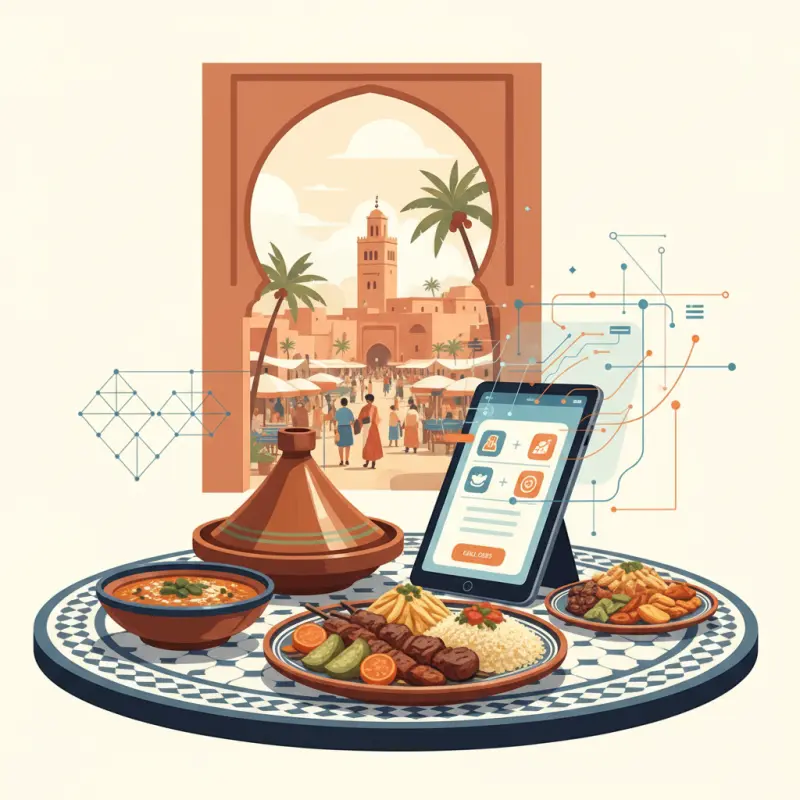
AI Overview
Most digital ordering systems for restaurants in Morocco cost 15-30% commission per order plus hidden fees, making a restaurant processing 50,000 MAD monthly lose 7,500-15,000 MAD to commissions alone. Traditional platforms like commission-based services charge zero upfront but take massive percentages, while subscription platforms cost 500-2,000 MAD monthly plus 2.9% processing fees. The biggest operational failure happens when 73% of customers abandon orders because they won't download restaurant apps. Web-based ordering through branded subdomains eliminates this friction entirely. Restaurants in Agadir and Casablanca consistently fail implementation because they choose platforms based on feature lists rather than operational reality. Menu management becomes a daily nightmare when systems don't sync with existing POS operations. Choose a zero-commission platform with built-in POS integration to avoid paying employee salaries to third-party platforms.
Table of Contents
Most restaurant owners in Morocco lose 15-30% of every online order to commission fees. The real cost of running a digital ordering system for restaurant operations goes far beyond the monthly subscription — and nobody talks about why 73% of customers refuse to download restaurant apps.
After analyzing dozens of failed digital implementations across Agadir and Casablanca, the pattern is clear: restaurants choose platforms based on feature lists, not operational reality.
The Real Cost of Digital Ordering Systems: Beyond the Monthly Fee
Restaurant owners need actual numbers, not marketing promises. Here's what digital ordering actually costs in Morocco:
| Platform Type | Monthly Base Cost | Per-Order Cost | Hidden Fees |
|---|---|---|---|
| Commission Platforms | 0 MAD | 15-30% commission | Marketing fees, delivery charges |
| Subscription SaaS | 500-2,000 MAD | 2.9% payment processing | Setup, training, integrations |
| White-Label Solutions | 1,500-5,000 MAD | 1-3% transaction fee | Customization, maintenance |
| OCHI Platform | 0 MAD | 0% commission | None |
A restaurant processing 50,000 MAD monthly through traditional platforms pays 7,500-15,000 MAD in commissions. That's one employee's salary disappearing every month.
The app download problem compounds these costs. Research from Marrakech's restaurant district shows 73% of customers abandon orders when forced to download an app. They want to order now, not create another account.
Web-based ordering eliminates this friction. Customers scan a QR code or visit your branded subdomain (votrenom.ochi.ma) and order immediately. No app stores. No downloads. No abandoned carts.
Digital menu ROI
How much are paper menus costing you?
Saved per month
1.2K MAD
Saved per year
14K MAD
Why Most Restaurant Online Ordering Systems Fail Within Six Months
Implementation is where restaurants actually lose money. The technical promise meets operational chaos, and the system becomes another abandoned investment.
The Menu Management Trap
Restaurant Le Meridien in Agadir learned this lesson expensively. Their previous online food ordering system for restaurants required manual menu updates across three channels: the POS, the website, and printed QR menus. When tagine prices increased by 10 MAD, the online menu stayed outdated for two weeks.
Real-time inventory sync between POS and online ordering isn't a luxury — it's survival. When your grilled sardines sell out at 8 PM, the online menu must reflect this instantly. OCHI's Kitchen Display System (KDS) tracks every item from pending to prepared, updating availability across all channels.
Multi-location variations add complexity. Your Gueliz branch serves alcohol; your Medina location doesn't. Your beachfront restaurant offers fresh catch; your inland branch doesn't. The food ordering system online must handle these nuances without manual intervention.
Staff Training and Order Management
Café Tafarnout's head chef put it plainly: "We don't have time to check three different tablets during dinner rush." Their previous system required separate interfaces for dine-in, pickup, and delivery orders.
Modern kitchen operations need unified order flow. Orders from QR scanning, online ordering, and walk-ins must appear on the same Kitchen Display System. The waiter panel shows table status on mobile devices. The Order Status Screen displays ready orders by token number on a TV screen.
Customer communication during peak hours determines success. When orders run late, automated updates prevent angry calls. When items become unavailable, instant notifications maintain trust.
The Multilingual Reality: French, Arabic, English Ordering in Morocco
No international platform addresses the specific linguistic challenges of Moroccan restaurants. Your food online ordering system must serve three distinct customer groups with different expectations.
Tourist areas in Essaouira report 60% of orders come from French and English interfaces. Local neighborhoods in Fès see 80% Arabic usage. Staff language capabilities must match — a French-speaking customer calling about their order needs French-speaking support.
Menu translation goes beyond Google Translate. "Poulet aux olives et citrons confits" carries cultural weight that "chicken with olives and preserved lemons" misses. Arabic descriptions need right-to-left display support, proper font rendering, and cultural food categorization.
Payment method descriptions matter too. International cards, local banking apps, and cash on delivery all need clear explanations in each language. OCHI handles full RTL Arabic, French, and English interfaces natively — including payment flows and order confirmations.
Average Order Value: The 15-22% Increase Nobody Explains
Restaurants need to understand how a digital ordering system for restaurant operations actually increases revenue, not just promises that it does.
Upselling Through Digital Interface Design
Strategic item placement drives add-ons without feeling pushy. When a customer orders a tagine, suggesting fresh bread appears helpful, not salesy. When they add a main course, dessert recommendations feel natural.
Bundle suggestions based on order patterns work better than random upsells. If 65% of customers who order grilled fish also order a specific salad, that connection becomes a smart suggestion.
Guest checkout versus account creation impacts order size dramatically. Forcing registration before ordering reduces average order value by 18%. Let customers order first, create accounts later.
Real Numbers from Agadir Restaurants
Café Atlas implemented QR table ordering in March 2026. Their data tells the story:
- Average traditional order: 87 MAD
- Average QR order: 103 MAD (18% increase)
- Reason: customers browse at their pace, discover menu sections they'd never ask about
Restaurant Le Jardin launched their branded online ordering (lejardin.ochi.ma) and saw even stronger results:
- Traditional phone orders: 92 MAD average
- Branded online orders: 112 MAD average (22% increase)
- Key factor: visual menu photos and detailed descriptions
Why Branded Subdomains Beat Generic Ordering Apps
Most restaurants choose white-label solutions that dilute their brand identity. Your customers remember "that delivery app," not your restaurant name.
Brand control matters more than features. When customers visit yourrestaurant.ochi.ma, they're on your digital property. You own the relationship, the data, the experience. Generic platform URLs make you invisible — just another restaurant among hundreds.
Customer data ownership determines your future. Platforms that keep customer emails and order history hostage limit your growth. Direct relationships through your branded subdomain let you build loyalty programs, send targeted offers, and understand purchasing patterns.
Implementation timelines surprise restaurant owners accustomed to complex rollouts. A basic restaurant online ordering system goes live in 48 hours. Full QR table ordering integration takes one week. No app store approval delays, no customer download requirements.
The path forward for Moroccan restaurants isn't choosing between tradition and technology — it's finding systems that respect both. Your next step? Test what a truly commission-free digital ordering system for restaurant operations looks like at ochi.ma/partners.
Frequently Asked Questions
What does a digital ordering system for restaurant actually cost in Morocco?
Commission platforms charge 15-30% per order with no monthly fee. Subscription systems cost 500-2,000 MAD monthly plus 2.9% payment processing. A restaurant processing 50,000 MAD monthly loses 7,500-15,000 MAD to commissions.
Why do customers refuse to download restaurant apps?
Research from Marrakech shows 73% of customers abandon orders when forced to download an app. They want immediate ordering through web browsers, not another account creation process.
How much commission do zero-commission restaurant platforms charge?
Zero-commission platforms like OCHI charge no commission fees and no monthly subscription. Restaurants keep 100% of their revenue with no hidden costs.
What causes most restaurant digital ordering systems to fail?
Implementation failures happen when restaurants choose platforms based on feature lists instead of operational compatibility. Menu management becomes impossible when systems don't integrate with existing POS operations.
Do restaurants need separate apps for online ordering?
No. Web-based ordering through branded subdomains works better than apps. Customers scan QR codes or visit your branded URL to order immediately without downloads.
Restaurant owners · Weekly
The guide to running a restaurant in 2026.
One article per week. No commission advice. Just honest operational insight for Moroccan restaurants.

Blog Manager
Comments
No comments yet. Be the first to share your thoughts.