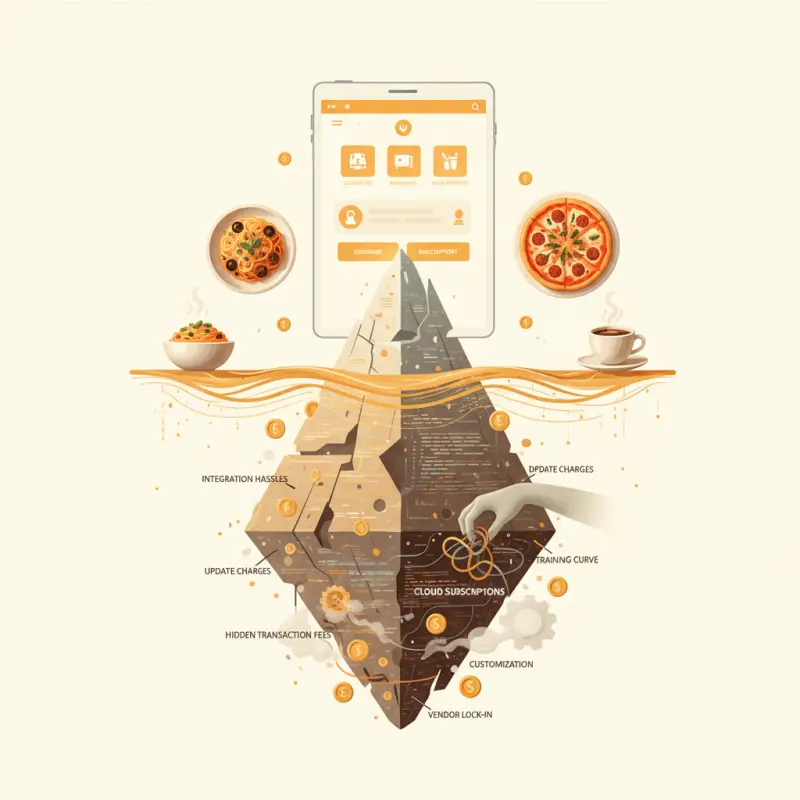
EPOS Software for Restaurant Hidden Costs: What You Actually Pay
Blog Manager
··5 min read
AI Overview
EPOS software for restaurant operations typically costs 40-60% more than advertised rates due to hidden fees and payment processing markups. While base plans start around £99 monthly, essential features like inventory management, support, and payment processing can triple actual costs to £400+ per month. Major providers like Toast charge 2.49-2.9% for payment processing compared to direct bank rates of 1.8%, costing restaurants an extra £345 monthly on £50,000 revenue. Free POS systems prove most expensive, charging 3.5% plus transaction fees while adding 15-30% commission on third-party orders. Hardware leases add £79 monthly over 48 months for equipment worth £800. Morocco's restaurant owners increasingly choose zero-commission platforms that eliminate payment processing markups entirely. Calculate your true monthly POS costs by adding base software fees, payment processing differences, hardware leases, and third-party commission cuts before signing any contract.
Table of Contents
For restaurant owners
Start your restaurant in 60 minutes.
From signup to your first real order — no commission, no setup fee, no sales call.
Your Tangier seafood restaurant processes £50,000 monthly through your EPOS software. Between payment processing fees, commission cuts, and hidden charges, you're losing £2,500 every month — enough to hire two full-time staff. Most restaurant owners discover these costs only after signing multi-year contracts.
The EPOS software for restaurant industry thrives on complexity. Vendors bury true costs under feature lists, knowing owners focus on capabilities rather than calculating total monthly expenses. This guide exposes what you'll actually pay and why zero-commission alternatives are reshaping Morocco's restaurant tech landscape.
The Hidden Math Behind EPOS Software Pricing
Restaurant EPOS pricing follows a predictable pattern: attractive base rates that triple once you add essential features. A Casablanca bistro owner recently showed me their POS invoice — what started as £99 monthly ballooned to £487 with payment processing, support, and "premium" features they considered basic.
The real damage comes from payment processing markups. While banks charge restaurants 1.8% for card transactions, POS providers like the Toast POS company typically charge 2.49% to 2.9%. On £50,000 monthly revenue, that 0.69% difference costs £345 — pure profit for the POS vendor.
Why "Free" POS Systems Cost More Than Paid Ones
Free EPOS software for restaurant operations follows the razor-blade model. The software costs nothing, but payment processing runs 3.5% plus £0.30 per transaction. Add commission fees on third-party orders (15% to 30%), and that "free" system becomes your most expensive vendor.
Hardware leases compound the problem. That sleek terminal isn't included — it's £79 monthly over 48 months for equipment worth £800. Early termination? You'll pay the full remaining balance immediately.
The Toast POS Company Model: Software + Payments Bundle
Toast exemplifies the bundled pricing trap. Their advertised £79 starter plan excludes inventory management, advanced reporting, and multi-location support. The full package runs £199 per location monthly, plus 2.49% on all card payments, plus £0.15 per transaction.
Annual contracts lock you in with steep penalties. One Marrakech restaurant paid £3,000 to exit their Toast contract six months early — standard practice when switching costs protect vendor profits over restaurant needs.
EPOS Features That Actually Matter vs. Marketing Fluff
EPOS vendors love feature lists. AI-powered analytics, blockchain loyalty programs, augmented reality menus — impressive in demos, useless in service. After implementing systems in 200+ restaurants, clear patterns emerge about what actually improves operations.
Core Operations (Must-Have)
Your EPOS software for restaurant operations needs four fundamentals. Order management that routes tickets to the right station. Payment processing that handles cash, cards, and splits without crashing. Basic inventory that tracks high-value items. Staff permissions that prevent theft while enabling service.
Everything else is secondary. That fancy heat map showing table turnover? Worthless if orders route incorrectly. Advanced modifier trees? Pointless when staff can't split bills. Focus on operational basics that work during Friday night rush.
Advanced Features (Nice-to-Have)
Some advanced features earn their complexity. Multi-location management saves hours for restaurant groups. Real billing PetPooja-style loyalty programs increase repeat visits by 23%. Automated purchasing based on par levels reduces waste. But these features only matter after mastering core operations.
Integration capabilities matter more than built-in features. Can you connect your accounting software? Does it sync with your scheduling system? Petpooja billing success comes from playing well with other tools, not trying to replace them all.
Why Zero-Commission Platforms Are Disrupting Traditional EPOS
The commission model is dying because math doesn't lie. A Rabat pizzeria processing 500 delivery orders monthly at £15 average loses £2,250 to 30% platform commissions. That's rent money disappearing into platform profits while restaurants struggle with razor-thin margins.
The Commission Problem
Traditional platforms justify commissions through "marketing reach" and "customer acquisition." But once customers know your restaurant, why keep paying 30% for repeat orders? A Fès restaurant tracked their numbers — 78% of platform orders came from existing customers who would order directly if given the option.
Worse, platforms control customer data. You can't email your own customers. You can't build loyalty programs. You can't even see their phone numbers. You're renting access to your own customer base at 30% markup.
The OCHI Alternative
OCHI flips the model: zero commission, zero subscription fees. Restaurants pay only standard payment processing (1.8%) — the same rate you'd get dealing directly with banks. Your Agadir beachfront café keeps that £2,250 monthly commission as pure profit.
The platform includes everything POS toast systems charge extra for. Kitchen display system, real-time delivery tracking, customer loyalty programs, multi-branch management — all included. Your branded subdomain (votrerestaurant.ochi.ma) means customers order directly from you, building your brand, not the platform's.
Implementation Reality Check: What Installation Actually Takes
Every EPOS vendor promises "quick setup" and "intuitive interface." Reality: expect four weeks minimum from contract to confident daily use. Vendors quote setup time; they ignore training, testing, and the inevitable week of chaos as staff adapt.
Week 1-2: Setup and Configuration
Menu digitization consumes most setup time. A 50-item menu with modifiers, variations, and photos takes eight to 10 hours to input correctly. Staff account creation, permission settings, and payment gateway connections add another full day. Hardware installation (if required) depends on your internet quality — many Moroccan restaurants need network upgrades first.
Price everything during quiet hours. Nothing destroys service like discovering mid-rush that your special combo prices incorrectly or modifiers don't flow to the kitchen display.
Week 3-4: Training and Testing
Staff training separates smooth launches from disasters. Run mock services with full teams, not just managers. Test edge cases — split bills, refunds, modifier chains, shift changes. Document everything in simple terms because your best server might train the next hire.
Create backup procedures before going live. What happens when internet drops? How do you handle cash if the system freezes? Who can override prices? These scenarios will happen; preparation determines whether they're minor hiccups or service meltdowns.
Traditional EPOS software for restaurant operations evolved to extract maximum revenue from restaurants through complex pricing, hidden fees, and customer data control. But technology should amplify your restaurant's strengths, not tax them. The future belongs to transparent, zero-commission platforms that align with restaurant success rather than feeding off it.
Ready to calculate your real savings? Visit ochi.ma/partners for transparent pricing or explore our blog for more insights on profitable restaurant management. Set up your commission-free ordering platform at votrenom.ochi.ma today.
Frequently Asked Questions
What is the real cost of EPOS software for restaurants?
Most EPOS software starts with attractive base rates around £99 monthly but can triple to £487 once you add payment processing, support, and essential features. Payment processing markups alone can cost an additional £345 monthly on £50,000 revenue compared to direct bank rates.
Why do free EPOS systems often cost more than paid ones?
Free EPOS software uses the razor-blade model, charging nothing for software but up to 3.5% plus £0.30 per transaction for payment processing. Combined with commission fees of 15% to 30% on third-party orders, these systems become the most expensive vendor for most restaurants.
How much can restaurants save with zero-commission EPOS alternatives?
Restaurants using zero-commission platforms like OCHI pay only direct bank processing rates of 1.8% instead of vendor markups up to 2.9%. On £50,000 monthly revenue, this saves approximately £550 monthly compared to traditional EPOS providers.
What are the hidden costs in EPOS software contracts?
Beyond base software fees, restaurants face payment processing markups, hardware leases of £79 monthly for £800 equipment, early termination penalties up to £3,000, and feature upgrades that can double monthly costs. Annual contracts protect these vendor profits with steep exit fees.
Which EPOS features actually improve restaurant operations?
Core operational features like inventory management, staff scheduling, and direct payment processing provide measurable ROI. Marketing features like AI analytics and blockchain loyalty programs often deliver minimal value despite impressive demos and higher costs.
Restaurant owners · Weekly
The guide to running a restaurant in 2026.
One article per week. No commission advice.
Just honest operational insight for Moroccan restaurants.
Blog Manager
Comments
No comments yet. Be the first to share your thoughts.