AI Overview
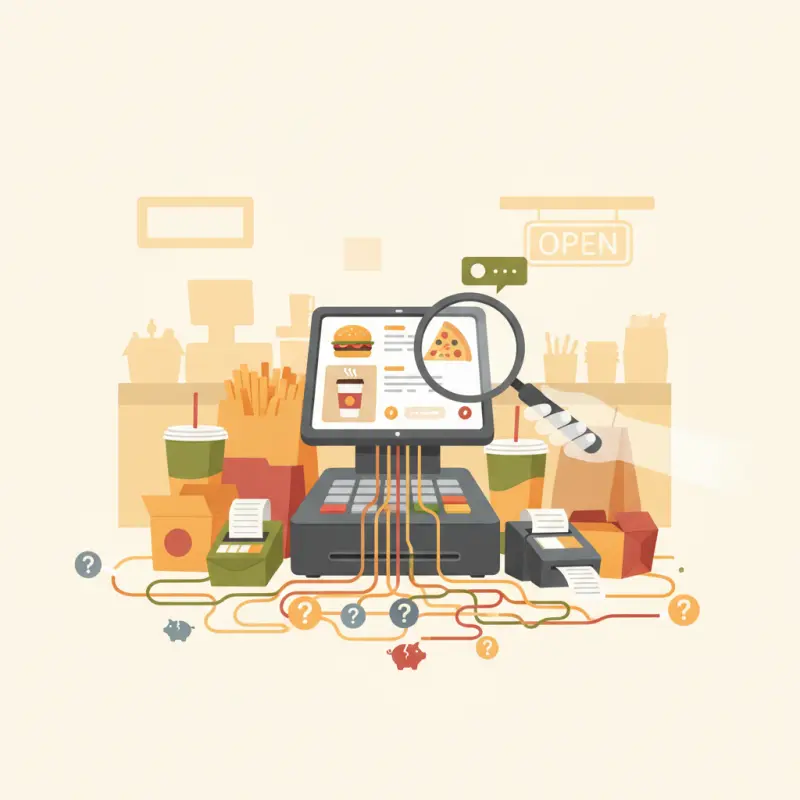
An epos system for takeaway costs far more than the advertised monthly fee due to hidden transaction charges and commission splits. While vendors promote £50 monthly subscriptions, restaurants face additional costs including 2.5% card payment fees, £30 monthly delivery platform integration, and 1.5% payment gateway charges. A restaurant processing 500 monthly orders at 80 MAD average can pay €180+ monthly when all fees combine. Systems like petpooja billing stack multiple fee layers: software subscription, payment processing, delivery integration, and aggregator commissions. One Agadir pizzeria paid €2,400 extra over their contract term compared to buying equipment outright. The commission trap creates a profitability ceiling where restaurants earning €8,000 monthly lose €400+ to various system fees alone. Calculate total cost of ownership including all transaction fees before signing any EPOS contract.
Table of Contents
The Hidden Math Behind Takeaway EPOS Pricing
Your EPOS system for takeaway costs more than the monthly fee on the pricing page. Much more. While vendors highlight their £50 monthly subscriptions, the real expense hides in transaction fees, integration costs, and commission splits that compound with every order.
Take Ahmed's shawarma restaurant in Casablanca. His point-of-sale provider charges £50 monthly for the software. Reasonable, right? Add 2.5% on every card payment. Then £30 monthly for delivery platform integration. Another 1.5% for payment gateway fees. By month's end, his 500 orders cost him £185 in system fees alone — before counting the 30% commission to delivery platforms.
Monthly Software vs. Per-Transaction Reality
The pricing trap works like this: vendors show you the base software cost, knowing you'll discover the rest after signing a 24-month contract. A restaurant in Marrakech processing 500 monthly orders at 80 MAD average discovers their "affordable" system costs €180+ monthly when all fees combine.
Those "free" hardware offers? The tablet might cost nothing upfront, but the three-year contract locks you into transaction fees that dwarf any hardware savings. One Agadir pizzeria calculated they paid €2,400 extra over their contract term compared to buying equipment outright.
The Commission Trap Most Systems Don't Mention
Systems like billing petpooja stack fees at every level. First, the monthly software subscription. Then payment processing fees on each transaction. Add delivery platform integration fees. Finally, the commission on every order placed through aggregators. A restaurant earning €8,000 monthly loses €400+ to various system fees — 5% of gross revenue before considering food costs or rent.
The math gets worse with volume. Higher sales mean higher absolute fees, creating a ceiling on profitability that most restaurant owners don't see coming. When petpooja billing or similar systems promise to "grow your business," they forget to mention they grow their revenue share too.
Platform comparison
Where does your money really go?
| Commission | 27% | 25% | 30% | 0% |
| Customer data | They own it | They own it | They own it | You own it |
| Your branding | Theirs | Theirs | Theirs | Yours |
| Payout cadence | Biweekly | Weekly | Biweekly | Weekly |
| Setup cost | Free | Free | Free | Paid |
Why Most Takeaway EPOS Reviews Miss the Point
Every review obsesses over feature lists. Cloud storage, 47 reports, AI-powered insights. None explain which features actually improve your bottom line versus expensive distractions. The gap between marketing promises and operational reality costs restaurants thousands annually.
Features That Pay vs. Features That Impress
Kitchen display screens reduce order errors by 40%. That's measurable ROI — fewer remakes, happier customers, better reviews. Inventory tracking sounds sophisticated but wastes hours for small takeaway operations where suppliers deliver daily and menus rarely change.
Toast POS company markets 47 features in their premium package. Moroccan restaurants actively use seven. The rest create complexity without value, requiring more training and causing more errors. Simple systems that nail core functions beat feature-heavy platforms every time.
| Feature | Marketing Promise | Actual Impact | Worth Paying For? |
|---|---|---|---|
| Kitchen Display | "Streamline operations" | 40% fewer errors | Yes |
| AI Analytics | "Predict demand" | Ignored by 90% of users | No |
| Inventory Tracking | "Never run out" | 2+ hours weekly maintenance | Only 1000+ orders/month |
| Customer Database | "Build loyalty" | 15% repeat order increase | Yes |
The Integration Illusion
Most systems promise seamless delivery platform integration. The technical connection might work, but the financial one creates a double burden. You pay commission to delivery aggregators AND monthly fees to your EPOS system for takeaway. A Rabat burger joint discovered they paid 32% total fees on delivery orders: 30% to the platform, 2% to their POS toast system for "enabling" the integration.
This double-dipping destroys margins on already thin takeaway profits. When platforms take their cut and your POS adds another layer, a 15 MAD profit per order shrinks to 10 MAD or less.
The Morocco-Specific Challenge Nobody Addresses
International EPOS systems design for UK and US markets where 80% of transactions use cards. In Morocco, cash remains king. Systems built for London don't fit Casablanca operations, creating expensive friction at every touchpoint.
Why International EPOS Falls Short in Morocco
Payment processing assumes card-heavy operations. In Agadir, 60% of takeaway orders still pay cash. International systems charge you for card processing infrastructure you barely use while offering weak cash management tools you desperately need.
Support operates on London time. Your dinner rush crisis at 21:00 Casablanca time meets voicemail because it's after-hours in their timezone. Currency adds another layer — pricing in pounds or dollars creates exchange rate risk that compounds your financial uncertainty.
Local Staff Training Reality
Complex systems require extensive training. With Moroccan restaurant staff turnover averaging four months, you're constantly teaching new employees. Most international platforms lack Arabic interfaces, forcing staff to navigate English menus during busy service.
Simple wins here. A waiter who starts Tuesday morning needs to take orders by lunch. Systems requiring three-day training courses don't match this reality. Local restaurants need intuitive interfaces that new staff master in hours, not days.
The Zero-Commission Alternative
The core problem isn't features or integration — it's revenue sharing. Traditional EPOS systems for takeaway take a slice of every transaction while charging monthly fees. OCHI flips this model: restaurants keep 100% of their revenue.
What Zero Commission Actually Means
Traditional model: pay £50 monthly plus lose 2-3% of every order to transaction fees. On €6,000 monthly revenue, that's €120 in percentage fees plus the subscription. Annual cost: €1,440 minimum.
OCHI provides your branded ordering platform at yourrestaurant.ochi.ma. Full POS functionality, delivery management, customer database — without touching your revenue. The same €6,000 monthly sales stays in your pocket. No percentages, no surprises.
Essential Features Without the Markup
QR table ordering reduces staff workload during peak hours. Customers scan, browse your menu, and order from their phones. GPS delivery tracking keeps them informed without calling your busy kitchen. The kitchen display system shows orders clearly, reducing errors that cost money and reputation.
Every feature serves a specific operational purpose. No AI predictions you'll never use. No complex analytics that require a data science degree. Just the tools that make service smoother and keep customers happy — all included without per-transaction fees.
Making the Switch:
What Actually Matters
Choosing an EPOS system for takeaway depends on your volume and growth trajectory, not marketing promises. The right system for 200 orders monthly fails at 1000 orders. Understanding your needs prevents expensive mistakes.
Size-Based Decision Framework
Under 200 monthly orders: a simple tablet-based system handles your needs. Beyond that wastes money on unused features. Focus on easy payment processing and basic order management.
200-1000 orders: you need integrated POS with delivery tracking and customer management. Kitchen display becomes essential. Multi-channel ordering (walk-in, phone, online) requires central coordination.
Above 1000 orders: multi-location management, detailed analytics, and inventory tracking start paying dividends. The complexity serves a purpose at this scale.
Questions to Ask Before Signing
Calculate total monthly cost at your actual order volume — include all transaction fees, not just the base subscription. Contract length matters: two-year minimums lock you into systems that might not grow with your business. Ask what happens to your customer database if you switch providers. Confirm support availability during Moroccan dinner service hours, not UK business hours.
Data ownership often hides in contract fine print. Some systems claim your customer information belongs to them. Others charge "export fees" to access your own data. These details matter more than feature lists.
Your EPOS system for takeaway should make operations simpler, not create new monthly expenses that compound with success. When systems take percentages of your growth, they become silent partners in your business — partners who contribute nothing while demanding their share.
See how OCHI gives you complete control at ochi.ma/partners.
Frequently Asked Questions
What are the hidden costs in takeaway EPOS system pricing?
Most EPOS systems add transaction fees (2-3% per payment), integration costs (£30+ monthly), payment gateway fees (1.5%), and commission splits on top of base monthly subscriptions. A restaurant processing 500 orders monthly can pay £185+ in system fees alone, triple their advertised £50 subscription cost.
How much does an EPOS system really cost for a takeaway restaurant?
While vendors advertise £50 monthly subscriptions, real costs range from €180-400+ monthly when including all fees. Restaurants lose 5% of gross revenue to various system charges before accounting for food costs or rent.
Why do EPOS vendors offer free hardware for takeaway restaurants?
Free hardware locks restaurants into long-term contracts with higher transaction fees that exceed hardware savings. One pizzeria calculated paying €2,400 extra over their contract term compared to buying equipment outright.
Which EPOS features actually improve takeaway restaurant profits?
Kitchen display screens reduce order errors by 40%, delivering measurable ROI through fewer remakes and happier customers. Most restaurants actively use only seven features from premium packages despite paying for dozens of unused tools.
How do commission fees stack up in takeaway EPOS systems?
Systems layer multiple fees: monthly software subscription, payment processing on each transaction, delivery platform integration, plus commission on aggregator orders. Higher sales volumes increase absolute fees, creating a ceiling on profitability that grows with business success.
Restaurant owners · Weekly
The guide to running a restaurant in 2026.
One article per week. No commission advice. Just honest operational insight for Moroccan restaurants.

Blog Manager
Comments
No comments yet. Be the first to share your thoughts.