AI Overview
Most food inventory management app systems fail in restaurants because they ignore staff training needs and create workflow disruption. A food inventory management app typically assumes English-speaking teams with tech experience, but many Moroccan restaurant staff work primarily in Arabic or French. Restaurant Atlas in Casablanca lost 280 MAD daily to food waste despite using inventory software because their system didn't integrate with their POS, requiring double data entry. Staff resist systems that add work without showing clear benefits, especially during busy service periods. Integration problems force manual data transfers between POS and inventory systems, creating accuracy issues. Choose inventory software that connects directly to your existing POS system and offers multilingual training materials.
Table of Contents
Why Most Restaurant Stock Management Software Fails in Practice
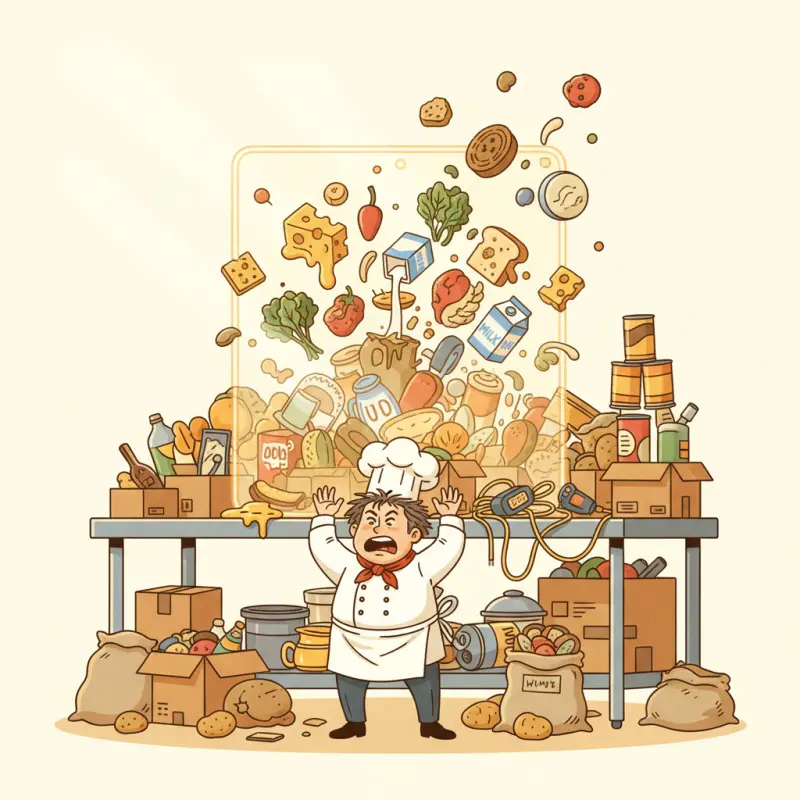
Restaurant Atlas in Casablanca was losing 280 MAD every single day to food waste. Their chef knew the problem — over-ordering proteins, inconsistent portions, forgotten inventory in the walk-in. But their existing restaurant inventory program made things worse, not better.
The pattern repeats across Morocco. Owners invest in restaurant software inventory systems expecting instant results. Instead, they get staff rebellion, data chaos, and the same waste levels with extra paperwork. The software vendors promise "intuitive interfaces" and "seamless workflows." The reality hits different when your line cook needs to weigh every ingredient during the dinner rush.
The Training Problem Nobody Talks About
Your head chef speaks Arabic and some French. The inventory software's tutorial videos? English only. Your prep cooks have been eyeballing portions for years — now they need to log every gram into a tablet they've never touched. The vendor's "quick start guide" assumes everyone knows what SKU means.
Traditional restaurant stock management software treats your team like data entry clerks. Staff resist because the system adds work without showing them why it matters. They see forms to fill, not money saved. When the breakfast rush hits, guess what gets skipped? The careful ingredient logging you need for accurate data.
When Your POS and Inventory Don't Speak
Here's what vendors don't tell you: that "leading" food inventory management app probably won't integrate with your existing POS. You'll manually transfer sales data. Your team enters orders twice — once for the kitchen, once for inventory. Errors multiply. Your theoretical stock drifts further from reality every service.
Atlas tried three different systems before finding one that actually connected their POS to inventory tracking. The first two required daily Excel exports and manual reconciliation. By month two, they'd given up on accurate data and gone back to clipboard counts.
Stack audit
What do you currently use?
Tick what you have. We’ll show what OCHI replaces or connects to.
The Hidden Math Behind Food Waste (And Why 15% Reduction Isn't Enough)
The average restaurant in Agadir throws away 230 MAD daily in spoiled ingredients and prep mistakes. That's 6,900 MAD monthly disappearing into the bin. Industry consultants celebrate when you cut waste by 15%. Do the math — you're still losing 5,865 MAD every month.
Real restaurant inventory management software shows you where each dirham goes. Not vague categories like "produce waste" but specific losses: 45 MAD in wilted cilantro because you over-ordered for Tuesday's slow service. 80 MAD in chicken breast trimmed too aggressively by new prep cooks. Numbers that drive action.
Daily Waste Breakdown by Category
| Waste Category | Daily Loss (MAD) | Primary Cause | Reduction Potential |
|---|---|---|---|
| Proteins | 85 | Over-ordering, poor trimming | 30-40% |
| Produce | 65 | Spoilage, prep errors | 25-35% |
| Dairy | 40 | Expiration, opened containers | 20-30% |
| Prepared items | 40 | Over-production | 40-50% |
The Real Cost of Over-Ordering Proteins
Chicken breast costs 45 MAD per kilogram in Casablanca markets. Order 10% too much weekly? That's 315 MAD in excess inventory. But proteins don't just spoil — they get trimmed wrong, cooked incorrectly, or forgotten in marinade. Your actual loss runs 40% higher than the purchase price once you factor in labor and missed yield.
Smart restaurant inventory program tracking catches these patterns. You see that Ahmed trims 15% more fat than Youssef. Not to blame anyone — to standardize training and save those missing grams that add up to hundreds of dirhams.
Restaurant Inventory Program Implementation: Week by Week
Launching inventory tracking without disrupting service takes planning. Atlas learned this after their first attempt created kitchen chaos during a busy Friday dinner. Their second approach worked because they rolled out gradually, training staff in stages.
Week 1: Baseline Measurement
Start simple. Count everything once without any software. Use your existing sheets or clipboards. Weigh five key ingredients that represent 60% of your food cost — probably chicken, beef, cooking oil, tomatoes, and onions. This baseline shows your team what you're measuring before you add technology.
Train one person per shift to own these counts. Not the chef — they're too busy. Pick your most detail-oriented prep cook or sous chef. Pay them an extra hour to stay late and count properly. This investment returns itself in saved ingredients within days.
Week 2-3: Staff Training Without Service Disruption
Introduce your food inventory management app during slow afternoons. Start with receiving — logging deliveries as they arrive. This builds the habit without pressure. Show staff how tracking catches supplier shorts. When they see the system saved 50 MAD on a delivery discrepancy, they buy in.
Next, add end-of-day counts for those five key ingredients. Keep it under 15 minutes. The goal isn't perfection — it's consistent measurement. Once this routine sticks, expand to full inventory counts weekly, then daily for high-value items.
Week 4: Full Integration and First Results
Connect your POS data to see theoretical vs. actual usage. This reveals the real problems. Maybe your burger recipe says 150g of beef, but cooks use 180g. That 30g difference across 50 daily burgers? You're losing 1.5kg of beef — 67 MAD — every single day.
Share these discoveries with your team. Not as criticism but as opportunity. "Look, we can save 2,000 MAD monthly just by using the portioning cups consistently." Make waste reduction a team sport with visible scoreboard tracking.
Why Gram-Level Tracking Beats Portion-Based Systems
Most restaurant software inventory counts in portions. "2.5 cases of chicken." But a "portion" of couscous varies by who's scooping. That variance kills your data accuracy and your food cost control.
The Couscous Test: Portions vs. Precise Measurement
Run this experiment in your kitchen: have three different cooks portion couscous for the same dish. Weigh each portion. Atlas found variations from 80g to 120g — a 50% difference. Multiply that variance across every ingredient, every dish, every day. Your inventory numbers become fiction.
Weight-based tracking forces precision. When recipes specify "85g couscous," there's no interpretation. Your food inventory management app can calculate exact costs, flag overuse immediately, and predict exactly when you'll run out.
Recipe Consistency Through Weight Standards
Precise measurements do more than control costs — they standardize quality. A tagine that calls for "handful of olives" tastes different every time. "45g green olives" tastes identical whether your senior chef or newest cook makes it.
This consistency builds customer trust. They order their favorite dish knowing it will match their memory. Your restaurant inventory management software becomes a quality control system, not just a cost tracker.
OCHI Inventory in Action: Restaurant Atlas Case Study
Atlas implemented OCHI's gram-level inventory tracking in March. By April, they'd cut daily waste from 280 MAD to 210 MAD — a 25% reduction worth 2,100 MAD monthly. The key? OCHI connected their POS system directly to inventory, eliminating double entry.
Their workflow now: morning delivery arrives, prep cook scans items into OCHI using the tablet. The system knows each recipe's requirements and suggests prep quantities based on typical Tuesday sales. When orders come through the POS, OCHI automatically deducts ingredients. End of shift, a 10-minute count confirms accuracy.
The surprise benefit? Better supplier negotiations. OCHI's reports showed their meat vendor's portions ran 5% light consistently. Armed with three months of weight data, Atlas negotiated a 3% price reduction — saving another 1,800 MAD monthly.
Real-time alerts prevent the forgotten walk-in disasters. When chicken breast stock drops below two days' supply, the chef gets a notification. No more emergency market runs during service. No more overpaying for last-minute ingredients.
Ready to cut your food waste by 25% or more? Set up your restaurant inventory management software at votrenom.ochi.ma — start measuring waste reduction in week one.
Frequently Asked Questions
Why do restaurant staff resist using food inventory management apps?
Staff resist because most apps add data entry work without showing clear benefits. They see extra forms to fill during busy service periods rather than understanding how accurate tracking saves money and reduces waste.
What integration problems occur with food inventory management apps?
Many inventory apps don't integrate with existing POS systems, forcing manual data transfers and double entry. This creates accuracy issues and wastes staff time reconciling discrepancies between systems.
How much food waste can restaurants lose daily without proper inventory management?
Restaurant Atlas in Casablanca was losing 280 MAD daily to food waste through over-ordering, inconsistent portions, and forgotten inventory. Poor inventory tracking compounds these losses across the industry.
What training challenges exist with food inventory management apps?
Most apps provide English-only tutorials while restaurant staff often work in Arabic or French. Training assumes tech familiarity that line cooks and prep staff may lack, creating adoption barriers.
Restaurant owners · Weekly
The guide to running a restaurant in 2026.
One article per week. No commission advice. Just honest operational insight for Moroccan restaurants.

Blog Manager
Comments
No comments yet. Be the first to share your thoughts.