AI Overview
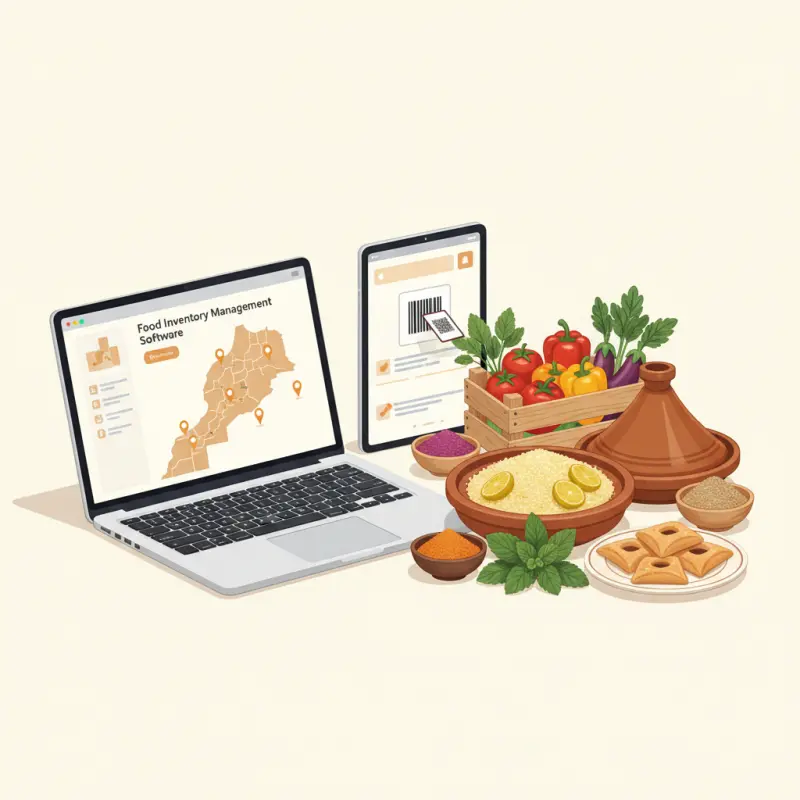
Food inventory management software eliminates the manual tracking that costs Moroccan restaurants an average of 15,000 MAD monthly. Modern restaurant inventory systems automatically track ingredients from delivery to plate, reducing shrinkage from 3% to under 1% while cutting labor costs by four hours weekly. Leading platforms integrate with POS systems and suppliers, providing real-time stock levels and automated reorder points. Restaurants in Casablanca and Marrakech using digital inventory management report 20-30% reduction in food waste within the first month. The software typically costs 500-2,000 MAD monthly but pays for itself through reduced waste and theft prevention. Start by implementing barcode scanning for high-value ingredients like meat and seafood, then expand to full inventory automation.
Table of Contents
Every night at 2 AM, restaurant owners across Casablanca are doing the same thing: counting tomatoes, weighing flour, and updating spreadsheets that never quite match reality. The average mid-size restaurant loses 15,000 MAD monthly to inventory inefficiencies — enough to hire another chef.
Food inventory management software promises to fix this. But most restaurant owners see it as another expense rather than understanding how the right system pays for itself within weeks.
The Hidden Cost of Manual Inventory: Why Spreadsheets Are Killing Your Profit Margins
Restaurant inventory isn't just about knowing what's in your walk-in cooler. It's about understanding where your money disappears between the delivery truck and the customer's plate.
The Real Numbers Behind Inventory Chaos
Consider a typical 50-seat restaurant in Marrakech. The chef spends four hours weekly on inventory counts. The assistant manager spends another three reconciling invoices. That's seven hours of highly paid staff time — roughly 2,800 MAD weekly in labor costs alone.
But the real damage happens in the gaps. Studies show manual inventory tracking has a 3-5% error rate. For a restaurant purchasing 200,000 MAD in supplies monthly, that's up to 10,000 MAD in unaccounted inventory. Some goes to theft. Some to miscounting. Most simply vanishes into the complexity of managing hundreds of ingredients across multiple suppliers.
Then there's shrinkage — the polite term for food that spoils, gets wasted, or walks out the back door. Without proper tracking, restaurants average 2-3% shrinkage. That's another 6,000 MAD monthly for our example restaurant.
Why "Good Enough" Inventory Control Costs More Than Software
Many owners believe their current system works well enough. They catch major issues. They reorder before running out (usually). But "good enough" is expensive.
Restaurant stock management software typically costs 500-2,000 MAD monthly. Compare that to the 15,000+ MAD bleeding out through manual processes, and the math becomes clear. The question isn't whether you can afford inventory software — it's whether you can afford to operate without it.
Stack audit
What do you currently use?
Tick what you have. We’ll show what OCHI replaces or connects to.
What Food Inventory Management Software Actually Does (Beyond Basic Stock Counting)
Modern restaurant software inventory goes far beyond digital spreadsheets. It transforms how restaurants operate from delivery to plate.
Automated Purchase Orders vs. Manual Reordering
Picture this: your system knows you use 12 kg of onions daily. It tracks your current stock, monitors usage patterns, and automatically generates purchase orders when supplies dip below your set threshold. No more emergency runs to the supplier. No more over-ordering that leads to spoilage.
The best restaurant inventory management software even tracks seasonal patterns. It knows you'll need 30% more tomatoes in July when gazpacho sales spike. It adjusts orders accordingly.
Recipe Costing That Updates With Supplier Price Changes
Your tagine recipe calls for 200g of lamb, 150g of vegetables, and specific spices. When lamb prices increase 10%, your food cost percentage shifts. Manual systems miss these changes until monthly P&L reviews reveal shrinking margins.
Restaurant inventory program features now include dynamic recipe costing. Upload new supplier invoices, and every recipe using those ingredients updates automatically. You see exactly which dishes remain profitable and which need price adjustments.
The Waste Tracking Most Restaurants Ignore
Ask any restaurant owner their daily waste, and you'll get a shrug. Yet tracking waste reveals massive opportunities. Is prep cook Ahmed trimming vegetables too aggressively? Are servers bringing back the same dish uneaten? Without data, you're guessing.
Modern systems track waste by category: prep waste, spoilage, customer plate waste. This granular data drives real improvements. One restaurant in Agadir discovered their prep team was discarding 15% of vegetables during trimming — a simple training session cut this to 8%, saving 4,000 MAD monthly.
The Commission Platform Trap: Why Your Delivery Apps Shouldn't Control Your Inventory
Here's what traditional delivery platforms don't tell you: every order through their system creates inventory chaos. They don't integrate with your stock levels. They don't update your ingredient counts. They operate in a silo that costs you money.
Data Silos Cost Money
When your online orders flow through one system and your inventory lives in another, you're managing two parallel realities. Staff manually deduct ingredients after each platform order. Errors compound. Stock-outs happen despite having ingredients because one system doesn't talk to the other.
OCHI takes a different approach. Orders placed through your branded storefront (yourname.ochi.ma) automatically deduct ingredients from your inventory. Real-time. No manual intervention. When stock runs low, the system can even mark items as unavailable across all channels.
Why Integration Beats "Best of Breed" for Small Restaurants
Enterprise restaurants might afford separate best-in-class systems for ordering, inventory, and POS. But for independent restaurants, integration matters more than individual feature depth.
Consider this workflow comparison:
| Task | Separate Systems | Integrated Platform |
|---|---|---|
| Customer orders tagine online | Manually check inventory availability | Auto-deducts 200g lamb, 150g vegetables |
| Low stock alert | Check multiple systems for usage | Single dashboard shows all channel usage |
| Month-end food cost | Export and reconcile 3+ reports | One-click P&L with accurate COGS |
| Menu item runs out | Update each platform separately | Mark unavailable once, syncs everywhere |
The efficiency gain isn't just convenience — it's accuracy that directly impacts profitability.
Real-World Scenario: How Riad Al Fassia Cut Food Waste by 25% in Three Months
Riad Al Fassia, a 75-seat traditional restaurant in Fès, was hemorrhaging money through food waste. Their turning point came when they implemented proper inventory tracking.
Week 1: Baseline Tracking Setup
The first week revealed shocking truths. Daily waste averaged 8 kg — mostly vegetables and bread. Their "signature" lamb dish was actually losing money due to over-portioning. Prep cooks were preparing 20% more than needed "just in case."
Simply starting to measure changed behavior. Waste dropped 10% in week one as staff became conscious of tracking.
Week 4: First Optimization Round
Armed with data, management made targeted changes. They introduced portion control tools. They adjusted prep quantities based on actual sales patterns. They created a staff meal program using ingredients approaching expiration.
The restaurant inventory program showed them that Tuesdays needed 30% less prep than weekends. They adjusted accordingly. Waste tracking by station revealed which cooks needed additional training.
Month 3: The 25% Waste Reduction Results
Three months later, daily waste averaged 6 kg — a 25% reduction. Monthly savings: 12,000 MAD. The system paid for itself four times over. But the benefits went beyond money. Kitchen stress decreased. Food quality improved with fresher ingredients. Customer complaints about unavailable items virtually disappeared.
Choosing Software That Grows With Your Restaurant (Not Against It)
Not all inventory systems suit every restaurant. The key is matching features to your growth stage and operational style.
Monthly Costs vs. Commission Savings
Standalone inventory software runs 500-2,000 MAD monthly. But consider the full picture. If you're paying 25-30% commission on delivery orders, switching to a zero-commission platform with integrated inventory saves far more than the software cost.
A restaurant doing 100,000 MAD in monthly delivery sales saves 25,000-30,000 MAD by eliminating commissions. Even premium inventory features become essentially free in this context.
The Features That Matter Most in Year One
Start simple. In your first year, focus on:
Accurate stock levels with low-stock alerts. You need to know what you have and when to reorder. Everything else is secondary until this works flawlessly.
Recipe management that links to your actual menu. If your system tracks flour but doesn't know how much goes into your bread, you're only halfway there.
Basic waste tracking by category. Perfect gram-level accuracy can wait. First, understand whether you're losing more to prep waste, spoilage, or portion control.
Integration with your ordering channels. Manual inventory deduction defeats the purpose. Your restaurant stock management software must connect to where orders originate.
When to Choose Integrated vs. Standalone Systems
Standalone inventory systems work when you have established operations and dedicated staff to manage integration points. But most restaurants benefit more from integrated platforms.
If you're evaluating new POS systems, online ordering, or delivery management, choose a platform that includes inventory. OCHI's approach — where inventory tracking comes built into the same system handling orders and payments — eliminates the complexity that causes most restaurants to abandon their inventory software after a few months.
The path from spreadsheet chaos to profitable inventory management isn't complicated. It requires choosing restaurant inventory management software that fits your operation and committing to the process. The restaurants that make this shift don't just save money — they transform their entire approach to the business. Ready to see how integrated inventory management can transform your restaurant? Explore what's possible at ochi.ma/partners.
Frequently Asked Questions
What is food inventory management software?
Food inventory management software tracks restaurant ingredients from delivery to consumption, monitoring stock levels, costs, and waste in real-time. It replaces manual spreadsheets with automated systems that integrate with POS and supplier networks.
How much does restaurant inventory software cost in Morocco?
Restaurant inventory management software in Morocco costs between 500-2,000 MAD monthly depending on restaurant size and features. Most systems pay for themselves within 4-6 weeks through reduced waste and theft prevention.
Can inventory software reduce food waste?
Yes, inventory management software typically reduces food waste by 20-30% through automated expiration tracking, portion control, and demand forecasting. It alerts staff before items spoil and optimizes ordering based on usage patterns.
Does inventory software work with existing POS systems?
Most modern inventory management systems integrate with popular POS platforms through APIs. This integration automatically updates stock levels when items are sold and provides unified reporting across operations.
How long does it take to implement inventory management software?
Basic inventory software setup takes 1-2 weeks including staff training. Full implementation with barcode scanning and supplier integration typically requires 3-4 weeks for complete deployment.
Restaurant owners · Weekly
The guide to running a restaurant in 2026.
One article per week. No commission advice. Just honest operational insight for Moroccan restaurants.

Blog Manager
Comments
No comments yet. Be the first to share your thoughts.