AI Overview
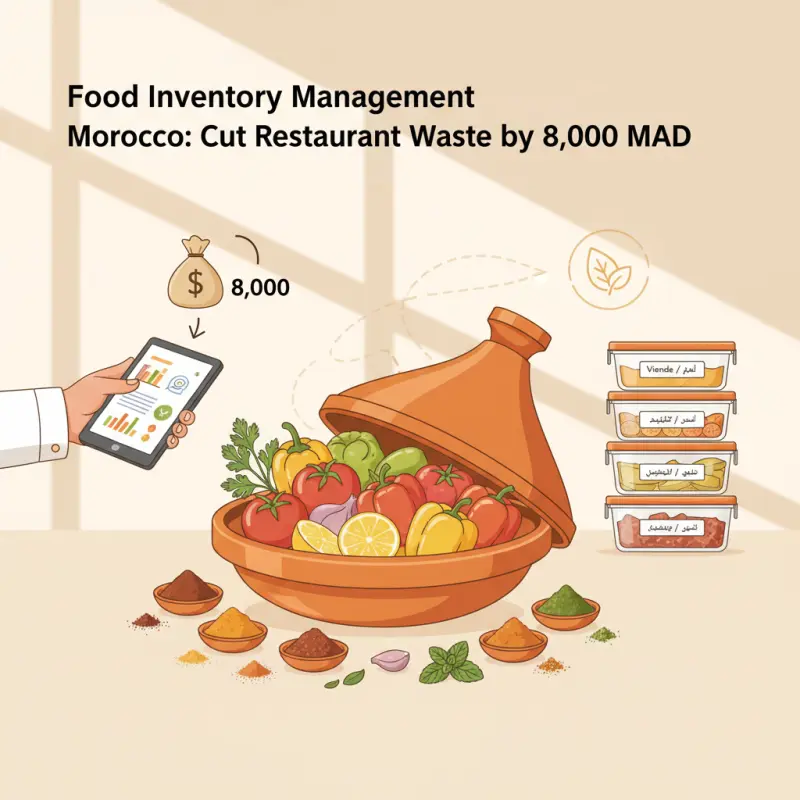
Food inventory management prevents the 15-25% food cost losses that plague most Moroccan restaurants. Poor tracking creates three major drains: emergency supplier runs at 40% markup, spoilage from over-ordering, and portion inconsistency. Restaurant Le Jardin in Casablanca exemplifies this — throwing away 15 kilos of vegetables nightly costs them 12,000 MAD monthly. Emergency runs alone cost restaurants 1,800 MAD monthly when ingredients run out during service. Without standardized portions, meat usage varies by 50 grams per dish, multiplying across hundreds of orders. Staff waste time searching for out-of-stock items during rush periods. Industry data shows restaurants spending 40,000 MAD monthly on ingredients lose 6,000-8,000 MAD to spoilage without proper systems. Start with basic tracking: count what enters, record what exits, and standardize portion sizes across all kitchen staff.
Table of Contents
Every night, Restaurant Le Jardin in Casablanca throws away 15 kilos of wilted vegetables — 400 MAD down the drain. Multiply that by 30 days, and you're looking at 12,000 MAD monthly in pure waste, all because their food inventory management relies on memory and guesswork.
This isn't unusual. Most Moroccan restaurants lose 15-25% of their food costs to poor inventory control. The solution isn't complex software or expensive consultants. It's understanding what actually moves the needle in a busy kitchen.
The Real Cost of Poor Food Inventory Management in Morocco
Walk into any restaurant kitchen in Marrakech at 9pm and you'll see the damage. Half-empty containers of spoiled produce. Emergency receipts from afternoon supplier runs. Staff scrambling to find ingredients that should be there but aren't.
The numbers tell the real story. Without proper tracking, restaurants face three specific financial drains that compound daily.
Why Your Restaurant Loses 2,000 MAD Monthly to Inventory Chaos
Emergency supplier runs hit hardest. When you run out of tomatoes during lunch service, you don't negotiate. You pay whatever the nearest supplier charges — typically 40% above your regular rate. Three emergency runs weekly at 150 MAD premium each adds up to 1,800 MAD monthly.
Spoilage comes next. Without tracking, kitchens over-order "just in case." That safety buffer becomes tomorrow's waste. Industry data shows 15-20% spoilage rates without inventory systems. For a restaurant spending 40,000 MAD monthly on ingredients, that's 6,000-8,000 MAD in the bin.
Staff waste accelerates when portions aren't standardized. One cook uses 200g of meat per tagine, another uses 250g. Those 50-gram differences multiply across hundreds of orders, bleeding your margins dry.
The Hidden Costs No One Talks About
The financial bleeding extends beyond direct waste. During Friday dinner rush, your chef spends 10 minutes searching for harissa paste that's actually out of stock. Those 10 minutes of chaos ripple through the entire service.
Menu items disappear mid-shift when you discover key ingredients depleted. Telling customers "sorry, no more pastilla tonight" damages your reputation in ways that don't show up on spreadsheets.
Inconsistent portions trigger the worst feedback. Table 5 gets a generous serving while table 6 gets standard. They compare notes. They leave reviews. They don't return.
Stack audit
What do you currently use?
Tick what you have. We’ll show what OCHI replaces or connects to.
Why Restaurant Stock Management Software Beats Spreadsheets (Controversial Take)
Here's what software vendors won't tell you: most restaurant inventory management software is overkill. Small restaurants don't need 47 features and AI predictions. They need simple, consistent tracking that staff will actually use.
The Spreadsheet Trap: Why "Simple" Becomes Complicated
Excel seems perfect at first. Free, familiar, flexible. Then reality hits. Your morning prep cook updates quantities at 6am. Your evening manager checks stock at 8pm using yesterday's numbers. The gap between spreadsheet and reality widens daily.
Multiple staff can't access the same spreadsheet simultaneously. WhatsApp photos of inventory sheets pile up in group chats. Updates happen sporadically, usually after problems surface.
Manual systems can't alert you. Your spreadsheet won't text you when olive oil drops below two liters. It sits there, silently outdated, while your kitchen runs dry.
When Complex Restaurant Software Inventory Systems Backfire
The pendulum swings too far the other way with enterprise systems. Restaurant software inventory designed for hotel chains overwhelms single-location restaurants. Training your team on complex interfaces takes weeks they don't have.
Feature overload paralyzes daily operations. Barcode scanners, RFID tags, predictive analytics — impressive on demos, useless when your prep cook just needs to log potato deliveries quickly.
Monthly fees compound the problem. Paying 3,000 MAD monthly for features you'll never use makes no sense when simple tracking would save you more.
The OCHI Approach: Gram-Level Tracking Without the Headaches
OCHI's restaurant inventory program strips complexity while keeping precision. Track ingredients by gram, get alerts before running out, generate purchase orders instantly — without training manuals or consultants.
Automatic Low-Stock Alerts Save 3 Hours Weekly
Set minimum levels once for each ingredient. When chicken breast drops below 5kg, OCHI alerts you immediately. No checking, no guessing, no surprises during service.
Notifications arrive via push, SMS, or email — your choice. Review low items, tap to generate a purchase order, send to your supplier. The entire process takes two minutes instead of two hours of manual counting.
Integration with supplier systems means orders flow directly to their system. No phone calls, no misheard quantities, no "did you get my order?" follow-ups.
Recipe Management That Actually Works
OCHI tracks ingredient usage per dish automatically. Set your couscous royale recipe once: 180g lamb, 120g vegetables, 150g couscous. Every order deducts exact amounts from inventory.
Real-time cost calculation shows your true profit per dish. When tomato prices spike 30%, you see the impact on your margherita pizza margin immediately. Adjust prices or portions based on data, not guesswork.
Portion control becomes automatic. Staff can't over-portion when the system tracks every gram. Consistency improves, waste drops, profits rise.
Case Study: Café Atlas Cuts Food Waste by 25%
Café Atlas in Rabat struggled with the typical inventory chaos. Three suppliers, 200+ ingredients, zero visibility. Their transformation shows what's possible with the right approach.
Before OCHI: 2,800 MAD Monthly Waste
Their baseline numbers painted a grim picture:
| Waste Category | Monthly Amount | Monthly Cost (MAD) |
|---|---|---|
| Produce Spoilage | 180kg | 1,200 |
| Dairy Expiration | 40 liters | 600 |
| Emergency Purchases | 12 runs | 1,000 |
| Total Waste | — | 2,800 |
Three emergency supplier runs weekly disrupted service and inflated costs. Staff guessed portions, leading to inconsistent dishes and customer complaints. The owner spent Sunday evenings manually counting stock, often discovering problems too late.
After Implementation: 2,100 MAD Saved
Within 30 days of implementing OCHI's system, the numbers shifted dramatically. Real-time tracking eliminated surprise shortages. Automated purchase orders meant planned deliveries at negotiated prices, not panic purchases.
Standardized recipes cut waste by 25%. When every chef follows the same 200g chicken portion, overuse disappears. The saved ingredients compound — 50g saved per dish across 30 dishes daily equals 1.5kg of chicken, worth 75 MAD.
Staff efficiency improved too. The kitchen manager now spends five minutes reviewing automated reports instead of two hours counting stock. That recovered time goes into training and quality control.
The Three Changes That Made the Difference
First, daily inventory updates became routine, not burden. Each station chef spends two minutes logging usage through OCHI's mobile interface. Real-time data replaces weekly guesswork.
Second, supplier integration automated the painful parts. Low-stock alerts trigger suggested orders. One click sends the order. Suppliers confirm receipt instantly. The phone stays quiet.
Third, portion control moved from suggestion to system. OCHI's recipe tracking enforces consistency. New staff can't accidentally use 300g of beef when the recipe calls for 200g. The system knows.
Getting Started: Your First 30 Days
Implementation doesn't require shutting down or hiring consultants. Follow this tested sequence for smooth adoption without disrupting service.
Week 1: Set Up Basic Tracking
Start with your top 20 ingredients by cost — usually proteins, oils, and specialty items. Input current levels into OCHI. This takes about an hour with two people counting.
Set minimum stock alerts at 3-day supply levels. For items you use 10kg weekly, set the alert at 4kg. This gives you buffer for delivery delays without excessive stock.
Designate one staff member as inventory lead. They own the system, train others, and become your internal expert. Choose someone detail-oriented who works multiple shifts.
Week 2-3: Connect Your Suppliers
Add your top three suppliers to OCHI's directory. Include contact details, delivery schedules, and standard prices. This becomes your purchasing command center.
Test automated ordering with small, non-critical items first. Order napkins or cleaning supplies to verify the workflow. Iron out issues before moving to ingredients.
Gradually expand to include all regular suppliers. By week three, 80% of your orders should flow through the system.
Week 4: Analyze and Adjust
Review your first waste reduction report. Most restaurants see 10-15% improvement just from awareness. Celebrate the wins with your team.
Adjust minimum levels based on actual usage patterns. That 4kg minimum for chicken might need to be 5kg for weekends, 3kg for weekdays. OCHI's reports show these patterns clearly.
Begin training the full team. Start with simple tasks — logging deliveries, checking stock levels. Build confidence before teaching advanced features.
The best food inventory management system is one your team actually uses. OCHI makes that possible by focusing on what matters: accuracy, alerts, and automation. Start tracking your inventory at votrenom.ochi.ma. See your waste reduction in the first month.
Ready to stop bleeding money through inventory chaos? Visit ochi.ma/partners to see how restaurants across Morocco save thousands monthly with simple, effective tracking.
Food waste isn't inevitable. It's a choice you stop making today.
Frequently Asked Questions
How much money do Moroccan restaurants lose to poor food inventory management?
Most Moroccan restaurants lose 15-25% of their food costs to poor inventory control. For a restaurant spending 40,000 MAD monthly on ingredients, this translates to 6,000-10,000 MAD in monthly losses from spoilage, emergency purchasing, and waste.
What causes the biggest inventory losses in restaurant kitchens?
Emergency supplier runs cause the most damage, costing 40% above regular rates. Spoilage from over-ordering and inconsistent portion sizes by kitchen staff create additional major losses that compound daily.
How can restaurants track food inventory without expensive software?
Start with basic tracking: count ingredients entering the kitchen, record what gets used daily, and standardize portion sizes. Many successful restaurants use simple spreadsheets before investing in specialized inventory management systems.
What's the first step to reduce restaurant food waste in Morocco?
Standardize portion sizes across all kitchen staff. When one cook uses 200g of meat per dish and another uses 250g, those differences multiply across hundreds of orders and destroy profit margins.
Restaurant owners · Weekly
The guide to running a restaurant in 2026.
One article per week. No commission advice. Just honest operational insight for Moroccan restaurants.

Blog Manager
Comments
No comments yet. Be the first to share your thoughts.