AI Overview
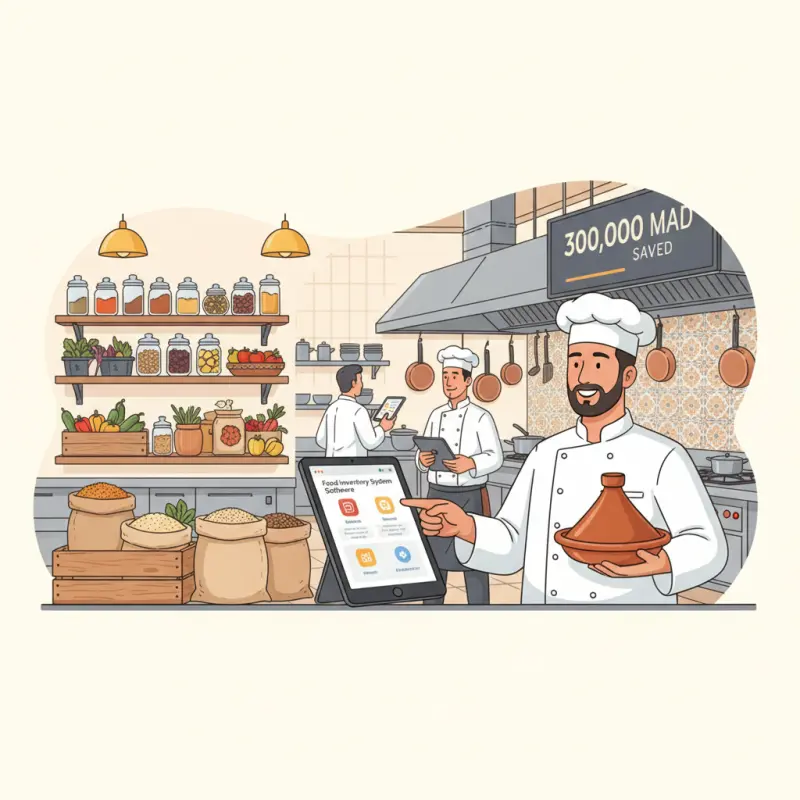
Moroccan restaurants lose 20-30% of potential profit annually to inventory mismanagement without proper food inventory system software. A medium restaurant in Casablanca wastes 25,000 MAD monthly on untracked ingredients. Food inventory system software prevents these losses by providing real-time tracking instead of weekly snapshots. Manual tracking creates three critical problems: over-ordering leads to spoilage, under-ordering causes stockouts during peak hours, and invisible theft drains profits. One Agadir restaurant discovered 8,000 MAD in monthly theft after implementing digital tracking. The most expensive mistake is ignoring portion control — when kitchen staff use 180g instead of 150g per recipe, that 20% variance costs 12,000 MAD monthly across thousands of orders. Track inventory daily and monitor portion sizes to recover hundreds of thousands in lost profit.
Table of Contents
A medium-sized restaurant in Casablanca throws away 25,000 MAD worth of ingredients every month. Not because the food went bad — but because nobody tracked what they had. This is the reality for most Moroccan restaurants operating without proper food inventory system software.
The numbers are brutal. Between spoilage, theft, and over-ordering, the average 100-seat restaurant loses between 20% to 30% of its potential profit to inventory mismanagement. That's 300,000 to 450,000 MAD annually vanishing into thin air.
The Real Cost of Guesswork in Rabat's Restaurant Scene
Walk into any busy restaurant kitchen in Rabat at 6 PM and you'll see the same scene: a chef frantically checking fridges, guessing quantities, sending runners to nearby suppliers for emergency purchases. The markup on these last-minute orders? Often 40% higher than planned purchases.
Manual inventory tracking creates three specific problems. First, over-ordering leads to spoilage — particularly for seafood and produce. Second, under-ordering causes menu items to run out during peak hours, losing sales. Third, without tracking, employee theft becomes invisible. One Agadir seafood restaurant discovered they were losing 8,000 MAD monthly to "missing" premium fish after implementing proper tracking.
Stack audit
What do you currently use?
Tick what you have. We’ll show what OCHI replaces or connects to.
Three Inventory Mistakes That Cost Restaurant Owners 15,000 MAD Monthly
The first mistake is tracking inventory weekly instead of daily. Food costs fluctuate too quickly for weekly snapshots to catch problems. A restaurant serving 200 covers daily needs real-time data to spot when food cost suddenly jumps from 35% to 42%.
The second mistake is ignoring portion control in inventory calculations. If your recipe calls for 150g of beef but your kitchen staff uses 180g, that 20% variance compounds across thousands of orders. Over a month, this "small" difference can mean 12,000 MAD in lost profit.
The third mistake is separating inventory from menu pricing. When olive oil prices spike 30% (as they did last year), restaurants without integrated systems continue selling tagines at a loss for weeks before noticing. Restaurant stock management software connects these dots automatically.
What Food Inventory System Software Actually Does
At its core, restaurant software inventory tracks three things: what comes in, what goes out, and what's left. But modern systems do much more than count bottles and bags.
Ingredient tracking starts when supplies arrive. Each item gets logged with its cost, quantity, and supplier. The software then tracks usage through recipes — when a customer orders a Caesar salad, it deducts romaine lettuce (120g), parmesan (30g), croutons (40g), and dressing (60ml) from inventory.
From Receiving to Recipe: The Complete Inventory Flow
The journey begins at receiving. Staff scan items or enter them manually, creating a digital record. These ingredients link to recipes with exact quantities. When orders process through the POS, inventory depletes automatically. At day's end, the system compares theoretical usage (based on sales) with actual counts, highlighting variances.
This matters because variance tells stories. A 5% variance might be normal spillage. A 15% variance on expensive proteins suggests portion control issues or worse. One Marrakech steakhouse discovered their grill station was giving away 30% more meat than recipes specified — costing them 22,000 MAD monthly.
Why Gram-Level Tracking Matters for Pastry Shops and Bakeries
Bakeries face unique challenges. A few grams of yeast or salt can ruin entire batches. Restaurant inventory management software designed for bakeries tracks ingredients down to the gram, not just kilograms.
Consider a Casablanca patisserie making 500 croissants daily. Each requires 12g of butter. If bakers use 15g instead, that's 1.5kg of extra butter daily — at 80 MAD per kilogram, that's 3,600 MAD monthly in unnecessary cost. Gram-level tracking catches these discrepancies before they become habits.
The Hidden Features That Separate Basic Apps from Professional Systems
Most restaurant owners focus on stock alerts when evaluating inventory software. But the real value lies elsewhere. Professional systems include supplier management, waste tracking, and purchase order automation — features that save more money than any alert system.
Supplier Directory Management: Why This Beats Price Tracking
Price tracking tells you costs changed. Supplier management helps you respond. A complete supplier directory includes contact information, delivery schedules, payment terms, and order history. When tomato prices spike at Supplier A, you instantly see that Supplier B offers comparable quality at better rates.
More importantly, it tracks supplier reliability. If your seafood vendor delivers late 40% of the time, that data helps justify switching vendors — even if their prices are 5% lower. Unreliable suppliers force emergency purchases that destroy margins.
Real-Time Cost Analysis: How Marrakech Restaurants Cut Food Costs 18%
Real-time cost analysis means seeing your food cost percentage update with every order. Not at month's end when it's too late to adjust. This visibility creates accountability at every service.
| Metric | Without Real-Time Tracking | With Real-Time Tracking |
|---|---|---|
| Food Cost Discovery | Monthly (too late to fix) | Daily (immediate action) |
| Average Food Cost % | 38-42% | 32-35% |
| Monthly Savings (150 covers/day) | 0 MAD | 25,000-35,000 MAD |
| Waste Reduction | 5-8% | 15-20% |
Restaurant Stock Management Software: Implementation Reality Check
The gap between buying software and seeing results often spans months. Not because the software is complex — but because restaurants underestimate the human element. Successful implementation requires planning, training, and patience.
Training Your Team: The 72-Hour Implementation Timeline
Day one focuses on basic data entry. Your team learns to receive deliveries digitally and perform counts. Keep it simple — full functionality comes later. Day two introduces recipe management. Start with your five best-selling dishes. Perfect these before adding the entire menu.
Day three brings everything together. Run a full service with the new system. Expect mistakes. The goal isn't perfection but establishing the workflow. Within 72 hours, your team should handle basic operations confidently.
Working with Traditional Moroccan Suppliers in the Digital Age
Many Moroccan suppliers still operate with handwritten invoices and cash payments. This doesn't prevent digital inventory management. Modern restaurant inventory programs accommodate manual entry while encouraging suppliers to adopt digital invoicing.
Start by photographing paper invoices immediately upon delivery. Enter data during quiet periods, not during rush hours. Some restaurants assign this task to junior staff during afternoon breaks, turning downtime into productive inventory management time.
Why OCHI's Inventory Module Works for Independent Restaurants
OCHI built its inventory system specifically for restaurants like yours — independent operators who need professional tools without enterprise complexity. The system handles everything from gram-level ingredient tracking to automatic stock deductions when orders process.
Integration matters more than features. OCHI's inventory connects directly with your POS, online ordering, and kitchen display. When a customer orders through your branded site (votrenom.ochi.ma), inventory updates instantly. No double entry. No synchronization delays.
Case Study: How a 50-Seat Agadir Restaurant Cut Waste by 25%
La Perle, a seafood restaurant in Agadir, struggled with waste management. Fresh fish spoilage cost them 18,000 MAD monthly. After implementing OCHI's inventory module, they discovered their ordering patterns completely mismatched their sales patterns.
The solution was simple once visible. They shifted from twice-weekly to daily fish orders, reducing order sizes by 60% but increasing frequency. Result: fresher products, happier customers, and 25% less waste. The monthly savings of 4,500 MAD paid for the entire OCHI platform — inventory module included.
Integration Without Disruption: One Dashboard for Everything
The problem with standalone inventory apps is the constant switching between systems. Check inventory here, process orders there, run reports somewhere else. OCHI puts inventory management inside your existing workflow.
From the same dashboard where you manage online orders and track deliveries, you monitor stock levels, create purchase orders, and analyze food costs. Your team already knows the interface from taking orders. Adding inventory management becomes a natural extension, not a new system to learn.
The path from inventory chaos to controlled operations isn't complicated — it just requires the right tools and commitment to use them. Whether you run a small café in Fès or a busy restaurant in Casablanca, the principles remain the same: track everything, analyze the data, and adjust quickly.
See how OCHI's complete restaurant management platform can transform your inventory operations at ochi.ma/partners.
Frequently Asked Questions
How much money do Moroccan restaurants lose without food inventory system software?
The average 100-seat restaurant loses 20-30% of potential profit annually, equivalent to 300,000-450,000 MAD, due to spoilage, theft, and over-ordering from poor inventory management.
What are the main problems with manual food inventory tracking?
Manual tracking causes over-ordering that leads to spoilage, under-ordering that creates stockouts during peak hours, and invisible theft. Emergency purchases cost 40% more than planned orders.
How often should restaurants track food inventory?
Restaurants should track inventory daily, not weekly. Food costs fluctuate too quickly for weekly snapshots to catch problems when serving 200+ covers daily.
How does portion control affect food inventory costs?
Poor portion control compounds losses across thousands of orders. Using 180g instead of 150g per recipe creates a 20% variance that costs around 12,000 MAD monthly.
Can food inventory software detect employee theft in restaurants?
Yes, proper inventory tracking makes theft visible. One Agadir seafood restaurant discovered 8,000 MAD in monthly losses from missing premium fish after implementing digital tracking.
Restaurant owners · Weekly
The guide to running a restaurant in 2026.
One article per week. No commission advice. Just honest operational insight for Moroccan restaurants.

Blog Manager
Comments
No comments yet. Be the first to share your thoughts.