AI Overview
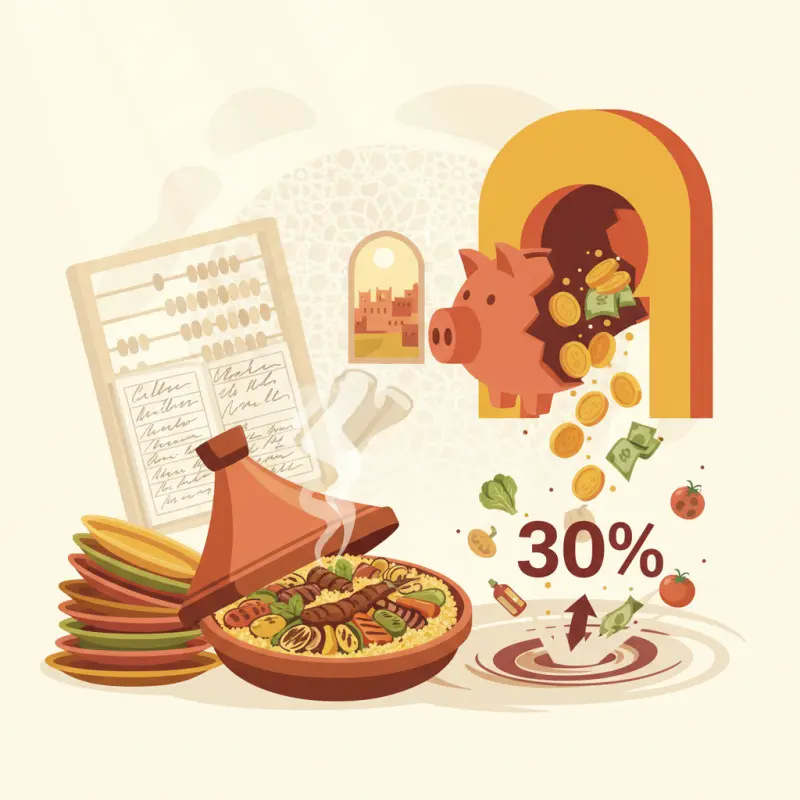
Manual food production inventory management costs Moroccan restaurants 15-30% of their ingredient expenses through waste, over-ordering, and theft. Restaurants using paper-based tracking lose 3,000 to 6,000 MAD monthly for mid-sized operations — money that could hire additional staff or upgrade equipment. A typical 50-seat restaurant in Agadir loses 2,400 MAD monthly on spoiled ingredients alone, while excess inventory ties up 20,000 to 40,000 MAD in unused stock. Staff spend four to eight hours weekly on manual counts and order reconciliation, adding 800 to 1,600 MAD in labor costs. One Marrakech tagine restaurant discovered six months' worth of preserved lemons worth 8,000 MAD sitting unused while continuing to order more. Track ingredient usage in real-time and set automated reorder points to eliminate guesswork ordering.
Table of Contents
Ahmed watches another crate of tomatoes turn soft in his Marrakech restaurant's walk-in cooler — 300 MAD gone, the third time this month. Like most Moroccan restaurant owners, he tracks inventory on paper, orders based on gut feeling, and discovers waste only when it's already in the trash.
The numbers are brutal: restaurants using manual food production inventory management lose 15-30% of their ingredient costs to waste, over-ordering, and theft. That's 3,000 to 6,000 MAD monthly for a mid-sized restaurant — enough to hire another cook or upgrade equipment.
The Real Cost of Manual Food Production Inventory Management in Moroccan Restaurants
Walk into any restaurant kitchen in Casablanca at closing time and you'll see the same scene: a chef with a clipboard, counting onions, estimating flour levels, guessing how many kilos of meat remain. Tomorrow morning, they'll place orders based on these estimates, hoping they've ordered enough but not too much.
This guesswork creates three specific problems that drain profits. First, ingredient spoilage. Without precise tracking, restaurants discover expired products only during weekly deep cleans. A typical 50-seat restaurant in Agadir loses 2,400 MAD monthly just on ingredients that spoil before use — harissa paste forgotten in the back, expensive saffron past its prime, fresh herbs wilting in storage.
Second, panic over-ordering. When you can't see exact stock levels, you order extra "just to be safe." This ties up 20,000 to 40,000 MAD in excess inventory that sits unused, taking up valuable cold storage space and eventually spoiling. One tagine restaurant in the Marrakech medina discovered they had six months' worth of preserved lemons — 8,000 MAD sitting in jars while they kept ordering more.
Third, the hidden labor cost. Staff spend four to eight hours weekly on manual inventory counts, supplier calls, and order reconciliation. At 50 MAD per hour, that's 800 to 1,600 MAD monthly in wages spent on administrative tasks instead of food preparation or customer service.
Stack audit
What do you currently use?
Tick what you have. We’ll show what OCHI replaces or connects to.
Why Most Restaurant Stock Management Software Fails at Gram-Level Precision
Generic restaurant inventory programs assume every kitchen operates like an American chain restaurant: standardized portions, consistent suppliers, predictable ordering patterns. These systems track "units" — one chicken breast, one tomato, one portion of sauce.
But Moroccan cuisine doesn't work in units. Your grandmother's harira recipe calls for 250 grams of lentils, not "one cup." Your supplier at Souk El Had sells lamb by the kilo with prices that change daily, not pre-packaged portions with fixed costs. When your restaurant software inventory can't handle these realities, you're back to spreadsheets and guesswork.
The math breaks down at the recipe level. A proper chicken tagine with preserved lemons and olives uses 180g of chicken, 60g of olives, 40g of preserved lemons, plus spices measured in grams. When your system tracks "portions" instead of actual weights, you can't calculate true food costs or predict when you'll run out of ingredients.
Local supplier integration presents another challenge. Most restaurant inventory management software expects electronic invoices and standardized product codes. But when you're buying fresh vegetables from three different vendors at the central market, each with handwritten receipts and varying prices, these systems become useless. You need software that understands how Moroccan restaurants actually source ingredients.
OCHI's Food Production Inventory Management: Built for Moroccan Restaurants
OCHI approaches inventory differently because it was built by people who understand Moroccan restaurant operations. The system tracks ingredients at the gram level, integrates with local supplier workflows, and automatically adjusts stock based on actual recipe usage.
Real-Time Ingredient Tracking Down to the Gram
When a customer orders couscous royale, OCHI automatically deducts 300g semolina, 150g lamb, 120g seasonal vegetables, and every spice down to the gram. No manual entry, no guessing, no "updating the spreadsheet later." The system knows exactly what you have, what you've used, and what you need to order.
This precision transforms decision-making. Instead of discovering you're out of ras el hanout during Friday lunch rush, you receive alerts when any ingredient drops below your set threshold. The restaurant inventory program learns your usage patterns — higher meat consumption on weekends, more vegetarian dishes during Ramadan — and adjusts predictions accordingly.
Supplier Directory with Local Market Integration
OCHI's supplier management understands Moroccan realities. Add your fish vendor from Agadir port, your spice supplier from Rahba Kedima, your meat source from the local halal butcher. Track different prices from different suppliers, manage seasonal availability, and maintain purchase history even with handwritten receipts.
Purchase orders adapt to how you actually buy. Order lamb by the kilo, vegetables by the crate, spices by the 100-gram packet. The system converts everything to your base unit (usually grams) for accurate tracking while respecting how your suppliers sell.
Waste Reduction Through Predictive Alerts
Smart alerts prevent waste before it happens. OCHI tracks expiration dates and usage velocity, warning you when ingredients risk spoiling. If argan oil typically lasts 20 days in your kitchen but current usage suggests it'll last 35 days, you'll receive an alert to use it in daily specials before it goes rancid.
| Waste Type | Manual Tracking (MAD/month) | With OCHI (MAD/month) | Savings |
|---|---|---|---|
| Expired ingredients | 2,400 | 720 | 1,680 |
| Over-ordering | 3,200 | 1,280 | 1,920 |
| Prep waste | 1,800 | 900 | 900 |
| Theft/loss | 1,200 | 480 | 720 |
| Total | 8,600 | 3,380 | 5,220 |
Case Study: How Restaurant Riad Atlas Cut Waste by 25% in Six Months
Riad Atlas, a 75-seat traditional restaurant in Marrakech's medina, struggled with food cost control despite steady sales. Owner Khalid suspected waste but couldn't pinpoint where money disappeared. His kitchen team insisted they followed recipes, suppliers claimed fair prices, yet food costs consumed 42% of revenue — well above the 30% target.
Month one focused on baseline measurement. OCHI's initial audit revealed surprising waste patterns: expensive saffron and almonds expired regularly because staff didn't track opened containers. The kitchen ordered vegetables based on "feeling" rather than data, resulting in 40% wastage of delicate items like fresh coriander and mint.
By month three, automated ordering based on actual usage patterns showed results. Instead of Monday's panic orders, the restaurant stock management software suggested precise quantities based on reservation data and historical patterns. Meat orders dropped 20% while they never ran out during service — the system had identified their tendency to over-order "safety stock."
Month six brought the full transformation. Waste dropped from 3,200 MAD to 2,400 MAD monthly. More importantly, food costs stabilized at 32% of revenue. The kitchen team saved eight hours weekly on inventory tasks, time they redirected to perfecting dishes and training junior staff. Khalid finally had clarity: every dirham spent, every gram wasted, every opportunity to improve.
Setting Up Your Restaurant Inventory Program for Moroccan Operations
Successful implementation follows a specific sequence. Week one requires a complete inventory count — not estimates, but actual weights. Borrow a digital scale if needed. Count everything: that half-bottle of orange blossom water, the opened container of olives, every spice in your rack. This baseline accuracy determines everything that follows.
Week two focuses on recipe standardization. Document your actual recipes with gram-level measurements. Test yields — how much harira does your standard recipe actually produce? This process often reveals surprising variations: one cook uses 300g of meat while another uses 400g for the "same" tagine.
Week three brings supplier integration. Enter your regular vendors into the restaurant software inventory, including their typical prices and delivery schedules. Set up reorder points based on your usage data — if you use five kilos of onions daily and receive deliveries every three days, your reorder point accounts for both regular usage and a safety margin.
Week four emphasizes staff training. Show your team how daily tracking saves them time. When they update inventory through recipe deductions rather than manual counts, accuracy improves while workload decreases. Most importantly, share the waste reduction goals — when staff understand that reducing waste protects their jobs and enables bonuses, they become partners in the process.
The path from chaotic manual tracking to precise food production inventory management isn't complex — it just requires commitment to accuracy and the right tools. Start with gram-level tracking, integrate your actual suppliers, and watch waste disappear. See how OCHI can transform your restaurant's inventory management at ochi.ma/partners.
Frequently Asked Questions
How much do Moroccan restaurants lose from manual inventory management?
Restaurants using manual food production inventory management lose 15-30% of ingredient costs monthly. For a mid-sized restaurant, this equals 3,000 to 6,000 MAD in avoidable losses from waste, over-ordering, and theft.
What causes the biggest inventory losses in restaurant kitchens?
The three main causes are ingredient spoilage from poor tracking, panic over-ordering due to unclear stock levels, and labor costs from manual counting. Spoilage alone costs a typical 50-seat restaurant 2,400 MAD monthly.
How much time do restaurant staff spend on manual inventory?
Staff spend four to eight hours weekly on manual inventory counts, supplier calls, and order reconciliation. At 50 MAD per hour, this costs 800 to 1,600 MAD monthly in wages.
Can automated inventory management reduce restaurant food waste?
Yes, automated systems track ingredient usage in real-time and set reorder points based on actual consumption. This eliminates guesswork ordering and reduces both spoilage and excess inventory holding costs.
Restaurant owners · Weekly
The guide to running a restaurant in 2026.
One article per week. No commission advice. Just honest operational insight for Moroccan restaurants.

Blog Manager
Comments
No comments yet. Be the first to share your thoughts.