The Real Cost Breakdown:
Beyond Monthly Subscriptions
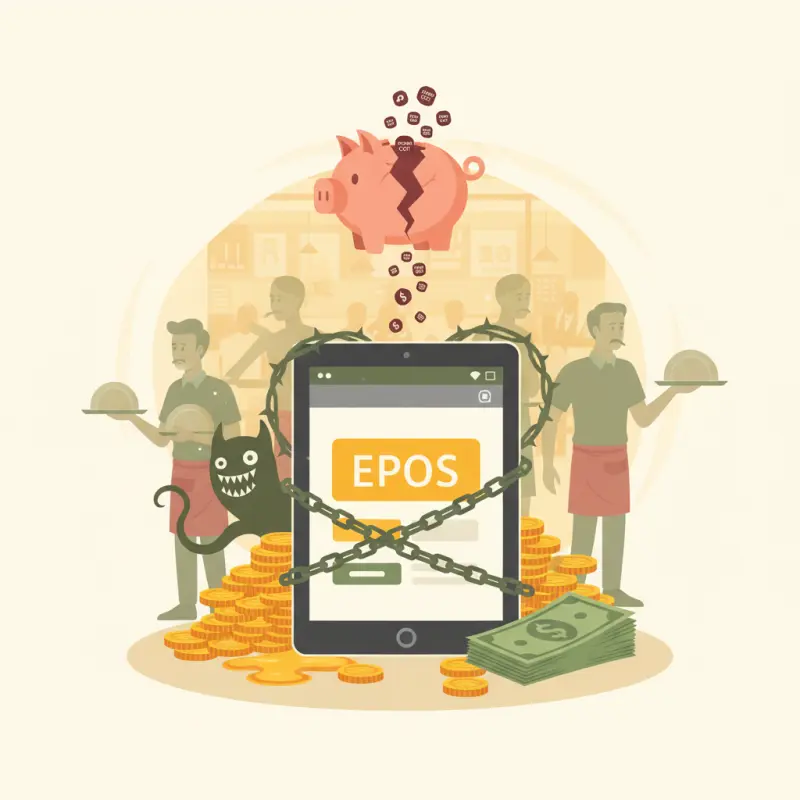
EPOS vendors love to advertise low monthly fees. "Starting at just 890 MAD per month!" What they don't advertise: the total cost of ownership that can reach 50,000 MAD annually for a mid-sized restaurant.
Transaction Fees: The Silent Profit Killer
Payment processing represents the largest hidden cost in restaurant technology. Here's what major providers actually charge:
| Provider |
Transaction Fee |
Cost per 100K MAD |
Annual Cost (2M MAD volume) |
| Toast POS company |
2.49% + 1.5 MAD |
2,490 MAD |
52,800 MAD |
| Billing Petpooja |
1.8-2.5% |
1,800-2,500 MAD |
36,000-50,000 MAD |
| Traditional Banks |
2.75-3.5% |
2,750-3,500 MAD |
55,000-70,000 MAD |
Petpooja billing adds another layer: gateway fees. Most restaurants don't realize they're paying both the EPOS transaction fee and the payment gateway fee. The double-dipping can add another 0.5-1% to every transaction.
Hidden Implementation Costs
The subscription fee is just the beginning. Real implementation costs include:
Hardware requirements run 20,000-80,000 MAD for a full setup. Tablets, receipt printers, cash drawers, barcode scanners, kitchen printers — each terminal needs complete equipment. A restaurant with three POS stations, two kitchen printers, and a bar setup easily spends 45,000 MAD before processing a single order.
Staff training consumes 20-40 hours per location. At 150 MAD per hour for a trainer, plus lost productivity during training, the cost reaches 10,000-15,000 MAD. Complex systems require follow-up training sessions when features update or staff turnover occurs.
Menu digitization often gets outsourced. Converting a 200-item menu with modifiers, variations, and photos costs 5,000-20,000 MAD. Restaurants with complex menus or multiple languages pay even more.
Why Subscription-Based EPOS Actually Costs More
Monthly subscriptions feel manageable. Pay as you go. Cancel anytime. Spread the cost. The psychology works — which is why EPOS vendors love the model.
The 5-Year Reality Check
A restaurant keeping the same EPOS for five years faces compounding costs:
Traditional EPOS charging 890 MAD monthly costs 53,400 MAD over five years — just in subscription fees. Add 2.5% transaction fees on 2 million MAD annual revenue, and the total reaches 303,400 MAD. That's before hardware, training, or integration costs.
Commission-based platforms extract even more. A 20% commission on 2 million MAD annual delivery revenue means 400,000 MAD yearly — 2 million MAD over five years. Successful restaurants literally pay the platform more than they spend on rent.
Zero-commission platforms flip the model. One-time hardware investment. No monthly fees. No transaction percentages. A 50,000 MAD hardware investment pays for itself in six months compared to commission-based alternatives.
Cash Flow Impact on Small Restaurants
Small restaurants in cities like Fès or Meknes operate on 8-12% profit margins. Every percentage point paid to technology vendors comes directly from owner profits. A family restaurant earning 50,000 MAD monthly profit loses 10,000 MAD to a 20% delivery commission — that's two months of profit annually.
What Works Best for Different Restaurant Types in Morocco
Restaurant technology isn't one-size-fits-all. A beachfront café in Agadir has different needs than a fine dining establishment in Marrakech's medina.
High-Volume Quick Service (Casablanca, Rabat)
Fast food and quick service restaurants prioritize speed and reliability. They need rapid order processing, kitchen display systems, and simple interfaces. POS Toast systems excel here — if you can afford the transaction fees. For QSRs processing 500+ transactions daily, even 0.5% in fees becomes significant.
The smart approach: calculate transaction volume first. Above 300 daily transactions, zero-commission systems save 100,000+ MAD annually despite higher upfront costs.
Sit-Down Restaurants (Marrakech tourist areas)
Full-service restaurants need table management, split bills, and modifier handling. Tourist-heavy locations require multi-language support and currency conversion. Traditional hospitality EPOS software handles these complexities well.
The challenge: seasonal fluctuations. Paying 3,000 MAD monthly for EPOS during slow season hurts. Platforms with flexible pricing or commission-only models work better for seasonal businesses.
Local Neighborhood Spots (Agadir, smaller cities)
Neighborhood restaurants operate differently. Regular customers. Predictable patterns. Simple menus. They don't need 95 features — they need reliability and low costs. Many still use manual systems because EPOS feels too expensive or complex.
These restaurants benefit most from simple, affordable systems. A zero-commission platform with basic POS and online ordering covers 90% of their needs without the overhead.
The Zero-Commission Alternative:
When It Makes Sense
Zero-commission platforms represent a fundamental shift. Instead of paying forever through subscriptions and transaction fees, restaurants invest once in technology they own.
Revenue Protection vs. Feature Richness
The trade-off is clear. Zero-commission platforms may have fewer features than enterprise systems. But they protect 100% of restaurant revenue. For restaurants where delivery and online ordering represent significant revenue, keeping those commissions makes the difference between profit and loss.
Ideal Fit: Independent Restaurants Doing 200+ Orders Monthly
The economics work best for restaurants with consistent order volume. At 200 orders monthly with 150 MAD average tickets, saving 20% commission means 6,000 MAD additional profit. The platform pays for itself quickly.
Multi-location restaurants save even more. One zero-commission system across five locations can save 500,000+ MAD annually compared to traditional commission models.
Implementation at votrenom.ochi.ma
Modern zero-commission platforms like OCHI provide branded ordering at votrenom.ochi.ma, complete POS systems, and kitchen management without ongoing fees. Restaurants maintain their pricing, keep their customer data, and pay nothing per transaction.
The implementation mirrors traditional EPOS: setup, training, launch. The difference appears on the P&L statement — revenue stays with the restaurant.
For deeper insights into restaurant technology costs, explore more at our blog. Compare your current EPOS costs against zero-commission alternatives at ochi.ma/partners — the math might surprise you.