AI Overview
Menu restaurant software becomes profitable when it tracks ingredient costs and calculates real food cost ratios, not just displays menu items. Most restaurants in Morocco fail because they price dishes by gut feeling rather than using menu restaurant software to maintain the critical 28-35% food cost ratio. For example, if your pastilla costs 18 MAD in ingredients, you need to charge at least 51 MAD to achieve a healthy 35% food cost. OCHI's platform tracks costs per gram and automatically calculates whether each dish generates profit or drains cash flow. Professional kitchens in Casablanca use ingredient cost tracking to identify which menu items make money and which ones slowly kill the business. Track your actual costs per dish and price accordingly — even 8 MAD difference per kilogram can determine whether you expand or close.
Table of Contents
Most restaurants in Morocco fail within two years. The culprit isn't bad food or poor location — it's math. Specifically, the math that menu restaurant software should handle but doesn't.
Walk into any restaurant in Casablanca and you'll find owners who can describe their signature tajine down to the last preserved lemon. Ask them what it costs to make, and watch their confidence evaporate. They price by gut feeling, copy competitors, or worse — set prices based on what customers "seem willing to pay."
This pricing blindness kills more restaurants than bad reviews ever could.
The 28-35% Food Cost Rule Every Casablanca Restaurant Ignores
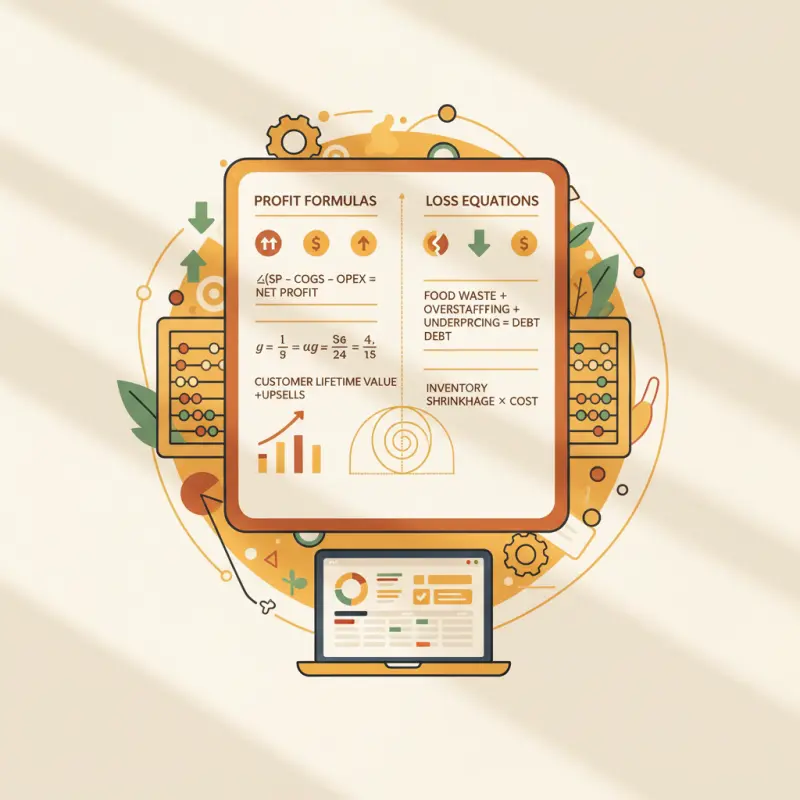
Here's the formula that separates thriving restaurants from those scraping by: (Cost of ingredients ÷ Menu price) × 100. Keep that number between 28% and 35%, and you have room for rent, staff, marketing, and profit.
Let's make this real. Your pastilla requires 18 MAD worth of ingredients. At a 35% food cost ratio, you need to charge at least 51 MAD. Price it at 40 MAD because "that's what the place down the street charges," and you're operating at 45% food cost — a path to certain failure.
Yet restaurant after restaurant makes this exact mistake. They see competitors pricing their grilled fish at 75 MAD and match it, never calculating that their supplier charges 8 MAD more per kilogram. Those 8 dirhams, multiplied across hundreds of orders, become the difference between expansion and closure.
The bitter truth: most Moroccan restaurants have no idea which menu items make money and which drain it. They feel busy, see orders coming in, but wonder why the bank account never grows.
Food cost calculator
What’s your real margin?
Food cost
29.2%
Gross margin
70.8%
Profit / dish
85 MAD
Healthy · under 30%
Digitize your menu with OCHIRecipe Costing: The Math Your Competitors Skip
Generic restaurant menu management software shows pretty pictures and translates your menu into three languages. What it doesn't do is track whether your harira soup bleeds money with every bowl served.
Ingredient Cost Tracking
Professional kitchens track costs per gram, per milliliter, per piece. Your olive oil costs 65 MAD per liter. That spectacular drizzle over your salads? It uses 30ml — that's 1.95 MAD before you've added a single vegetable.
| Ingredient | Supplier Price | Portion Size | Portion Cost |
|---|---|---|---|
| Olive Oil | 65 MAD/L | 30ml | 1.95 MAD |
| Chicken Breast | 28 MAD/kg | 200g | 5.60 MAD |
| Saffron | 45 MAD/g | 0.1g | 4.50 MAD |
| Tomatoes | 8 MAD/kg | 150g | 1.20 MAD |
Now factor in waste. Fresh ingredients typically lose 5-8% to trimming, spoilage, and prep loss. Your 1kg of tomatoes yields only 920g of usable product. Suddenly that 8 MAD per kilogram becomes 8.70 MAD.
The Hidden Costs in Your Couscous
Ingredients tell only part of the story. Your famous seven-vegetable couscous takes 45 minutes of active preparation. At minimum wage, that's 12.50 MAD in labor before cooking even begins.
Add cooking fuel (gas prices jumped 15% last year), the mint tea you serve alongside (2.50 MAD per glass), and delivery packaging for online orders (4 MAD per container). That 35 MAD ingredient cost becomes 54 MAD in real expense. Price it at 95 MAD thinking you're making good margin, and you're actually operating at 57% total cost — well into the danger zone.
This is why restaurant pricing software that only displays menus fails restaurant owners. They need systems that calculate true profit per dish, not just arrange photos attractively.
Why "Competitive Pricing" Kills Restaurants in Agadir
Here's what happens when three fish restaurants on Agadir's corniche price their grilled sea bass at 85 MAD without checking costs:
Restaurant A sources from the morning market, paying 45 MAD per kilogram. Their 300g portion costs them 21 MAD in fish, totaling 28 MAD with sides. Food cost: 33%. Healthy margin.
Restaurant B uses a premium supplier for consistency, paying 58 MAD per kilogram. Same portion costs them 32 MAD total. Food cost: 38%. Barely surviving.
Restaurant C, trying to match prices while using imported fish at 70 MAD per kilogram, loses money on every plate. Food cost: 44%. They'll close within six months.
Only Restaurant A can afford to hire skilled chefs, upgrade equipment, or weather a slow month. The others slowly bleed out, wondering why being "competitive" led to bankruptcy.
Smart operators price based on their costs first, then find ways to deliver value that justifies those prices. Maybe it's portion size, presentation, or service speed. But never sacrifice margins to match a competitor who might be pricing their way to closure.
OCHI's Recipe Builder: Automatic Cost Recalculation When Prices Change
Traditional online menu ordering system platforms treat menus as static displays. OCHI treats them as living business documents that adapt to market realities.
Consider what happened to Riad Yasmine, an OCHI-powered restaurant in Marrakech's medina. February brought a 15% spike in tomato prices — a disaster for their tomato-heavy menu. Their traditional tagine uses 400g of tomatoes per serving.
OCHI's restaurant menu management system automatically flagged four dishes now running above 40% food cost. The owner saw the alert on his Monday morning dashboard, not at the end-of-month accounting review when the damage was done.
Within 24 hours, he adjusted portions on two dishes, replaced fresh tomatoes with a mix of fresh and preserved on another, and raised the price of his signature tagine by 5 MAD. Average food cost returned to 32%.
Without automated recalculation, he would have lost approximately 4,200 MAD that month — discovered only when wondering why February felt so tight despite strong sales.
From Spreadsheets to Profit: Setting Up Cost Control
Stop managing your menu in Excel and hoping for the best. Here's your three-week transformation plan:
Week 1: Audit Your Current Pricing
List your 10 best sellers. Calculate the true cost of each, including ingredients, labor, and overhead allocation. Any item below 65% gross margin needs immediate attention.
Don't guess at portion sizes. Weigh everything for one full service. That "handful" of almonds your chef tosses on the salad? It might be 30g (costing 4.50 MAD) instead of the 15g you budgeted.
Week 2: Strategic Repricing
Never shock regular customers with sudden 20 MAD increases. Instead, test new prices on your delivery menu first — online customers are less price-sensitive than dine-in regulars who remember last week's bill.
Raise prices in 3-5 MAD increments over several weeks. Monitor order volumes carefully. A 10% price increase that reduces orders by only 5% still increases revenue.
Week 3: Supplier Optimization
Get quotes from three suppliers for your highest-cost ingredients. Don't just compare prices — factor in delivery schedules, payment terms, and quality consistency.
Negotiate volume commitments for 10-15% discounts. Set up price alerts so you know immediately when key ingredients spike, not when the invoice arrives.
Most importantly, build these costs into a system that updates automatically. Restaurant menu management software should do more than show pretty pictures — it should guard your margins every single day.
The restaurants thriving in Morocco aren't necessarily serving better food. They're serving food they know makes money. Every dish, every portion, every garnish calculated and optimized. That's not taking the romance out of cooking — it's ensuring you'll still be cooking next year.
Ready to see what your menu really costs? Your complete menu and cost management system awaits at votrenom.ochi.ma — because knowing your numbers beats hoping for the best.
Frequently Asked Questions
What is the ideal food cost ratio for restaurants in Morocco?
Successful restaurants maintain food costs between 28-35% of menu price. Calculate this by dividing ingredient cost by menu price, then multiply by 100.
How does menu restaurant software track ingredient costs?
Professional systems track costs per gram, milliliter, and piece for every ingredient. They automatically calculate recipe costs and suggest profitable pricing based on your target food cost ratio.
Why do most Moroccan restaurants fail with pricing?
They price by copying competitors or guessing what customers will pay, instead of calculating actual ingredient costs. This leads to selling dishes at a loss without realizing it.
Can menu software help identify unprofitable dishes?
Yes, it calculates the real cost of every menu item and shows which dishes generate profit versus those that drain cash flow. This data helps restaurants eliminate money-losing items.
What happens when restaurants ignore food cost calculations?
They operate with food costs above 35%, leaving insufficient margin for rent, staff, and profit. Even busy restaurants with high order volume can fail if they sell every dish at a loss.
Restaurant owners · Weekly
The guide to running a restaurant in 2026.
One article per week. No commission advice. Just honest operational insight for Moroccan restaurants.

Blog Manager
Comments
No comments yet. Be the first to share your thoughts.