The restaurant online ordering system you choose determines who truly owns your business growth. Most owners focus on order volume without realizing they're building someone else's customer base.
When orders flow through third-party platforms, you never receive customer emails or phone numbers. You can't inform regulars about your Ramadan special menu or invite them to your anniversary celebration. The platform controls every interaction, keeping your diners at arm's length.
Price control vanishes too. Platforms often display your menu alongside cheaper alternatives, forcing you to compete on price rather than quality. Some even add hidden markup fees, showing customers prices higher than your actual menu — pocketing the difference while damaging your value perception.
Restaurant-Controlled Systems: You Own the Relationship
A food ordering system online that you control changes everything. Your branded storefront (like yourrestaurant.ochi.ma) gives customers a direct path to your menu. You capture their preferences, build loyalty programs, and communicate directly about new dishes or special events.
This ownership extends to pricing strategy. Run a Tuesday special for locals. Create VIP pricing for regular customers. Test new menu items with specific segments. When you control the online food ordering system for restaurants, these decisions stay in your hands — not subject to platform policies or competitor pressure.
The QR Code Revolution: Why Apps Are Becoming Obsolete
While platforms push restaurant apps, smart owners recognize QR table ordering as the friction-free future. In Marrakech's tourist quarter, restaurants using QR codes report 40% higher table turnover and increased average orders.
Why Customers Skip App Downloads
Phone storage matters. The average Moroccan smartphone holds 30-40 apps, with users reluctant to add more for occasional dining. A tourist visiting Agadir for a week won't download five restaurant apps — but they'll eagerly scan QR codes for instant menu access.
QR ordering removes every barrier. No app store searches. No account creation. No password hassles. Customers scan, browse your menu in their preferred language, and order within seconds. This simplicity particularly resonates with older diners and international visitors who value straightforward experiences.
The Multilingual Advantage in Morocco
Morocco's linguistic diversity demands flexible solutions. A proper food online ordering system supports Arabic (with right-to-left display), French, and English seamlessly. Tourists in Agadir can browse in English, while local families order in Darija, all through the same QR code.
Language barriers dissolve when visual menus replace verbal orders. That British couple struggling to pronounce "rfissa" can simply tap their choice. Your staff spends less time explaining dishes and more time ensuring excellent service. Guest checkout options mean even one-time visitors order confidently without registration friction.
Platform Economics: The 15-22% AOV Increase Nobody Talks About
Digital ordering consistently outperforms phone orders in average ticket size. The psychology is simple — customers order more when they're not rushed and can see enticing photos of each dish.
Digital Upselling vs. Phone Orders
Phone orders create pressure. Customers feel conscious about holding up the line, rushing through selections without considering appetizers or desserts. Digital menus eliminate this anxiety. Diners browse at their own pace, notice the grilled vegetable sides, and add that tempting almond pastry they'd never ask about on the phone.
Smart online food ordering platforms use subtle prompts: "Others who ordered this tagine also enjoyed our traditional salads." These suggestions feel helpful rather than pushy, naturally increasing order values. Visual presentation matters too — professional photos of your msemen or freshly squeezed orange juice trigger cravings phone descriptions can't match.
The Agadir Case Study: Tourist Season Impact
Agadir restaurants see dramatic seasonal swings. During peak tourist months, order volumes can triple — but only if ordering stays simple. Restaurants using commission-free platforms with guest checkout report capturing 65% more tourist orders compared to app-only competitors.
The numbers tell the story: average tourist orders reach 150-180 MAD versus 95 MAD for locals. Multiply this by summer volumes, and the revenue difference between owning your ordering system versus paying commissions becomes transformative. One beachfront restaurant saved 127,000 MAD in commissions during a single summer season — funds they reinvested in terrace expansion.
Building Your Restaurant's Digital Future Without Bleeding Money
The path forward doesn't require choosing between digital presence and profitability. Zero-commission platforms prove restaurants can have sophisticated ordering technology while keeping every dirham earned.
Nothing about commission-based platforms is truly free. Beyond the obvious percentage cut, hidden costs accumulate. Payment processing adds 2-3%. Promotional visibility requires paying for ads. Premium placement during peak hours costs extra. Some platforms even charge for basic features like editing your menu or adding photos.
Worst of all, you lose future flexibility. Once dependent on platform traffic, switching becomes nearly impossible without losing customers. Your regulars know you through the platform, not your brand. This dependency trap keeps restaurants paying increasing commissions with no escape route.
Why Zero Commission Changes Everything
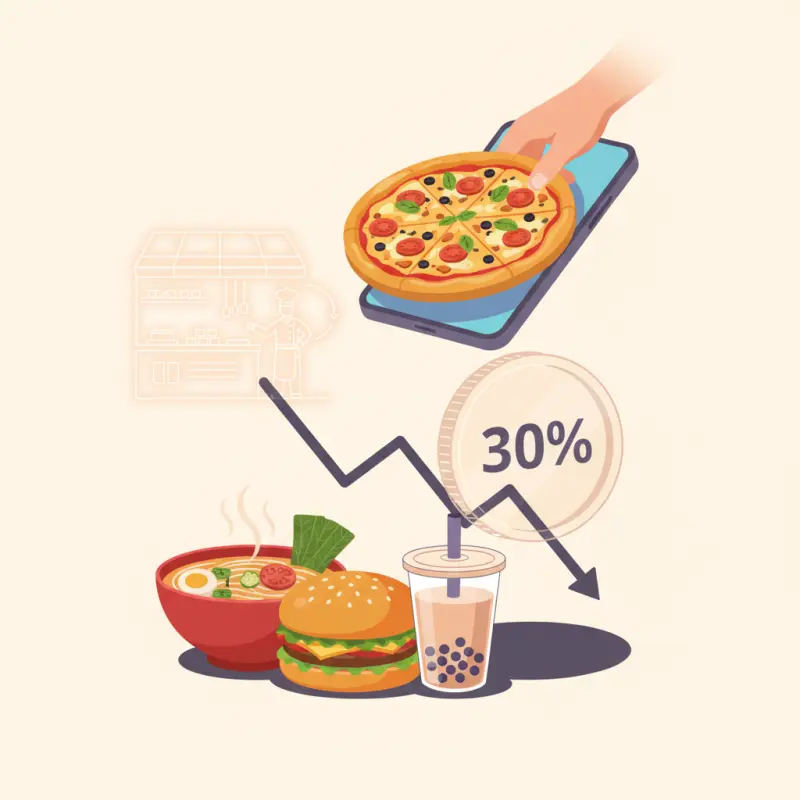
Imagine keeping that 30% commission as pure profit. For a restaurant processing 50 orders daily at 100 MAD average, that's 45,000 MAD monthly staying in your business. These funds transform operations — better ingredients, staff training, marketing campaigns you control.
OCHI's zero-commission model paired with integrated tools (POS, kitchen display, inventory tracking) means you're not just saving money — you're gaining capabilities typically reserved for chain restaurants. Your branded subdomain (yourname.ochi.ma) becomes a digital asset you own forever, building value with every order processed.
The smartest restaurant owners in Morocco recognize that true digital transformation means controlling your technology stack, not renting access to someone else's. They invest commission savings into growth that compounds — better menus, stronger teams, memorable experiences that create customers for life.
Start building your commission-free digital presence at ochi.ma/partners — where restaurants keep what they earn.