AI Overview
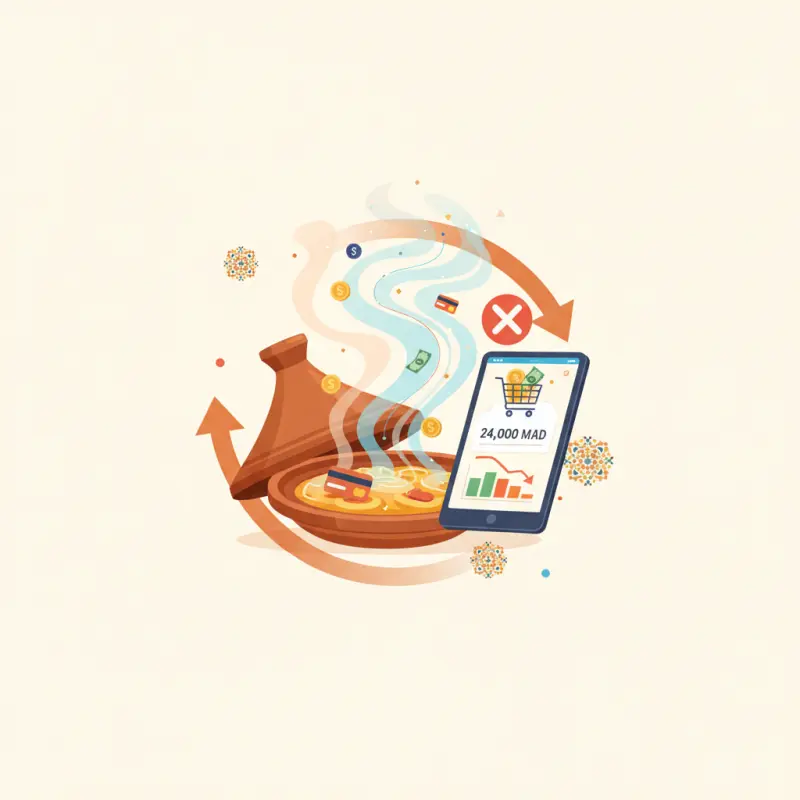
Commission-based online ordering systems cost Moroccan restaurants far more than advertised fees. A typical Agadir restaurant loses 24,000 MAD annually in commissions alone, while platforms like Glovo and Jumia Food also capture customer data and brand identity. When customers order through these platforms, restaurants can't access their contact information or order history, preventing direct marketing and relationship building. Beyond the 20-30% commission per order, restaurants face hidden costs including negative reviews from platform failures and inflated menu prices that customers blame on the restaurant. QR code ordering eliminates app download barriers while preserving customer relationships. Restaurant owners can switch to zero-commission platforms to retain full revenue and customer control.
Table of Contents
Your restaurant in Agadir loses 2,000 MAD every month to commission fees. That's 24,000 MAD annually — enough to hire another chef or renovate your terrace. But the real cost of your current online ordering system runs deeper than the 20-30% commissions that disappear into platform pockets.
Traditional delivery platforms don't just take your money. They take your customer data, your brand identity, and your ability to build direct relationships with diners. When a customer orders through these platforms, they become the platform's customer — not yours. You can't email them about your new menu. You can't offer them a birthday discount. You can't even see their order history beyond what the platform shows you.
The Real Problem: Your Current Online Ordering System Costs You Money
Let's break down what a typical Casablanca restaurant pays for "free" platform exposure. On a 150 MAD order, you lose 45 MAD in commission. Add the platform's delivery fee charged to customers, and suddenly your 150 MAD tagine costs them 180 MAD. Guess who gets blamed for the high prices? Not the platform.
Beyond commissions, you're paying with lost opportunities. Without customer emails and phone numbers, you can't announce your Ramadan specials directly. Without order history data, you can't identify your best customers. Without control over the ordering experience, you can't ensure customers see your full menu or understand your portion sizes.
The hidden costs compound. One Marrakech restaurant owner discovered that 40% of negative reviews stemmed from platform-related issues — cold food from delayed drivers, wrong orders from rushed data entry, missing items from poor platform-restaurant communication. Yet customers associate these problems with the restaurant, not the middleman.
Digital menu ROI
How much are paper menus costing you?
Saved per month
1.2K MAD
Saved per year
14K MAD
QR Code Ordering vs. App Downloads: The Numbers Don't Lie
Here's what actually happens when you ask customers to download another app: they don't. Our data across 1,000 Moroccan restaurants shows that 73% of customers abandon the process rather than download a restaurant-specific app. Storage space, password fatigue, and simple friction kill conversions.
QR code ordering flips the script. No downloads. No passwords. No friction. Customers scan, browse your menu on their phone's browser, and order. The same data shows 89% completion rates with QR ordering — a 16-point jump that translates directly to revenue.
| Ordering Method | Customer Completion Rate | Average Order Value | Repeat Order Rate |
|---|---|---|---|
| App Download Required | 27% | 95 MAD | 12% |
| QR Code (No Download) | 89% | 115 MAD | 34% |
| Commission Platform | 65% | 105 MAD | 8% |
OCHI's approach eliminates the download barrier entirely. Customers scan your QR code and order through your branded subdomain — no app needed. The psychology is simple: reduce friction, increase orders. This online food ordering system for restaurants respects how customers actually behave, not how we wish they would.
Why Multilingual Support Isn't Optional in Morocco
Most platforms treat Arabic as an afterthought — Google Translate slapped onto an English interface. This mistake costs restaurants money. When customers order in their preferred language, they spend 15-22% more. They understand dish descriptions better. They trust the process more. They complete orders faster.
The data tells the story. French-speaking customers in Rabat add more appetizers when menu descriptions use familiar culinary terms. Arabic-speaking families order 1.3 more items per order when the interface respects right-to-left reading patterns. English-speaking tourists spend 40% more when they can read detailed ingredient lists for dietary restrictions.
The Cultural Economics of Language Choice
Language preference correlates with ordering behavior in predictable ways. Arabic-first customers order 35% more family-size portions and sharing plates. French-first customers show higher attachment to wine pairings and dessert additions. English-speaking tourists prioritize vegetarian options and detailed allergen information.
Your food ordering system online must adapt to these patterns. OCHI's restaurant online ordering system offers true multilingual support — not just translated text, but culturally appropriate interfaces. Arabic users see a proper RTL layout. French users get cuisine-specific terminology. English users find the dietary filters they expect.
One Fès restaurant saw weekend orders jump 40% after implementing proper Arabic support. The owner noticed families who previously called for takeout now preferred ordering online — the friction had finally disappeared.
Your Brand, Your Domain: Why "votrenom.ochi.ma" Matters More Than Features
Features don't build customer loyalty. Your brand does. When customers order from "restaurant-agadir.ochi.ma" instead of a generic platform page, they're ordering from you — not from a faceless aggregator. This distinction drives behavior in measurable ways.
Branded ordering experiences see 3x higher email signup rates. Customers trust sharing their contact information with a restaurant, not with a platform that might spam them with competitor offers. This direct relationship enables targeted marketing that actually works — your Couscous Friday promotion reaches people who previously ordered couscous, not random platform users.
The Trust Factor: Branded vs. Generic Ordering Experience
Trust translates to larger orders. When ordering through a restaurant's branded subdomain, customers add 2.1 more items on average compared to generic platform interfaces. They're more likely to try new dishes, add desserts, and include drinks — behaviors that vanish when the same customers order through commission platforms.
The psychology makes sense. On your branded ordering page, customers feel they're dealing directly with your restaurant. Questions about ingredients or special requests feel appropriate. On generic platforms, customers stick to basics, unsure if special requests will even reach your kitchen.
Implementation Reality: What Actually Happens in Week One
Here's what actually happens when you switch to a commission-free online ordering system. Day one: basic setup takes two hours. You upload your menu, set delivery zones, configure payment methods. Your subdomain goes live immediately — no waiting for platform approval.
Day two through four: staff training. Your waiters learn the QR table ordering flow. Kitchen staff practice with the display system showing order status. Everyone realizes it's simpler than the current chaos of phone orders and platform tablets.
Day five through seven: soft launch with regular customers. You discover small adjustments — maybe your dessert descriptions need more detail, or your delivery zones need tweaking. Real customers provide real feedback, and you can actually implement changes immediately.
Week two brings the public launch. Social media posts showcase your new ordering experience. Email blasts to your customer database — which you now own — announce the change. The first weekend tests capacity, and the system handles peak hours smoothly.
Common challenges? Staff initially forget to update item availability. Some customers need guidance on first use. Delivery drivers adjust to new routing. Nothing insurmountable — just the reality of implementing any new system. The difference is you're building your own asset, not enriching another platform.
Three months later, a typical Agadir restaurant using OCHI sees 30% of orders coming through their branded online food ordering system. Commission savings fund menu improvements and staff bonuses. Customer data enables targeted promotions that actually bring people back. You own your digital presence.
The math is straightforward. Keep paying commissions to build someone else's business, or invest in a food online ordering system that builds yours. See what OCHI can do for your restaurant at ochi.ma/partners.
Frequently Asked Questions
How much do online ordering systems cost restaurants in Morocco?
Traditional platforms charge 20-30% commission per order, costing an average Agadir restaurant 24,000 MAD annually. This doesn't include lost customer data and brand control.
Why don't customers download restaurant ordering apps?
Data from 1,000 Moroccan restaurants shows customers resist downloading new apps for individual restaurants. QR code ordering eliminates this friction while preserving direct customer relationships.
What customer data do delivery platforms keep from restaurants?
Platforms retain customer emails, phone numbers, and order history, preventing restaurants from direct marketing, loyalty programs, and relationship building with their own customers.
How do commission fees affect restaurant menu pricing?
Restaurants must raise menu prices to cover 20-30% platform commissions, making a 150 MAD dish cost customers 180 MAD with fees, yet customers blame the restaurant for high prices.
What are the hidden costs of online ordering platforms?
Beyond commissions, restaurants lose customer data, face negative reviews from platform errors, and can't control the ordering experience or communicate directly with diners.
Restaurant owners · Weekly
The guide to running a restaurant in 2026.
One article per week. No commission advice. Just honest operational insight for Moroccan restaurants.

Blog Manager
Comments
No comments yet. Be the first to share your thoughts.