AI Overview
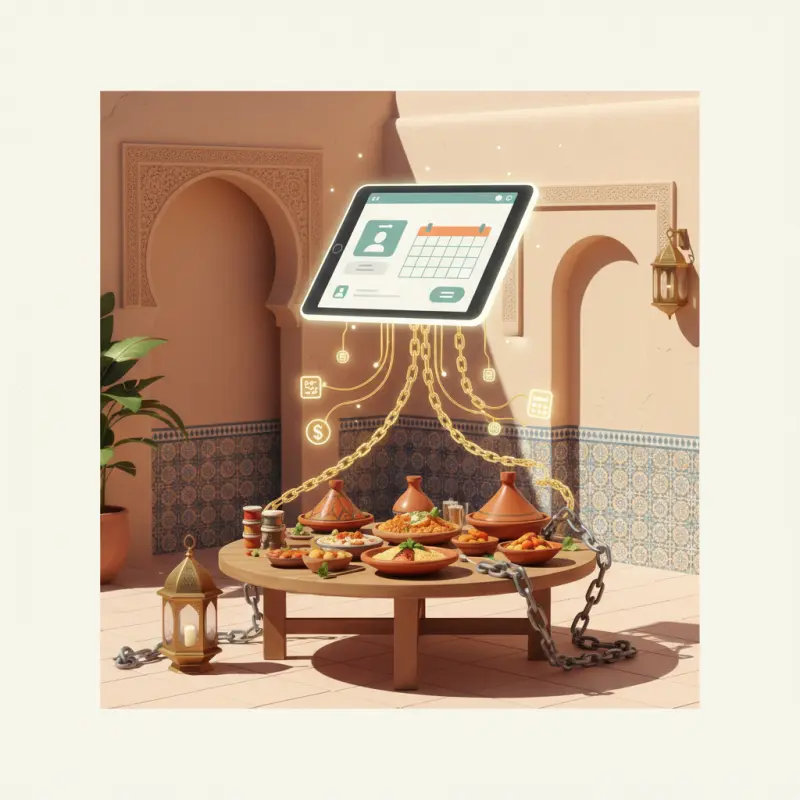
Traditional online restaurant booking systems charge Moroccan restaurants 2-5% commission per reservation plus hidden integration fees. A 40-table restaurant in Casablanca typically pays 12,000 MAD monthly in booking commissions alone, while platforms like OpenTable and Resy control customer relationships. These systems create dependency by training diners to book through their branded apps rather than directly with restaurants. Commission-free alternatives exist that provide reservation management without ongoing fees or customer ownership issues. Restaurant owners should calculate total monthly costs including commissions, staff time, and lost revenue from system conflicts before choosing booking software.
Table of Contents
Your phone rings at 5 PM on a Thursday — a group of 12 wants a table for 8 PM tonight. You check your paper reservation book, squint at the scribbled names, try to remember which tables you promised to regulars. By the time you confirm, they've already called your competitor down the street who uses an online restaurant booking system.
This scenario costs Moroccan restaurants thousands of dirhams every week. The solution seems simple: get reservation software. But choosing the wrong system creates more problems than it solves — commission fees, integration nightmares, and confused staff during the dinner rush.
The Hidden Costs Behind "Free" Restaurant Reservation Software
Most restaurant reservation software promises zero upfront costs. What they don't advertise: the 2-5% commission on every booking, the 5,000 MAD integration fee to connect with your POS, and the hours your staff waste juggling multiple systems.
The Commission Trap Most Platforms Don't Mention
Traditional booking platforms operate like delivery apps — they bring customers but take a cut. A busy restaurant in Marrakech with 40 tables serving 200 covers nightly pays up to 15,000 MAD monthly in booking commissions alone. Add integration costs, monthly software fees, and SMS charges for confirmations, and your "free" system costs more than hiring another server.
The real damage happens when these platforms own your customer relationships. Diners book through their app, get their branding on confirmations, and build loyalty with the platform — not your restaurant. When they eventually raise commissions, your customers are trained to find you through their system.
What "Free" Actually Costs You in Casablanca
Here's what a 40-table restaurant in Casablanca actually spends on disconnected reservation systems:
| Cost Category | Monthly Amount (MAD) | Annual Impact |
|---|---|---|
| Booking commissions (3% average) | 12,000 | 144,000 |
| Staff time managing systems (2 hours/day) | 3,000 | 36,000 |
| Lost revenue from double bookings | 8,000 | 96,000 |
| SMS confirmation charges | 1,500 | 18,000 |
| Integration/API fees | 500 | 6,000 |
| Total Hidden Costs | 25,000 | 300,000 |
These numbers assume average performance. High-end restaurants with larger average checks see proportionally higher losses to commissions.
Demand heatmap
When do Moroccan restaurants get busy?
Typical demand across the week. Iftar shifts the pattern during Ramadan.
| 7h | 10h | 12h | 15h | 19h | 22h | |
|---|---|---|---|---|---|---|
| Mon | ||||||
| Tue | ||||||
| Wed | ||||||
| Thu | ||||||
| Fri | ||||||
| Sat | ||||||
| Sun |
Why Your POS and Reservation System Must Talk to Each Other
Restaurant booking software means nothing if it doesn't connect to your operations. Most reservation platforms are built for customer convenience, not restaurant efficiency. The result: your front-of-house scrambles to match online bookings with table availability while the kitchen preps blindly.
The 6 PM Rush Reality Check
Picture your restaurant at 6 PM on a Friday. The host checks three screens: the POS for current orders, the reservation tablet for upcoming bookings, and handwritten notes for special requests. A party of eight arrives 20 minutes early. Their table is still occupied because your systems don't sync turnover times.
Now the dominoes fall. You seat them at two four-tops, disrupting your floor plan. The kitchen gets slammed with unexpected large-party orders. Service slows. Other reservations back up. Your 5-star Google reviews mention "chaotic service" and "long waits despite reservations."
Integrated systems prevent this spiral. When your POS knows about reservations, it calculates realistic table turnover, alerts kitchen about large parties, and automatically updates availability based on actual service times — not optimistic estimates.
Integration Requirements That Matter
Effective restaurant table reservation software needs three core integrations. First, real-time table status that shows which tables are ordering, eating, or paying — not just "occupied" or "available." Second, automatic waitlist management that texts customers when tables open up, filling cancellations instantly. Third, complete customer history accessible during service, so servers know preferences, allergies, and past orders without asking.
OCHI builds these integrations into the core platform. Your reservation system, POS, kitchen display, and customer database share the same brain. A reservation made online appears instantly in your POS, assigns the table to the right section, and notifies the kitchen about party size and timing.
The Morocco-Specific Features International Platforms Miss
Global restaurant reservation software assumes every market operates like New York or London. They miss critical details that matter in Morocco — from Ramadan service patterns to local payment preferences.
Ramadan and Holiday Booking Patterns
During Ramadan, Agadir restaurants see booking patterns flip completely. Lunch service disappears while iftar reservations spike to 300% of normal dinner volume. International platforms can't handle this shift — their algorithms assume consistent patterns year-round.
Moroccan diners also book differently than Western markets. Family groups of 10-15 are common, not exceptions. Birthday celebrations involve multiple tables. Holiday bookings come in waves based on salary schedules. Restaurant booking software built for Morocco handles these patterns automatically, adjusting availability and prep schedules accordingly.
Payment and Communication Preferences
Your customers expect WhatsApp confirmations, not just emails. They want to modify reservations through voice messages. They pay with local methods that international processors don't support. When Eid approaches, they need Arabic-language confirmations for family members.
These aren't nice-to-have features — they're mandatory for customer satisfaction. A reservation system that only sends English emails and requires credit card deposits will frustrate half your potential diners before they even arrive.
OCHI's Reservation System: Built Into Your Restaurant's Brain
OCHI approaches reservations differently. Instead of bolting on a booking widget, the reservation system is woven into every operational component. This integration philosophy means zero double-bookings, no manual transfers, and complete visibility across your restaurant.
One Dashboard for Everything
When a customer books a table at votrenom.ochi.ma, the reservation flows through your entire operation instantly. Your POS assigns the table and calculates timing. The kitchen display shows upcoming large parties with dietary notes. Floor managers see updated sections with server assignments. The customer gets a branded confirmation that matches your restaurant's style.
During service, every status update syncs automatically. Mark a table as dessert course? The system knows they'll leave in 20 minutes and updates availability. Cancel a reservation? The waitlist gets notified immediately. Large party running late? The kitchen adjusts prep timing.
The Branded Experience That Builds Loyalty
Traditional platforms put themselves between you and your customers. OCHI disappears into your brand. Customers book at your subdomain, receive confirmations with your logo, and never see OCHI mentioned. Their loyalty builds with your restaurant, not a third-party platform.
This branded approach extends to every touchpoint. Confirmation messages come from your restaurant name. Reminder texts include your phone number for direct contact. Even the booking page matches your website design, creating a seamless experience from discovery to dining.
The Numbers That Matter: ROI on Reservation Systems
Restaurant owners need concrete data to justify any technology investment. Here's what properly integrated reservation systems deliver in measurable results.
Revenue Impact Analysis
Restaurants using integrated booking systems see three immediate improvements. Table turnover increases 15-25% through accurate timing and reduced gaps between seatings. No-show rates drop from 20% to under 5% with automated reminders. Average party size grows 12% when waitlist optimization fills partial bookings.
For a typical Casablanca restaurant with 50 seats and 80 MAD average check, these improvements translate to 48,000 MAD additional monthly revenue — before considering the cost savings from operational efficiency.
Break-Even Timeline for Different Restaurant Sizes
| Restaurant Type | Monthly Savings | Break-Even | 12-Month ROI |
|---|---|---|---|
| 20-table casual dining | 15,000 MAD | 3 months | 180,000 MAD |
| 50-table full service | 35,000 MAD | 6 weeks | 420,000 MAD |
| Multi-location (3 sites) | 90,000 MAD | Immediate | 1,080,000 MAD |
These calculations include both direct savings from eliminated commissions and indirect gains from improved operations. Multi-location restaurants see amplified benefits through centralized management and consistent guest experiences across sites.
The right online restaurant booking system doesn't just fill tables — it transforms your entire operation. When reservations integrate deeply with your POS, kitchen, and staff systems, every part of your restaurant runs smoother. Your team spends less time juggling systems and more time creating memorable experiences. See what true integration looks like at ochi.ma/partners.
Frequently Asked Questions
What are the hidden costs of restaurant booking systems in Morocco?
Most booking platforms charge 2-5% commission per reservation, 5,000 MAD integration fees, monthly software subscriptions, and SMS charges for confirmations. A busy restaurant can pay 15,000 MAD monthly in hidden costs.
Why do booking platforms take commission from restaurants?
Platforms like OpenTable operate similarly to delivery apps - they provide customer access but take a percentage of each booking as their revenue model. This creates ongoing costs for restaurants rather than one-time software fees.
Do booking systems control my restaurant's customer relationships?
Yes, most platforms brand the booking experience with their logo and app. Customers build loyalty with the platform rather than your restaurant, making you dependent on their system.
How much do reservation system commissions cost Moroccan restaurants annually?
A 40-table restaurant serving 200 covers nightly typically pays up to 144,000 MAD annually in booking commissions alone, not including integration fees and staff time costs.
Are there commission-free restaurant booking systems available?
Yes, some platforms offer reservation management without ongoing commissions or customer ownership issues. These systems charge flat fees rather than percentages of bookings.
Restaurant owners · Weekly
The guide to running a restaurant in 2026.
One article per week. No commission advice. Just honest operational insight for Moroccan restaurants.

Blog Manager
Comments
No comments yet. Be the first to share your thoughts.