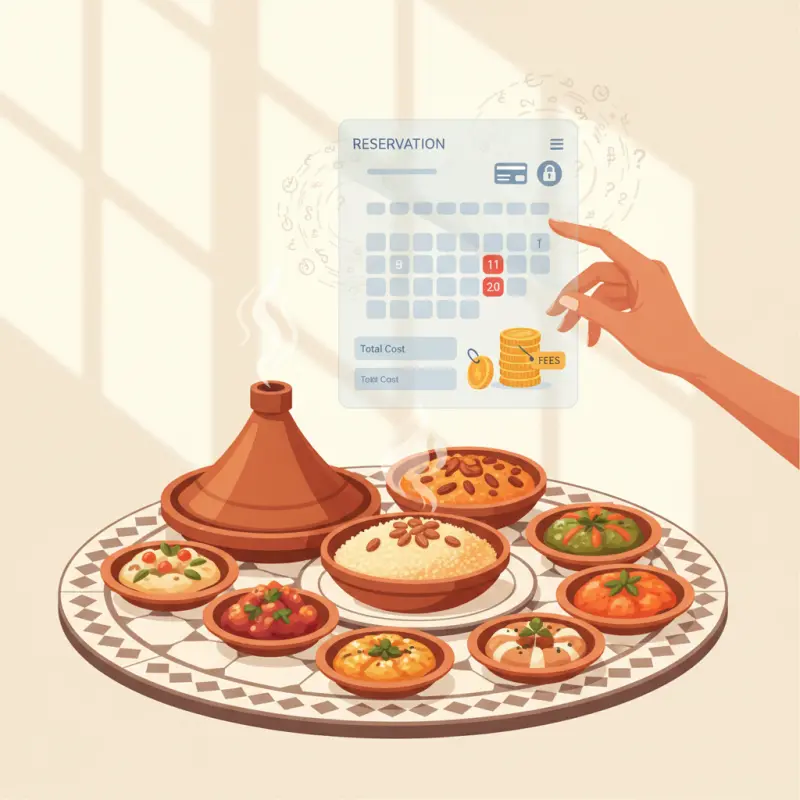
Why Most Restaurant Booking Software Fails in Morocco
International platforms built for New York or London miss critical local nuances. They assume everyone books like Americans — through web forms, with credit cards, speaking English. Morocco operates differently.
The disconnect shows in conversion rates. While global platforms celebrate 40% booking completion, Morocco-optimized systems achieve 65-70% by respecting local preferences.
The WhatsApp Problem
Ask any Rabat restaurant owner about reservations, and they'll show you their WhatsApp Business account with 500+ unread messages. It's how 78% of Moroccan diners prefer to book — quick voice notes in Darija, screenshots of group sizes, last-minute changes.
Traditional table reservation software ignores this reality. They force customers into rigid forms when a simple message would convert better. Smart platforms integrate WhatsApp as a booking channel, not fight against it.
Peak Hour Reality Check
Your reservation system faces its real test during peak hours. Friday and Saturday between 7-9 PM generate 45% of weekly bookings. During Ramadan, that concentration intensifies — one Agadir beachfront restaurant processed 400 iftar reservations in six hours.
Most platforms buckle under this pressure. Slow loading times, crashed payment gateways, and frozen table maps turn eager customers into frustrated critics. A properly architected system handles these surges without breaking a sweat.
Table Reservation Software Features That Actually Matter
Forget 50-point feature comparisons. After analyzing 1,000+ Moroccan restaurants, four capabilities determine reservation success. Everything else is nice-to-have.
The Four Non-Negotiables
Real-time availability stands above all else. Your system must update table status within 30 seconds across all channels — website, app, phone, walk-in. One double-booking damages trust more than 10 successful reservations build it.
Trilingual confirmations seem obvious until you see platforms sending French confirmations to Arabic-speaking customers. Automatic language detection based on booking behavior prevents confusion and reduces no-shows by 22%.
Smart waitlists transform cancellations into opportunities. When a prime Saturday slot opens, your system should automatically notify waiting guests in order of request, giving each 15 minutes to confirm before moving on.
Mobile-first design isn't optional when 90% of bookings happen on phones. If customers pinch-to-zoom on your booking widget, you've already lost them to a competitor.
OCHI's Integrated Approach
While standalone reservation systems create data silos, OCHI connects bookings directly to your POS and kitchen operations. A reservation made online appears instantly on your floor plan, updates table availability in real-time, and syncs with your QR ordering system.
This integration eliminates the juggling act between multiple platforms. Your host manages walk-ins and reservations from one screen. Your servers see dietary preferences and special occasions without checking separate systems. Your kitchen knows to prep for that 20-person birthday party tomorrow night.
The result? Zero double-bookings, faster table turns, and staff who spend time with guests instead of wrestling with technology.
Setting Up Your Restaurant Reservation System: Week-by-Week Guide
Implementation determines whether your online restaurant reservation system becomes an asset or another abandoned investment. This three-week timeline, refined across 200+ restaurant launches, gets you operational without disrupting service.
Week 1: Foundation
Start with accurate table mapping. Count every seat, measure table dimensions, and note which combinations work for larger parties. A Marrakech riad discovered they'd been underutilizing their courtyard by 30% simply because their old system couldn't handle non-standard table shapes.
Configure booking windows based on your prep capabilities. Most restaurants succeed with 60-day advance bookings for regular service and 90 days for special events. Set minimum party sizes for peak hours — accepting single diners on Saturday night might hurt revenue.
Test every integration twice. Run dummy bookings through your POS, verify they appear correctly, then reverse the process. Better to find conflicts during setup than during Friday dinner rush.
Week 2: Customer Experience
Write confirmation templates that sound like your restaurant, not a robot. Include parking tips, menu highlights, and what to expect. One Fès restaurant saw no-shows drop 40% after adding a simple line: "Chef Khalid is preparing something special for your anniversary."
Design your reminder sequence for maximum effectiveness. Send initial confirmation immediately, a reminder 24 hours before, and a final note two hours prior. Include easy modification links — customers who can adjust reservations rarely abandon them entirely.
Build your waitlist strategy around local behavior. Moroccan diners often book multiple restaurants then choose last-minute. A smart waitlist captures this opportunity, converting 25-35% of cancellations into filled tables.
Week 3: Staff Training and Go-Live
Train your team in order of customer contact. Hosts first, then servers, then back-office. Focus on common scenarios: moving reservations between tables, handling late arrivals, managing walk-in conflicts with bookings.
Soft launch with your email list and regular customers. They'll forgive minor glitches while providing valuable feedback. One Agadir seafood restaurant discovered their booking button disappeared on certain Android phones — loyal customers helped them fix it before the public launch.
Monitor performance metrics from day one. Track no-show rates, booking-to-arrival time, and peak hour utilization. Adjust table turn times based on actual data, not assumptions. Most restaurants discover they can serve 15-20% more covers with proper reservation management.
The right restaurant table reservation software pays for itself within 30 days through reduced no-shows and increased table utilization. Whether you're managing a cozy café in Essaouira or a bustling brasserie in Casablanca, the technology should amplify your hospitality, not complicate it. Ready to see how OCHI's integrated reservation system can transform your front-of-house operations? Explore the complete platform at ochi.ma/partners.