AI Overview
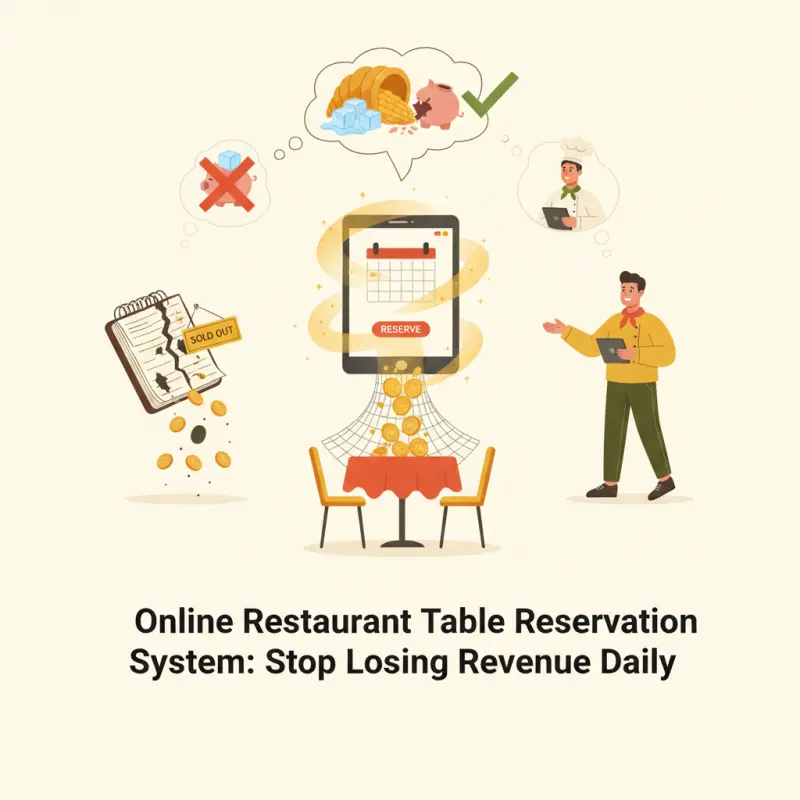
An online restaurant table reservation system prevents the 48,000 to 72,000 MAD in annual revenue that Moroccan restaurants lose through manual booking processes. The system eliminates busy signals, double bookings, and no-shows that plague phone-only reservations. A 50-seat restaurant in Rabat typically loses eight to 12 covers weekly from manual systems, while servers waste valuable service time answering reservation calls during peak hours. Integration with POS systems like those used by Restaurant Andalusia in Casablanca creates seamless operations rather than data silos. The most critical factor isn't features but operational fit — how the system connects with existing workflows, captures deposits to prevent no-shows, and maintains centralized availability across all channels. Choose reservation software that integrates directly with your POS system to avoid double-entry and ensure real-time table availability.
Table of Contents
Every Friday night at 7:45 PM, Restaurant Andalusia in Casablanca loses three table reservations. Not because they're fully booked — but because their phone line is busy taking other bookings while potential customers give up and book elsewhere.
This scenario repeats across Morocco's restaurant industry, where manual reservation systems quietly drain revenue. The right online restaurant table reservation system transforms this chaos into predictable, profitable operations.
The Hidden Cost of Manual Reservations (and Why Most Restaurants Underestimate It)
Restaurant owners see reservation software as an expense, missing the larger picture. A 50-seat restaurant in Rabat typically loses eight to 12 covers weekly from phone-only reservations. At an average ticket of 150 MAD, that's 48,000 to 72,000 MAD in annual revenue vanishing into busy signals.
The math gets worse when you factor in operational costs. During peak service, a server answering reservation calls for two minutes loses eight minutes of table service time. Multiply that across a dinner rush, and you're paying staff to manage bookings instead of generating revenue.
Double bookings create another revenue leak. Without a centralized system, host stands and phone reservations clash. One angry customer who arrives to find their reserved table occupied rarely returns. Their negative review costs you far more than any reservation software subscription.
No-shows compound the problem. Manual bookings rarely capture deposits or credit cards. A party of six that doesn't show on Saturday night represents 900 MAD in lost revenue that you cannot recover.
Demand heatmap
When do Moroccan restaurants get busy?
Typical demand across the week. Iftar shifts the pattern during Ramadan.
| 7h | 10h | 12h | 15h | 19h | 22h | |
|---|---|---|---|---|---|---|
| Mon | ||||||
| Tue | ||||||
| Wed | ||||||
| Thu | ||||||
| Fri | ||||||
| Sat | ||||||
| Sun |
What Actually Matters in Restaurant Table Reservation Software (Hint: It's Not the Features List)
Feature comparisons miss the point. What matters is how restaurant reservation software fits into your actual operations.
Integration Reality Check
POS integration separates useful systems from data silos. When your restaurant booking software talks directly to your POS, every reservation becomes actionable data. You see which time slots generate the highest revenue. You track customer preferences automatically. Your kitchen knows about dietary restrictions before service begins.
Standalone systems create double work. Staff must check two systems, manually transfer bookings, and hope nothing falls through the cracks. This defeats the entire purpose of automation.
The Moroccan Restaurant Context
Morocco's dining culture demands specific features. Peak times between 8 PM and 10 PM create booking bottlenecks that basic systems cannot handle. Your reservation software must queue requests intelligently, not just show "fully booked" when tables remain empty at 7:30 PM.
Family dining patterns require flexibility. A table for four often becomes six when extended family joins. Your system needs to handle modifications gracefully, with automatic table reshuffling that maintains service flow.
Ramadan transforms reservation patterns entirely. Iftar bookings surge 400% in the week before Ramadan begins. Systems designed for steady-state operations crash under this load. You need restaurant table reservation software built for these realities.
Why Zero-Commission Matters More for Reservations Than You Think
Commission-based platforms don't just take a cut of orders — they tax every customer interaction. Reservation deposits, pre-orders, and loyalty program purchases all trigger fees. A restaurant with 200 monthly reservations pays between 2,400 and 4,800 MAD annually just in booking fees.
| Platform Type | Monthly Reservations | Avg Commission | Annual Cost |
|---|---|---|---|
| Commission-based | 200 | 2-4% | 2,400-4,800 MAD |
| Subscription | 200 | 0% | 1,200-2,400 MAD |
| OCHI (Zero-commission) | 200 | 0% | 0 MAD |
The hidden cost runs deeper. Commission structures incentivize platforms to display restaurants with higher margins more prominently. Your marketing budget fights against the platform's algorithm, pushing costs higher.
The Integration Test: How OCHI's Reservation System Actually Works in Practice
Theory meets reality when a customer books a table. Here's what integrated restaurant reservation software actually delivers.
Real Workflow Example
At 2 AM, a customer visits yourrestaurant.ochi.ma and books a table for four this Saturday. The system automatically confirms the booking, offers an optional deposit to secure premium time slots, and sends confirmation via SMS and email.
When staff arrives at 10 AM, the reservation already appears in the POS system. No manual entry needed. The host station display shows table assignments optimized for party size and preferences. If the customer noted a birthday celebration, the system flags this for special attention.
During service, the kitchen display system shows party size and any dietary notes directly on order tickets. After the meal, the integrated system triggers loyalty points automatically and schedules a feedback request for the next day.
The Data You Actually Get
Integrated systems reveal patterns manual tracking misses. You discover that Sunday lunch no-shows spike 40% for parties over six. You implement deposit requirements for large groups on Sundays only, reducing no-shows without friction for other bookings.
Revenue per reservation versus walk-ins becomes clear. Perhaps reserved tables spend 30% more because they plan special occasions. This insight drives your marketing toward reservation incentives rather than walk-in promotions.
Peak booking windows emerge from the data. If 70% of Saturday reservations happen between Tuesday and Thursday afternoons, you can time social media posts and email campaigns accordingly.
Setting Up Your First Week: The Launch Checklist
Transitioning to restaurant booking software requires planning, not prayer. Week one runs both systems in parallel. Your existing regulars call as usual while you train staff on the new system. This overlap prevents dropped bookings during the learning curve.
Staff training focuses on three scenarios: standard bookings, modifications, and walk-in management when fully reserved. Each team member practices these until the actions become automatic. Include your kitchen staff — they need to understand how dietary notes and special requests will appear.
Customer communication starts before launch. Add your booking URL (votrenom.ochi.ma) to Google Business, Instagram bio, and table tents two weeks early. When regulars call, mention they can now book online 24/7. Make it convenient, not mandatory.
Your booking page needs Moroccan market optimization. Display time slots in 30-minute increments to accommodate longer dining. Allow party sizes up to 12 for family gatherings. Include a notes field for dietary restrictions and celebrations.
Configure quiet times differently than peak slots. Tuesday lunch might allow 15-minute booking windows while Saturday dinner requires two-hour minimums. This maximizes both occupancy and revenue.
The right online restaurant table reservation system transforms your operations from reactive to strategic. Instead of managing chaos, you're optimizing revenue. Visit our blog for more insights on restaurant operations, or see what OCHI can do for your restaurant at ochi.ma/partners.
Frequently Asked Questions
How much revenue do restaurants lose without online table reservations?
A typical 50-seat restaurant loses 48,000 to 72,000 MAD annually from manual reservation systems. This comes from eight to 12 lost covers weekly due to busy phone lines, double bookings, and no-shows.
What's the most important feature in restaurant reservation software?
POS integration matters most. Systems that connect directly to your point-of-sale create seamless operations, while standalone reservation tools create data silos and double-entry work.
How do online reservations prevent no-shows?
Digital systems capture credit cards and deposits during booking. Manual phone reservations rarely collect this information, making no-show recovery impossible.
Why do manual reservations cost more than software?
Staff time answering phones during service costs more than reservation software subscriptions. A server taking a two-minute reservation call loses eight minutes of table service time during peak hours.
Restaurant owners · Weekly
The guide to running a restaurant in 2026.
One article per week. No commission advice. Just honest operational insight for Moroccan restaurants.

Blog Manager
Comments
No comments yet. Be the first to share your thoughts.