AI Overview
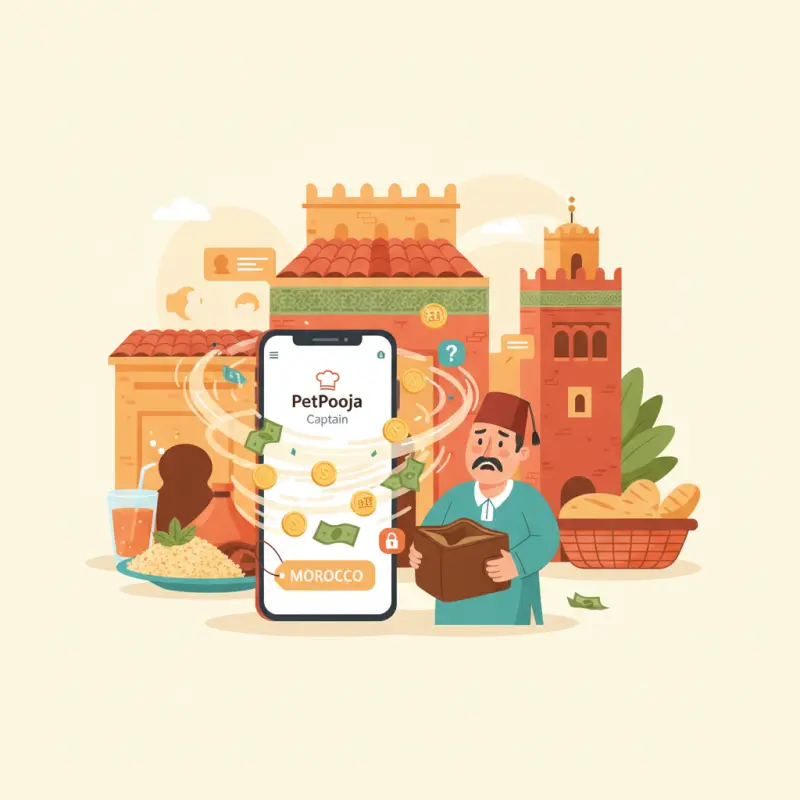
PetPooja captain app costs Moroccan restaurants 36,248-81,608 MAD annually when accounting for all expenses. The petpooja captain app charges $89-299 monthly for subscriptions, but hardware, internet upgrades, training, and currency conversion fees add substantial costs. Each tablet costs 2,500-4,000 MAD, internet upgrades run 500-1,500 MAD monthly, and currency conversion fees consume 2.5-3.5% of payments. Connection drops and hardware failures in Morocco's infrastructure create additional downtime costs. The system works for tableside ordering and kitchen integration but struggles with local connectivity issues. Restaurant owners should budget triple the advertised subscription cost for total implementation expenses.
Table of Contents
The Real Cost of PetPooja Captain App in Morocco
Your waiter pulls out a tablet to take your order at a Casablanca bistro. The PetPooja Captain App crashes mid-order, forcing everyone to wait while the system reboots. This scene plays out daily in restaurants trying to modernize with technology built for Mumbai, not Morocco.
The true cost of implementing PetPooja Captain App goes far beyond the advertised monthly fee. While marketing materials promise "affordable" tableside ordering, Moroccan restaurant owners discover hidden expenses that can double or triple their technology budget.
Start with the basics: PetPooja charges $89-299 monthly for captain app features, depending on your restaurant size. Add hardware costs — each tablet runs 2,500-4,000 MAD, and you need one per waiter during peak hours. Internet upgrades to support constant connectivity cost another 500-1,500 MAD monthly. Currency conversion fees eat 2.5-3.5% when paying in dollars.
| Cost Category | Monthly Amount (MAD) | Annual Total (MAD) |
|---|---|---|
| PetPooja Subscription | 890-2,990 | 10,680-35,880 |
| Internet Upgrade | 500-1,500 | 6,000-18,000 |
| Hardware (5 tablets) | 1,042 (amortized) | 12,500 |
| Training & Support | 500-1,000 | 6,000-12,000 |
| Currency Fees (3%) | 89-269 | 1,068-3,228 |
| Total | 3,021-6,801 | 36,248-81,608 |
These calculations assume smooth operations. Add connection drops, hardware failures, and staff turnover requiring retraining — your actual costs climb higher.
Platform comparison
Where does your money really go?
| Commission | 27% | 25% | 30% | 0% |
| Customer data | They own it | They own it | They own it | You own it |
| Your branding | Theirs | Theirs | Theirs | Yours |
| Payout cadence | Biweekly | Weekly | Biweekly | Weekly |
| Setup cost | Free | Free | Free | Paid |
What PetPooja Captain App Actually Does (And Doesn't)
Strip away the marketing language and PetPooja Captain App provides four core functions: tableside ordering through mobile devices, automatic KOT generation for kitchens, basic billing petpooja integration, and table-based payment collection. These features work well in ideal conditions.
Core Captain App Functions
The app transforms waiters' smartphones or restaurant tablets into ordering terminals. Staff select items, add modifiers, and send orders directly to kitchen printers. The system generates sequential KOTs, tracks order status, and enables payment processing at tables. When everything connects properly, service speeds up by 15-20%.
Integration with petpooja billing happens through API connections, syncing menu items, prices, and inventory. Orders flow from captain devices to the central POS, maintaining consistent records. The promise: seamless operations from order to payment.
The Limitations Nobody Mentions
Reality hits when your Agadir beachfront restaurant loses internet during lunch rush. PetPooja Captain App requires constant connectivity — no offline mode exists. One connection drop means orders disappear, customers wait, and staff scramble for paper backup.
Customization proves nearly impossible for Moroccan dining preferences. The app assumes Western-style ordering: appetizer, main, dessert. Try explaining Morocco's communal dining style, where tables share multiple dishes arriving simultaneously. The rigid workflow frustrates both staff and customers.
Older waiters struggle with tablet interfaces designed for tech natives. A 55-year-old server who's worked tables for 30 years now needs hours of training to perform basic tasks. Many quit rather than adapt, creating turnover costs PetPooja never mentions.
Why Toast POS Company and PetPooja Miss the Mark for Moroccan Restaurants
Toast POS company built their platform for American quick-service restaurants where speed trumps hospitality. PetPooja copied this model for Indian markets. Neither understands Moroccan restaurant culture, where meals stretch for hours and personal service matters more than efficiency metrics.
These platforms assume restaurants operate like factories: standardized processes, interchangeable staff, metrics-driven management. Visit any traditional restaurant in Marrakech's medina — you'll find the opposite. Family operations rely on relationships, flexibility, and staff who've served the same customers for years.
The pos toast approach requires every server to carry devices, navigate complex menus, and troubleshoot technical issues. This works in San Francisco tech cafes. In Rabat family restaurants, it creates chaos. Staff resist the technology, viewing tablets as barriers between them and guests rather than tools for better service.
Cost structures reveal the deeper mismatch. American restaurants average 25-30% profit margins, absorbing technology fees easily. Moroccan restaurants operate on 10-15% margins. When toast pos company charges 2.99% plus $0.15 per transaction, plus monthly fees, the math stops working.
The Hidden Truth About Commission-Based Restaurant Tech
Restaurant technology companies perfected the art of hiding true costs. They advertise low monthly fees while burying transaction percentages, setup charges, and integration costs in fine print. The real damage appears only after implementation.
Consider a mid-size Casablanca restaurant processing 500 digital orders monthly at 150 MAD average. Traditional platforms charge 15-30% commission, extracting 11,250-22,500 MAD monthly from revenue. Add subscription fees, and technology costs can exceed rent.
| Monthly Orders | Average Order (MAD) | Revenue (MAD) | Commission (20%) | Net to Restaurant |
|---|---|---|---|---|
| 100 | 150 | 15,000 | 3,000 | 12,000 |
| 500 | 150 | 75,000 | 15,000 | 60,000 |
| 1,000 | 150 | 150,000 | 30,000 | 120,000 |
Break-even analysis shows most Moroccan restaurants need 800+ monthly orders to justify commission-based platforms. Few achieve this volume consistently. Zero-commission models eliminate this math entirely — restaurants keep every dirham earned.
Switching costs compound the problem. Migrating from one platform to another involves menu recreation, staff retraining, customer communication, and operational disruption. Restaurants feel trapped, paying excessive fees because change seems more expensive than staying.
How OCHI Solves What Captain Apps Can't
OCHI approached restaurant technology differently. Instead of forcing staff to carry devices, QR codes at each table let customers order from their own phones. No tablets to buy, no apps to install, no training required. Scan, browse, order — the same flow everyone already knows from social media.
Zero commission means restaurants keep 100% of revenue. A Fès restaurant processing 50,000 MAD in monthly orders keeps all 50,000 MAD. No percentages, no transaction fees, no surprises. The same prices on your printed menu appear online at votrenom.ochi.ma.
The platform works offline through progressive web technology. Orders queue locally when connections drop, syncing automatically when internet returns. Kitchen operations continue uninterrupted. This matters in Morocco where connectivity varies by neighborhood, weather, and time of day.
Built specifically for Moroccan operations, OCHI handles communal dining, multi-stage meals, and complex modifications. Staff use familiar interfaces matching local workflows. The waiter panel shows tables exactly as arranged in your dining room. Kitchen displays organize orders by Moroccan service patterns, not Western assumptions.
Integration happens at your pace. Start with QR ordering for one section. Add delivery zones for your neighborhood. Enable reservations when ready. Each feature activates independently, preventing the overwhelming transitions that sink captain app implementations.
Technology should reduce complexity, not add it. While PetPooja Captain App demands restaurants reshape operations around software limitations, OCHI molds itself to how Moroccan restaurants actually work. The difference shows in adoption rates — staff embrace tools that make their jobs easier rather than fighting systems that complicate simple tasks.
See what OCHI can do for your restaurant at ochi.ma/partners.
Frequently Asked Questions
What is the real monthly cost of PetPooja Captain App in Morocco?
PetPooja Captain App costs 890-2,990 MAD monthly for subscriptions, but total expenses reach 3,021-6,801 MAD when you include hardware, internet upgrades, training, and currency conversion fees. The actual annual cost ranges from 36,248-81,608 MAD depending on restaurant size.
Does PetPooja Captain App work offline in Morocco?
No, PetPooja Captain App requires constant internet connectivity and has no offline mode. Connection drops during busy periods cause orders to disappear and force staff to use paper backups.
What hardware do I need for PetPooja Captain App?
Each waiter needs a tablet costing 2,500-4,000 MAD, and you need one device per server during peak hours. Most restaurants require five tablets plus upgraded internet infrastructure to support constant connectivity.
Can PetPooja Captain App handle Moroccan dining customs?
The app follows Western-style ordering workflows and struggles with Morocco's communal dining style where tables share multiple dishes arriving simultaneously. Customization options for local dining preferences are extremely limited.
Are there commission-free alternatives to PetPooja Captain App in Morocco?
Yes, platforms like OCHI offer tableside QR ordering with zero commission fees and local support designed for Moroccan restaurants. You can explore features at ochi.ma/partners without the hidden costs of international systems.
Restaurant owners · Weekly
The guide to running a restaurant in 2026.
One article per week. No commission advice. Just honest operational insight for Moroccan restaurants.

Blog Manager
Comments
No comments yet. Be the first to share your thoughts.