AI Overview
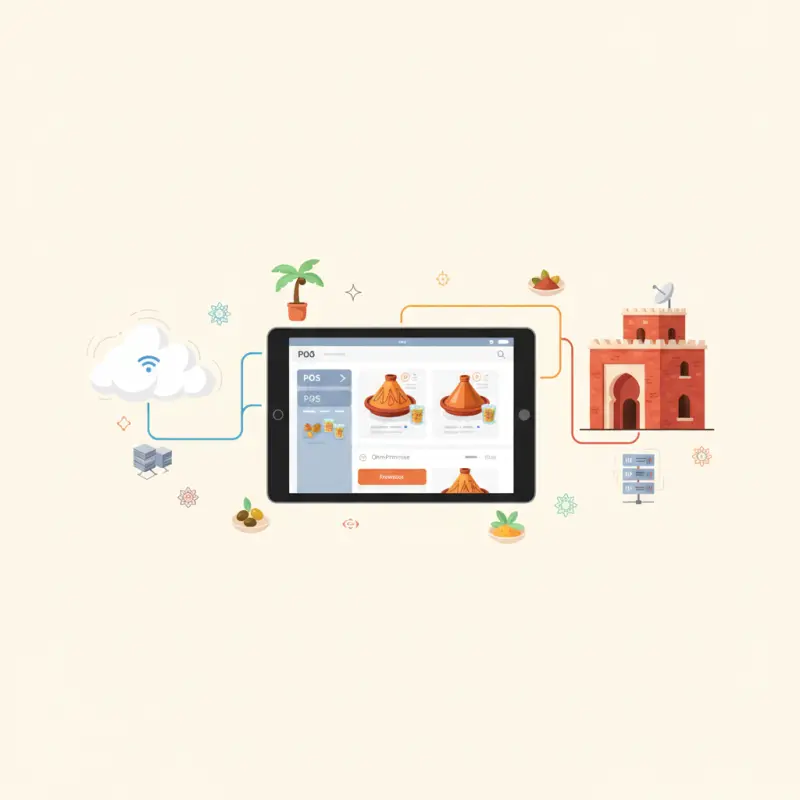
Cloud-based POS systems for iPad significantly outperform on-premise solutions in Morocco's challenging infrastructure environment. While iPad POS system hardware gets attention, the underlying architecture determines business continuity during power outages that occur 2-3 times monthly in Casablanca and twice that in Agadir. On-premise systems require 50,000 MAD generator backup plus 2,000 MAD monthly maintenance, while cloud solutions operate through cellular networks when WiFi fails. Restaurant owners lose 3,000-5,000 MAD per outage with traditional systems as staff scramble with paper orders. Cloud-based restaurant management platforms sync automatically when connectivity returns, keeping kitchens operational. Data recovery for failed on-premise hardware costs 10,000-20,000 MAD with no guarantees, compared to automatic cloud backups every five minutes. Choose cloud-based POS systems that prioritize cellular connectivity and real-time syncing over hardware specifications.
Table of Contents
Your restaurant's iPad crashed during the Friday dinner rush. In Agadir's 40°C summer heat, the device overheated while processing 200 orders. Your on-premise server holds all the data, but without the iPad, your staff writes orders on paper napkins while customers wait.
This scenario plays out weekly across Morocco. Restaurant owners invest heavily in iPad POS systems without understanding the infrastructure reality. The hardware gets the attention, but the architecture behind it determines whether your business survives the next power outage.
Why Cloud-Based Restaurant POS Systems Matter More in Morocco Than Anywhere Else
Morocco's power grid tells a tale of two countries. Casablanca experiences 2-3 outages monthly, lasting 30 minutes on average. Move to Agadir or smaller coastal cities, and that number doubles. Each outage costs restaurants 3,000-5,000 MAD in lost orders when on-premise systems fail.
The math is brutal. A typical restaurant processes 50 orders during peak hours. When your on-premise server loses power, you lose access to menus, prices, and customer data. Staff scramble to remember prices. Orders get mixed up. Customers leave.
Cloud-based restaurant management systems continue operating through local outages. Your iPad connects to cellular networks when WiFi drops. Orders sync when connectivity returns. The kitchen never stops.
The Hidden Costs Nobody Mentions
Generator backup for on-premise solutions costs 50,000 MAD upfront plus 2,000 MAD monthly maintenance. IT support in Marrakech charges 500 MAD per hour — if you can find someone available on weekends. When hardware fails, data recovery runs 10,000-20,000 MAD with no guarantees.
Compare this to cloud-based restaurant management software: zero infrastructure investment. Automatic backups every five minutes. Support available 24/7 through chat. Your data lives in multiple data centers, not a dusty server room above your kitchen.
Stack audit
What do you currently use?
Tick what you have. We’ll show what OCHI replaces or connects to.
The iPad Advantage: Why Hardware Matters Less Than You Think
Restaurant owners choose iPads for the wrong reasons. They focus on screen size and processor speed. The real advantage? iPads are disposable endpoints. Drop one, grab another, log in, and continue serving customers. Your POS system for iPad should treat hardware as temporary.
Marketing claims promise 10-hour battery life. Reality in a busy Moroccan restaurant: six hours maximum with constant use, WiFi, and Bluetooth enabled. Smart operators keep two iPads per station, rotating them through charging cycles.
The Real Question: Local Storage vs Cloud Native
When internet drops — and it will — what happens to your orders? Legacy systems store everything locally, creating sync nightmares when connectivity returns. Duplicate orders. Missing payments. Inventory chaos.
Modern cloud-based POS for retail and restaurants queue orders locally, then sync intelligently. OCHI's system timestamps every action, preventing duplicates. Orders process in sequence. Inventory adjusts accurately. Revenue reports stay clean.
Data sync failures cost more than lost orders. When local and cloud databases conflict, restaurants spend days reconciling accounts. One Rabat restaurant group lost 45,000 MAD in duplicate refunds after a sync error corrupted their payment records.
Security and Compliance: The Moroccan Restaurant Reality
Banks in Morocco require specific integration protocols. Your POS system for iPad must handle MAD currency correctly, update exchange rates for tourist payments, and maintain transaction logs for five years. Most international systems fail these basic requirements.
PCI compliance costs 15,000 MAD annually for on-premise systems through mandatory security audits. Cloud-based restaurant POS systems shift this burden to the provider. Your restaurant inherits enterprise-grade security without the enterprise price tag.
Staff Access Control That Actually Works
Basic systems offer two roles: admin and cashier. Real restaurants need eight. Your chef shouldn't access payment reports. Waiters need table assignments without seeing daily revenue. Delivery staff require route information, not inventory costs.
OCHI implements granular permissions by default. Branch managers see their location only. POS operators process payments without accessing discounts. Every action logs with timestamps and user IDs. When cash goes missing, you know exactly who handled what.
Remote management becomes critical when you own multiple locations. Monitor Agadir from Casablanca. Adjust Marrakech pricing from your phone. Real-time dashboards show performance across all branches without driving between cities.
The Total Cost Breakdown: iPad POS Systems in 2026
| Component | Upfront Cost (MAD) | Monthly Cost (MAD) | Annual Hidden Costs (MAD) |
|---|---|---|---|
| iPad Pro 12.9" + Case + Stand | 15,000 | 0 | 3,000 (replacement) |
| Receipt Printer + Cash Drawer | 8,000 | 0 | 500 (paper/maintenance) |
| Card Reader | 3,000 | 0 | 0 |
| Traditional POS Software | 0 | 2,000 | 15,000-25,000 (3-5% commission) |
| Zero-Commission Platform | 0 | 0 | 0 |
The Commission Trap
Traditional platforms charge 3-5% per order. A restaurant processing 1,000 monthly orders at 150 MAD average loses 4,500-7,500 MAD. Annually, that's 54,000-90,000 MAD — enough to hire another chef.
Zero-commission platforms like OCHI charge nothing per transaction. Your menu prices stay yours. Customers pay what they see. No hidden fees inflating your prices or eating your margins.
The break-even calculation is simple: if your monthly revenue exceeds 40,000 MAD, commission-based systems cost more than the most expensive flat-fee alternatives. Most restaurants cross this threshold in their first month.
Implementation Strategy: From Decision to First Order
Switching POS systems terrifies restaurant owners. They imagine weeks of chaos, untrained staff, and angry customers. Reality: proper implementation takes one week with minimal disruption.
Week One: System Setup and Staff Training
Day 1-2: Export existing menu data to Excel. Clean pricing errors. Organize by categories. Upload to your new cloud-based restaurant management system. Modern platforms import standard formats automatically.
Day 3-4: Configure dining areas, table layouts, and printer routing. Set up staff accounts with appropriate permissions. Test every workflow from order to payment to kitchen display.
Day 5-7: Train staff in small groups during slow hours. Start with basic order flow. Add advanced features gradually. Run parallel systems for one service to ensure confidence.
Month One: Performance Monitoring
Track three metrics religiously: order accuracy (target 98%), average service time (under 20 minutes), and daily revenue variance (within 5% of previous system). When metrics slip, identify the cause immediately.
Customer feedback reveals training gaps. If complaints mention slow service, check your kitchen display setup. Wrong orders indicate menu configuration issues. Payment problems suggest staff need more POS practice.
Revenue impact appears within two weeks. Faster order processing means more table turns. Accurate inventory reduces waste. Real-time reports identify your best-selling items for strategic promotion.
The right POS system for iPad transforms operations without transforming your restaurant's soul. In Morocco's challenging infrastructure environment, cloud-based architecture isn't a luxury — it's survival. When evaluating options, ask not about features but about reliability when everything else fails. Your customers don't care about your technology. They care about getting their tagine while it's hot. Read more insights about restaurant technology that puts operations first.
See how OCHI's cloud-native platform keeps Moroccan restaurants running through any challenge at ochi.ma/partners.
Frequently Asked Questions
What happens to my iPad POS system during power outages?
Cloud-based iPad POS systems continue operating through cellular networks when WiFi drops, while on-premise systems lose access to menus, prices, and customer data until power returns.
How much do power outages cost restaurants using on-premise POS systems?
Restaurants lose 3,000-5,000 MAD per outage with on-premise iPad POS systems, as staff can't access pricing or sync orders during typical 30-minute power cuts.
What's the backup cost for on-premise iPad POS systems in Morocco?
Generator backup requires 50,000 MAD upfront plus 2,000 MAD monthly maintenance. Data recovery from failed hardware costs 10,000-20,000 MAD with no guarantees.
Can iPad POS systems work without internet connection?
Cloud-based iPad POS systems switch to cellular networks automatically when WiFi fails, then sync all data when connectivity returns. On-premise systems stop functioning completely.
Which iPad POS system works best in Agadir's climate?
Cloud-based systems reduce hardware dependency, crucial when iPads overheat in Agadir's 40°C summers. The processing happens in data centers, not on local devices.
Restaurant owners · Weekly
The guide to running a restaurant in 2026.
One article per week. No commission advice. Just honest operational insight for Moroccan restaurants.

Blog Manager
Comments
No comments yet. Be the first to share your thoughts.