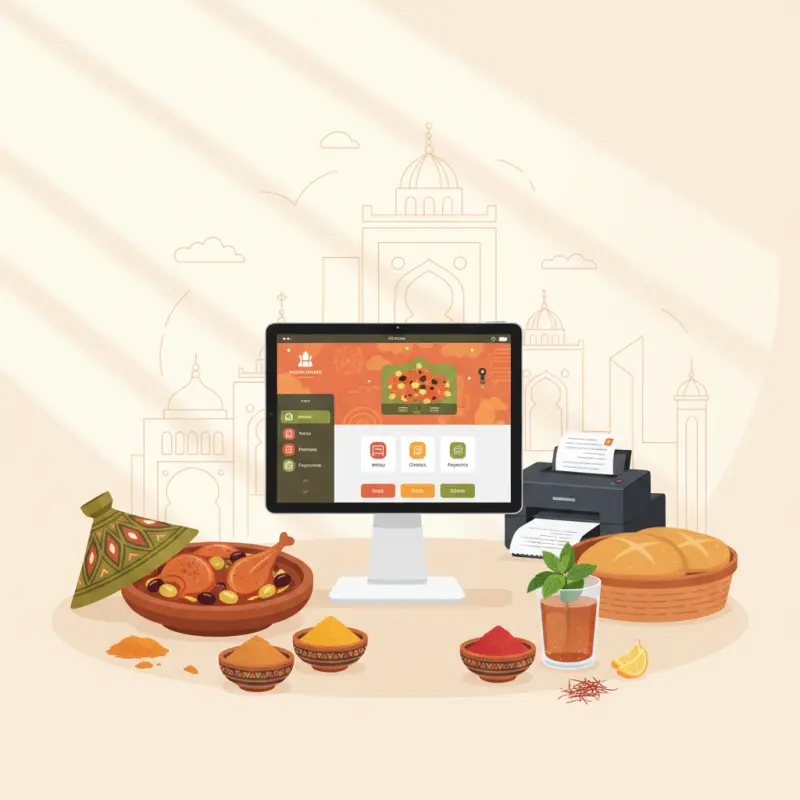
POS System for Restaurant iPad: Infrastructure Requirements Morocco
Blog Manager
··5 min read
AI Overview
A pos system for restaurant ipad requires minimum 5 Mbps consistent internet bandwidth to handle peak-hour operations without freezing. Most pos system for restaurant ipad setups fail during high-traffic periods because restaurants underestimate their infrastructure needs. iPads degrade 40% faster in commercial kitchen environments due to heat above 45°C, with screen coatings wearing out in 12-14 months from constant touching. In Agadir's industrial zones, where internet speeds drop to 2 Mbps during business hours, restaurants need dedicated fiber lines or face system failures during lunch rushes. Payment processing still requires internet connectivity even when vendors promise offline mode, creating backup payment vulnerabilities. Restaurant owners should budget for iPad replacement every 18 months and secure dedicated internet lines before implementing cloud-based POS systems.
Table of Contents
For restaurant owners
Start your restaurant in 60 minutes.
From signup to your first real order — no commission, no setup fee, no sales call.
Most restaurant owners in Morocco discover their iPad POS system needs twice the internet bandwidth they have — right in the middle of Friday dinner service. The truth about pos system for restaurant ipad setups goes far beyond the glossy marketing photos.
The Infrastructure Reality Check: What iPad POS Actually Demands
Restaurant technology vendors love showing sleek iPads on marble countertops. They don't mention the technical foundation required to keep those systems running when 40 orders hit your kitchen at once.
Internet Speed Requirements: The 5 Mbps Minimum Nobody Mentions
Cloud based restaurant POS systems need consistent bandwidth to process transactions. During peak hours, your system pulls data for menu updates, sends orders to the kitchen display, processes payments, and syncs inventory — all simultaneously.
In Agadir's industrial zones, where internet speeds often drop to 2 Mbps during business hours, restaurants face a choice: invest in expensive dedicated fiber lines or watch their POS system freeze during the lunch rush. One restaurant near the port reported losing 12,000 MAD in a single weekend when their consumer-grade internet couldn't handle their new cloud based restaurant management system.
Hardware Lifespan in Restaurant Environments
iPads weren't designed for commercial kitchens. Between steam from the grill, flour dust from the pizza station, and the occasional coffee spill, restaurant environments destroy consumer electronics faster than any warranty covers.
Environment Factor
iPad Lifespan Impact
Replacement Cost
Kitchen heat (45°C+)
Battery degrades 40% faster
3,500-4,000 MAD
Constant touching
Screen coating wears in 12-14 months
1,200 MAD repair
Grease and moisture
Port corrosion after 18 months
Full replacement needed
The Backup Payment Problem
When vendors promise "offline mode," they mean your POS system for iPad can store orders temporarily. What they don't explain: payment processing still requires internet. No connection means cash-only service, and in Morocco's increasingly digital payment landscape, that means turning away customers.
A seafood restaurant in Casablanca's Corniche lost an entire tour group's payment — 8,500 MAD — when their "offline capable" system couldn't process cards during a network outage. The group left for another restaurant that accepted mobile payments through a different system.
Stack audit
What do you currently use?
Tick what you have. We’ll show what OCHI replaces or connects to.
The debate between cloud and local systems takes on unique dimensions in Morocco's restaurant market, where IT expertise costs premium wages and power outages remain common in some districts.
Why Cloud-Based Restaurant POS Systems Win in Morocco
Cloud based restaurant management software eliminates the need for on-site IT staff — a significant advantage when qualified technicians in Marrakech charge 500-800 MAD per service call. Updates happen automatically overnight. Multi-location restaurant groups can manage their Rabat and Fès branches from a single dashboard without VPN setups or remote desktop licenses.
Data backups run every hour without human intervention. Compare that to on-premise systems where backup failures go unnoticed until disaster strikes. One restaurant chain discovered their local backups hadn't run successfully in four months — after a server crash wiped their entire sales history.
The Hidden Costs of On-Premise Systems
Local server installations seem cheaper until you calculate total ownership costs:
Server hardware: 15,000-25,000 MAD for restaurant-grade equipment
Uninterruptible power supply: 8,000 MAD (essential in Morocco)
Monthly IT maintenance: 2,000-3,000 MAD
Annual software licenses: 12,000-18,000 MAD
Emergency repair calls: 1,500 MAD minimum
After three years, on-premise systems cost double their cloud equivalents — and that's before counting the revenue lost during system failures.
Security Reality: Your Data in the Cloud
Restaurant owners worry about cloud security while their local servers sit in unlocked offices next to the kitchen. The security conversation needs better context.
Why Local Servers Are Less Secure Than You Think
Physical access equals total access. Any staff member with a USB drive can copy your entire customer database from a local server. Professional hackers don't even need physical access — unpatched local systems make easy targets.
Restaurant servers rarely receive security updates. IT contractors install the system and return only when something breaks. Meanwhile, discovered vulnerabilities remain open for months or years. A Tangier restaurant group lost three months of customer data to ransomware because their local server ran outdated software.
Cloud Security Standards That Matter
Professional cloud providers maintain security standards no individual restaurant can match. PCI DSS compliance comes standard — try achieving that certification with a local server. Encryption happens at multiple levels: during transmission, at rest, and in backups.
Automatic security patches deploy within hours of discovery. Compare that to local systems where updates require scheduling downtime and paying technicians. The math is simple: cloud providers employ full-time security teams. Your local IT guy handles security between fixing printers.
The OCHI Advantage: Zero Infrastructure, Full Control
OCHI built its platform understanding these exact challenges. No servers to buy, no infrastructure to maintain, no IT contracts to manage.
True Cloud-Native Architecture
OCHI runs entirely in the cloud with built-in redundancy across multiple data centers. When one connection fails, traffic routes automatically to another. Your restaurant operations continue without interruption.
Updates deploy without downtime. New features appear overnight. Security patches apply automatically. Your team focuses on serving customers, not managing technology.
The Cost Reality
Cost Category
Traditional iPad POS
OCHI Platform
Initial hardware
8,000-12,000 MAD
Use existing devices
Monthly software
1,500 MAD
Zero commission model
Transaction fees
2.5-3.5%
0%
Support costs
Pay per incident
24/7 included
OCHI's zero-commission model means restaurants keep 100% of their revenue. No percentage fees eating into margins. No surprise charges. The same prices on your printed menu appear on your digital storefront.
Making the Switch: What Restaurant Owners Need to Know
Transitioning to a cloud based restaurant management system requires planning, but less than most owners expect.
Implementation Timeline for Cloud-Based Restaurant Management Systems
Day one starts with menu upload and basic configuration. By day three, payment systems integrate and test successfully. Week one ends with full staff training on the iPad interface — most employees master the basics within two hours.
Week two brings the complete transition. Old systems can run parallel during this period for safety. By day 14, restaurants typically process all orders through their new cloud platform. The key: schedule implementation during slower periods. Avoid Ramadan, summer tourist season, or major local events.
Staff Training Reality
Waiters familiar with smartphones learn iPad-based systems quickly. The real training focus: teaching proper handling to extend hardware life. Simple rules make a difference — always use the stand, never place iPads on wet surfaces, clean screens with appropriate materials.
Common mistakes cluster around rush periods. Staff skip steps to save seconds, creating inventory mismatches or payment errors. Solution: practice mock rush scenarios during training. Run 20 orders in 10 minutes. Create deliberate stress to reveal weak points before real service.
Schedule training sessions for 3 PM — after lunch service, before dinner prep. Two hours gives enough time for hands-on practice without exhausting staff. Record training sessions for future reference when hiring new team members.
The restaurant industry doesn't pause for technology transitions. But with proper planning and the right cloud platform, switching to a modern POS system takes days, not months. See how OCHI's zero-infrastructure approach works at ochi.ma/partners.
Frequently Asked Questions
What internet speed does a POS system for restaurant iPad need?
Restaurant iPad POS systems need minimum 5 Mbps consistent bandwidth during peak hours. Cloud-based systems simultaneously process transactions, update menus, send kitchen orders, and sync inventory data.
How long do iPads last in restaurant environments?
iPads in restaurant kitchens typically last 12-18 months due to heat, moisture, and constant use. Kitchen temperatures above 45°C degrade batteries 40% faster than normal conditions.
Do iPad POS systems work without internet?
iPad POS systems can store orders temporarily without internet, but payment processing still requires connectivity. Offline mode doesn't solve backup payment issues during internet outages.
What are the hidden costs of iPad POS systems?
Beyond software fees, expect dedicated internet line costs, iPad replacements every 18 months (3,500-4,000 MAD), and screen repairs after 12-14 months (1,200 MAD).
Restaurant owners · Weekly
The guide to running a restaurant in 2026.
One article per week. No commission advice.
Just honest operational insight for Moroccan restaurants.
Blog Manager
Comments
No comments yet. Be the first to share your thoughts.