AI Overview
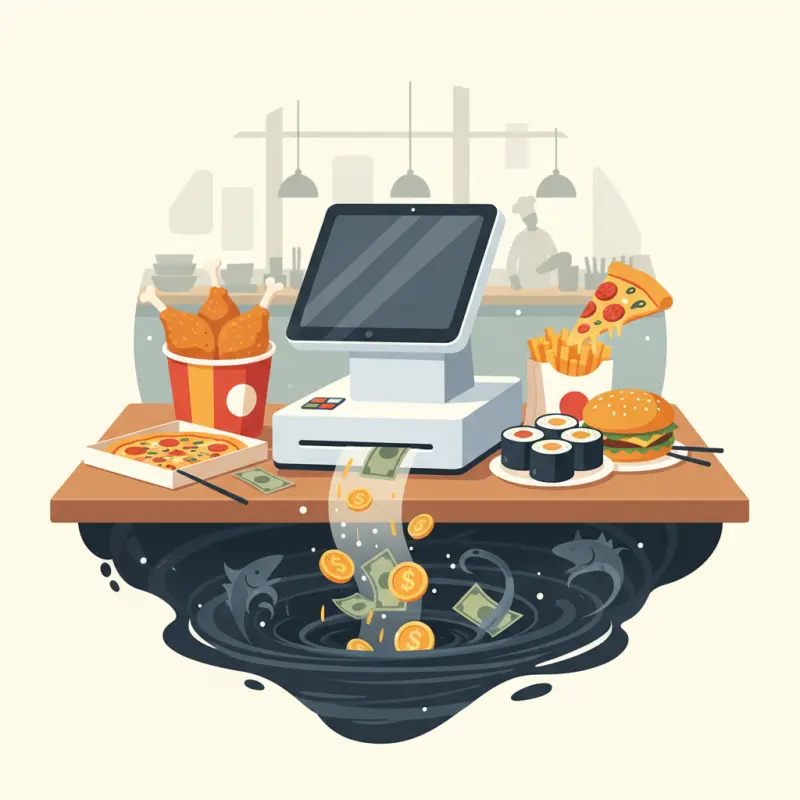
Traditional POS systems for takeaway extract 15-30% of restaurant revenue through hidden commission structures and processing markups. A Casablanca pizzeria discovered their "free" system cost 3.4 times more than paid alternatives after tracking six months of actual expenses. Medium-sized takeaway restaurants processing 30,000 MAD weekly lose 4,500-9,000 MAD to commissions alone. Payment processing markups often reach 3-4% versus 1.5-2% from direct processors, costing an additional 4,000 MAD monthly on 200,000 MAD revenue. Zero-commission platforms like OCHI eliminate these hidden costs by charging transparent monthly fees instead of transaction percentages. Restaurants keep 100% of their revenue while accessing branded online ordering, QR table service, and integrated delivery tracking. Calculate your current commission costs by multiplying monthly online sales by your platform's percentage rate.
Table of Contents
A takeaway restaurant in Casablanca discovered their "free" POS system for takeaway was costing them 14,000 MAD monthly in hidden fees. This isn't unusual — it's the industry standard most restaurant owners don't see coming.
The real cost of restaurant technology hides in commission structures, processing markups, and integration fees that compound silently. While vendors promote low monthly fees, the actual expense comes from the 15-30% bite they take from every order. Understanding these hidden costs — and how to avoid them — determines whether your restaurant thrives or merely survives.
The Commission Trap Most Restaurants Fall Into
Traditional platforms market themselves as affordable POS solutions, often starting at "just 299 MAD per month." What they don't advertise is the commission structure that follows. A medium-sized takeaway restaurant processing 30,000 MAD in online orders weekly loses between 4,500 and 9,000 MAD to commissions alone.
The math is straightforward but painful. At a 20% commission rate — standard for most platforms — a restaurant with 120,000 MAD in monthly online sales surrenders 24,000 MAD. That's enough to hire two full-time staff members or upgrade kitchen equipment. Yet owners accept this as "the cost of doing business" because they haven't seen the alternative.
"Free" POS systems prove most expensive. They lure restaurants with zero upfront costs, then extract value through transaction fees, delivery commissions, and marketing charges. One Casablanca pizzeria tracked their actual costs over six months and found their "free" system cost 3.4 times more than a paid alternative would have.
Hidden Fees That Destroy Your Margins
Payment processing markups hit hardest. While direct payment processors charge 1.5-2%, integrated POS systems often mark this up to 3-4%. On 200,000 MAD monthly revenue, that extra 2% equals 4,000 MAD — gone.
Third-party delivery integration adds another layer. Connecting your restaurant online ordering system to multiple delivery platforms costs 500-1,500 MAD per integration, plus monthly maintenance fees. Staff training runs 2,000-5,000 MAD for initial setup, with ongoing costs as employees turn over.
| Cost Category | Traditional POS | Hidden Monthly Cost |
|---|---|---|
| Order Commissions (20%) | 0 MAD advertised | 24,000 MAD |
| Payment Processing Markup | "Included" | 4,000 MAD |
| Delivery Integration | Per platform | 1,500 MAD |
| Training & Support | "Free onboarding" | 500 MAD |
| Total Hidden Costs | 299 MAD/month | 30,000 MAD/month |
Food cost calculator
What’s your real margin?
Food cost
29.2%
Gross margin
70.8%
Profit / dish
85 MAD
Healthy · under 30%
Digitize your menu with OCHIWhy QR Ordering Beats Mobile Apps for Takeaway Success
Restaurant technology vendors push custom mobile apps as the ultimate solution. They promise customer loyalty, push notifications, and brand presence on phones. What they don't mention: 78% of customers abandon orders when forced to download an app.
The storage problem compounds this. Modern smartphones juggle dozens of apps, and customers regularly delete those they use infrequently. A restaurant app used twice monthly doesn't survive the next storage cleanup. Meanwhile, QR ordering works instantly — scan, order, done.
The App Download Problem Nobody Talks About
Guest checkout changes everything. When customers can order without creating accounts, conversion rates jump 40%. Forced registration creates friction at the worst moment — when someone's hungry and ready to pay. Online food ordering system for restaurants should remove barriers, not create them.
A Marrakech restaurant group tested both approaches. Their app-based ordering converted 22% of visitors. QR ordering converted 61%. The difference? Zero download requirement and guest checkout option. Customers want food, not another account to manage.
QR Table Ordering: The Overlooked Revenue Driver
QR ordering at tables increases average order value by 15-22%. Without server pressure, customers browse leisurely, adding desserts and extras they might skip during verbal ordering. Digital menus show appetizing photos and descriptions that paper menus can't match.
Labor costs drop simultaneously. Servers focus on food delivery and customer service instead of order-taking. One Agadir beachfront restaurant reduced front-of-house staff by 30% while improving service ratings. Their food ordering system online handles the routine work, letting humans excel at hospitality.
Real-time menu updates eliminate the printing cycle. Out of stock? Update instantly. New special? Live in seconds. Price changes don't require reprinting 200 menus. This flexibility alone saves restaurants 2,000-3,000 MAD monthly in printing costs.
The Multilingual Advantage in Morocco's Takeaway Market
Most POS systems treat Arabic as an afterthought. French gets basic support. But 60% of Moroccan customers prefer ordering in their native language, and poor translations drive them away. A food online ordering system built for Morocco must excel in Arabic, French, and English equally.
Language barriers create real problems. Miscommunication leads to wrong orders, unhappy customers, and wasted food. When customers order in their preferred language, accuracy improves by 35%. Returns and complaints drop proportionally.
Language Barriers Cost You Customers
Staff efficiency multiplies with proper multilingual support. Kitchen displays in Arabic, waiter interfaces in French, customer receipts in their chosen language — this isn't luxury, it's necessity. Mixed-language households need systems that switch seamlessly between languages per user.
Right-to-left Arabic support goes beyond translation. Proper RTL layouts, Arabic numerals, and culturally appropriate design matter. Customers notice when a system feels foreign versus built for them. This attention to local needs drives loyalty more than any rewards program.
Branded Storefront Benefits Beyond SEO
Generic ordering links scream "third-party platform." Customers wonder about markups, data security, and whether the restaurant even knows they ordered. A branded subdomain like votrenom.ochi.ma builds immediate trust. It's your restaurant, your brand, your direct relationship.
Professional image impacts pricing perception. Restaurants with branded ordering systems command 8-12% higher average orders than those using generic platforms. Customers associate direct ordering with better quality and service. They're willing to pay for that perception.
Repeat customer rates improve with branded systems too. When customers bookmark "pizzahouse.ochi.ma" instead of "delivery-platform.com/restaurant/pizza-house-cas-3847," they return directly. No browsing competitors, no commission fees, just direct orders to your restaurant.
Integration Reality: What Actually Works
Marketing promises seamless integration. Reality delivers API conflicts, sync delays, and manual workarounds. Before choosing any POS system for takeaway, test the actual integration, not the sales demo.
Kitchen Display Systems suffer most from poor integration. Orders arrive late, modifications get lost, and peak hours bring system crashes. A properly integrated KDS shows orders instantly, updates in real-time, and handles hundreds of simultaneous orders without breaking.
Kitchen Display Systems That Actually Sync
Real-time synchronization means milliseconds, not minutes. When a customer modifies their order, kitchen staff need immediate updates. OCHI's KDS shows order status changes instantly across all screens — POS, kitchen, and customer tracking.
Peak performance matters most during rush hours. A Rabat restaurant tested their system during Ramadan iftar orders — 200 orders in 30 minutes. Systems that work fine during quiet periods often crumble under pressure. Only battle-tested platforms survive real restaurant conditions.
Inventory Management Integration Truth
Most POS systems claim inventory integration but deliver CSV exports. True integration means automatic stock deduction per order, ingredient-level tracking, and real-time availability updates. When you sell the last burger, your online menu should reflect that immediately.
Recipe costing accuracy determines profitability. If your POS tracks sales but not ingredient costs, you're flying blind. Proper integration calculates margins per item, suggests price adjustments, and identifies loss leaders. This data transforms gut-feeling pricing into strategic decisions.
The Zero-Commission Alternative: OCHI's Takeaway Solution
OCHI operates differently. No commissions, no percentage fees, no hidden charges. Restaurants keep 100% of their revenue while accessing enterprise-grade tools. The math is simple: save 20-30% on every online order starting day one.
Implementation takes 24 hours, not weeks. Upload your menu, customize your branded storefront at votrenom.ochi.ma, and start accepting orders. Staff training requires two hours maximum — the interface is that intuitive. Most restaurants see their first order within hours of going live.
Month-by-Month ROI Breakdown
For a typical Moroccan takeaway doing 150,000 MAD in monthly online orders, the savings are immediate. Month one: save 30,000 MAD in commissions. Month two: eliminate 4,000 MAD in processing markups. Month three: reduce labor costs by 15% through QR ordering efficiency.
Break-even happens instantly since there's no commission structure to overcome. Every order adds to your bottom line instead of feeding platform profits. Casablanca restaurants using OCHI report 25-40% profit margin improvements within 90 days.
| Month | Commission Savings | Other Savings | Cumulative Benefit |
|---|---|---|---|
| Month 1 | 30,000 MAD | 4,000 MAD | 34,000 MAD |
| Month 2 | 30,000 MAD | 6,000 MAD | 70,000 MAD |
| Month 3 | 30,000 MAD | 8,000 MAD | 108,000 MAD |
The choice facing takeaway restaurants isn't about features anymore. Every POS system for takeaway promises inventory management, online ordering, and kitchen displays. The real decision comes down to ownership — do you want to rent access to your customers or own the relationship completely?
Ready to calculate your exact savings? See how OCHI transforms your takeaway operations at ochi.ma/partners.
Frequently Asked Questions
What hidden costs should I watch for in a POS system for takeaway?
Commission fees (15-30% per order), payment processing markups (often 3-4% vs 1.5-2% direct rates), delivery integration charges, and marketing automation fees. These compound monthly and can exceed 24,000 MAD on 120,000 MAD in sales.
Why are free POS systems more expensive than paid ones?
Free systems extract value through transaction percentages rather than monthly fees. A Casablanca pizzeria found their free system cost 3.4 times more than paid alternatives after six months of tracking actual expenses.
How much do commission-based POS systems actually cost?
At standard 20% commission rates, restaurants processing 120,000 MAD monthly lose 24,000 MAD to fees. That's enough to hire two full-time staff or upgrade kitchen equipment.
What's the difference between commission-free and commission-based POS systems?
Commission-free platforms charge transparent monthly fees and let restaurants keep 100% of revenue. Commission-based systems take 15-30% of each order while advertising low monthly costs.
How can I calculate my current POS system costs?
Multiply your monthly online sales by your platform's commission rate, add payment processing markups, and include any delivery or marketing fees. Compare this total to zero-commission alternatives.
Restaurant owners · Weekly
The guide to running a restaurant in 2026.
One article per week. No commission advice. Just honest operational insight for Moroccan restaurants.

Blog Manager
Comments
No comments yet. Be the first to share your thoughts.