AI Overview
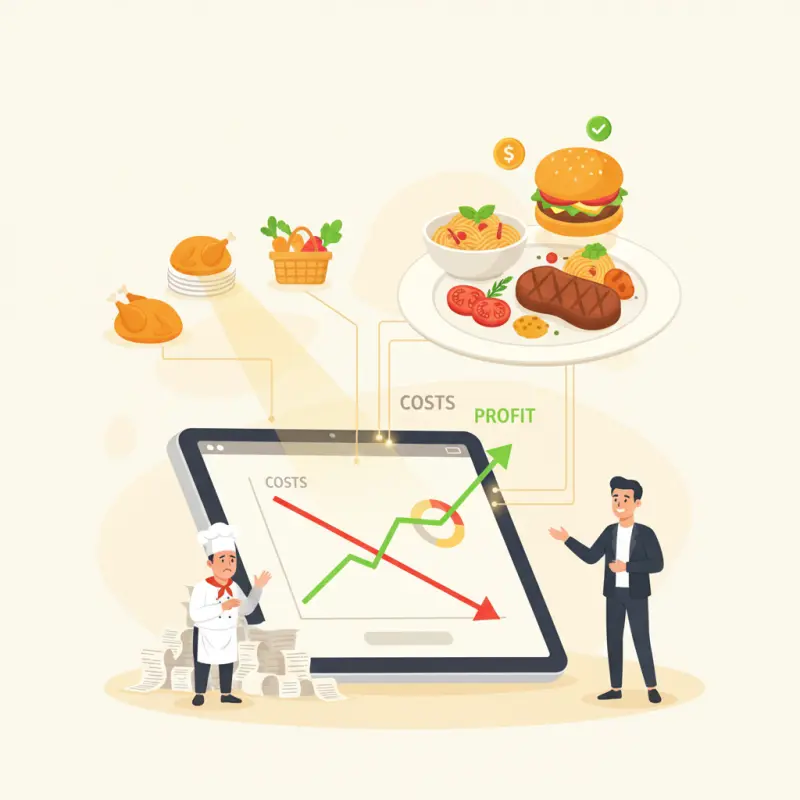
Restaurant costing software calculates exact food costs and profit margins for every menu item, preventing restaurants from pricing dishes below their actual production cost. Without restaurant costing software, 47% of restaurant owners in Morocco unknowingly sell items at a loss. The global restaurant benchmark maintains food costs at 28-35% of menu price, but manual tracking with spreadsheets fails when managing 60+ menu items with fluctuating supplier prices. In Morocco's volatile ingredient market, where tomato prices change weekly and suppliers adjust rates frequently, automated costing becomes critical. Hassan's Agadir Marina restaurant generates 12,000 MAD daily revenue but loses money because his 75 MAD fish tagine actually costs 68 MAD to produce. Restaurant costing software like OCHI tracks real-time ingredient costs, calculates true dish margins including packaging and delivery expenses, and automatically updates pricing recommendations when supplier costs change. Calculate your current food cost percentage by dividing ingredient cost by menu price, then multiply by 100.
Table of Contents
Every morning at 6 AM, Hassan opens his seafood restaurant in Agadir Marina and checks yesterday's numbers. Revenue looks healthy — 12,000 MAD. But his bank account tells a different story. Like 47% of restaurant owners in Morocco, he's pricing menu items below their actual cost.
The culprit isn't poor sales or bad food. It's the absence of proper restaurant costing software — the difference between guessing at prices and knowing your exact margins on every dish.
The 28% Rule That's Bankrupting Moroccan Restaurants
Food cost percentage is simple math: divide your ingredient cost by menu price, multiply by 100. A 45 MAD tagine that costs 15 MAD in ingredients runs a 33% food cost. Sounds reasonable — until you factor in the other costs most owners ignore.
The global restaurant benchmark sits at 28-35% food cost. In Morocco, where ingredient prices swing wildly between seasons and suppliers change rates weekly, that target becomes critical. Cross 35% and you're losing money on every order, even with full tables.
The Real Cost of Guessing at Menu Prices
Most Moroccan restaurant owners set prices by checking competitors or estimating "what feels right." They'll price a fish tagine at 75 MAD because the place next door charges 80 MAD. But without restaurant costing software tracking actual expenses, that 75 MAD dish might cost 68 MAD to produce — leaving just 7 MAD to cover rent, staff, utilities, and profit.
The math gets worse with delivery. Add packaging (3 MAD), delivery costs (even on commission-free platforms), and suddenly you're paying customers to eat your food.
Why Traditional Spreadsheets Fail Restaurant Owners
Excel sheets work fine for a food truck with 10 items. Scale to a full restaurant menu with 60+ dishes, daily specials, and seasonal variations, and manual tracking becomes impossible. By the time you update tomato prices from last week's supplier invoice, you've already sold 200 salads at the wrong margin.
Restaurant menu management software automates what spreadsheets can't: real-time cost updates across every dish containing that ingredient. When olive oil jumps 15%, every item using it recalculates instantly.
Stack audit
What do you currently use?
Tick what you have. We’ll show what OCHI replaces or connects to.
Four Menu Items That Killed a Casablanca Café's Profit Margins
Café Andalous thought they had pricing figured out. Their downtown Casablanca location stayed packed, orders flowed through their online menu ordering system, yet profits kept shrinking. A proper cost analysis revealed the truth:
| Menu Item | Selling Price (MAD) | Actual Cost (MAD) | Loss per Item (MAD) |
|---|---|---|---|
| Lamb Tagine with Prunes | 38 | 42 | -4 |
| Seafood Pastilla | 45 | 51 | -6 |
| Seven Vegetable Couscous | 35 | 38 | -3 |
| Traditional Mint Tea (pot) | 15 | 18 | -3 |
These weren't random selections — they were the café's four most popular items. Every busy Friday, they lost money faster.
The Tagine That Cost 42 MAD to Make (Sold for 38 MAD)
The lamb tagine breakdown exposed every hidden cost: 18 MAD for meat, 8 MAD for prunes and almonds, 4 MAD for vegetables, 3 MAD for spices, 5 MAD for cooking gas and oil, 4 MAD for the portion of bread served alongside. Before adding labor or overhead, they'd already hit 42 MAD.
Without restaurant pricing software calculating these totals automatically, the owner assumed his "simple" tagine cost maybe 25 MAD maximum.
Hidden Costs Restaurant Owners Always Miss
Cooking oil disappears into dishes without anyone tracking it. That generous drizzle of argan oil costs 2 MAD. The charcoal for grilled items? Another MAD per portion. Complimentary olives and bread? 3-4 MAD vanished before the actual meal arrives.
Then comes waste. Buy 10 kilos of tomatoes, use eight in dishes, lose two to spoilage. Your restaurant menu management system needs to spread that 20% loss across every tomato-based item, or your costs stay fictional.
The Psychology Behind "Customer Favorite" Pricing Mistakes
Owners resist raising prices on popular items, fearing customer backlash. But selling 100 tagines at a 4 MAD loss means giving away 400 MAD daily. Better to sell 80 at the correct price than subsidize every meal.
The fear is usually unfounded. Customers who love your food will pay 42 MAD instead of 38 MAD — especially when the quality justifies it.
Recipe Costing: The Numbers Every Owner Needs to Track
Accurate costing starts with weighing every ingredient in your recipes. Not "a handful of parsley" but "15 grams of parsley." Not "some olive oil" but "30ml of olive oil." Precision turns guessing into knowing.
Calculating True Ingredient Costs (Including 15% Waste)
Smart restaurant menu management software factors in unavoidable waste. Buy chickens at 18 MAD per kilo, but only 85% is usable meat after cleaning. Your actual cost: 21 MAD per kilo of usable chicken.
Vegetable prep waste runs higher. One kilo of onions yields 850g after peeling. Carrots? Only 800g after trimming. Build these yields into your restaurant costing software or watch margins evaporate.
Labor Allocation: Why Your Chef's Time Costs More Than You Think
A pastilla takes 45 minutes of skilled labor. At 50 MAD hourly for an experienced chef, add 37.50 MAD just for preparation time. Suddenly that "profitable" 45 MAD pastilla shows its true colors.
Compare this to a simple grilled fish: five minutes prep, 10 minutes cooking. Same chef, but only 12.50 MAD in labor costs. Your menu needs this balance between complex showpieces and profitable workhorses.
Seasonal Pricing: When Tomatoes Jump 40% in Winter
Summer tomatoes in Agadir cost 4 MAD per kilo. Come December, they hit 7 MAD. Without dynamic pricing tools, your margherita pizza profits disappear for four months yearly.
Restaurant pricing software handles this automatically — adjusting menu costs as you update supplier invoices. Some owners create seasonal menus, others adjust prices quarterly. Both beat losing money half the year.
Why Most Restaurant Menu Management Software Misses the Point
Browse software options and you'll find AI-powered demand forecasting, blockchain inventory tracking, and augmented reality menu previews. Meanwhile, most restaurants can't answer: "What does this tagine actually cost to make?"
The Feature Bloat Problem in Restaurant Software
Complex systems promise to revolutionize your restaurant with 200+ features. But owners need five things: recipe costing, inventory tracking, margin calculation, menu price optimization, and simple reports. Everything else is expensive distraction.
The best restaurant costing software stays invisible. Update supplier prices, watch menu costs recalculate. Check daily margins, adjust problem items. No PhD required.
What Restaurants Actually Need vs. What They're Sold
Restaurants need software that answers: Which items make money? Which lose money? How much should I charge? What's my daily food cost percentage? Instead, they're sold predictive analytics for customer behavior they don't have time to analyze.
Focus on the foundation. Know your costs, set correct prices, track daily performance. Advanced features mean nothing if you're pricing below cost.
How OCHI's Menu Management System Prevents Pricing Disasters
OCHI builds cost intelligence directly into restaurant operations. The recipe builder tracks every gram of every ingredient. When you update supplier prices, all related menu items recalculate instantly. No spreadsheet gymnastics, no manual updates across dozens of dishes.
Real-Time Cost Updates When Supplier Prices Change
Monday morning, your olive oil supplier raises prices 12%. In OCHI's system, you update one number. Every salad, tagine, and grilled dish using olive oil shows new costs immediately. The suggested prices adjust based on your target margins. One update ripples through your entire online menu ordering system.
This real-time intelligence prevents the slow profit drain that kills restaurants. You see margin erosion the day it happens, not months later in your accountant's report.
The Branded Menu Advantage: votrenom.ochi.ma
Your costs stay perfect internally, but customers see your branded ordering experience at votrenom.ochi.ma. They order from your restaurant, not a generic platform. You control prices, descriptions, photos — while the system ensures every item maintains healthy margins.
The integration runs deeper than display. When kitchen costs change, your online menu updates automatically. No manual syncing between your restaurant pricing software and customer-facing menu.
Integration Between Kitchen Operations and Online Orders
Orders flow from your branded site into the same system tracking costs. The KDS shows real-time ingredient usage. Inventory deducts automatically. End of day, you see exact food cost percentage — not estimates, but precise calculations from actual orders.
This closed loop between costing, ordering, and operations is what most restaurant menu management software misses. They track costs in isolation, leaving owners to manually connect the dots.
For examples of how Agadir restaurants transformed their margins with proper costing tools, browse our blog for detailed case studies and implementation guides.
Restaurant costing software isn't about complex features or AI predictions. It's about knowing whether that beautiful lamb tagine makes you money or slowly bankrupts your business. In a market where 47% of restaurants price below cost, that knowledge determines survival.
Set up your restaurant's cost-controlled menu system at votrenom.ochi.ma.
Frequently Asked Questions
What is restaurant costing software?
Restaurant costing software automatically calculates the exact cost of ingredients, labor, and overhead for each menu item. It tracks supplier price changes in real-time and shows your true profit margins on every dish.
How do you calculate food cost percentage for restaurants?
Divide your ingredient cost by the menu price, then multiply by 100. A 45 MAD tagine with 15 MAD in ingredients has a 33% food cost percentage.
What should food cost percentage be for restaurants?
The global restaurant benchmark is 28-35% food cost percentage. Going above 35% means you lose money on every order, even with full tables.
Why do spreadsheets fail for restaurant costing?
Spreadsheets can't handle real-time price updates from multiple suppliers or track costs across 60+ menu items with daily specials. By the time you manually update prices, you've already sold hundreds of dishes at wrong margins.
How does restaurant costing software help with delivery orders?
It factors in packaging costs, delivery fees, and platform commissions to show your true profit per delivery order. Many restaurants lose money on delivery without realizing it due to hidden costs.
Restaurant owners · Weekly
The guide to running a restaurant in 2026.
One article per week. No commission advice. Just honest operational insight for Moroccan restaurants.

Blog Manager
Comments
No comments yet. Be the first to share your thoughts.