AI Overview
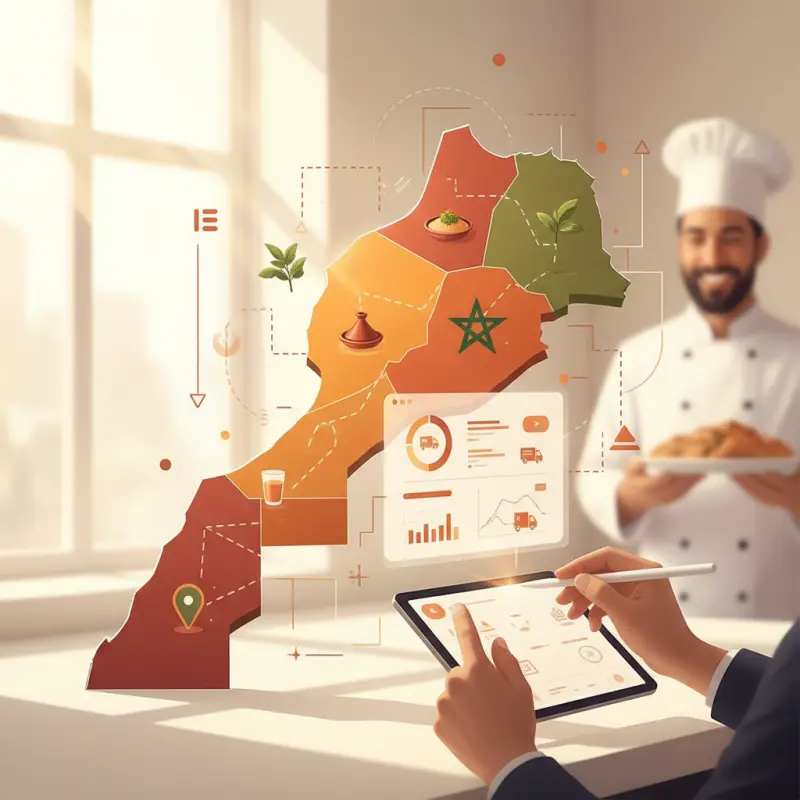
A restaurant delivery management system reduces delivery costs by 40% when you replace radius zones with polygon zones targeting high-density neighborhoods. Most platforms use simple radius zones that include unprofitable areas — a 5km radius covers 78.5 square kilometers of mixed-value territory. Smart operators in Casablanca target dense areas like Maarif (12 orders per square kilometer) while skipping sparse zones like Sidi Moumen (two orders per square kilometer). Polygon zones let you draw custom boundaries around profitable neighborhoods only. OCHI's delivery management tools enable this precision targeting across Morocco's major cities. The minimum viable density for profitable delivery is three orders per square kilometer during peak hours.
Table of Contents
Last month, a restaurant owner in Casablanca discovered he was paying 180,000 MAD annually in delivery commissions — enough to hire two full-time employees. This isn't unusual. Most restaurants using traditional delivery platforms lose 30% of every order to commission fees, while struggling with zones they can't control and drivers they can't manage.
A restaurant delivery management system changes this equation. But only if you understand the operational details that determine success or failure.
Why Your Restaurant Delivery Zone Setup Determines Success or Failure
Your delivery zone isn't just a circle on a map. It's the foundation of your unit economics. Get it wrong, and you'll bleed money on every order — no matter how good your food is.
Most online food ordering and delivery platforms push radius zones because they're simple. Draw a 5km circle around your restaurant. Done. But that 5km radius covers 78.5 square kilometers — including areas where you'll never get enough orders to justify the delivery cost.
The Hidden Cost of Radius Zones
Here's what the platforms don't tell you: a 5km radius zone includes profitable neighborhoods and money-losing ones. In Agadir, that might mean delivering to both touristy Secteur Balnéaire (high order density) and residential Tikiouine (sparse orders). Every delivery to low-density areas costs you money.
Polygon zones cut delivery costs by 40%. Instead of a circle, you draw custom boundaries around profitable neighborhoods. Skip the dead zones. Focus on areas with at least three orders per square kilometer — the minimum density for profitable delivery.
Polygon Zone Strategy for Casablanca Restaurants
A smart Casablanca restaurant targets Maarif and Gauthier — dense neighborhoods with high order volumes. They skip Sidi Moumen despite being closer. Why? Order density. Maarif generates 12 orders per square kilometer during dinner rush. Sidi Moumen generates two.
Food delivery management software like OCHI lets you draw these custom polygons. Set different delivery fees per zone. Charge 15 MAD for high-density areas, 25 MAD for medium-density. Turn off low-density zones during slow hours. This level of control transforms your delivery economics.
Platform comparison
Where does your money really go?
| Commission | 27% | 25% | 30% | 0% |
| Customer data | They own it | They own it | They own it | You own it |
| Your branding | Theirs | Theirs | Theirs | Yours |
| Payout cadence | Biweekly | Weekly | Biweekly | Weekly |
| Setup cost | Free | Free | Free | Paid |
Commission Models: The 30% Problem No One Talks About
Traditional platforms take 30% of every order. They call it a "marketing fee" or "technology cost." Let's call it what it is: a profit killer.
The True Cost of Traditional Platforms
Run the numbers for any Moroccan restaurant:
| Metric | Traditional Platform (30% commission) | Zero-Commission System |
|---|---|---|
| Average order value | 100 MAD | 100 MAD |
| Commission per order | 30 MAD | 0 MAD |
| Monthly orders (500) | 15,000 MAD lost | 0 MAD lost |
| Annual commission | 180,000 MAD | 0 MAD |
| Profit margin on 25% food cost | 45 MAD (45%) | 75 MAD (75%) |
That 180,000 MAD? It's two full-time delivery drivers. A marketing budget. Kitchen equipment. Growth capital you're handing to a platform that doesn't cook a single meal.
Zero-Commission Math That Actually Works
OCHI operates on zero commission. You keep 100% of every order. Same 100 MAD order, but now you pocket the full 75 MAD profit margin. That's a 67% improvement in profitability per order.
Restaurants using zero-commission food ordering and delivery platforms report 43% higher profit margins. They reinvest in better ingredients, staff training, and marketing. They build direct customer relationships through their branded subdomain (yourname.ochi.ma) instead of being just another listing.
Driver Assignment Systems: Auto vs Manual Control
Who decides which driver takes which order? This question determines whether your customer gets hot food in 25 minutes or cold food in 45.
Why Auto-Assignment Often Fails
Traditional platforms use "smart" algorithms that optimize for the platform, not your restaurant. During Agadir's dinner rush in Hay Mohammadi, their system might assign your driver to a competitor's order first because it's "on the way." Your customer waits.
Drivers game the system too. They see a 8km delivery to Bensergao and skip it, waiting for shorter runs. Your long-distance orders sit. Customers complain. You can't intervene because you don't control the assignment.
Batch Delivery Strategy
Restaurant delivery software should let you batch orders intelligently. Group 3-4 orders within a 2km radius. Send one driver. Cut delivery time from 45 to 25 minutes average.
OCHI's system shows you exactly this: pending orders on a map, driver locations, optimal routes. You decide whether to batch orders to Talborjt together or send them separately. During lunch rush, batch aggressively. During slow afternoons, prioritize speed. You're in control.
GPS Tracking: Customer Expectations vs Restaurant Reality
Every customer wants to know where their food is. How you answer that question determines whether they order again.
The Support Call Reduction Effect
Before GPS tracking: 40% of customers call asking about their order. Your staff spends half their time on the phone instead of serving walk-in customers. After implementing real-time tracking: calls drop to 8%.
The math is simple. If you handle 50 delivery orders daily, that's 20 phone calls reduced to four. Sixteen fewer interruptions. Your staff stays focused. Service improves. Ratings climb from 4.2 to 4.7 stars average.
OCHI's Real-Time Tracking Advantage
Customers see their driver on a live map that updates every 30 seconds. They get SMS notifications at each milestone: order confirmed, preparation started, driver assigned, on the way. No more guessing.
You monitor everything from one dashboard. See all active deliveries, driver locations, and delivery times. Spot problems before customers complain. A driver stuck in traffic near Place Al Amal? Reassign the order. Customer happy. Problem solved.
Setting Up Your Restaurant Delivery Management System in Morocco
Implementation determines whether your delivery system becomes a profit center or another operational headache.
Day One Setup Process
Start with zone mapping. In Marrakech, that might mean creating three polygons: Guéliz (high-end, 20 MAD delivery), Medina (tourist-heavy, 15 MAD), and Daoudiate (residential, 25 MAD). Upload your menu with delivery-optimized pricing — add 5-10% to cover packaging costs.
Train your drivers on the new system. Show them the app, explain batch delivery benefits, set performance expectations. The best Moroccan restaurants achieve 30-minute average delivery times with 95% customer satisfaction.
Your Branded Delivery Experience
With OCHI, customers order from yourname.ochi.ma — your branded storefront. They see your logo, your colors, your message. No competing restaurants. No commission fees. Just direct orders from customers who know your brand.
You own the customer relationship. Their email, phone number, order history — it's your data. Use it for targeted marketing, loyalty programs, and building a business that doesn't depend on third-party platforms.
The best restaurant delivery management system isn't the one with the most features. It's the one that gives you control over your business. See what OCHI can do for your restaurant at ochi.ma/partners.
Frequently Asked Questions
What is a restaurant delivery management system?
A restaurant delivery management system is software that controls delivery zones, tracks drivers, manages orders, and optimizes routes. It replaces third-party platform dependency with direct control over delivery operations.
How much do restaurants save with polygon delivery zones?
Restaurants reduce delivery costs by 40% using polygon zones instead of radius zones. Polygon zones target high-density neighborhoods while avoiding sparse areas that lose money on every delivery.
What is the minimum order density for profitable delivery?
Profitable delivery requires at least three orders per square kilometer during peak hours. Areas below this density cost more in driver wages and fuel than they generate in revenue.
Why do delivery platforms use radius zones instead of polygon zones?
Delivery platforms use radius zones because they're simple to implement. A circle requires one data point while polygon zones require multiple coordinates and geographic analysis.
Can restaurants in Morocco create custom delivery zones?
Yes, restaurant delivery management systems like OCHI allow Moroccan restaurants to create polygon delivery zones targeting specific neighborhoods in cities like Casablanca, Rabat, and Agadir.
Restaurant owners · Weekly
The guide to running a restaurant in 2026.
One article per week. No commission advice. Just honest operational insight for Moroccan restaurants.

Blog Manager
Comments
No comments yet. Be the first to share your thoughts.