How Delivery Zone Configuration Makes or Breaks Your Revenue Per Order
Your delivery zone isn't just a circle on a map. It's a complex calculation balancing customer reach, driver efficiency, and food quality. Get it wrong, and you'll either miss potential customers or deliver cold tagines to disappointed diners.
Polygon Zones vs Radius: Why Your Delivery Area Shape Matters More Than Size
Radius zones create perfect circles around your restaurant. Simple to set up, but they ignore real-world geography. A 5km radius in Marrakech might include the medina's winding streets where delivery takes 45 minutes, while missing straight-road neighborhoods just outside the circle.
Polygon zones let you draw custom shapes following actual delivery routes. OCHI's polygon tool lets restaurants exclude slow areas and extend along fast roads. One Rabat burger joint increased orders by 30% simply by reshaping their zone to follow Hassan II Avenue instead of using a basic radius.
Driver Assignment Logic That Actually Works in Agadir's Traffic Reality
Smart restaurant delivery software considers more than distance. During Agadir's beach season, a 3km coastal delivery might take longer than a 5km inland route. Auto-assignment algorithms must factor real-time traffic, driver location, and order preparation time.
The best systems batch nearby orders intelligently. Two orders going to Talborjt can share a driver, but only if both finish cooking within a five-minute window. Get this timing wrong, and the first customer receives cold food while waiting for the second order.
Batch Delivery Math: When Grouping Orders Saves Money vs When It Kills Customer Experience
Batching two orders saves 15-20 MAD in delivery costs. But if customer satisfaction drops and they don't reorder, you've lost 200 MAD in future revenue to save 20 MAD today. Smart platforms set maximum wait times and automatically split batches that exceed quality thresholds.
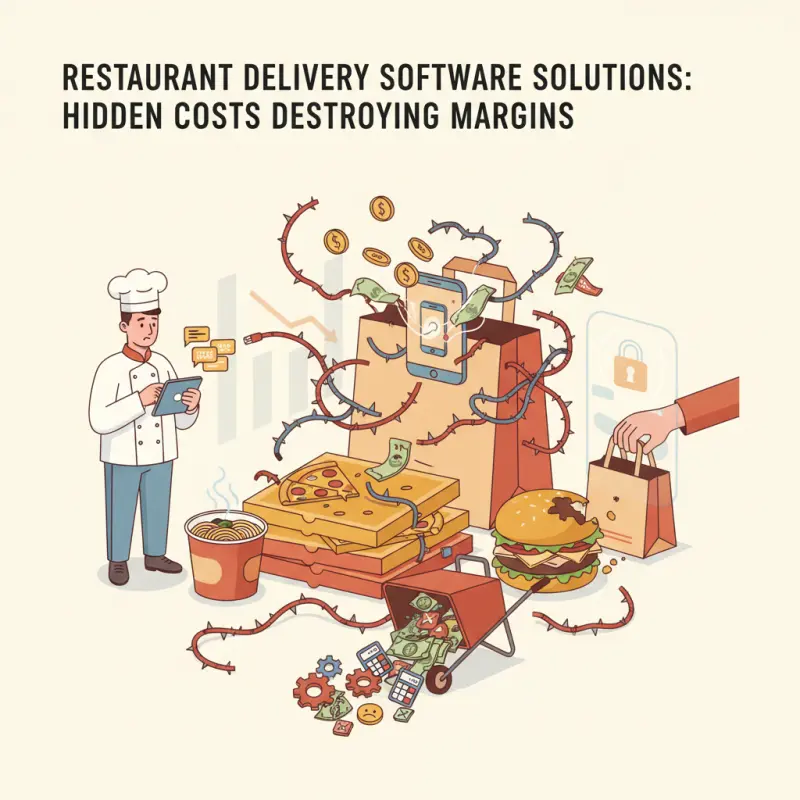
Commission platforms advertise "no upfront cost" because they know restaurants fear initial investment. But over 12 months, these "free" platforms extract more money than premium solutions. Here's the math they don't want you to run.
Real Numbers: Commission vs Subscription Over 1,000 Orders
| Platform Model |
Monthly Orders |
Average Order |
Platform Cost |
You Keep |
| 25% Commission |
1,000 |
100 MAD |
25,000 MAD |
75,000 MAD |
| Subscription (3,000 MAD) |
1,000 |
100 MAD |
3,000 MAD |
97,000 MAD |
| OCHI (0% commission) |
1,000 |
100 MAD |
990 MAD |
99,010 MAD |
The difference compounds monthly. After one year, a commission platform costs 300,000 MAD versus 11,880 MAD for OCHI. That's 288,120 MAD staying in your business instead of funding platform profits.
Commission platforms profit when your prices increase, not when your margins improve. They push restaurants to raise menu prices to offset commission costs, making your food less competitive. They have zero incentive to help you optimize operations or reduce costs.
These platforms also own the customer relationship. They collect customer data, control communication, and can redirect your regulars to competitors offering higher commissions. You're building their business, not yours.
The Psychology Behind "No Upfront Cost" Marketing
Restaurants choose commission platforms during cash-strapped moments. "Pay nothing now" sounds attractive when you're worried about next month's rent. But this short-term thinking creates long-term dependency. By month six, when you realize the true cost, switching platforms means losing accumulated reviews and customer habits.
Technical Features That Actually Move the Revenue Needle (And Which Ones Don't)
Most food ordering and delivery platforms overwhelm restaurants with features that sound impressive but don't impact revenue. After studying successful implementations, three technical capabilities consistently correlate with higher profits and customer satisfaction.
Real-Time GPS Tracking: Customer Peace of Mind vs Operational Intelligence
Customers check delivery status 3-4 times per order. Real-time GPS reduces support calls by 60% and increases reorder rates by showing transparency. But the real value comes from operational data: identifying slow routes, driver performance, and optimization opportunities.
OCHI's tracking shows live location with ETA countdown, automatically adjusting for traffic. More importantly, it logs delivery patterns to suggest zone adjustments and identify problem areas before they impact customer satisfaction.
Auto-Driver Assignment: Simple vs Smart (and Why Smart Costs More Upfront but Pays Back)
Simple assignment sends orders to the nearest available driver. Smart assignment considers driver performance history, current route efficiency, and order characteristics. A driver who consistently delivers soup without spills gets priority for liquid items.
The difference shows in the numbers. Smart assignment reduces delivery time by 12 minutes average and cuts problem orders by 40%. That translates to happier customers who order more frequently.
Integration Reality Check: POS, Inventory, and Staff Management in One Dashboard
True integration means orders flow directly to your kitchen display without manual entry. When a customer orders, inventory automatically adjusts, kitchen staff see the ticket instantly, and your accounts update in real-time. This isn't just convenience — it eliminates order errors that cost 2-3% of revenue.
Visit our blog for detailed integration guides specific to Moroccan POS systems. The setup investment pays back through reduced errors and staff efficiency.
What OCHI's Zero-Commission Model Actually Costs Casablanca Restaurants
OCHI charges 990 MAD monthly for unlimited orders, zero commission. This includes branded ordering (yourname.ochi.ma), delivery management, POS integration, and 24/7 support. But the real question is ROI timeline and operational impact for typical Moroccan restaurants.
Month one with OCHI costs 990 MAD plus setup time (typically 2-3 hours). A commission platform costs nothing upfront but immediately takes 25% of every order. By month two, any restaurant processing more than 40 orders has already saved money with OCHI.
Month six tells the real story. A typical Casablanca restaurant doing 200 orders monthly saves 30,000 MAD in commission fees. That's enough to upgrade kitchen equipment or launch marketing campaigns — investments that grow your business instead of feeding platform shareholders.
The yourname.ochi.ma Advantage: Branded Experience Without Development Costs
Every OCHI restaurant gets a custom subdomain: yourname.ochi.ma. Customers order directly from your branded site, building loyalty to your restaurant, not a platform. You own the customer relationship, data, and communication channel.
This branded approach typically costs 50,000-100,000 MAD to develop independently. OCHI includes it standard, with instant setup and automatic updates. One Marrakech restaurant saw direct orders increase 300% after promoting their branded link on social media.
24/7 Support Reality: What It Means for Weekend Rush Hours
Friday night rushes don't wait for business hours. When your delivery tablet crashes at 9 PM with 50 orders pending, you need immediate help. OCHI's support team handles urgent issues within five minutes, preventing the revenue loss and reputation damage of failed service during peak times.
Modern restaurant delivery software solutions must balance immediate profitability with long-term growth. The math is clear: zero-commission models let restaurants invest saved fees into growth instead of platform profits. Smart delivery zones, real-time tracking, and integrated operations transform delivery from necessary evil to competitive advantage. See what OCHI can do for your restaurant at ochi.ma/partners.