AI Overview
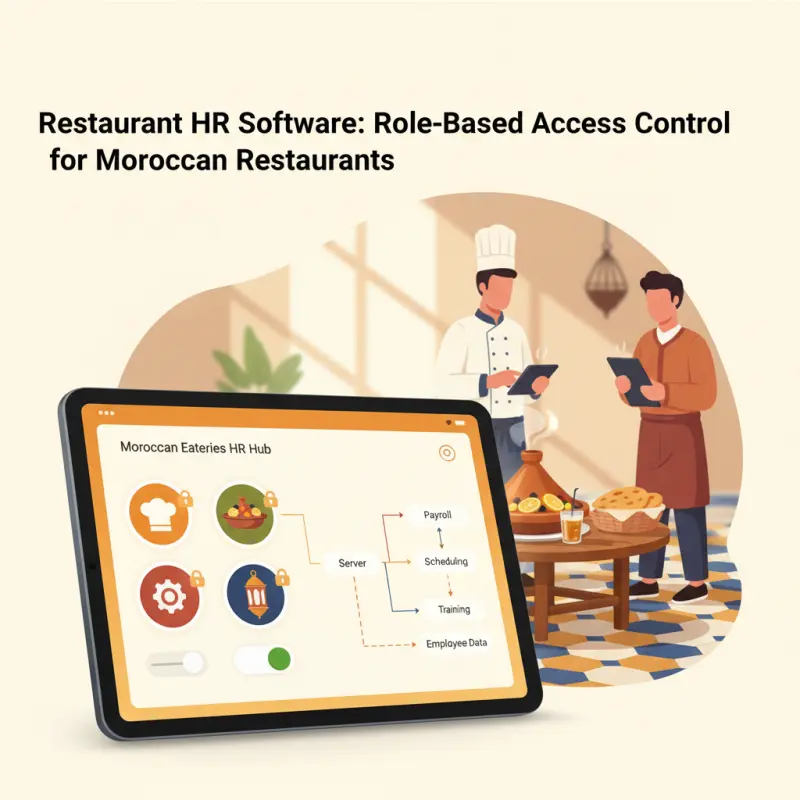
Restaurant hr software with role-based access control prevents internal theft and protects profit margins by limiting employee system permissions. In Morocco, 73% of restaurant internal theft involves staff with excessive system access. Effective restaurant hr software supports eight distinct roles: Admin, Branch Manager, POS Operator, Waiter, Chef, Delivery Boy, Cashier, and Staff. Each role receives precisely the permissions needed for their responsibilities. For example, cashiers handle payments but can't modify menu prices, while chefs update item availability without accessing payroll data. OCHI's permission system maps to how Moroccan restaurants actually operate, with per-employee action tracking that catches problems before they impact your bottom line. Café Atlas in Agadir discovered 47 fake refunds through action history logs. Implement eight-role permission structure with action tracking to reduce internal theft and maintain accurate financial records.
Table of Contents
Role-Based Access Control: The Make-or-Break Feature Most Restaurants Ignore
Your restaurant HR software's permission system determines whether you catch problems or discover them months later in your P&L. In Morocco's restaurant industry, where 73% of internal theft involves employees with excessive system access, the difference between profit and loss often comes down to who can see — and change — what.
Most restaurant owners in Agadir and Casablanca still hand out full admin access like candy. They create one manager login that gets shared among five people. They wonder why their inventory numbers never match. They blame the software when cash goes missing. The software isn't the problem — the permissions are.
The Eight Critical Staff Roles Your System Must Support
Restaurant workforce management software needs more nuance than "admin" and "user." Your head chef shouldn't see payroll data. Your cashier shouldn't edit menu prices. Your delivery driver shouldn't access customer payment details. Yet most systems offer only two or three permission levels.
Here's what actually works in a 50-seat restaurant: Admin controls everything. Branch Manager handles daily operations without touching company-wide settings. POS Operator processes orders and payments. Waiter takes orders and manages tables. Chef updates item availability. Delivery Boy sees only addresses and order details. Cashier handles cash movements and shift reports. Staff clocks in and views schedules.
OCHI's eight-role system maps to how Moroccan restaurants actually operate. Each role gets exactly the access they need — nothing more. Your morning shift waiter can't accidentally delete yesterday's sales data. Your evening cashier can't modify their own clock-in times.
Per-Employee Action History: Catching Problems Before They Become Losses
Café Atlas in Agadir discovered their cashier had processed 47 fake refunds over two months. How? Their new restaurant HR software tracked every action with timestamps, device IDs, and IP addresses. The pattern was obvious once they looked — always during the 3pm shift change, always from the same tablet, always for amounts just under 100 MAD.
The best restaurant scheduling software doesn't just record who worked when. It logs every system interaction. Who voided that order? When did they clock in? Which device did they use? What was their GPS location? This isn't about spying on staff — it's about protecting honest employees from suspicion when money goes missing.
Smart operators review these logs weekly, not monthly. They spot patterns before they become problems. They notice when certain employees always have higher void rates. They see who consistently forgets to clock out. Small details reveal big issues.
Stack audit
What do you currently use?
Tick what you have. We’ll show what OCHI replaces or connects to.
Why Most Restaurant Workforce Management Software Fails in Morocco
International HR platforms weren't built for Morocco. They assume American labor laws. They calculate overtime wrong. They format dates in MM/DD/YYYY. They offer "Arabic support" that's clearly Google Translated. Restaurant owners end up managing HR in Excel because the software creates more problems than it solves.
The Hidden Compliance Costs
Moroccan labor law requires specific documentation that foreign restaurant labor management systems don't provide. Weekly hour limits differ from US standards. Overtime calculations follow different rules. Holiday pay works differently. Ramadan scheduling needs special consideration.
When labor inspectors visit your Casablanca restaurant, they won't accept "our software doesn't support that" as an excuse. One restaurant in Marrakech faced 50,000 MAD in fines because their American HR platform calculated overtime using US rules. Another couldn't produce proper Arabic employment contracts during an audit.
Language isn't just about translation — it's about legal protection. Your Moroccan staff need contracts in Arabic. They deserve pay stubs they can read. When disputes arise, documentation in their native language matters. International platforms treat Arabic as an afterthought. In Morocco, it's the law.
The Real Cost Breakdown: Commission vs Subscription Models
| Platform Type | Monthly Cost (20 employees) | Annual Cost | Hidden Fees |
|---|---|---|---|
| Traditional HR Software | 3,000-6,000 MAD | 36,000-72,000 MAD | Setup, training, integrations |
| Commission Platforms | 8-15% of gross sales | 96,000-180,000 MAD* | Processing fees, monthly minimums |
| OCHI (Zero Commission) | 0 MAD | 0 MAD | None |
*Based on average restaurant monthly sales of 100,000 MAD
The math is simple. Traditional restaurant HR software charges per employee. Add more staff, pay more money. Commission-based platforms take a cut of every transaction. Busy Saturday night? They earn more. OCHI includes eight staff roles with granular permissions at no extra cost because workforce management shouldn't penalize growth.
What "Best Payroll Software for Restaurants" Actually Means for Your Business
The best payroll software for restaurants isn't the one with the most features. It's the one your managers actually use. It's the one that prevents costly mistakes. It's the one that integrates with your existing systems without monthly fees.
Beyond Basic Scheduling: The Data That Drives Profit
Labor should run 25-35% of restaurant sales. Most Moroccan restaurants have no idea what their actual percentage is. They schedule based on gut feeling. They wonder why Friday nights feel chaotic while Tuesday afternoons drag.
Modern restaurant workforce management software connects scheduling to sales data. It shows you that Ahmed sells 40% more per hour than Mohamed. It reveals that your 2pm-4pm shift is overstaffed by two people. It proves that splitting the dinner shift actually costs you money in overtime.
Integration with your POS matters here. When staff can clock in from table-side tablets, you get accurate data. When break times sync automatically, labor costs become real-time metrics, not monthly surprises. OCHI's system tracks productivity by connecting orders to staff members — you see exactly who drives revenue.
The Make-or-Break Integration Test
Restaurant Agadir reduced labor costs 23% in four months. Not through layoffs — through proper scheduling based on integrated data. Their previous system required manual entry of sales figures. Staff forgot. Managers estimated. Schedules reflected habits, not needs.
With POS integration, they discovered Thursday lunch needed one less server. Saturday dinner needed one more. Small adjustments based on real data saved them 18,000 MAD monthly. The blog has more success stories from Moroccan restaurants using integrated systems.
Test any restaurant labor management system with these three scenarios: Can staff clock in from multiple devices? Do sales automatically influence next week's schedule? Can you see real-time labor cost percentage during service? If the answer to any is no, keep looking.
Your 30-Day Implementation Roadmap
Switching restaurant HR software feels overwhelming. Most owners delay until crisis forces their hand. Here's how to transition smoothly without disrupting service.
Week 1-2: Audit Your Current Process
Document everything. Most restaurants discover 40+ manual tasks hiding in their current process. Who approves time-off requests? How do you handle shift swaps? Where do you track uniform deposits? What happens when someone forgets to clock out?
Map current staff permissions versus what they actually need. Your host doesn't need inventory access. Your prep cook doesn't need customer data. This audit reveals security gaps and efficiency opportunities. One Rabat restaurant found three employees had admin access who'd left six months earlier.
Week 3-4: Test Role Permissions Before Full Rollout
Smart operators intentionally try to break the system before going live. Create test accounts for each role. Try to access restricted areas. Attempt to modify locked data. See what happens when two managers edit the same schedule.
The three permission scenarios that reveal software quality: Can a waiter change their own tips? Can a cashier void orders after shift end? Can ex-employees still log in? Quality restaurant HR software makes these impossible by design, not by policy.
See how OCHI's restaurant labor management system handles eight staff roles with granular permissions at votrenom.ochi.ma. Zero setup fees, zero commission — just complete control over who sees what, when, and why.
Frequently Asked Questions
What is role-based access control in restaurant HR software?
Role-based access control limits employee system permissions based on their job responsibilities. Each staff member gets exactly the access they need to perform their duties without compromising security or data integrity.
How many staff roles should restaurant HR software support?
Effective restaurant HR software should support at least eight roles: Admin, Branch Manager, POS Operator, Waiter, Chef, Delivery Boy, Cashier, and Staff. This covers the full spectrum of restaurant operations without overlap.
Why do most restaurants have problems with employee system access?
Most restaurants share admin logins among multiple employees or give everyone full access. This creates security vulnerabilities and makes it impossible to track who performed specific actions when problems arise.
Can restaurant HR software track individual employee actions?
Yes, quality restaurant HR software logs every employee action with timestamps and user identification. This audit trail helps identify the source of discrepancies, unauthorized changes, or suspicious activity patterns.
What permissions should a restaurant cashier have in HR software?
Restaurant cashiers should access cash movements, shift reports, and basic POS functions. They shouldn't modify menu prices, access payroll data, or edit their own clock-in times to maintain security and accuracy.
Restaurant owners · Weekly
The guide to running a restaurant in 2026.
One article per week. No commission advice. Just honest operational insight for Moroccan restaurants.

Blog Manager
Comments
No comments yet. Be the first to share your thoughts.