AI Overview
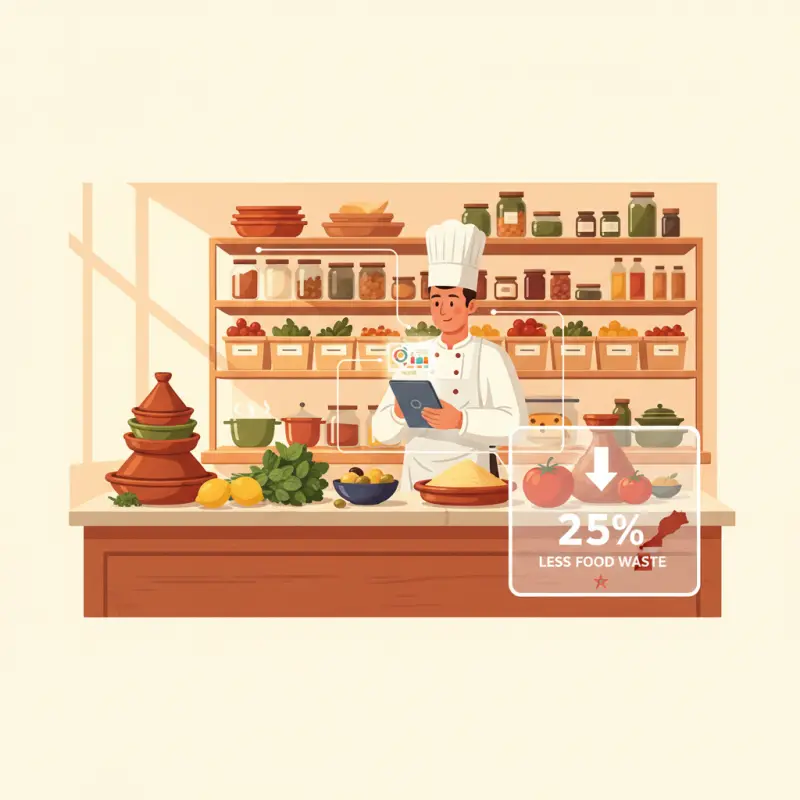
Morocco restaurants lose 15-30% of food costs to waste and poor ordering decisions. A restaurant inventory app with real-time tracking can cut these losses by 25% or more. The Casablanca seafood restaurant that lost 12,000 MAD monthly to waste represents thousands of establishments across Morocco using outdated manual tracking methods. Modern restaurant stock management software eliminates expired ingredient losses by tracking shelf life automatically. It prevents over-ordering through real-time stock visibility and reduces labor costs by automating inventory counts that typically require 32 hours per month. OCHI's integrated inventory system connects directly to POS data, providing accurate stock levels without manual entry. Restaurant owners should implement automated inventory tracking immediately to stop accepting waste as an inevitable business cost.
Table of Contents
A Casablanca seafood restaurant discovered they were throwing away 12,000 MAD worth of ingredients every month — simply because they couldn't track what was actually in their kitchen. This scenario plays out in restaurants across Morocco, where the average establishment loses 15-30% of food costs to waste, theft, and poor ordering decisions.
The difference between profitable restaurants and those barely surviving often comes down to one thing: knowing exactly what you have, what you need, and what's disappearing.
The Hidden Cost of Manual Inventory (Why Spreadsheets Fail)
Walk into any restaurant kitchen in Agadir at closing time and you'll likely find a manager with a clipboard, counting items one by one. Tomorrow, those numbers go into a spreadsheet. By next week, the data is already outdated.
Manual inventory tracking creates three expensive problems. First, expired ingredients hide in walk-in coolers until it's too late. A single case of imported cheese worth 800 MAD expires because nobody tracked its shelf life. Second, over-ordering becomes inevitable when you can't see real-time stock levels. That same restaurant orders 20 kilos of fresh fish when they already have 15 kilos — the excess spoils over the weekend.
The 15-30% Waste Reality
The numbers are brutal. A typical 50-seat restaurant in Morocco with monthly food costs of 80,000 MAD loses between 12,000 and 24,000 MAD to waste. That's not just spoilage — it includes theft, portion control issues, and ordering mistakes.
Restaurant owners often accept this loss as "the cost of doing business." They shouldn't. Modern restaurant stock management software can cut these losses by 25% or more, but only if you understand what actually drives waste.
What Manual Tracking Actually Costs You
Beyond the direct food costs, manual inventory burns through labor hours. A full inventory count takes two experienced staff members four hours. Do this weekly, and you're spending 32 labor hours per month just counting items — roughly 4,800 MAD in wages for zero productive output.
The real killer? Human error. One misplaced decimal point shows you have 10 kilos of beef when you actually have 1 kilo. Saturday night service grinds to a halt. Customers leave. Reviews suffer. Revenue disappears.
Stack audit
What do you currently use?
Tick what you have. We’ll show what OCHI replaces or connects to.
How Restaurant Stock Management Software Actually Works
Professional restaurant software inventory systems work differently than basic counting apps. They track ingredients at the gram level, not just units. When a customer orders a Caesar salad, the system automatically deducts 120g romaine lettuce, 30g parmesan, 40ml dressing, and 2 croutons from your stock.
This gram-level precision transforms how you understand your business. You know exactly how many portions remain. You see which dishes generate the most profit per gram of ingredients. You catch theft the moment inventory doesn't match sales.
Real-Time Tracking vs. Weekly Counts
The shift from periodic counts to real-time tracking changes everything. Your restaurant inventory program connects directly to your POS system. Every sale updates stock levels instantly. Low-stock alerts fire before you run out, not after.
A pizza restaurant in Marrakech implemented real-time tracking and discovered they were using 30% more mozzarella than recipes specified. The culprit? Prep cooks eyeballing portions instead of weighing. One month of proper portioning saved 6,000 MAD.
Recipe Costing That Actually Matters
Recipe management in modern inventory systems goes beyond listing ingredients. It calculates exact costs including prep waste. If a tomato weighs 150g but you only use 120g after removing the core, the system accounts for that 20% loss in your food cost calculations.
This accuracy reveals surprising truths. That signature dish you thought had 30% food cost? With proper waste accounting, it's actually 38%. Time to adjust the price or modify the recipe.
The ROI Numbers: What 25% Waste Reduction Looks Like
Let's examine a real scenario: a mid-size restaurant in Casablanca with 12 tables and monthly food costs of 100,000 MAD. Their baseline waste runs 20% — that's 20,000 MAD disappearing monthly.
| Metric | Before Software | After Software | Monthly Savings |
|---|---|---|---|
| Food Costs | 100,000 MAD | 100,000 MAD | — |
| Waste Percentage | 20% | 15% | 5% |
| Waste Amount | 20,000 MAD | 15,000 MAD | 5,000 MAD |
| Labor (Inventory) | 4,800 MAD | 800 MAD | 4,000 MAD |
| Total Savings | — | — | 9,000 MAD |
Monthly Savings Breakdown by Restaurant Size
Smaller operations see proportionally higher returns because they typically start with worse inventory practices. A 6-table café in Agadir reduced waste from 25% to 18% — saving 3,500 MAD monthly on just 50,000 MAD in food costs.
Larger restaurants with multiple stations benefit from better communication. When the pizza station runs low on mushrooms, the salad station knows not to push the mushroom salad special. This coordination alone prevents hundreds of "86'd" orders monthly.
When Restaurant Inventory Management Software Pays for Itself
Most restaurant inventory management software costs between 500 and 2,000 MAD monthly. Based on our Casablanca example saving 9,000 MAD monthly, the system pays for itself in under a week. Even conservative 10% waste reduction covers the software cost three times over.
Why Most Restaurant Inventory Apps Miss the Mark
Here's what vendors won't tell you: most inventory apps are glorified spreadsheets. They count what you have but don't prevent problems. You still manually update counts. You still guess at order quantities. You still discover theft weeks after it happens.
The Prevention vs. Tracking Problem
Effective restaurant stock management software prevents waste before it occurs. It suggests order quantities based on historical data and upcoming reservations. It flags unusual consumption patterns immediately — like when bar liquor usage spikes 40% without matching sales increases.
OCHI's approach differs fundamentally. The system tracks ingredients at the recipe level, connecting directly to your POS to deduct stock with every order. When inventory doesn't match sales, you know instantly. Read more about modern restaurant technology transforming Moroccan hospitality.
Why Integration Matters More Than Features
A standalone inventory app forces duplicate data entry. You ring up sales in your POS, then manually update inventory. This disconnect creates errors and delays that render the data useless for decision-making.
Integrated systems like OCHI eliminate this friction. Sales automatically update inventory. Low stock triggers purchase orders to suppliers. The entire flow works without manual intervention.
Building Your Waste Reduction System (OCHI Case Study)
A steakhouse in Rabat implemented OCHI's inventory system and cut waste by 28% in three months. Their approach focused on three key areas: automated tracking, supplier integration, and staff accountability.
First, they mapped every recipe with gram-level precision. A ribeye steak dinner deducts 350g beef, 200g potatoes, 150g vegetables, plus exact sauce and seasoning amounts. This precision revealed they were over-portioning sides by 25%.
Setting Up Automated Low-Stock Alerts
The restaurant configured alerts at two levels: "low stock" at 3 days of supply and "critical" at 1 day. Each alert goes to specific team members — low stock to purchasers, critical to the chef and manager. This dual-level system prevents both outages and panic ordering.
Smart reorder points adjust based on day of week and season. The system knows you need more fish on Fridays and more tagine ingredients during Ramadan. This intelligence prevents the common mistake of using fixed reorder quantities year-round.
Connecting Inventory to Your POS System
The real magic happens when your restaurant inventory program talks directly to your POS. Every sale updates stock in real-time. But OCHI goes further — it tracks inventory by branch, handles transfers between locations, and maintains separate stock levels for kitchen and bar.
Multi-unit operators see dramatic improvements. A restaurant group in Casablanca reduced inter-branch transfers by 60% simply because each location could see what others had in stock. No more emergency runs for ingredients another branch has excess of.
The path from manual counting to automated inventory management isn't complex — it just requires choosing a restaurant inventory app that actually understands restaurant operations. The 25% waste reduction isn't a marketing promise. It's what happens when you stop guessing and start knowing exactly what moves through your kitchen.
Get your branded restaurant inventory system at votrenom.ochi.ma — zero commission, full control. See how OCHI transforms restaurant operations.
Frequently Asked Questions
How much food waste can a restaurant inventory app reduce?
Restaurant inventory apps can reduce food waste by 25% or more by providing real-time stock tracking and automated shelf life monitoring. This translates to savings of 3,000-6,000 MAD monthly for typical Morocco restaurants.
What causes the most food waste in Morocco restaurants?
The biggest causes are expired ingredients hiding in storage, over-ordering due to poor stock visibility, and lack of portion control tracking. Manual inventory systems can't prevent these issues effectively.
How long does manual inventory tracking take compared to apps?
Manual inventory counts require 32 labor hours monthly for weekly tracking. Restaurant inventory apps automate this process, reducing time to minutes while providing more accurate data.
Do restaurant inventory apps work with existing POS systems?
Yes, modern restaurant inventory apps integrate with POS systems to automatically track ingredient usage per sale. This eliminates manual entry and provides real-time stock levels.
What inventory features should Morocco restaurants prioritize?
Essential features include real-time stock tracking, shelf life monitoring, automated reorder alerts, and integration with POS systems. Multi-location support is crucial for restaurant groups.
Restaurant owners · Weekly
The guide to running a restaurant in 2026.
One article per week. No commission advice. Just honest operational insight for Moroccan restaurants.

Blog Manager
Comments
No comments yet. Be the first to share your thoughts.