AI Overview
Moroccan restaurants without a restaurant inventory management system waste 28% of their food purchases, with typical losses reaching 4,000 to 6,000 MAD weekly. A restaurant inventory management system prevents the cash flow drain from overstocking, which can tie up 15,000 MAD monthly in excess inventory. Casablanca and Agadir restaurant owners report significant losses: one seafood restaurant wasted 15kg of fish weekly, losing 12,000 MAD monthly on fish alone. Manual inventory counting consumes six staff hours weekly, while disposal fees add another 500 MAD monthly. The hidden costs multiply during peak seasons like Ramadan when restaurants overstock without consumption data. Implement automated inventory tracking to capture real-time consumption patterns and reduce food waste by up to 30%.
Table of Contents
The Real Cost of Poor Inventory Control in Moroccan Restaurants
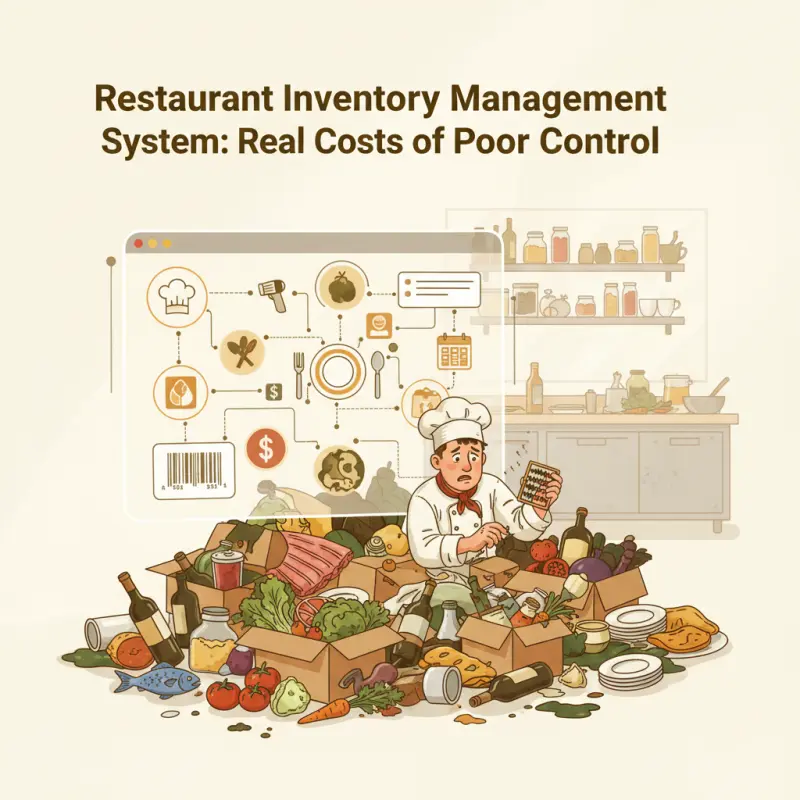
A Casablanca restaurant owner discovered his kitchen was hemorrhaging 4,000 MAD weekly through food waste — money that could have funded a new espresso machine or three months of social media ads. Without a restaurant inventory management system, most Moroccan restaurants bleed cash through spoilage, theft, and overordering.
Walk into any restaurant kitchen in Morocco after closing. You'll find wilting vegetables, expired dairy, and protein past its prime. The numbers tell a harsh story: restaurants without proper inventory tracking waste 28% of their food purchases. For a typical 50-seat restaurant, that's 2,500 to 4,000 MAD vanishing weekly.
Food Waste Hits 30% Without Systems
The hidden costs multiply beyond the spoiled food itself. Staff spend six hours weekly on manual inventory counts. Storage space fills with excess stock that may never sell. Disposal fees add another 500 MAD monthly. When you factor in the opportunity cost — that freezer space could hold profitable items — the real loss approaches 6,000 MAD weekly.
Restaurant owners in Agadir report similar patterns. One seafood restaurant discovered they were ordering 40kg of fresh fish weekly but only selling 25kg. The remaining 15kg either spoiled or got heavily discounted. Their monthly loss: 12,000 MAD in fish alone.
Cash Flow Drain from Overstocking
Moroccan suppliers typically demand payment within seven to 15 days. When restaurants overstock, they trap cash in inventory that could fuel growth elsewhere. A mid-size restaurant easily ties up 15,000 MAD monthly in excess stock — funds that could cover equipment repairs, staff bonuses, or marketing campaigns.
The cash flow squeeze hits harder during Ramadan and tourist seasons. Restaurants stock up expecting higher demand, but without restaurant stock management software to track actual consumption patterns, they're guessing blind. Post-season, they're left with expired goods and empty bank accounts.
Stack audit
What do you currently use?
Tick what you have. We’ll show what OCHI replaces or connects to.
Why Generic Restaurant Software Inventory Fails in Morocco
International inventory solutions promise efficiency but deliver frustration. They're built for Western markets with different supplier relationships, payment terms, and operational realities. Moroccan restaurant owners need systems designed for their specific challenges.
The Commission Platform Trap
Traditional delivery platforms compound inventory problems. They charge 15% to 30% commission on orders, then add hidden costs through supplier markups. When a restaurant orders tomatoes through these platforms, they pay platform prices — often 20% above market rates. The restaurant inventory program becomes another fee layer rather than a cost-saving tool.
These platforms also control supplier relationships. Restaurants can't negotiate directly or build the personal connections that ensure quality and reliability in Moroccan business culture. The result: higher costs, lower quality, and zero flexibility.
Staff Training Reality Check
Most restaurant inventory management software requires 40-plus hours of training. The interfaces come in English only, creating barriers for Arabic and French-speaking staff. Complex features designed for chain restaurants overwhelm independent operators.
Staff turnover means constant retraining expenses. A Marrakech restaurant owner spent 8,000 MAD training employees on an international system, only to start over when two key staff members left. The software now sits unused while they return to paper tracking.
OCHI's Gram-Level Tracking: The 25% Waste Reduction Formula
OCHI approaches inventory differently. The system tracks ingredients down to the gram, revealing true costs and waste patterns. This precision enables Moroccan restaurants to cut waste by 25% within three months.
Precise Recipe Costing Down to the Gram
Consider harira, Morocco's beloved soup. Most restaurants estimate costs loosely: "about 12 MAD per bowl." OCHI's recipe builder calculates precisely: 15g fresh cilantro (0.75 MAD), 200g tomatoes (2.40 MAD), 50g lentils (1.50 MAD), plus 11 other ingredients. True cost: 8.50 MAD.
This accuracy transforms pricing decisions. When tomato prices spike 15% during off-season, the system alerts managers immediately. They can adjust portions, find substitute ingredients, or update menu prices based on data, not guesswork.
Supplier Integration Without Markups
OCHI connects directly with over 50 suppliers across Agadir and Casablanca. Restaurant owners compare prices from three vendors instantly, seeing real wholesale costs without platform markups. Order directly through the system and pay supplier prices — OCHI takes zero commission.
The supplier directory includes delivery schedules, minimum orders, and payment terms. Filter by location, product type, or credit terms to find suppliers matching your restaurant's needs. Build relationships while maintaining digital efficiency.
Implementation Roadmap: Week-by-Week Setup
Switching to a digital restaurant inventory management system feels overwhelming. This weekly roadmap breaks implementation into manageable steps that work around restaurant operations.
Week 1: Baseline Inventory Count
Start with a comprehensive physical count. Schedule this during your slowest period — typically Tuesday afternoon in Morocco. Assign two-person teams to each storage area: one counts, one records. Use OCHI's mobile app to photograph high-value items for dispute resolution.
Count everything: from expensive proteins to salt packets. This baseline reveals your true starting position. Many Rabat restaurants discover 20% more inventory than expected, often forgotten in freezers or mislabeled on shelves.
Week 2-3: Recipe Standardization
Convert kitchen habits into precise measurements. That "handful of mint" becomes 25 grams. The "splash of oil" measures 15 milliliters. Work with your head chef during prep time to document actual portions.
Test standardized recipes with customers. Adjust if portions seem small or flavors change. Document variations for different service periods — lunch portions often differ from dinner servings.
Week 4: Full System Integration
Train staff using OCHI's Arabic and French interfaces. Start with basic functions: receiving deliveries, updating stock counts, checking low-stock alerts. Advanced features like automated purchase orders come later.
Create backup protocols for internet outages. OCHI works offline, syncing when connection returns. Assign inventory responsibilities by role: servers update table waste, kitchen staff track prep waste, managers handle purchasing.
The True ROI: Rabat Restaurant Case Study
Numbers tell the story better than promises. Here's how a traditional Moroccan restaurant in Rabat transformed their operations with proper inventory management.
| Metric | Before OCHI | After 6 Months | Improvement |
|---|---|---|---|
| Food Waste Rate | 31% | 18% | 42% reduction |
| Weekly Inventory Cost | 12,000 MAD | 8,800 MAD | 3,200 MAD saved |
| Staff Hours on Inventory | 14 hours | 6 hours | 8 hours saved |
| Stockout Incidents | 8 per week | 1 per week | 87% reduction |
| Monthly Software Cost | 0 MAD | 890 MAD | 360% ROI |
Before implementing OCHI's restaurant inventory management software, this 60-seat restaurant relied on paper logs and Excel sheets. Weekly inventory consumed entire mornings. Popular items like fresh fish ran out during busy periods while less popular ingredients spoiled in storage.
The transformation started small. Automated low-stock alerts prevented stockouts. Price comparison tools revealed their lamb supplier charged 15% above market rates. Recipe costing exposed their famous lamb tagine was losing 3 MAD per order at current menu prices.
Six months later, the results speak clearly. Food costs dropped from 38% to 29% of revenue. The 3,200 MAD weekly savings funded a new commercial freezer and staff performance bonuses. Inventory tasks that consumed 14 staff hours now take six.
The path from chaos to control starts with a single decision. Moroccan restaurants don't need complex international systems or commission-heavy platforms. They need tools built for their reality: Arabic interfaces, local supplier connections, and zero commission fees. Set up your restaurant inventory management system at votrenom.ochi.ma and join thousands of restaurants already saving 25% on food costs.
Discover the complete restaurant management platform at ochi.ma/partners. For more insights on running a successful restaurant in Morocco, explore our restaurant management guides.
Frequently Asked Questions
How much money do Moroccan restaurants lose without inventory management?
Restaurants without proper inventory systems waste 28% of food purchases, typically losing 4,000 to 6,000 MAD weekly through spoilage, overordering, and disposal fees.
What features should a restaurant inventory management system include?
Essential features include real-time stock tracking, automated reorder alerts, waste reporting, supplier integration, and consumption pattern analytics to prevent overstocking.
How does poor inventory control affect restaurant cash flow?
Overstocking ties up 15,000 MAD monthly in excess inventory that could fund equipment, marketing, or staff. Suppliers require payment within 7-15 days, creating cash flow strain.
Can inventory management systems reduce food waste in restaurants?
Yes, automated inventory tracking reduces food waste by up to 30% by providing accurate consumption data and preventing overordering of perishable items.
Restaurant owners · Weekly
The guide to running a restaurant in 2026.
One article per week. No commission advice. Just honest operational insight for Moroccan restaurants.

Blog Manager
Comments
No comments yet. Be the first to share your thoughts.