AI Overview
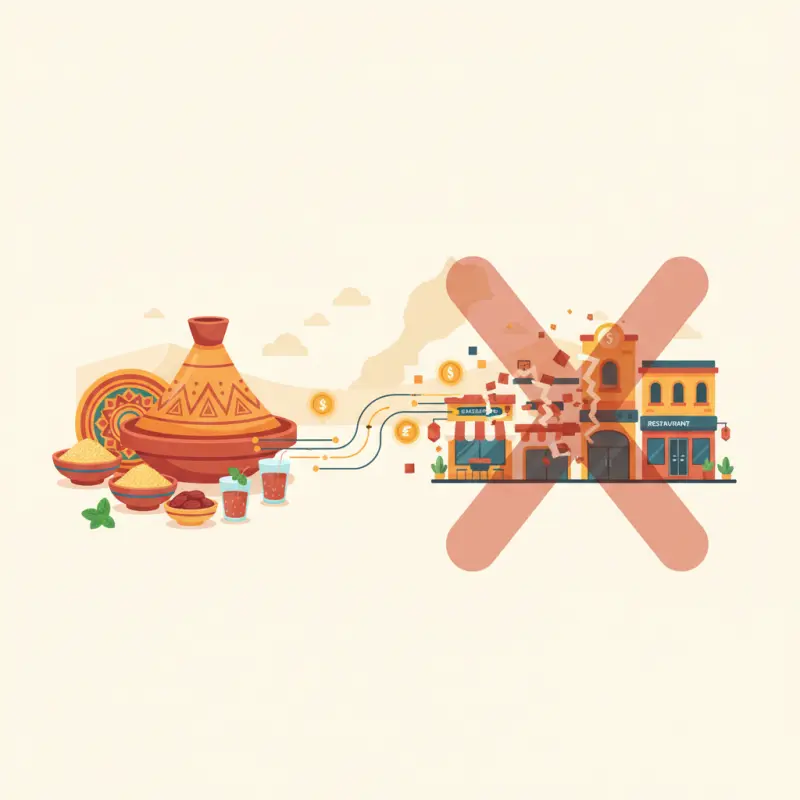
Most restaurant loyalty program providers in Morocco charge 2,800 MAD monthly plus transaction fees, with 70% of restaurants abandoning these programs within 18 months. Restaurant loyalty program providers like enterprise platforms cost up to 55,000 MAD over 18 months when you factor in setup, monthly fees, and integration costs. Independent restaurants lose an average of 18,000 MAD annually on loyalty programs that create data silos between POS systems and customer management. The provider model treats customer relationships like subscription services, charging restaurants to discount their own food. Points systems leak value through redemption friction, while percentage-based discounts work better for small operations. Built-in loyalty features within existing restaurant management platforms eliminate setup costs and integration headaches that plague standalone providers.
Table of Contents
Most restaurant loyalty program providers charge you 2,800 MAD per month for the privilege of giving your own money back to customers. That's before transaction fees, setup costs, and the hours you'll spend trying to integrate their system with your POS.
Independent restaurants in Morocco lose an average of 18,000 MAD annually on loyalty programs that never deliver the promised results. The problem isn't loyalty itself — it's the outdated provider model that treats your customer relationships like a subscription service.
Why Most Restaurant Loyalty Program Providers Drain More Than They Give
The economics of standalone loyalty providers work against independent restaurants. A typical provider in Morocco charges 500-2,000 MAD for setup, then 200-800 MAD monthly for "platform access." Add 2-5% transaction fees on every redemption, and you're paying to discount your own food.
Integration costs compound the damage. Your loyalty provider needs to connect with your POS, your ordering system, your CRM software for restaurants, and your accounting platform. Each integration runs 5,000-15,000 MAD if you hire a developer. Most restaurants skip it, creating data silos that make the loyalty program worthless.
| Provider Type | Setup Cost | Monthly Fee | Transaction Fee | 18-Month Total |
|---|---|---|---|---|
| Basic Loyalty App | 500 MAD | 200 MAD | 2% | 4,100 MAD + fees |
| Full-Service Provider | 2,000 MAD | 800 MAD | 5% | 16,400 MAD + fees |
| Enterprise Platform | 10,000 MAD | 2,500 MAD | 3% | 55,000 MAD + fees |
| Built-In (OCHI) | 0 MAD | 0 MAD | 0% | 0 MAD |
These numbers explain why 70% of Moroccan restaurants abandon external loyalty providers within 18 months. The model works for chains with dedicated IT teams and million-dirham budgets. For a family restaurant in Agadir doing 50,000 MAD monthly? It's a margin killer.
Quick check · 3 questions
Is OCHI right for your restaurant?
Step 1 of 3
How do you currently take online orders?
The Three Loyalty Models That Actually Work (And One That Doesn't)
Strip away the marketing promises and loyalty comes down to four models. Three can work. One almost never does.
Points Systems: Simple But Leaky
Points programs dominate because customers understand them instantly. Spend 100 MAD, earn 10 points. Collect 200 points, get 20 MAD off. The math is transparent.
The leak? Only 12% of earned points get redeemed. Customers forget, lose track, or never hit the threshold. This works in your favor financially but defeats the purpose — dormant points don't drive repeat visits.
Points work best for high-frequency purchases under 150 MAD. Coffee shops in Casablanca see 3x redemption rates compared to fine dining. If your average order exceeds 300 MAD or customers visit monthly, points programs underwhelm.
Tiered Programs: The Retention Champion
Tiered loyalty — Bronze, Silver, Gold, Platinum — increases visit frequency by 34% when executed properly. The psychology is different from points. Instead of saving for a discount, customers chase status.
Four tiers hit the sweet spot. Three feels basic. Five becomes confusing. OCHI's built-in program uses this exact structure, automatically upgrading customers based on spending. No manual management required.
Tier benefits must be immediate and visible. Bronze gets 5% off. Silver gets 10% off plus priority reservations. Gold adds exclusive menu items. Platinum includes birthday bonuses and double points. Each level must feel meaningfully better than the last.
Cashback: The False Economy
Cashback programs sound generous. "Get 5% back on every order!" But the math destroys most restaurants. With food costs at 30%, labor at 30%, and overhead at 25%, that 5% cashback comes straight from your 15% profit margin.
Worse, cashback trains customers to expect discounts. Unlike points or tiers that create engagement, cashback becomes an expected rebate. You're not building loyalty — you're subsidizing price-sensitive customers who would leave for a 6% offer elsewhere.
Why Your CRM System for Restaurants Matters More Than Your Loyalty Provider
Here's what loyalty providers won't tell you: the program itself matters less than how you use the data. A basic points system with proper customer segmentation outperforms fancy rewards with no restaurant CRM integration.
Restaurant CRM software transforms loyalty from expensive discounting into targeted revenue growth. Instead of giving everyone 10% off, you send personalized offers based on behavior. The customer who orders tagine every Friday gets a weekend special. The one who hasn't visited in 60 days gets a win-back offer.
A seafood restaurant in Casablanca proved this approach. They switched from blanket loyalty discounts to segmented campaigns through their CRM system for restaurants. Same 10% average discount, but targeted to the right customers at the right time. Result: 40% increase in repeat visits, 25% higher average order value.
The best CRM for restaurants integrates loyalty data automatically. Every point earned, tier achieved, and reward redeemed feeds into customer profiles. You see patterns, not just transactions.
Built-In vs. Bolt-On: The Integration Reality Check
External loyalty providers create data silos. Your POS knows what customers ordered. Your loyalty app knows their points. Your restaurant CRM knows their contact details. But these systems don't talk to each other.
Manual data entry becomes a full-time job. Staff forget to add points. Customers show different point balances on different systems. Redemptions require checking multiple screens. The friction kills both staff efficiency and customer experience.
A restaurant in Rabat learned this expensively. They paid 2,800 MAD monthly for a "premium" loyalty provider, plus 5,000 MAD for POS integration, plus hours of manual reconciliation. After switching to OCHI's built-in loyalty system, they eliminated all fees while automating the entire process. Points accrue automatically. Tiers update in real-time. Customer data flows seamlessly between ordering, POS, and campaigns.
The monthly savings let them invest in better ingredients and staff training — improvements that actually drive loyalty.
Setting Up Restaurant Loyalty That Actually Pays
Launching profitable loyalty requires systematic execution, not just good intentions. Follow this timeline:
Week 1: Audit your customer data. Export your POS transactions for the last six months. Identify your visit frequency distribution. How many customers come weekly? Monthly? Once? This baseline determines your program structure. Without it, you're guessing.
Week 2: Choose your model based on math, not marketing. Average order under 150 MAD with daily visits? Points work. Average order over 300 MAD with weekly visits? Tiers perform better. Mixed customer base? Combine both — points for transactions, tiers for total spending.
Week 3: Set thresholds that drive profitable behavior. Your tier spending levels should encourage one extra visit per month. If customers average 400 MAD monthly, set Silver at 600 MAD. Make it achievable but meaningful. Too easy destroys margins. Too hard kills engagement.
Track these three metrics or watch your program fail: redemption rate (target 25-40%), repeat visit rate (should increase 20%+), and profit per loyalty customer (must exceed non-loyalty customers after discounts).
The path to profitable loyalty isn't through expensive providers or complex programs. It's through integrated systems that make loyalty automatic, data actionable, and rewards sustainable. See how OCHI's zero-commission platform includes enterprise-grade loyalty at no extra cost at ochi.ma/partners.
Frequently Asked Questions
How much do restaurant loyalty program providers cost in Morocco?
Restaurant loyalty program providers in Morocco typically charge 500-2,000 MAD setup fees, 200-800 MAD monthly, plus 2-5% transaction fees. Enterprise platforms can cost up to 55,000 MAD over 18 months including integration costs.
Why do most restaurant loyalty programs fail?
70% of Moroccan restaurants abandon external loyalty providers within 18 months due to high costs, complex integrations, and data silos. The provider model charges restaurants to discount their own food while creating technical headaches.
What's the difference between standalone and built-in loyalty programs?
Standalone loyalty providers require separate systems, integrations, and monthly fees. Built-in loyalty features within restaurant management platforms eliminate setup costs, integration issues, and ongoing subscription fees.
Do restaurant loyalty program providers integrate with POS systems?
Most loyalty providers require custom integrations costing 5,000-15,000 MAD per connection. Many restaurants skip integrations, creating data silos that make loyalty programs ineffective.
What loyalty models work best for independent restaurants?
Simple percentage-based discounts and visit-based rewards work better than complex points systems for independent restaurants. Built-in loyalty features avoid the complexity and costs of standalone providers.
Restaurant owners · Weekly
The guide to running a restaurant in 2026.
One article per week. No commission advice. Just honest operational insight for Moroccan restaurants.

Blog Manager
Comments
No comments yet. Be the first to share your thoughts.