The Real Cost of Recipe Drift (And How to Stop It)
Recipes drift like sand dunes in Agadir. Your chef adds extra almonds to the pastilla because customers compliment it. Your morning prep cook uses ghee instead of regular butter. Small changes accumulate until your perfectly calculated 30% food cost becomes 37% reality.
Beyond portion drift, ingredient prices shift weekly. The restaurant menu management software that worked last month shows outdated costs today. Manual tracking means you discover problems through empty bank accounts instead of early warnings.
Saffron Goes Up 20%, Your Pastilla Price Stays the Same
Take a real example from Marrakech. When Spanish saffron prices spiked 20% in March, every restaurant serving paella absorbed the hit. Most never adjusted menu prices. They just watched margins evaporate, order by order. The same happened with argan oil last summer — a 15% increase that touched every traditional dish using it.
Smart operators track volatile ingredients weekly. Proteins, imported spices, seasonal vegetables. When chicken breast jumps 8 MAD per kilo, your chicken dishes need new math. When local tomatoes triple in price during Ramadan, your sauce-heavy items turn unprofitable.
OCHI's recipe builder connects ingredient price changes directly to menu costs. Upload new supplier invoices, watch food cost percentages update automatically. No spreadsheets, no manual calculations. Just real numbers that prevent surprise losses.
Restaurant Pricing Software That Actually Calculates Profit
Most restaurants run on spreadsheet life support. Monday morning means updating last week's supplier prices. Calculating new food costs. Checking if menu prices still make sense. Four hours of Excel gymnastics that one formula error can destroy.
The Spreadsheet Trap
Industry data shows 23% of restaurants miscalculate food costs due to spreadsheet errors. Forgotten ingredients, wrong units, outdated prices. One Rabat restaurant discovered they'd been using gram prices instead of kilogram prices for six months. Their "profitable" 28% food cost was actually 41%.
Manual systems also miss opportunity costs. Time spent updating spreadsheets could be spent training staff, improving recipes, talking to customers. The hidden expense of complexity compounds daily.
OCHI's Recipe Builder in Action
Integrated restaurant pricing software changes the equation. Create a recipe once: 200g chicken breast, 50g onions, 20ml olive oil, 5g spices. Link to current supplier prices. The system calculates total cost, suggests menu price based on target margin, alerts when costs exceed thresholds.
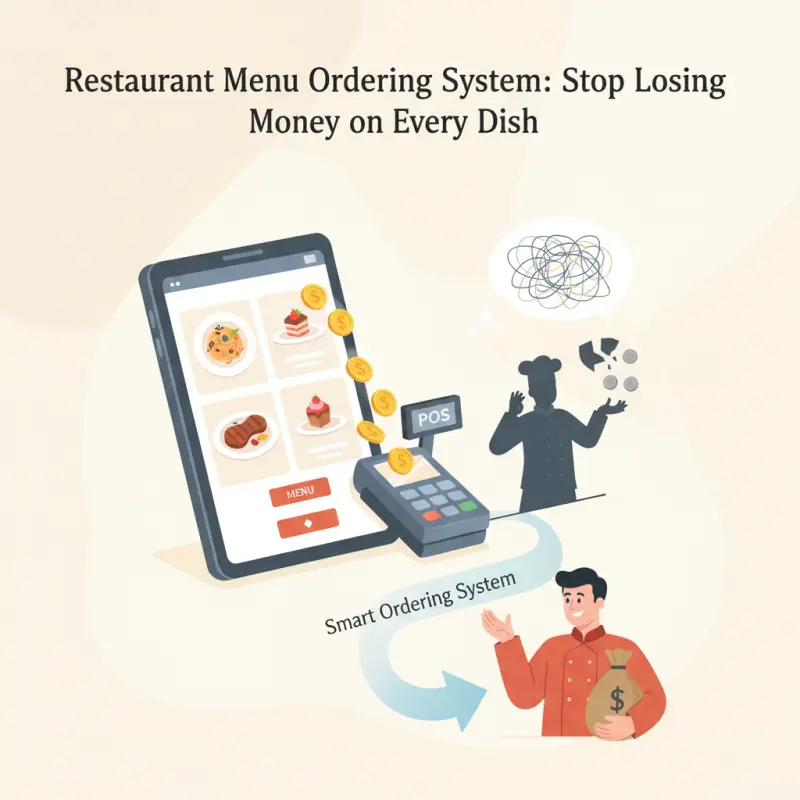
When supplier prices change, update once. Every recipe using that ingredient recalculates automatically. Your restaurant menu ordering system shows real margins on every item, every order. No guessing whether today's special makes money.
Traditional platforms want volume because they earn from every transaction. They show vanity metrics — order counts, gross sales, customer growth. They hide the only number that matters: how much you keep.
The Commission Blindness Problem
A restaurant grossing 6,000 MAD through commission platforms might keep 4,200 MAD after 30% platform fees. Now calculate food cost on that remaining amount. Your 65 MAD tagine didn't yield 65 MAD revenue — it yielded 45.50 MAD. At 30% food cost of the original price (19.50 MAD), you're actually operating at 43% real food cost.
Payment processing adds another 2-3%. Delivery fees. Service charges. Marketing fees. Each nibble seems small until you calculate cumulative impact on margins.
Zero-Commission Math
Remove the middleman tax and margins transform. Those same 100 orders at 60 MAD average become 6,000 MAD of actual revenue. No 1,500 MAD vanishing to platform fees. Your 30% food cost target remains 30% in reality.
OCHI's zero-commission model means your calculations match your bank deposits. Price a dish at 75 MAD, receive 75 MAD. Your restaurant blog readers see the same prices you set. No markup games.
Converting from spreadsheet chaos to integrated cost management takes less time than your lunch rush. The right online menu ordering system handles complexity while you handle customers.
The Four-Step Cost Setup
Start by importing your current menu with basic costs. No perfection required — rough numbers beat no numbers. Set target food cost percentages by category: 25% for beverages, 30% for appetizers, 32% for mains. Configure alerts when items drift beyond targets. Finally, connect everything to your branded ordering domain at votrenom.ochi.ma.
Within days, patterns emerge. That seemingly profitable pizza runs 38% food cost. Your loss-leader soup actually generates 65% gross margin. Armed with real data, you make informed decisions instead of hopeful guesses.
Your restaurant menu ordering system becomes your profit protection system. Every order tracked, every cost calculated, every margin preserved. Because in the restaurant business, what you don't measure, you don't keep.
Transform your guesswork into profit. See how OCHI's integrated cost management protects your margins at ochi.ma/partners.