AI Overview
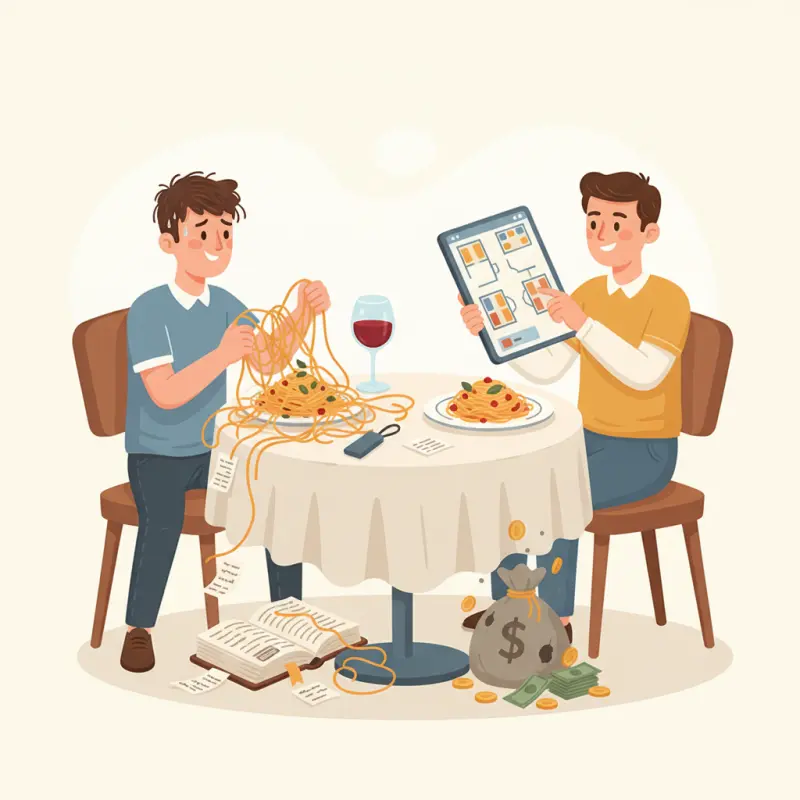
Manual table management costs Agadir restaurants an average of 200 MAD daily through overbooking, empty tables, and no-shows. A restaurant table management system eliminates these losses by providing real-time floor visibility and automated booking confirmations. Restaurant La Terrasse loses 2,400 MAD nightly by turning away walk-ins while reserved tables sit empty. Overbooking one party costs 1,600 MAD when eight-person groups are turned away. No-shows affect 15% of reservations across Agadir restaurants, creating 1,400 MAD in daily missed revenue for a 50-seat establishment. Staff productivity drops when hosts spend two hours daily on manual booking coordination. Digital systems reduce coordination errors and free staff for customer service. Install automated confirmation systems to cut no-show rates by 60% immediately.
Table of Contents
Why Your Current Table Management Method Is Costing You Money
Every evening at 7 PM, Restaurant La Terrasse in Agadir turns away eight walk-in customers while three reserved tables sit empty. That's 2,400 MAD lost in one night — the hidden cost of managing tables with a paper notebook.
Restaurant owners track food costs to the dirham but ignore the revenue bleeding from poor table management. The math is stark: when you can't see your floor status in real-time, you're making expensive guesses.
The 200 MAD Daily Loss You Don't See
Start with overbooking. When two parties show up for the same table, you don't just lose one customer — you lose their entire group. In Moroccan dining culture, that's often six to eight people. At 200 MAD average per person, turning away one overbooked party costs 1,600 MAD.
Under-booking creates the opposite problem. During Ramadan, an empty table at Iftar means lost revenue you'll never recover. With average table turnover at 90 minutes, one empty four-top during peak hours equals 800 MAD gone.
No-shows compound the damage. Without confirmation systems, 15% of reservations don't show up — standard across Agadir restaurants. For a 50-seat restaurant, that's seven empty seats nightly, or 1,400 MAD in missed revenue.
Beyond the Obvious: Staff Time Calculations
Your host spends three minutes per phone reservation. With 40 calls daily, that's two hours of pure booking management — time that could serve customers. At minimum wage, that's 500 MAD monthly in lost productivity.
Manual coordination multiplies the waste. Your host writes in the book, tells the manager, who tells the kitchen, who tells the waiters. Each handoff risks miscommunication. When a large party arrives 30 minutes early and you're not prepared, the scramble costs more than money — it costs reputation.
| Hidden Cost | Daily Loss (MAD) | Monthly Impact |
|---|---|---|
| Overbooking (1 party/day) | 1,600 | 48,000 |
| Empty tables (peak hours) | 800 | 24,000 |
| No-shows (15% rate) | 1,400 | 42,000 |
| Staff time on bookings | 17 | 500 |
| Total | 3,817 | 114,500 |
Demand heatmap
When do Moroccan restaurants get busy?
Typical demand across the week. Iftar shifts the pattern during Ramadan.
| 7h | 10h | 12h | 15h | 19h | 22h | |
|---|---|---|---|---|---|---|
| Mon | ||||||
| Tue | ||||||
| Wed | ||||||
| Thu | ||||||
| Fri | ||||||
| Sat | ||||||
| Sun |
The Three-Layer Restaurant Table Management System Every Restaurant Needs
Most guides list features. But features don't run restaurants — systems do. A working restaurant table management system operates on three interconnected layers, each solving specific operational problems.
Layer 1: Real-Time Floor Control
Your floor changes every minute. Table 12 just asked for the check. Table 7 needs cleaning. The corner booth reserved for 8 PM wants to come at 7:30. Without live status updates, your host makes decisions on outdated information.
Real-time control means every status change — occupied, reserved, cleaning, ready — updates instantly across all staff devices. When Table 12 pays through the POS, the system marks it for cleaning. When the busser finishes, it's automatically available for walk-ins.
Party size optimization goes beyond counting chairs. A four-top doesn't always mean four people. Moroccan dining often includes children who share plates, or business diners who need extra space for documents. Smart systems let you override default capacities based on actual party needs.
Layer 2: Reservation Intelligence
Time slots require cultural awareness. A two-hour window works for quick lunch service but fails for traditional Moroccan dinners. Tagines take 45 minutes to prepare. Add appetizers, tea service, and conversation — you need three-hour slots for dinner service.
Restaurant reservation software must adapt to these patterns. Automatic confirmations reduce no-shows by reminding customers 24 hours ahead. But the real intelligence comes from learning: if Saturday nights average 20% no-shows, the system can purposefully overbook by 15% to optimize capacity.
Waitlist activation fills unexpected gaps. When that 8 PM reservation cancels at 7:45, your system instantly notifies the next waiting party through SMS. No manual calls, no missed opportunities.
Layer 3: Integration Points
Isolated systems create operational silos. Your restaurant booking software must connect to your POS for timing accuracy. When orders start flowing to the kitchen, that's the real occupation time — not when guests sit down.
Kitchen display integration prevents overwhelming your line. When a 12-person party arrives, the kitchen needs advance warning to prep stations and adjust timing. The system flags large parties before they're seated.
Staff notifications close the communication loop. Special requests — birthday cake at 9 PM, highchair needed, halal requirements — flow directly to assigned waiters' phones. No more sticky notes lost between shifts.
The Ramadan Reality: Why Generic Systems Fail Moroccan Restaurants
International table reservation software assumes Western dining patterns: 90-minute turns, steady flow, predictable party sizes. Ramadan in Morocco breaks every assumption.
Iftar Booking Challenges
At sunset, your restaurant transforms. Every table fills within 30 minutes. Regular capacity rules collapse when extended families arrive — 12 people who must sit together, not split across tables. Generic restaurant table reservation software treats this as an edge case. In Morocco, it's Tuesday.
The math changes completely. Instead of managing steady 6 PM to 10 PM flow, you're handling 300% capacity spike at sunset. Traditional systems can't model this surge. They'll show availability that doesn't exist or block bookings when creative table combinations could work.
Prayer time adds another dimension. Some guests leave for Maghrib prayer and return. Others pray on-site. Your system must account for these patterns without showing tables as abandoned.
The Extended Service Model
Moroccan hospitality means nobody rushes dinner. Three-hour experiences are standard — multiple courses, tea service, extended conversation. Weekend family gatherings stretch even longer.
Generic systems push turnover optimization. They'll alert you that Table 8 has been occupied "too long." But rushing a family celebrating a graduation destroys more value than any efficiency gain.
The solution requires configurable service times by day and meal period. Friday lunch runs longer than Tuesday dinner. Ramadan service differs from regular months. Your system must reflect reality, not force behavior.
OCHI's Integrated Approach: POS-Connected Table Management
When your POS and restaurant reservation software speak the same language, operational magic happens. At OCHI, table management isn't a separate module — it's woven into your complete operational flow.
Zero-Commission Reservation Fees
Traditional platforms charge 3-5% per reservation, treating your tables like inventory to monetize. Book 100 covers at 150 MAD average? That's 450-750 MAD in fees for using your own tables.
OCHI includes complete restaurant table management system capabilities with your POS at yourname.ochi.ma. No per-booking fees. No commission on your own capacity. You manage tables like you manage orders — as part of unified operations.
Moroccan-Specific Features
Language switching happens per-guest, not per-system. Your host sees Arabic, your French-speaking customer books in French, your tourist from Germany uses English. All in the same reservation flow.
Extended time slots accommodate real dining patterns. Set three-hour default for weekend dinners, 90 minutes for business lunch. Large party tools handle the 15-person family booking without treating it as five separate reservations.
Integration with delivery means one source of truth. When your kitchen handles dine-in and delivery simultaneously, table timing must account for total kitchen load. OCHI shows both streams in unified views.
Real Numbers from Agadir Partners
La Perle Restaurant reduced no-shows from 15% to 3% using automated SMS confirmations. That's 12 more covers nightly — 36,000 MAD monthly revenue recovered.
Café Atlas improved table turnover by 15% after implementing proper time slot management. Not by rushing guests — by accurately predicting when tables would free up and scheduling accordingly.
Restaurant Tafarnout cut phone reservation time by 40%. Customers book online at tafarnout.ochi.ma, choosing their preferred time and party size. Staff handle exceptions, not routine bookings.
Implementation Roadmap: From Paper to Digital in 30 Days
The gap between paper books and digital systems feels massive until you map the journey. Here's how Casablanca restaurant Dar Beida transitioned without missing a single reservation.
Week 1: Data Migration
Export your existing patterns first. Which times book fastest? What's your typical party size? How many walk-ins versus reservations? This data shapes your digital configuration.
Staff training starts simple. Everyone learns to check table status on tablets. The paper book remains backup — running parallel systems eliminates fear of technology failure.
Week 2: Customer Communication
Update your Google Business profile with the booking link. Post on Instagram showing the new online reservation option. Train phone staff to guide callers to online booking while still taking phone reservations.
Test every integration point. When a reservation appears in the system, does the kitchen display flag large parties? Do confirmations send correctly? Does Arabic text display properly right-to-left?
Week 3-4: Full Operation
Monitor what changes. Table turnover should improve as staff see real-time availability. No-show rates drop with confirmations. Kitchen timing becomes more predictable with advance party size data.
Adjust based on reality. If your average dinner runs 2.5 hours, not 2, update the slots. If Friday prayers affect 1 PM bookings, block that time. Let the system learn your restaurant's rhythm.
By day 30, the paper book collects dust. Your host greets guests instead of juggling phone calls. Your kitchen preps for the 20-person birthday party arriving at 8. Revenue increases not from charging more, but from serving more efficiently.
Ready to see how integrated table management works with your existing operations? Set up your branded restaurant platform at votrenom.ochi.ma — no commission fees, complete control over your reservations and orders in one system.
Frequently Asked Questions
How much money do restaurants lose from manual table management?
Restaurants lose an average of 200 MAD daily from overbooking, empty tables during peak hours, and no-shows. A 50-seat restaurant can lose up to 114,000 MAD monthly from poor table management alone.
What is the average no-show rate for restaurant reservations?
Restaurant no-show rates average 15% across Agadir establishments. This translates to seven empty seats nightly for a 50-seat restaurant, equaling 1,400 MAD in missed revenue daily.
How does a restaurant table management system reduce overbooking?
Digital table management systems provide real-time floor status, preventing double bookings that occur with paper notebooks. This eliminates the 1,600 MAD loss when eight-person groups are turned away due to overbooking errors.
Why do empty tables cost restaurants money during peak hours?
Empty tables during peak dining hours represent unrecoverable revenue, especially during Ramadan Iftar when demand is highest. One empty four-person table during 90-minute peak periods costs 800 MAD in lost sales.
Restaurant owners · Weekly
The guide to running a restaurant in 2026.
One article per week. No commission advice. Just honest operational insight for Moroccan restaurants.

Blog Manager
Comments
No comments yet. Be the first to share your thoughts.