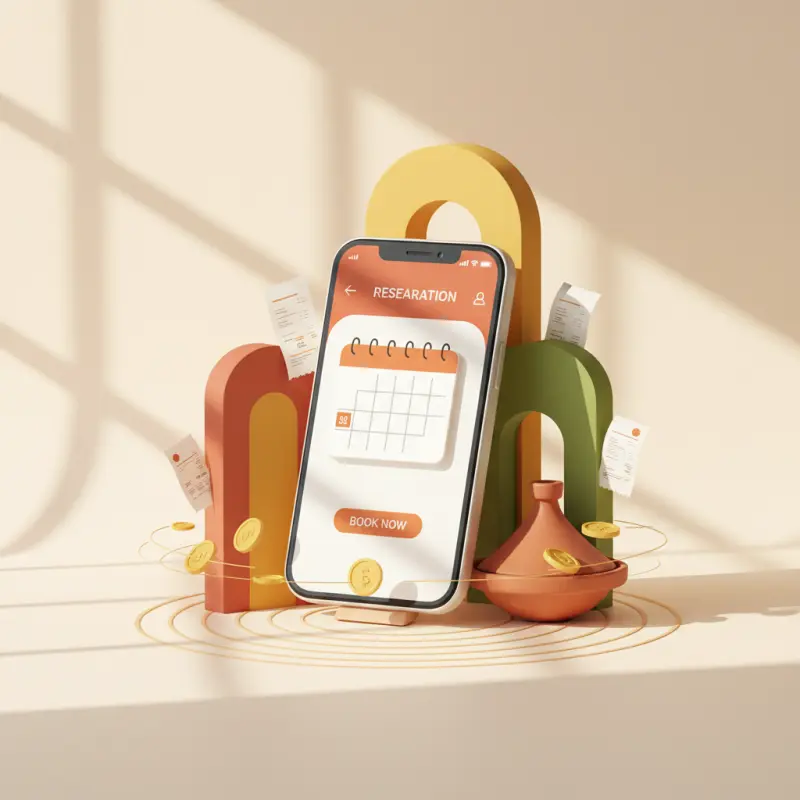
What Restaurant Owners in Casablanca Need Before Installing Any Reservation System
Most restaurant booking software assumes you operate like a Michelin-starred establishment in Paris. The reality in Morocco? Your head waiter still writes reservations in a notebook, your internet cuts out twice weekly, and half your staff doesn't have smartphones.
Before implementing any table reservation software, you need three fundamentals in place: a reliable internet backup (mobile hotspot minimum), a designated staff member who owns the reservation process, and clear table numbering that matches both your POS and floor plan.
Your POS System Must Talk to Your Reservation App (Or You'll Double-Book Tables)
Without POS integration, your reservations exist in a vacuum. The host takes a booking for table 12 at 8 PM through the app. Meanwhile, your waiter seats walk-ins at the same table because the reservation isn't visible on their terminal. Result: angry customers and scrambling staff.
Proper restaurant table reservation software syncs directly with your POS. When someone books online, the table automatically blocks in your system. When they arrive and order, their reservation links to their check. You see their history, preferences, and spending patterns in one place.
Staff Training: Why Your Waiters Need Access Too
Traditional reservation systems give access only to managers and hosts. This creates information bottlenecks. Your waiter can't check if table 8 has a reservation coming in 30 minutes. They can't see special requests. They can't update no-shows.
Modern restaurant reservation software provides role-based access. Waiters see their section's bookings on their phones. They update table status in real-time. The kitchen knows when a large party arrives. Everyone works from the same live data.
Internet Requirements: What Happens When WiFi Dies During Peak Hours
Friday night, 9 PM, full restaurant — and your internet crashes. With cloud-only reservation apps, you're blind. No access to tonight's bookings, tomorrow's reservations, or customer phone numbers. Your expensive restaurant table reservation app becomes useless precisely when you need it most.
Smart operators maintain offline capability. The best restaurant booking software caches data locally and syncs when connection returns. You need minimum 10 Mbps stable internet, a 4G backup router, and staff phones that can hotspot in emergencies.
The Features That Actually Matter vs. The Ones That Sound Good in Demos
Software demos love showing "AI-powered table optimization" and "predictive analytics dashboards." Meanwhile, you just need to know who's coming tonight and which tables turn fastest. Let's cut through the noise.
Table Turnover: How Reservation Apps Can Increase Your Revenue by 30%
The right restaurant table reservation software shows real-time table status and average dining duration. You learn that table 3 near the window averages 65-minute turns while corner booth 12 stretches to 95 minutes. Armed with this data, you slot quick business lunches at table 3 and romantic dinners at booth 12.
A steakhouse in Marrakech implemented duration-based booking slots. Result: 30% more covers on weekends without rushing guests. They simply matched reservation types to table patterns their restaurant reservation software revealed.
No-Show Management: Why Confirmation Texts Beat Deposit Requirements
Demanding credit card deposits kills bookings. A Rabat bistro requiring MAD 100 deposits saw reservations drop 40%. They switched to automated SMS confirmations 24 hours before arrival. No-shows decreased from 15% to 3% without losing a single booking.
Effective restaurant booking software sends confirmations automatically, includes one-click cancellation links, and maintains no-show history per customer. Serial offenders get flagged without blocking legitimate bookings.
Walk-In Integration: Most Apps Force You to Choose Between Bookings and Spontaneous Diners
Pure reservation systems assume every seat gets booked online. In Morocco, 60% of diners still walk in. If your restaurant table reservation software can't handle both, you're managing two separate systems — and inevitably double-booking tables.
The solution: unified table management. Walk-ins get entered immediately. The system shows which tables have upcoming reservations. Your host sees everything on one screen, whether customers booked online or just walked through the door.
Why Zero-Commission Restaurant Booking Software Changes Everything
OCHI operates differently. No commission on bookings. No percentage of your success. You keep every dirham from every table. For a mid-size restaurant in Agadir serving 150 covers nightly, this model transforms the economics.
Real Numbers: MAD 50,000 Annual Revenue vs. MAD 42,000 After Commissions
Consider La Terrace, a 60-seat restaurant with 25 tables. They average 400 reservations monthly at MAD 300 per check. Traditional platforms charging 20% commission would take MAD 24,000 from their MAD 120,000 monthly reservation revenue.
With OCHI's zero-commission model, they keep that MAD 24,000. That's MAD 288,000 annually — enough to hire two additional servers or renovate their terrace completely. The restaurant table reservation software pays for itself by not charging for itself.
OCHI's Integration: One Dashboard for Reservations, POS, and Kitchen Orders
OCHI isn't just restaurant reservation software — it's a complete operational platform. Reservations flow directly to your POS. Table status updates live across all devices. Your Kitchen Display System shows when reserved parties arrive. One login, one system, zero friction.
When a customer books online at votrenom.ochi.ma, their reservation appears instantly in your dashboard. Assign it to a specific waiter, note allergies for the kitchen, and track their order history. Everything connects without manual data entry or double systems.
Setting Up Your First Month: The Implementation Timeline Nobody Talks About
Every restaurant booking software promises "setup in minutes." Reality: proper implementation takes four weeks of focused effort. Here's the actual timeline from our work with hundreds of Moroccan restaurants.
Week 1: Menu Integration and Table Layout
Upload your menu with accurate descriptions and prices. Map your floor plan with actual table numbers and capacities. Set realistic turn times — 45 minutes for café tables, 90 minutes for dinner service. Configure booking rules: maximum party sizes, advance booking limits, and peak-hour restrictions.
This foundation determines everything. Rush this week and you'll fight problems for months.
Week 2: Staff Training and Test Bookings
Train your team role by role. Hosts learn the reservation interface. Waiters practice checking their section's bookings on mobile. Kitchen staff understand how reservations appear on their screens. Run 50 test bookings with fake customers to catch workflow issues.
Common discoveries: table numbers don't match between systems, some staff lack proper access permissions, or confirmation messages contain errors.
Week 3: Soft Launch with Regular Customers
Invite your regulars to try online booking. They'll forgive minor glitches and provide honest feedback. Monitor every reservation closely. Fix issues immediately — whether it's confusing booking steps or missing time slots.
A Fès restaurant discovered their lunch slots showed only 30-minute intervals when businesspeople needed full hours. Quick fix, major improvement.
Week 4: Full Marketing Push with votrenom.ochi.ma
Once your team confidently handles online reservations, promote widely. Add your booking link to Google Business, social media bios, and table tents. Train staff to mention online booking to phone callers. Set up automated campaigns for booking confirmations and thank-you messages.
Your branded domain (votrenom.ochi.ma) looks professional and builds trust. Customers bookmark it, share it, and return to it.
The restaurants succeeding with online reservations aren't using the most expensive restaurant table reservation software. They're using systems that match their actual operations, charge fairly, and integrate with their existing tools. In Morocco's restaurant market, that means choosing platforms built for local realities — not Silicon Valley fantasies.
See what OCHI can do for your restaurant at ochi.ma/partners.