AI Overview
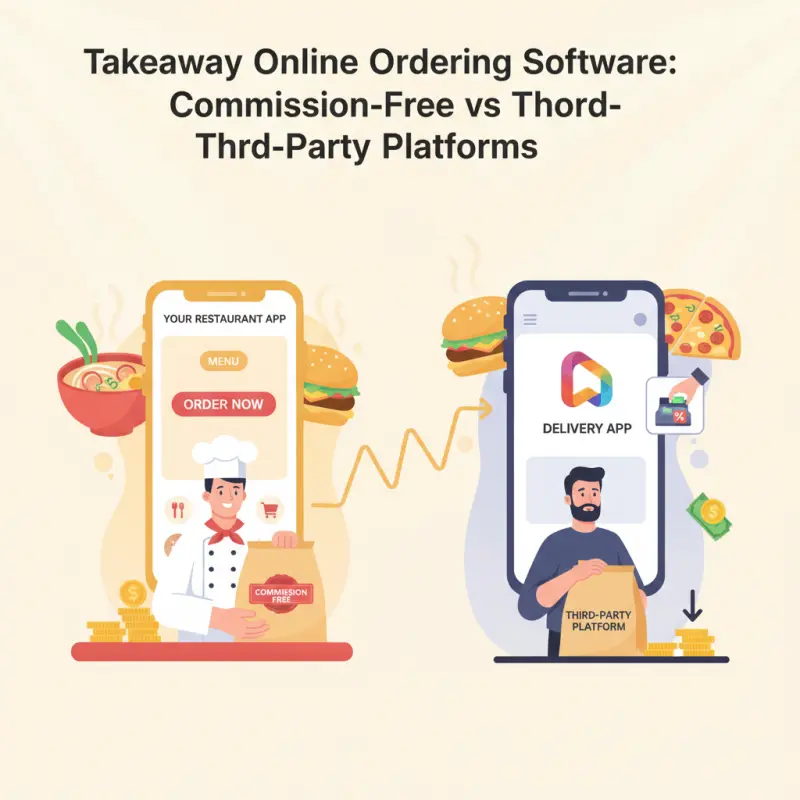
Commission-free takeaway online ordering software eliminates the 25-30% platform fees that drain restaurant profits. A Casablanca restaurant processing 100 monthly orders through platforms like Talabat loses 25,000 MAD annually to commission fees. Direct ordering systems like OCHI preserve the full order value of 150 MAD instead of netting just 105 MAD after platform cuts. The marketing reach argument fails when most platform customers already search for restaurants by name. They're ordering from established brands, not discovering new ones. Morocco's restaurants using commission-free platforms report 35% higher profit margins on takeaway orders. Platform defenders claim marketing benefits, but GPS tracking and branded domains provide better customer retention. Switch to commission-free takeaway online ordering software to keep profits in your kitchen instead of platform accounts.
Table of Contents
A restaurant in Casablanca processes 100 takeaway orders monthly through a commission-based platform. At 25% commission per order, they're handing over 25,000 MAD annually — enough to hire another chef or upgrade their kitchen equipment. This is the hidden cost of convenience that most takeaway online ordering software reviews won't discuss.
The real question isn't whether you need digital ordering. It's whether you're keeping the profits you earn from it.
Why Commission-Free Models Beat Third-Party Platforms for Takeaway Growth
The math behind commission-based ordering platforms tells a story restaurant owners know too well. Every order that comes through these platforms arrives with a hefty tax — typically 20% to 30% of the order value. Add payment processing fees, and you're looking at nearly a third of your revenue disappearing before it hits your account.
Consider a typical seafood restaurant in Agadir with an average order value of 150 MAD. Through commission platforms, that order nets you 105 MAD after fees. Through a direct restaurant online ordering system, you keep the full 150 MAD. Multiply that difference across hundreds of orders monthly, and you're looking at enough lost revenue to fund an entire marketing campaign.
The Real Cost of Commission-Based Ordering
Platform defenders argue that their marketing reach justifies the commission. But let's examine that claim with real numbers:
| Metric | Commission Platform | Direct Ordering |
|---|---|---|
| Average Order Value | 150 MAD | 150 MAD |
| Commission (25%) | 37.50 MAD | 0 MAD |
| Payment Processing | 4.50 MAD | 4.50 MAD |
| Net Revenue | 108 MAD | 145.50 MAD |
| Monthly (100 orders) | 10,800 MAD | 14,550 MAD |
The "marketing reach" argument crumbles when you realize that most platform customers are already searching for your restaurant by name. They're not discovering you — they're trying to order from you. Why pay 25% for customers who already chose your brand?
Direct Ordering Economics That Actually Work
A professional online food ordering system for restaurants typically costs between 500 and 2,000 MAD monthly. At the lower end, you break even after just 14 orders. Every order beyond that is pure profit retention. More importantly, you own the customer relationship. Their contact information, ordering preferences, and behavior patterns belong to you — not to a platform that might raise commissions tomorrow.
When customers order directly through your branded system, their lifetime value increases dramatically. You can send them personalized offers, reward loyalty, and build genuine relationships. Commission platforms keep this data locked away, leaving you blind to your own customer base.
Platform comparison
Where does your money really go?
| Commission | 27% | 25% | 30% | 0% |
| Customer data | They own it | They own it | They own it | You own it |
| Your branding | Theirs | Theirs | Theirs | Yours |
| Payout cadence | Biweekly | Weekly | Biweekly | Weekly |
| Setup cost | Free | Free | Free | Paid |
The Arabic Market Reality: Why Most Food Ordering System Online Platforms Fail in Morocco
Here's what Silicon Valley platforms don't understand about the Moroccan market: a poorly translated menu doesn't just look unprofessional — it actively repels customers. When your tajine descriptions read like robot poetry, customers lose trust in your entire operation.
Language Switching That Actually Works
Google Translate plugins are the fast food of localization — quick, cheap, and ultimately unsatisfying. Professional restaurant platforms understand that Arabic requires more than word-for-word translation. Right-to-left display affects everything from button placement to receipt formatting. Menu descriptions need cultural context, not literal conversion.
We've seen conversion rates drop by 40% when Arabic speakers encounter broken translations. Conversely, properly localized ordering systems see average order values increase by 18% among Arabic-preferring customers. They order more confidently when they understand exactly what they're getting.
Local Payment and Delivery Expectations
Cash remains king in Morocco, with over 70% of restaurant orders paid at delivery. Any food online ordering system that doesn't embrace this reality is fighting customer behavior instead of serving it. WhatsApp integration isn't a nice-to-have — it's how customers expect to modify orders, ask questions, and confirm delivery times.
Moroccan families order differently too. They share meals, order multiple main courses, and expect portion sizes that accommodate group dining. Platforms designed for individual meals miss these nuances, leading to confused customers and lost revenue.
QR Code Table Ordering: The Feature That Drives 22% Higher Average Orders
Place a QR code on a restaurant table in Marrakech, and watch what happens. Customers scan, browse at their own pace, and inevitably order that extra appetizer they might have skipped when ordering verbally. The psychology is simple: removing the pressure of a waiting server leads to more adventurous ordering.
Why QR Ordering Outperforms App Downloads
The friction difference between QR scanning and app downloading is massive. QR codes work instantly — scan, browse, order. No app store searches. No storage space concerns. No update requirements. Guest checkout conversion through QR ordering hits 67%, compared to just 23% for platforms requiring app downloads.
Menu updates happen instantly too. Add a daily special at 11 AM, and every QR scan shows it immediately. No waiting for app store approvals or customer updates. Your menu stays as dynamic as your kitchen.
The Psychology Behind Higher Order Values
When customers control their browsing time, they explore more. They read descriptions, view photos, and discover items they'd never notice on a printed menu. Social pressure evaporates — nobody's judging their third appetizer choice. This comfort translates directly to order values.
Visual menus on personal devices also trigger different decision-making. High-quality food photography on a phone screen feels more intimate than a laminated menu. Customers connect with dishes emotionally, leading to higher-margin item selection and increased add-ons.
Beyond Setup: What Happens When Your Restaurant Online Ordering System Goes Live
The sales pitch ends at "go live," but that's when the real work begins. Your first month with a new ordering platform reveals operational truths no demo can capture. Order volumes spike during unexpected hours. Staff struggle with new workflows. Customer service demands shift dramatically.
The First Month Reality Check
Expect order patterns to surprise you. That quiet Tuesday becomes busy when online customers order ahead for lunch. Weekend peaks shift earlier as customers place dinner orders from their offices. Your kitchen needs new prep strategies to handle the advance notice that online orders provide.
Staff training extends beyond button pushing. Your team needs to understand order prioritization, customer communication through the platform, and troubleshooting common issues. The restaurants that thrive are those that treat platform training as seriously as food safety certification.
Measuring Success Beyond Order Count
Order volume tells only part of the story. Track customer return rates — are online customers coming back, or are they one-time experiments? Monitor prep time accuracy — does your kitchen consistently meet the times your system promises? These metrics predict whether your online presence becomes a growth engine or a customer complaint generator.
OCHI's analytics dashboard, for instance, shows not just daily orders but customer lifetime value trends, item performance heat maps, and real-time kitchen efficiency metrics. This data transforms gut feelings into strategic decisions.
Building Your Branded Takeaway Presence: The votrenom.ochi.ma Advantage
Your restaurant's digital storefront matters as much as your physical ambiance. When customers see votrenom.ochi.ma instead of generic-platform.com/restaurant/yourname/menu, they recognize a business that takes its online presence seriously. This professional presentation affects everything from first-order conversion to long-term loyalty.
Professional Storefront Psychology
Brand consistency builds trust. When your online ordering matches your restaurant's visual identity — colors, fonts, imagery — customers feel confident they're ordering from the right place. Generic platform templates break this connection, making your carefully crafted brand feel like an afterthought.
Return customer behavior changes dramatically with branded domains. They bookmark votrenom.ochi.ma, type it directly, and share it with friends. Generic platform URLs get lost in browser history, forcing customers back to search engines where competitors wait.
Technical Requirements Most Platforms Hide
Server uptime during dinner rush determines whether you capture or lose orders. A 99.9% uptime promise means 8 hours of downtime annually — but if those 8 hours hit during peak service, you've lost significant revenue. Real-time order syncing prevents the nightmare of accepted orders your kitchen never sees.
Mobile optimization goes deeper than responsive design. Touch targets need proper spacing for hurried ordering. Image loading must balance quality with speed on Moroccan mobile networks. Payment flows need to work flawlessly across device types and connection speeds.
The difference between good and great takeaway online ordering software lies in these details. It's not about feature lists — it's about understanding how restaurants actually operate and what customers genuinely need. When technology serves both sides effectively, revenue grows without commission cuts eating your profits.
See what zero-commission ordering looks like for your restaurant at ochi.ma/partners.
Frequently Asked Questions
What percentage commission do takeaway online ordering software platforms charge?
Most commission-based platforms charge 20-30% per order, plus payment processing fees of 2-3%. This means restaurants lose nearly a third of their revenue on each takeaway order.
How much can restaurants save with commission-free takeaway ordering software?
A restaurant processing 100 orders monthly at 150 MAD average saves 3,750 MAD per month by avoiding 25% commission fees. This equals 45,000 MAD annually.
Do commission-based platforms really provide better marketing for restaurants?
Most platform orders come from customers already searching for specific restaurants by name. They're not discovering new places but trying to order from known brands, making the marketing argument weak.
What features should commission-free takeaway ordering software include?
Essential features include branded domains, QR code ordering, GPS delivery tracking, POS integration, and kitchen display systems. These tools match platform capabilities without ongoing commission fees.
Can small restaurants afford commission-free takeaway online ordering software?
Commission-free platforms typically cost 200-500 MAD monthly versus losing thousands in commissions. Even small restaurants save money within weeks of switching from commission-based platforms.
Restaurant owners · Weekly
The guide to running a restaurant in 2026.
One article per week. No commission advice. Just honest operational insight for Moroccan restaurants.

Blog Manager
Comments
No comments yet. Be the first to share your thoughts.