AI Overview
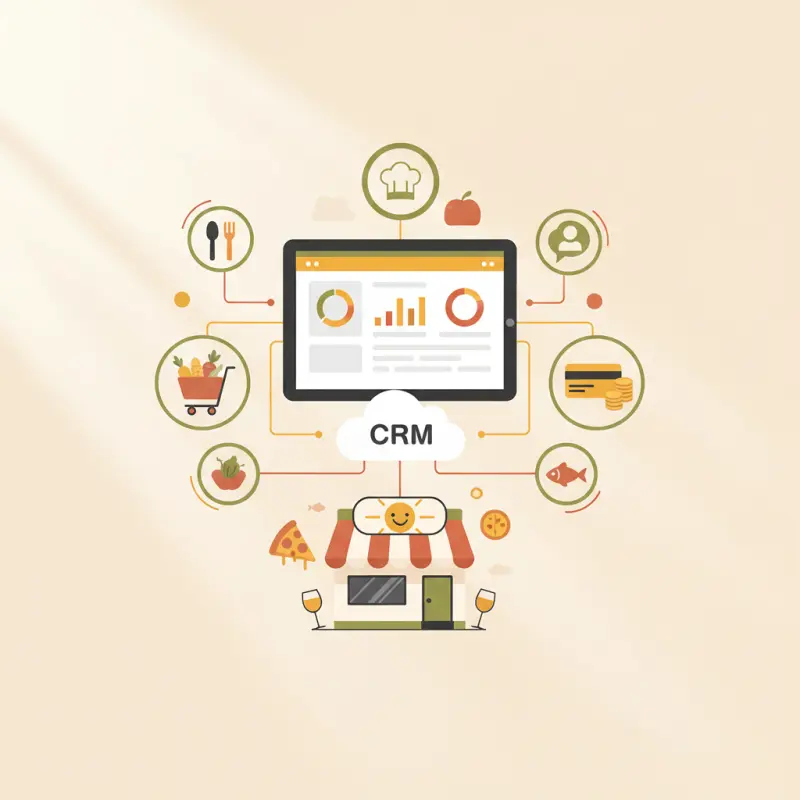
The best CRM for food industry businesses integrates directly with POS systems, understands operational context like table turns and delivery zones, and provides staff-accessible interfaces during service. Generic business CRMs like Salesforce and HubSpot fail restaurants because they don't handle perishable inventory cycles, high customer turnover, or seasonal demand patterns that define food service operations. Restaurant-specific CRMs offer better industry fit but often carry high monthly costs. POS systems with built-in CRM features typically provide the best value and functionality for food businesses. The most effective approach combines real-time customer data from POS transactions with operational insights like dining occasions and dietary preferences. Choose a CRM that your servers can access on handheld devices during service rather than desktop-only manager systems.
| CRM Type | Food Industry Fit | Key Limitation |
|---|---|---|
| Generic Business CRM | Poor | No POS integration |
| Restaurant-Specific CRM | Good | High monthly cost |
| POS with CRM Features | Best | Feature depth varies |
Table of Contents
What makes a CRM truly effective for food service businesses?
A food industry CRM must handle perishable inventory cycles, high customer turnover, seasonal demand patterns, and integrate with staff scheduling — requirements that generic business CRMs ignore. Most CRM vendors treat restaurants like any other retail business. They don't understand that a steakhouse tracking dry-aged beef inventory has fundamentally different needs than a clothing store managing seasonal collections. Food service businesses need systems that speak their language: table turns, food costs, peak hours, and delivery zones.
| CRM Type | Food Industry Fit | Key Limitation |
|---|---|---|
| Generic Business CRM | Poor | No POS integration |
| Restaurant-Specific CRM | Good | High monthly cost |
| POS with CRM Features | Best | Feature depth varies |
The three non-negotiable CRM requirements for food businesses
First, real-time POS integration. Customer data without purchase history is worthless. Your CRM must know that Maria orders gluten-free pasta every Tuesday and tips 22% when her regular server works. This data lives in your POS, not in a separate CRM database that syncs overnight.
Second, operational context. A customer who orders lunch delivery to their office has different needs than one who books weekend brunch tables. Your CRM must distinguish between delivery addresses, dietary preferences, and dining occasions — data points that generic CRMs treat as custom fields requiring manual setup.
Third, staff-accessible interfaces. Your servers need customer preferences on their handheld devices during service. Your kitchen needs allergy alerts on order tickets. Your delivery drivers need apartment gate codes. Traditional CRMs lock this data behind manager logins on desktop computers.
Why general business CRMs fail restaurants and food trucks
Salesforce works brilliantly for B2B sales teams tracking multi-month deals. HubSpot excels at nurturing leads through email funnels. Neither understands that restaurants measure customer lifetime value in weeks, not years. Neither handles table assignments or kitchen modifiers.
Food trucks face unique challenges. They need location-based customer tracking — who orders when you're parked downtown versus at the farmer's market. They need weather-responsive marketing — pushing hot soup on cold days. They need inventory alerts tied to customer preferences — knowing your vegan wrap sells out by noon on university campus days.
General CRMs treat all customers equally. Food service knows better. The regular who orders daily coffee deserves different treatment than the tourist passing through. The office that orders catering monthly has different value than individual lunch customers. These distinctions require industry-specific logic.
Integration with operational systems (POS, inventory, scheduling)
The best CRM for food industry operations isn't a CRM at all — it's an operational platform with customer intelligence built in. When your POS tracks orders, your kitchen display manages tickets, and your inventory system monitors stock levels, customer data flows naturally through these touchpoints.
OCHI demonstrates this approach. Orders flow from QR table scanning through kitchen displays to payment processing, capturing preferences automatically. When a customer orders the lamb tagine, the system notes their spice tolerance. When they skip dessert three visits in a row, it stops suggesting sweets. This happens without manual CRM data entry.
Staff scheduling integration reveals patterns generic CRMs miss. Customers who only visit when certain servers work. Tables that spend more with specific bartenders. Delivery zones that order more during particular driver shifts. This operational data creates actionable customer insights.
Stack audit
What do you currently use?
Tick what you have. We’ll show what OCHI replaces or connects to.
How much should you actually spend on food industry CRM?
Most food businesses overspend on CRM because vendors hide true costs behind "contact your sales team" buttons and complex pricing tiers. Here's what restaurants actually pay across different business sizes and needs.
CRM cost breakdown by business size
Food trucks and small cafes: $0-50/month realistic range. A food truck serving 50-100 customers daily doesn't need enterprise CRM features. Free tools like Google Contacts plus a solid POS system handle basic customer tracking. Small cafes can use email marketing platforms with basic CRM features for under $50/month. OCHI's Starter plan includes customer profiles and order history at no cost — enough for businesses getting started.
Mid-size restaurants: $50-200/month realistic range. A 60-seat restaurant needs loyalty programs, targeted campaigns, and multi-channel communication. Dedicated restaurant CRMs in this range include basic automation and segmentation. OCHI's Growth plan at 290 MAD/month (~$29/month) includes loyalty programs, customer segments, and marketing automation alongside full POS and kitchen operations.
Multi-location chains: $200+ realistic range. Restaurant groups need centralized customer data across locations, role-based access for managers, and API connections to other systems. Enterprise CRM platforms start at $200/month per location. Custom solutions can reach thousands monthly. See ochi.ma/pricing for current multi-branch plans that include unified customer management.
Hidden costs competitors don't mention
Setup fees hit hard. "Free onboarding" often means DIY configuration that takes weeks of staff time. Professional setup runs $1,000-5,000 for proper menu mapping, customer field configuration, and staff training. Integration costs multiply — connecting your CRM to POS, accounting, and marketing tools requires technical expertise or ongoing consultant fees.
Per-contact pricing scales dangerously. That "$50/month for 1,000 contacts" becomes $500/month as you grow. SMS and email sending fees add up — campaigns to your full list might cost more than the base CRM subscription. API call limits force upgrades when you connect delivery platforms or accounting systems.
Training and turnover create ongoing costs. Every new server needs CRM access and training. Every manager change requires permission updates. Restaurant staff turnover averages 75% annually — that's constant retraining on complex CRM systems.
Why commission-based platforms cost more long-term
Traditional delivery platforms take 15-30% commission while capturing your customer data. A restaurant doing $50,000 monthly delivery revenue loses $7,500-15,000 to commissions. Over a year, that's $90,000-180,000 — enough to buy enterprise software, hire developers, or open another location.
Worse, you're paying commissions to lose customer relationships. The platform owns the data, controls the communication, and decides which restaurants to promote. Your customers become their customers. Your marketing investment builds their database.
Zero-commission platforms like OCHI flip this model. You pay a predictable monthly fee and keep all revenue. Customer data stays yours. Marketing builds your database. The math is straightforward: fixed costs beat percentage fees as you grow.
The three-tier approach: matching CRM complexity to your actual needs
Food businesses fall into three distinct operational tiers, each requiring different customer management approaches. Choosing the wrong tier wastes money and complicates operations.
Tier 1: Operational CRMs (orders, delivery, basic customer data)
Most food businesses start here. You need to know who ordered what, when they ordered it, and where to deliver it. This isn't sophisticated CRM — it's operational necessity. Your delivery drivers need addresses. Your kitchen needs allergy notes. Your cashier needs order history for refunds.
Operational CRMs capture customer data through transactions. Name, phone, address, order history, payment methods — the basics that make service possible. No complex segmentation or automation. Just clean data flowing from order to fulfillment.
POS systems with built-in customer profiles excel at Tier 1. They capture data naturally during transactions. Staff already knows the interface. No separate logins or data syncing. OCHI's order management automatically builds customer profiles — every QR scan, online order, or POS transaction adds to their history.
Tier 2: Marketing CRMs (loyalty programs, email campaigns, segmentation)
Successful Tier 1 operations eventually need marketing sophistication. You have customer data — now you want to drive repeat visits. Loyalty programs reward frequent diners. Email campaigns announce new menus. Push notifications promote daily specials.
Tier 2 requires segmentation. Lunch customers get different offers than dinner regulars. Vegetarians see plant-based promotions. Big spenders receive VIP perks. This targeting requires rules engines and automation — features that basic operational systems lack.
The best CRM for food industry businesses at this tier combines operations with marketing. Separate systems create data silos. OCHI's Growth plan includes dynamic segments, multi-channel campaigns, and automated triggers (cart abandonment, birthday rewards, win-back offers) without requiring a separate CRM subscription.
Tier 3: Enterprise CRMs (advanced analytics, multi-location, custom integrations)
Multi-location restaurant groups need enterprise features. Customer profiles that work across all branches. Managers who see location-specific patterns. APIs that connect to franchise systems, supply chain platforms, and business intelligence tools.
Tier 3 demands custom configuration. Your CRM must match your unique workflows, integrate with proprietary systems, and scale to millions of customer records. Generic solutions require extensive customization. Restaurant-specific platforms may lack enterprise robustness.
This tier justifies dedicated CRM investment — if you truly need it. Many restaurant groups force themselves into Tier 3 complexity when solid Tier 2 operations would serve better. Evaluate honestly: do you need predictive analytics, or would clean cross-location reporting suffice?
Why most restaurants don't need traditional CRM software
The CRM industry wants you to believe every business needs dedicated customer relationship management software. For restaurants, this often creates more problems than it solves. You already have customer relationships — they walk through your door, scan your QR codes, and order from your website. You need operational excellence, not another software subscription.
When your POS system handles customer relationships better than CRM
Modern restaurant POS systems capture extensive customer data. Every transaction records preferences, frequency, spending patterns, and contact information. Your servers see order history on their handhelds. Your host knows table preferences. Your kitchen flags dietary restrictions automatically.
Adding traditional CRM software to this stack creates redundancy. Now customer data lives in two places. Updates in one system don't reflect in the other. Staff needs training on both platforms. You pay for overlapping features while creating operational friction.
The best CRM for food industry operations is often the one already embedded in your POS. It knows your menu items, understands modifiers, tracks table assignments, and processes payments. Customer intelligence flows naturally from operational data rather than requiring separate tracking.
The operational-first approach to customer data
Restaurants succeed through operations, not marketing automation. A perfectly segmented email campaign means nothing if orders arrive late. The most sophisticated loyalty program fails when kitchen quality drops. Customer relationships in food service build through consistent execution.
Operational-first platforms prioritize service delivery, then layer customer intelligence on top. Orders flow smoothly from placement through fulfillment. Customer preferences get captured along the way. Marketing features support operations rather than competing for attention.
This approach matches how restaurants actually work. Your team focuses on service during rush hours, not CRM data entry. Customer insights emerge from transaction patterns, not manual surveys. Technology supports your workflow rather than disrupting it.
How OCHI's integrated customer management eliminates separate CRM costs
OCHI demonstrates operational-first customer management. Orders from any channel — QR codes, online, POS — build unified customer profiles. No manual data entry. No overnight syncing. No separate CRM logins.
Customer segments update dynamically based on behavior. Big spenders automatically join VIP tiers. Lunch regulars receive weekday promotions. Inactive customers trigger win-back campaigns. This happens through operational data, not complex CRM configuration.
Marketing automation runs on the same platform handling orders and payments. Birthday rewards process automatically. Abandoned carts trigger recovery emails. First-time customers receive welcome offers. Zero commission means you keep all revenue while building direct relationships. See ochi.ma/pricing for current plans including these integrated features.
Red flags when evaluating food industry CRM vendors
CRM vendors make impressive promises during sales demos. Smart buyers look beyond features to spot warning signs that predict implementation failure. These red flags save you from costly mistakes.
Vendors who don't understand food service workflows
Ask how their CRM handles table transfers during service. Watch them struggle. Quiz them on managing separate delivery and dine-in customer profiles for the same person. See confusion. These basic restaurant scenarios reveal vendors who retrofitted generic CRM for food service.
Warning signs appear in their terminology. They talk about "leads" and "opportunities" instead of guests and orders. Their demo data shows B2B companies, not restaurants. Their integration list includes Salesforce but not major POS systems. Their support team has never worked in food service.
Real restaurant CRM vendors know rush hour realities. They understand why customer lookups must take seconds, not minutes. They design for one-handed operation on greasy touchscreens. They recognize that servers won't fill out contact forms during table service.
Pricing models that scale unpredictably with growth
Beware per-location pricing that multiplies costs as you expand. That reasonable $100/month becomes $1,000/month with ten locations — even if they share customers and marketing campaigns. Growth shouldn't penalize your technology costs exponentially.
Contact-based pricing creates perverse incentives. You want more customers but fear database growth. Marketing to your full list becomes prohibitively expensive. You start deleting inactive contacts to control costs, losing valuable re-engagement opportunities.
Transaction fees hide the true cost of success. "Only 2% per order" sounds minimal until you calculate annual revenue impact. A restaurant processing $1 million annually loses $20,000 to transaction fees — on top of base CRM subscription costs.
Integration promises that don't deliver in practice
"Integrates with any POS" usually means basic API access requiring custom development. Budget $5,000-20,000 for proper integration work. Factor ongoing maintenance as both systems update. Add troubleshooting time when synchronization inevitably breaks.
Pre-built integrations often disappoint. They sync basic customer names and emails but miss crucial restaurant data. Order history doesn't include modifiers. Loyalty points don't reflect accurately. Table preferences get lost in translation. You get integration checkboxes without operational value.
Native integration beats third-party connections. When your POS, kitchen display, and customer management share the same platform, data flows seamlessly. OCHI's unified architecture eliminates integration complexity — everything works together because it's built together.
The best CRM for food industry businesses often isn't a CRM at all. It's an operational platform that understands restaurants, scales fairly, and integrates naturally. Your customers don't care about your CRM choice — they care about consistent service, remembered preferences, and seamless ordering. Choose technology that delivers what matters.
See what OCHI can do for your restaurant at ochi.ma/partners.
Editorial verdict
OCHI Restaurant Management Platform
Ochi Editorial Team
PriceUSD 0
Frequently Asked Questions
What is the average cost of CRM software for restaurants?
Small restaurants typically spend $0-50/month on CRM, mid-size restaurants invest $50-200/month, and multi-location chains pay $200+ monthly. Many restaurants save money by using POS systems with built-in CRM features rather than separate software.
Do food trucks need CRM software?
Most food trucks don't need dedicated CRM software. A good POS system with basic customer tracking, combined with free email marketing tools, handles their needs. Focus on operational efficiency and customer service before investing in complex CRM.
What's the difference between restaurant CRM and regular business CRM?
Restaurant CRMs understand food service workflows like table management, kitchen operations, and delivery zones. They integrate with POS systems, track dining preferences, and handle high customer turnover. Regular business CRMs focus on long sales cycles and B2B relationships that don't match restaurant needs.
Can POS systems replace dedicated CRM for restaurants?
Yes, modern POS systems often include sufficient CRM features for most restaurants. They capture customer data during transactions, track preferences, manage loyalty programs, and enable targeted marketing. This integrated approach eliminates data silos and reduces software costs.
What CRM features do restaurants actually need?
Restaurants need customer order history, contact information, dietary preferences, loyalty program management, and basic segmentation for marketing. Advanced features like lead scoring and pipeline management rarely apply. Focus on operational CRM features that improve service quality.
Restaurant owners · Weekly
The guide to running a restaurant in 2026.
One article per week. No commission advice. Just honest operational insight for Moroccan restaurants.

Blog Manager
Comments
No comments yet. Be the first to share your thoughts.