AI Overview
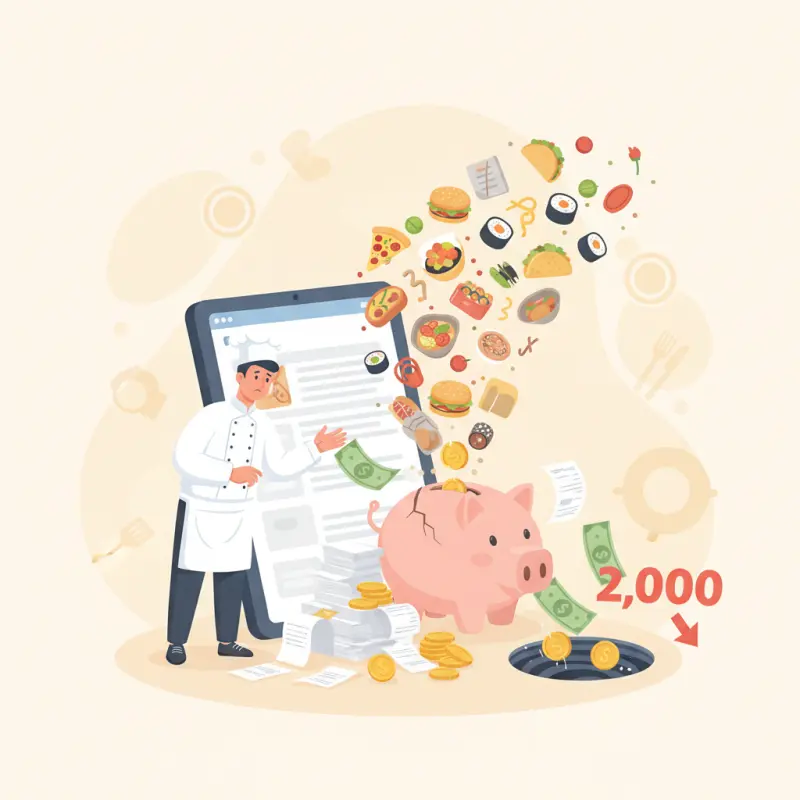
Restaurants using manual order taking lose an average of 2,000 MAD monthly through operational inefficiencies. A modern food order management system eliminates these losses by automating phone orders, reducing food waste from illegible tickets, and capturing customer data for repeat business. Manual systems force servers to spend 18 minutes per hour on phone calls instead of serving dine-in guests, leading to longer wait times and reduced satisfaction. Digital ordering platforms like those used in Casablanca and Agadir increase average order values by 15-22% through smart menu suggestions and upselling features. Kitchen display systems prevent lost orders and improve communication between front and back of house. The biggest hidden cost comes from lost customer relationships — paper orders provide no contact information for marketing to repeat customers. Replace manual ordering with integrated digital systems that connect online orders directly to kitchen displays.
Table of Contents
Why Your Current Order Taking Method Costs You 2,000 MAD Monthly
Your restaurant loses money every time the phone rings during lunch rush. Picture this: it's 12:45 PM at your restaurant in Casablanca. Three tables wait for orders while your best server answers the fifth phone call in ten minutes. Two callers hang up. That's 350 MAD in lost orders — and it happens every single day.
The hidden costs of manual ordering add up faster than most restaurant owners realize. When servers spend 18 minutes per hour on phone orders, they're not attending to dine-in guests. Those guests wait longer, order less, and tip worse. The real damage? Your kitchen receives handwritten tickets with "extra spicy" crossed out three times, leading to remakes that cost you 180 MAD in food waste daily.
But the biggest loss sits in your drawer: a stack of paper orders with no customer data. No names, no preferences, no email addresses. When Ahmed from Maarif orders tagine every Friday, you have no way to send him your weekend special. That's pure revenue walking past your door because your food order management system stops at pen and paper.
Consider what happens in your kitchen during peak hours. Orders pile up on the pass, some get lost, others arrive out of sequence. Your chef spends more time decoding handwriting than cooking. A proper restaurant online ordering system eliminates these friction points — orders flow directly to the kitchen display, each one crystal clear, timed perfectly.
Restaurants
10+
on the platform
Monthly orders
100+
processed every month
Commission
0%
on every order, always
Uptime
99.9%
platform reliability
Zero commission, always.
Learn moreThe Real Numbers Behind Restaurant Online Ordering Systems
Restaurant owners in Morocco see average order values jump between 15% and 22% after implementing digital ordering. The numbers tell a clear story about customer behavior when given the right tools.
Average Order Value Increase: 15-22% Breakdown
Digital menus do what paper can't — they suggest. When customers browse your online menu, smart recommendations appear: "Add fresh orange juice for 15 MAD" or "Make it a combo with fries and salad for 25 MAD more." These gentle nudges increase average orders from 85 MAD to 103 MAD. That's real money in your register.
The difference becomes stark when comparing ordering methods:
| Order Method | Average Order Value | Accuracy Rate | Processing Time |
|---|---|---|---|
| Phone Orders | 72 MAD | 87% | 4.2 minutes |
| Digital Orders (Guest Checkout) | 85 MAD | 99.2% | 45 seconds |
| QR Table Orders | 94 MAD | 99.5% | Instant |
Guest checkout matters more than you think. When customers order through your online food ordering system for restaurants without creating accounts, friction disappears. They order faster, order more, and come back sooner. OCHI's guest checkout feature removes the barrier — customers simply enter their phone number and start ordering.
Order Accuracy Rates
Digital orders achieve 99.2% accuracy because customers enter their own preferences. No miscommunication, no "I said NO onions." When orders flow directly from customer to kitchen through your food ordering system online, errors virtually disappear. Each saved remake puts 45 MAD back in your profit margin.
Time Allocation Changes
Your staff gains 2.3 hours daily when phone ordering stops dominating their shift. That time transforms into better table service, faster food delivery, and happier customers. Kitchen efficiency jumps 31% when orders arrive digitally — no more shouting across the pass, no more clarifying handwritten notes. Orders appear on the kitchen display in perfect sequence, each item status tracked from pending to prepared.
Why QR Table Ordering Changes Everything
Forget what you've heard about delivery being the only growth driver. QR table ordering generates higher margins because you keep the full ticket value — no delivery costs, no driver fees. A table in your Agadir beachfront restaurant scans the QR code, browses your menu in Arabic, French, or English, and orders directly. No app download required.
Table turnover increases 23% when customers order via QR. They scan, order, and eat — no waiting for servers to take orders or bring bills. Your kitchen receives orders instantly through the KDS, timing improves, and food arrives hot. Meanwhile, your servers focus on what matters: ensuring guests enjoy their meal, not scribbling on notepads.
The trust factor of branded domains can't be overstated. When customers see yourname.ochi.ma instead of generic ordering links, they know they're ordering directly from you. No middleman, no markup. Just your restaurant, your prices, your food. This direct connection builds loyalty that third-party apps can never match.
Consider a typical Saturday night: instead of three servers juggling order-taking and service, they're free to upsell desserts, recommend wine pairings, and create memorable experiences. Your food online ordering system handles the transactional parts while humans handle the hospitality.
Food Order Management System Components That Actually Matter
Core Requirements
Any system you choose must speak your customers' language — literally. In Morocco, that means seamless Arabic (right-to-left), French, and English support. OCHI handles this natively, letting customers switch languages mid-order without losing their cart.
Guest checkout ranks as essential because 67% of first-time digital orderers won't create an account. They want food, not another password to remember. Direct kitchen integration means orders appear instantly on your KDS, and real-time inventory sync prevents selling items you've run out of. Nothing frustrates customers more than ordering couscous only to receive a call saying it's unavailable.
Advanced Features Worth The Investment
GPS delivery tracking builds customer confidence. They see their driver approaching, eliminating "where's my food?" calls. Marketing automations work quietly in the background — sending a gentle reminder to customers who haven't ordered in two weeks, or a birthday discount that brings them back.
Multi-branch management becomes critical as you grow. Manage your Casablanca and Rabat locations from one dashboard, comparing performance, sharing successful menu items, and maintaining consistency. Webhook APIs let you connect with existing systems — your accounting software, your POS, your inventory management.
Choosing Your Food Online Ordering System: The Morocco Reality Check
Internet reliability varies across Morocco, so choose a system that works offline and syncs when connection returns. Your staff in Marrakech might not have the same tech comfort as those in Casablanca — the interface must be intuitive. Arabic-first design matters because that's how your team thinks.
Customer adoption rates tell an encouraging story. In Agadir, 72% of customers prefer QR ordering when offered. In Casablanca's business districts, online pre-ordering for lunch reaches 81% adoption within three months. The key? Make it easier than calling.
Local payment integration can't be an afterthought. Cash on delivery still dominates in many neighborhoods. Your system needs to handle cash, cards, and mobile payments seamlessly. OCHI processes all payment types through one interface, reconciling everything in your daily reports.
Commission structures kill restaurant margins. When delivery platforms take 30%, your 15% profit margin becomes a loss. That's why OCHI charges zero commission — you keep every dirham. Combined with the efficiency gains and higher order values, the math becomes obvious.
The transition doesn't happen overnight, but it doesn't take months either. Most restaurants see full adoption within two weeks when they commit to the change. The results speak louder than any promise: more orders, higher values, happier customers, and a team that finally has time to breathe.
Start where you are. Whether you're managing five tables in Agadir or fifty in Casablanca, the right food order management system transforms chaos into calm, one order at a time. See what OCHI can do for your restaurant at ochi.ma/partners.
Frequently Asked Questions
How much money do restaurants lose with manual food order management systems?
Restaurants typically lose 2,000 MAD monthly through missed phone calls, food waste from illegible orders, and lost customer data. Manual systems also reduce server efficiency by 18 minutes per hour spent on phone orders.
What are the main problems with paper-based restaurant ordering?
Paper orders create illegible tickets leading to 180 MAD daily food waste, provide no customer data for marketing, and slow kitchen operations. Orders get lost or arrive out of sequence during peak hours.
How much do digital food order management systems increase sales?
Digital ordering systems increase average order values by 15-22% through smart menu recommendations and upselling features. They also capture customer data for repeat business marketing.
Why do customers hang up when calling restaurants during busy hours?
During lunch rush, servers handling multiple phone calls create long wait times. When customers can't get through quickly, they hang up and order elsewhere, resulting in immediate revenue loss.
What features should a restaurant food order management system include?
Essential features include kitchen display systems for clear order communication, customer data capture for marketing, integrated payment processing, and direct connection between online orders and kitchen operations.
Restaurant owners · Weekly
The guide to running a restaurant in 2026.
One article per week. No commission advice. Just honest operational insight for Moroccan restaurants.

Blog Manager
Comments
No comments yet. Be the first to share your thoughts.