AI Overview
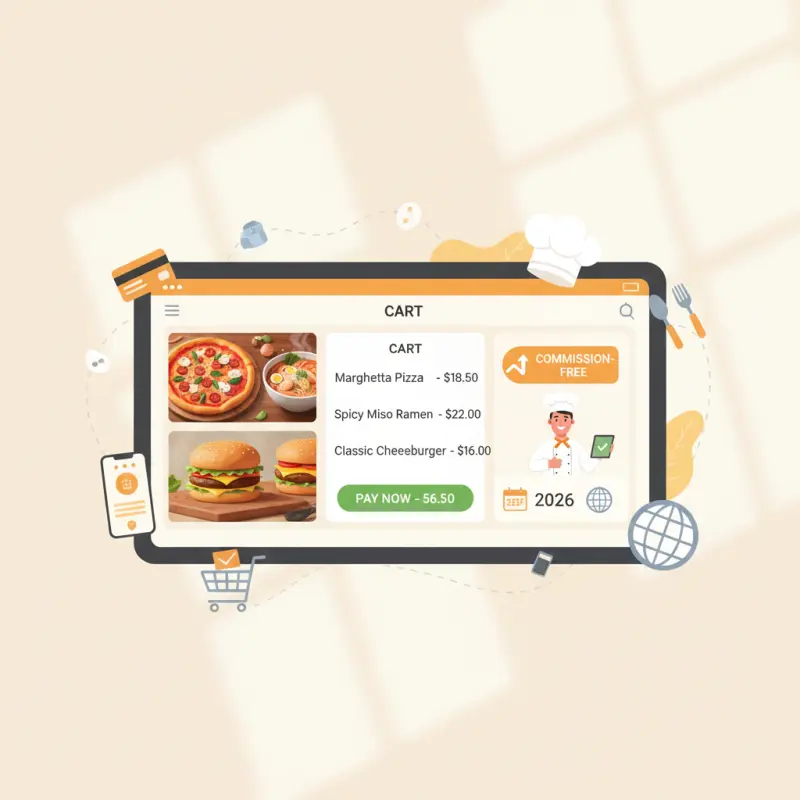
The best online ordering system for restaurants operates without commission fees that can cost establishments MAD 150,000 to 600,000 annually. Commission-based platforms like traditional delivery apps charge 25-30% per order, turning profitable digital sales into margin killers. Zero-commission platforms preserve 100% of order revenue while providing essential features like QR table ordering, POS integration, and delivery tracking. A seafood restaurant in Agadir saved MAD 180,000 in their first year after switching from a commission-based system to OCHI's zero-fee model. The mathematics are clear: a Casablanca restaurant processing MAD 200,000 monthly loses MAD 60,000 annually at standard commission rates. Choose systems that align with restaurant profitability rather than extracting percentages from every sale. Evaluate total cost of ownership including commissions, processing fees, and hidden charges before making platform decisions.
Table of Contents
Most restaurant owners lose MAD 15,000 every month to ordering platform commissions — and they don't even realize it. When searching for the best online ordering system for restaurants, guides focus on monthly fees while ignoring the silent profit killer: commission percentages that compound into six-figure losses.
The Real Cost Behind "Free" Restaurant Online Ordering Systems
The mathematics of commission-based platforms shock restaurant owners once they run the numbers. A mid-sized restaurant in Casablanca processing MAD 200,000 in monthly online orders loses MAD 60,000 annually at a 25% commission rate. Add processing fees, marketing charges, and premium placement costs — suddenly that "free" platform consumes 30% of digital revenue.
Traditional platforms structure fees to appear minimal during slow periods. Setup costs nothing. Monthly fees stay low. Then orders increase and commission percentages multiply into thousands of dirhams vanishing from each month's profits. Restaurant owners discover too late they've built their digital presence on a platform that profits from their success.
Monthly Orders | Commission (25%) | Annual Loss |
|---|---|---|
MAD 50,000 | MAD 12,500 | MAD 150,000 |
MAD 100,000 | MAD 25,000 | MAD 300,000 |
MAD 200,000 | MAD 50,000 | MAD 600,000 |
The Zero-Commission Alternative
OCHI operates on a different model entirely. Restaurants keep 100% of order revenue. No percentages. No hidden fees. No commission calculations eating into margins. A seafood restaurant in Agadir switched from a commission platform and saved MAD 180,000 in their first year — money reinvested into kitchen equipment and staff bonuses.
The restaurant online ordering system you choose determines whether technology becomes a profit center or cost center. Commission-free platforms align incentives correctly: the platform succeeds when restaurants grow revenue, not by taking larger slices of existing sales.
Digital menu ROI
How much are paper menus costing you?
Saved per month
1.2K MAD
Saved per year
14K MAD
Why QR Table Ordering Beats App-Based Systems Every Time
Every guide promoting restaurant apps ignores a fundamental truth: customers hate downloading apps for single-use cases. Research shows 80% of diners abandon orders when forced to download an app. QR code ordering eliminates this friction entirely — scan, browse, order, done.
The online food ordering system for restaurants must match customer behavior, not fight it. Diners carry phones but resist cluttering them with dozens of restaurant apps. QR ordering respects this reality. Tables display codes. Customers scan. Menus load instantly in their browser. No downloads. No accounts. No barriers.
Multi-Language Support That Actually Works
Morocco's linguistic diversity creates unique challenges for digital ordering. A table might seat Arabic speakers, French professionals, and English-speaking tourists. Forcing one language alienates two-thirds of potential customers. Proper multi-language support switches seamlessly — Arabic with right-to-left layout, French with proper formatting, English for international visitors.
OCHI's interface detects device language and adjusts automatically. Customers order in their preferred language without hunting for tiny flag icons or language dropdowns. This seemingly small detail increases order completion rates by 30% in cosmopolitan areas of Marrakech and Rabat.
Technical Features That Drive Revenue (Not Just Orders)
Features matter only when they increase profits. The best food ordering system online focuses on average order value, not just order count. Digital menus enable psychological techniques impossible with printed versions: strategic item placement, visual hierarchy, and dynamic recommendations based on current selections.
Average Order Value: The 15-22% Increase Factor
Digital ordering increases average order values between 15% and 22% through subtle upselling. When customers add a main dish, the system suggests complementary sides or beverages. Bundle deals appear at the perfect moment. These prompts feel helpful rather than pushy — increasing satisfaction while boosting revenue.
Real-time analytics reveal which items drive profits versus those that merely generate orders. A pizzeria in Agadir discovered their MAD 25 appetizer had the highest margin percentage. Strategic menu placement increased appetizer orders by 40%, adding MAD 8,000 monthly profit without raising prices.
The Multi-Branch Management Reality Check
Successful restaurants expand. Single-location thinking limits growth from day one. The food online ordering system must scale elegantly as restaurants open second and third locations. Separate dashboards per branch create data silos and operational headaches.
When One Dashboard Controls Everything
OCHI's multi-branch architecture provides unified control without complexity. Three Agadir locations share one login, one dashboard, one source of truth. Branch managers access their specific data. Owners see everything. Staff permissions ensure kitchen workers see orders while managers handle inventory.
Centralized reporting reveals patterns invisible at the branch level. Which location sells more desserts? Where do delivery times lag? How do Saturday lunch patterns differ between branches? These insights drive decisions that improve operations across all locations.
Branded Subdomain Strategy
Your online presence matters. Generic platform URLs — order.platform.com/restaurant-name — scream "third-party service." Professional restaurants deserve professional web addresses. OCHI provides branded subdomains: yourname.ochi.ma. Customers remember it. Search engines rank it. The restaurant owns its digital identity.
Implementation Timeline: From Setup to First Order
Theory means nothing without execution. Restaurant owners need concrete timelines, not vague promises. Digital transformation happens in phases, each building on the previous.
Week One: Menu Setup and QR Generation
Day one starts with menu digitization. Upload items, descriptions, prices, photos. The system generates QR codes immediately — no waiting for technical teams. Print codes on existing table tents or order professional stands. Train staff on the new flow: less order-taking, more customer service.
By day seven, tables display QR codes and orders flow through the system. Early adopters provide feedback. Staff gain confidence. The restaurant operates normally while testing digital ordering with willing customers.
Ongoing: Marketing Automation Without Marketing Budget
Built-in marketing automation nurtures customer relationships without ongoing effort. First-time orderers receive welcome messages. Regular customers earn loyalty points. Birthday bonuses surprise and delight. These campaigns run automatically based on customer behavior and calendar triggers.
Integration with existing systems prevents double work. Orders flow to kitchen displays and POS terminals. Inventory updates automatically. Customer data builds profiles for targeted campaigns. Technology amplifies human effort rather than replacing it.
Choosing the best online ordering system for restaurants requires looking beyond feature lists to actual business impact. Commission structures, customer friction, revenue optimization, and scalability determine whether technology helps or hinders growth. See what zero-commission ordering looks like at ochi.ma/partners.
Frequently Asked Questions
What makes an online ordering system the best choice for restaurants?
The best systems eliminate commission fees, offer branded experiences, and provide comprehensive management tools. Zero-commission platforms preserve profit margins while commission-based systems can cost restaurants 25-30% of digital revenue annually.
How much do commission fees cost restaurants annually?
Mid-sized restaurants lose MAD 150,000 to 600,000 annually on commission fees. A restaurant processing MAD 200,000 monthly pays MAD 60,000 yearly at 25% commission rates, not including processing fees and premium placement costs.
Should restaurants choose QR ordering or mobile apps?
QR table ordering eliminates app download friction and integrates seamlessly with existing operations. Customers scan codes to access branded ordering pages without installing new software or creating accounts.
What features should restaurant ordering systems include?
Essential features include POS integration, inventory management, delivery tracking, staff role management, and analytics. Advanced systems offer kitchen display screens, marketing automation, and webhook APIs for custom integrations.
How do zero-commission platforms make money?
Zero-commission platforms charge subscription fees rather than taking percentages from orders. This model aligns platform success with restaurant growth rather than extracting revenue from existing sales.
Restaurant owners · Weekly
The guide to running a restaurant in 2026.
One article per week. No commission advice. Just honest operational insight for Moroccan restaurants.

Blog Manager
Comments
No comments yet. Be the first to share your thoughts.