AI Overview
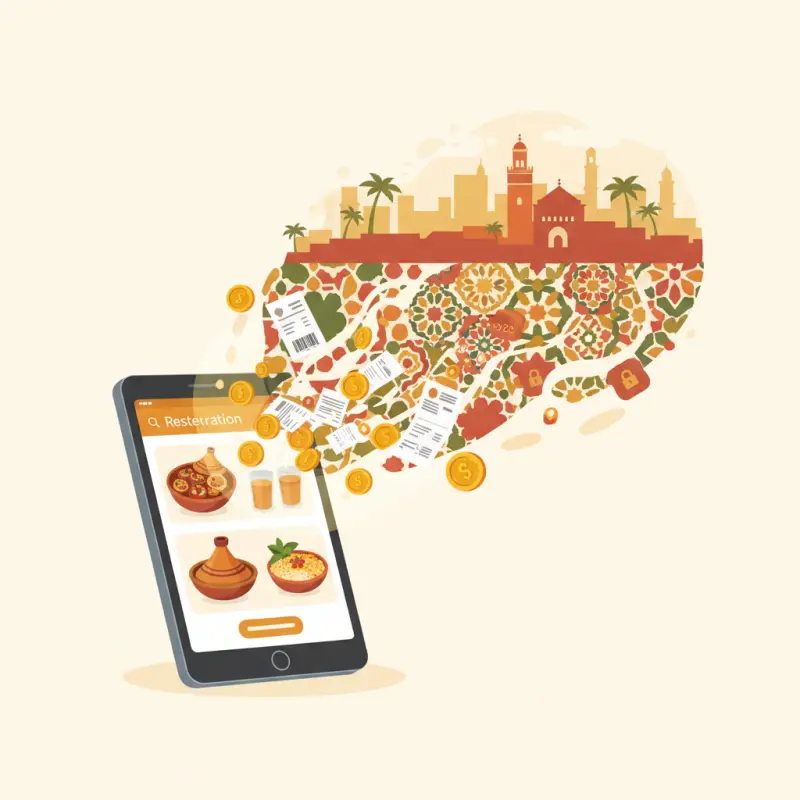
Popular online restaurant reservation software platforms charge restaurants between 2,200-2,750 MAD monthly plus 110-275 MAD per seated guest. OpenTable charges 220 MAD per cover plus 2,200 MAD monthly base fees. Resy takes 275 MAD per cover for premium features. TheFork adds 2% commission on prepaid bookings. A typical 100-seat restaurant with 60% weekend occupancy pays over 15,000 MAD monthly in reservation fees alone. These platforms also charge setup fees up to 5,500 MAD for POS integration. Many advertise 'free forever' plans that disappear once restaurants exceed 50 monthly bookings. Commission fees compound quickly with additional charges for SMS reminders, Arabic language support, and marketing features. Calculate total ownership costs before signing annual contracts.
Table of Contents
Restaurant owners in Casablanca pay 2,800 MAD monthly for online restaurant reservation software that barely works. The real shock comes when they discover the hidden transaction fees, integration costs, and feature limitations buried in the fine print.
Most restaurant reservation software promises simplicity. What you get instead: complex pricing tiers, surprise charges, and features that work great in Paris but fail completely during a Friday night rush in Marrakech.
The Hidden Costs Behind "Free" Restaurant Table Reservation Software
That "free forever" plan disappears fast. OpenTable charges restaurants 220 MAD per seated cover plus 2,200 MAD monthly. Resy takes 275 MAD per cover for premium features. TheFork adds 2% commission on prepaid bookings.
The math gets ugly quick. A 100-seat restaurant with 60% weekend occupancy pays over 15,000 MAD monthly in reservation fees alone. That's before counting setup costs, training hours, and the inevitable "premium" features you need to actually run your business.
Commission Fees That Eat Your Margins
Every major platform takes a cut. Some charge per booking. Others per seated guest. The creative ones charge both, plus monthly minimums. A typical breakdown:
| Platform | Monthly Base | Per Cover | Additional Fees |
|---|---|---|---|
| OpenTable | 2,200 MAD | 220 MAD | POS integration: 5,500 MAD setup |
| Resy | 2,750 MAD | 110-275 MAD | SMS reminders: 0.50 MAD each |
| TheFork | Free | 220 MAD | 2% on prepaid + marketing fees |
| SevenRooms | Custom pricing | 165 MAD+ | Annual contracts only |
Monthly Subscription Traps
The "starter" plan handles 50 bookings. Your restaurant does 200. Now you're on the "professional" tier at triple the price. Need Arabic language support? That's enterprise pricing. Want to integrate with your POS? Add another 1,100 MAD monthly.
Restaurant owners discover these limits after implementation. After staff training. After printing QR codes and updating websites. The switching cost isn't just money — it's the chaos of changing systems mid-service.
Integration Costs Nobody Mentions
Your POS doesn't talk to their restaurant booking software. The solution? A 11,000 MAD middleware subscription plus 22,000 MAD in consultant fees. Or you manually enter every reservation twice, praying your host doesn't make mistakes during the dinner rush.
Stack audit
What do you currently use?
Tick what you have. We’ll show what OCHI replaces or connects to.
Why Most Restaurant Booking Software Fails in Morocco's Market
Silicon Valley builds restaurant table reservation software for San Francisco dining patterns. Morocco operates differently. Peak hours hit different. Payment works different. Family dining means different table configurations.
Generic platforms assume 90-minute table turns and 7pm dinner peaks. In Agadir, families arrive at 9pm and stay until midnight. Your reservation software thinks they're no-shows. Your staff knows they're just running on Moroccan time.
Peak Hour Reality: 8pm-11pm Rush
Western restaurant reservation software spreads bookings evenly from 6pm to 10pm. Moroccan restaurants see 70% of reservations between 8:30pm and 10pm. The software can't handle the compression. Tables show available when they're not. Double bookings multiply.
A restaurant in Marrakech switched from manual booking to a popular platform. First Friday night: 12 double bookings, angry customers, and a manager reverting to the paper book by 9pm.
Family Dining vs. Individual Bookings
Table for two? Simple. Table for eight with three kids, two high chairs, and a celebration cake? Most reservation systems choke. Moroccan dining means large groups, flexible seating, and tables that merge and split through the night.
Your software needs to understand that a 6-top might become an 8-top when cousins arrive. That the terrace tables combine for birthdays. That VIP regulars get the corner booth even if the system says it's reserved.
Payment Method Preferences
International platforms push credit card deposits. Morocco runs on cash and increasingly, mobile payments. Forcing credit card details for reservations? You just lost 60% of your bookings to competitors who understand local preferences.
The Real Requirements Checklist for Restaurant Reservation Software
Features don't matter if your team can't use them. The best restaurant booking software disappears into your operation. It works like your staff already works, not how Silicon Valley thinks they should work.
Staff Learning Curve (Under 2 Hours or Skip It)
Your host has two hours between lunch and dinner service to learn the new system. If they're still confused by day three, the software failed. Real training time for major platforms: 8-12 hours minimum plus ongoing support calls.
Simple test: can your newest server take a phone reservation and input it correctly after 30 minutes of training? If not, you bought complexity, not solutions.
POS Integration: Native vs. Third-Party Nightmare
Native integration means reservations appear in your POS automatically. Orders link to the right table. Kitchen knows the party size. Payment processes once. Third-party integration means none of that works reliably.
Watch for weasel words: "integrates with" usually means "sort of talks to." "Seamless integration" means anything but. "API available" means hire a developer and pray.
No-Show Prevention That Goes Beyond Email Reminders
Email reminders assume people check email. SMS works better but costs extra. Smart systems do both plus WhatsApp in Morocco. Smarter systems track no-show patterns and adjust confirmation requirements automatically.
The best prevention? Make booking so easy that customers value their reservation. Require deposits only for large parties or peak times. Build reputation scores internally. Treat regulars differently than first-timers.
OCHI's Integrated Approach: Reservations Within Your Complete Restaurant System
OCHI builds reservations into your restaurant operations platform from day one. Not bolted on. Not through third parties. Native to your POS, your customer database, your table management. One system that handles walk-ins, online orders, and table bookings without the juggling act.
A seafood restaurant in Casablanca manages everything through votrenom.ochi.ma. Morning coffee crowd walks in. Lunch reservations flow from their website. Dinner bookings sync with table assignments. The kitchen sees party sizes on tickets. No double entry. No synchronization delays.
Single Dashboard for All Orders and Bookings
Your host sees available tables in real-time. Not just reserved vs. free, but order status, payment status, special requests. A family of six reserved for 9pm? The system suggests combining tables 12 and 13. Their last order included two high chairs? Already noted.
Compare this to juggling three systems: POS for orders, separate software for reservations, WhatsApp for special requests. OCHI puts it all in one view your team already knows how to use.
Real-Time Table Status Across Channels
Table 7 just paid their bill. Your online restaurant reservation software shows it available in 15 minutes. A walk-in arrives? The host assigns table 7, and online availability updates instantly. No manual synchronization. No "sorry, we're actually full" calls.
This matters during Ramadan rushes or weekend peaks when every table counts. Real-time accuracy means maximum occupancy without overbooking chaos.
Customer Data That Stays in Your System
Most platforms own your customer data. They market to your guests. They sell aggregated information. With OCHI, customer profiles, preferences, and history stay in your system. Build your own marketing lists. Know who your VIPs are. Track dietary preferences and birthday celebrations.
Implementation Timeline: From Setup to First Booking
Seven days from signup to smooth operations. Not promises — actual restaurant implementations across Morocco. Each day has specific goals, measurable outcomes, and realistic expectations.
Days 1-2: System Setup and Menu Integration
Day one: basic configuration. Restaurant details, operating hours, table layout upload. Two hours with an OCHI specialist gets your Agadir beachfront restaurant mapped correctly. Terrace tables, indoor sections, VIP areas — all reflected accurately.
Day two: connect your existing POS or implement OCHI's. Menu items sync automatically. Table assignments match your physical layout. Test orders flow through. By evening, your system reflects your restaurant's reality.
Days 3-4: Staff Training and Testing
Morning shift practices taking phone bookings. Afternoon team runs through table assignments. Everyone processes at least five test reservations. Common scenarios covered: large parties, special requests, moving reservations between days.
Day four focuses on edge cases. What happens when someone's late? How do you handle a party of eight that becomes ten? Your team discovers answers through practice, not during service chaos.
Days 5-7: Soft Launch and Customer Communication
Enable online bookings for trusted customers first. Iron out real-world issues with friendly faces. Update your Google Business profile with the booking link. Add reservation buttons to Instagram and Facebook.
Day seven: full launch. Your website shows real-time availability. Customers book tables at votrenom.ochi.ma without downloads or accounts. Confirmations arrive via SMS and WhatsApp. Your Moroccan restaurant joins the digital age without losing its soul.
Online restaurant reservation software should reduce complexity, not add to it. The right system integrates with your operations, respects your market, and pays for itself through efficiency gains. Not through commission fees and monthly subscriptions that drain your profits. Learn more about modern restaurant management or see what zero-commission operations look like at ochi.ma/partners.
Frequently Asked Questions
What are the hidden costs of online restaurant reservation software?
Hidden costs include per-cover fees (110-275 MAD), setup charges (up to 5,500 MAD), SMS reminder fees (0.50 MAD each), and mandatory premium upgrades. Most platforms also require annual contracts with cancellation penalties.
How much does online restaurant reservation software cost in Morocco?
Monthly costs range from 2,200-2,750 MAD base fees plus per-cover charges. A typical restaurant pays 15,000+ MAD monthly including all fees and commissions.
Which reservation software has the lowest commission fees?
TheFork offers free monthly plans but charges 220 MAD per cover plus 2% on prepaid bookings. Resy charges 110-275 MAD per cover depending on features. OpenTable charges 220 MAD per seated guest.
Do restaurant reservation platforms require long-term contracts?
Most major platforms require annual contracts. SevenRooms only offers annual pricing. OpenTable and Resy include cancellation penalties in their terms.
What happens when you exceed the booking limits on free plans?
Free plans typically limit 50 bookings monthly. Exceeding this forces an upgrade to professional tiers at triple the cost. Some platforms charge overage fees immediately.
Restaurant owners · Weekly
The guide to running a restaurant in 2026.
One article per week. No commission advice. Just honest operational insight for Moroccan restaurants.

Blog Manager
Comments
No comments yet. Be the first to share your thoughts.