AI Overview
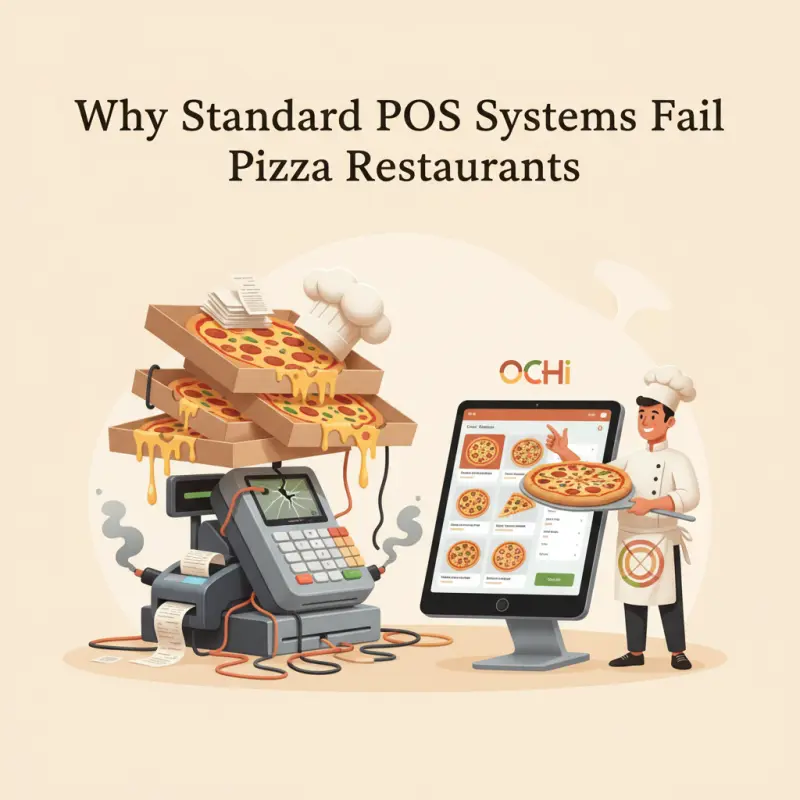
Pizza restaurant pos systems require specialized architecture to handle complex topping distributions, kitchen workflow coordination, and high-volume rush periods that break standard restaurant software. Generic POS platforms fail because they can't process orders like half-pepperoni, half-vegetarian pizzas with section-specific toppings while maintaining accurate inventory tracking and kitchen communication. Pizza operations run multiple parallel processes — dough prep, topping stations, multiple ovens, cutting, and packaging — that demand real-time coordination. Systems like Toast and Square often crash during peak hours when pizzerias in cities like Casablanca or Marrakech process 40+ orders in minutes. Most platforms create workarounds through manual notes or separate line items, but these patches fail when speed matters. Choose pizza-specific POS systems with proper topping mapping, kitchen display integration, and proven rush-hour performance to avoid operational breakdowns during your busiest revenue periods.
Table of Contents
Pizza Operations Break Standard Restaurant POS Systems
A pizzeria in Casablanca processes 47 orders in 12 minutes during Friday night rush. The POS crashes on order 23 because someone wanted half-pepperoni, half-vegetarian with extra cheese on just the vegetarian side. This isn't a software bug — it's what happens when generic restaurant systems meet pizza reality.
Pizza restaurants operate differently from every other food service model. The complexity starts with the product itself and cascades through every operational touchpoint.
The Toppings Problem:
Why Half-Pepperoni Orders Crash Systems
Standard restaurant POS architecture assumes simple modifiers: add cheese, no onions, extra sauce. Pizza ordering breaks this model completely. A single 12-inch pizza might have eight toppings distributed across four different sections, each with varying quantities and cooking requirements.
Consider a real order from a Marrakech pizzeria: large pizza, first quarter Margherita, second quarter BBQ chicken, third quarter vegetarian with no mushrooms but extra olives, fourth quarter Hawaiian. The kitchen needs to know which toppings go where. Inventory must deduct fractional portions. The receipt must show this clearly for accuracy.
Most pizza restaurant POS systems handle this by creating workarounds — special codes, manual notes, or separate line items. These patches fail during peak hours when speed matters most.
The Rush Hour Reality:
When 47 Orders Hit in 12 Minutes
Friday night at 8 PM in Agadir. The phone rings constantly. Online orders stream in. Walk-in customers wait at the counter. Delivery drivers circle back for their next batch. This is when mediocre systems reveal themselves.
Pizza kitchens run multiple parallel processes. Dough preparation, topping stations, multiple ovens at different temperatures, cutting, and boxing all happen simultaneously. A proper system must coordinate these workflows without bottlenecks.
The kitchen display must show oven assignments, cooking timers per pizza, and preparation sequences. When order 15 needs fresh dough rolled while orders 16-18 are already prepped, the system must flag this to prevent oven traffic jams.
Delivery Coordination That Actually Works
Pizza delivery isn't just about getting food from point A to point B. It's about synchronizing kitchen completion times with driver availability and routing efficiency. A driver returning from Hay Riad to your Guéliz location needs their next batch ready exactly when they arrive — not five minutes early (cold pizza) or five minutes late (idle driver).
Real-time GPS tracking must integrate with kitchen timers. When a pizza needs 12 minutes in the oven and the driver is 11 minutes away, the system should automatically queue that order for that specific driver. This coordination is what separates professional operations from chaos.
Stack audit
What do you currently use?
Tick what you have. We’ll show what OCHI replaces or connects to.
The Hidden Costs That Kill Pizza Restaurant Profits
Commission Math: The 3,000 MAD Monthly Drain
Let's run the numbers for a typical Casablanca pizzeria. You process 500 orders monthly with an average ticket of 60 MAD. That's 30,000 MAD in gross revenue. Traditional delivery platforms charge 15-20% commission, meaning you lose 4,500-6,000 MAD every month just to use their service.
| Metric | Your Restaurant | Platform Takes | You Keep |
|---|---|---|---|
| Monthly Orders | 500 | — | — |
| Average Order | 60 MAD | — | — |
| Gross Revenue | 30,000 MAD | — | — |
| 15% Commission | — | 4,500 MAD | 25,500 MAD |
| 20% Commission | — | 6,000 MAD | 24,000 MAD |
| Annual Loss (15%) | — | 54,000 MAD | — |
| Annual Loss (20%) | — | 72,000 MAD | — |
That's enough to hire another full-time employee or upgrade your kitchen equipment. Yet most pizzeria owners accept this as the cost of doing business online. Traditional commission-based platforms count on this resignation.
Transaction Fees Stack Up Fast
Beyond commissions, hidden costs erode margins. Credit card processing takes 2.9% plus fixed fees per transaction. POS subscriptions run 200-800 MAD monthly per terminal. Integration fees for connecting to delivery apps add another 150-300 MAD monthly.
A two-location pizza operation might pay 1,500 MAD monthly just in software fees before processing a single order. Add payment processing on 30,000 MAD monthly revenue (870 MAD) and you're bleeding 2,370 MAD in fixed costs alone.
Why Food Truck POS Systems Miss the Pizza Mark
The Mobility Trap:
Why Pos Systems for Food Trucks Fall Short
Food truck operators face unique challenges, but pos systems for food trucks optimize for the wrong problems when applied to pizza operations. Battery life that handles a four-hour lunch shift dies during a six-hour Friday night pizza rush. The compact screens that work for simple tacos can't display complex pizza modifications clearly.
More critically, point of sale systems for food trucks lack integration with pizza-specific equipment. Oven timers, temperature monitoring, and dough preparation schedules don't exist in the food truck POS world. Using these systems in a pizzeria means running critical operations on paper alongside your digital system.
The Cafe POS System Misconception
Some pizzeria owners consider cafe pos system options, thinking beverage-and-food combinations translate well. This misses fundamental differences in operational tempo. Cafes process 80 transactions daily with simple modifications. Pizzerias handle 200+ complex orders requiring precise kitchen orchestration.
Cafe accounting software excels at tracking coffee bean inventory and pastry sales. It fails when calculating cheese portions across 15 different pizza configurations or managing delivery driver cash reconciliation. The financial reporting needs are completely different — cafes focus on table turnover, pizzerias on delivery efficiency and kitchen throughput.
How OCHI Handles Pizza Restaurant Operations
Modular Architecture Adapts to Your Pizza Workflow
OCHI builds from the ground up for complex restaurant operations. The Kitchen Display System syncs directly with oven timers, showing exactly when each pizza should enter and exit. GPS delivery tracking integrates into the driver mobile app, automatically clustering orders by location for maximum efficiency.
Your branded subdomain (votrenom.ochi.ma) eliminates commission drain entirely. Customers order directly from you. You keep 100% of revenue. The same prices on your printed menu appear online — no markups, no hidden fees. The platform adapts to how you actually work, not the other way around.
Multi-Branch Management for Growing Pizza Operations
When your Rabat location runs low on mozzarella while your Salé branch has excess, OCHI's inventory system flags this immediately. Transfer stock with two taps. Track usage patterns across locations to optimize purchasing.
Staff permissions match real roles: pizza makers see only kitchen orders with topping details, drivers view their delivery queue with GPS routing, managers access full analytics. Real-time data shows which locations sell more Margherita versus Quattro Stagioni, informing menu decisions and inventory planning.
The Implementation Reality:
What Actually Happens Week One
Staff Training That Doesn't Stop Operations
Switching systems doesn't mean shutting down. Run your old system parallel for two days while the team learns. Kitchen staff typically master the new workflow after three to four shifts. The visual interface shows pizza quarters clearly — no more handwritten notes or memorized codes.
Customer adoption happens gradually. Expect 30% of orders through your new branded platform in month one. By month three, when customers realize they pay menu prices instead of inflated platform rates, adoption typically exceeds 70%.
Data Migration: Your Order History Stays Intact
Your customer database exports cleanly before switching. Loyalty points transfer. Order histories remain accessible. Customer preferences — Ahmed always wants extra oregano, Fatima orders every Tuesday — stay in the system.
Historical sales data imports for accurate forecasting. Know that Ramadan orders spike 40% on weekends. See that seafood pizzas sell better in summer. Use real patterns from your actual operations to make better decisions.
The right pizza restaurant POS systems don't just process orders — they understand how pizza operations actually work. From complex toppings to delivery coordination to multi-branch inventory, every feature must serve the chaotic reality of running a successful pizzeria. See how OCHI works for your pizza restaurant at votrenom.ochi.ma.
Frequently Asked Questions
Why do standard POS systems crash when processing complex pizza orders?
Standard restaurant POS systems assume simple modifiers like 'extra cheese' or 'no onions' but break when handling pizza orders with multiple toppings distributed across specific sections of one item. They can't process fractional inventory deductions or complex kitchen instructions needed for half-and-half pizzas.
What features should pizza restaurant POS systems have?
Pizza POS systems need topping distribution mapping, fractional inventory tracking, kitchen display coordination for multiple cooking stations, and high-volume order processing capabilities. They must handle complex modifiers while maintaining speed during rush periods.
Can generic restaurant POS systems work for pizza restaurants?
Generic systems can handle basic pizza orders but fail during peak hours with complex orders. They require workarounds like manual notes or separate line items that slow operations and create errors when processing 40+ orders in minutes.
How do pizza restaurants handle multiple cooking processes with POS systems?
Specialized pizza POS systems coordinate parallel workflows through integrated kitchen displays that show dough preparation, topping stations, oven assignments, and packaging queues. This prevents bottlenecks and ensures proper timing across all cooking stages.
What happens when pizza POS systems fail during rush hours?
System failures during peak periods cause order backlogs, kitchen confusion, customer complaints, and revenue loss. Pizza restaurants processing 47 orders in 12 minutes need systems with proven uptime and rush-hour performance capabilities.
Restaurant owners · Weekly
The guide to running a restaurant in 2026.
One article per week. No commission advice. Just honest operational insight for Moroccan restaurants.

Blog Manager
Comments
No comments yet. Be the first to share your thoughts.