AI Overview
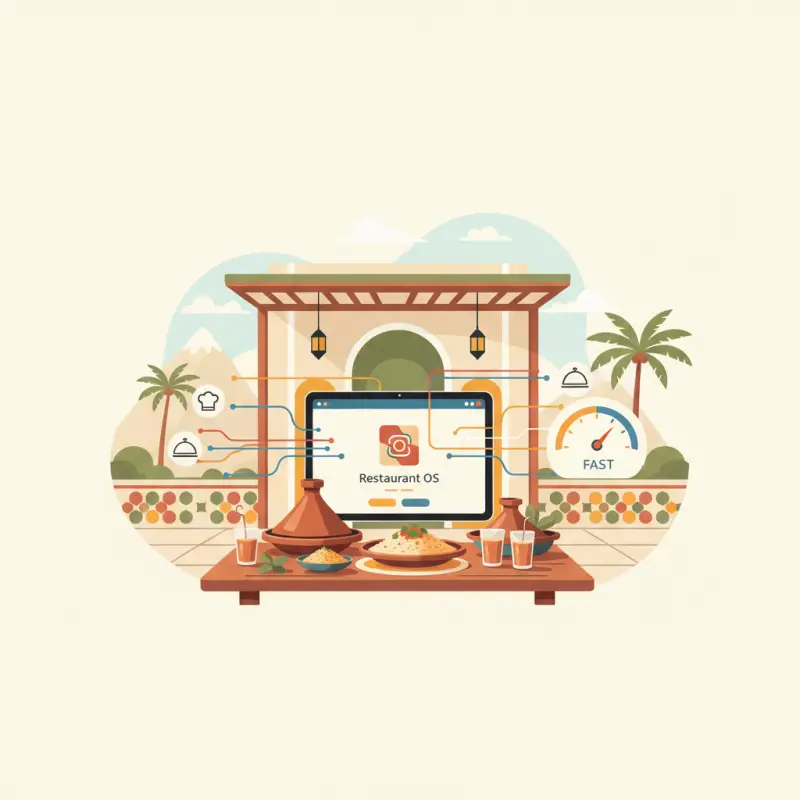
Web based restaurant management software requires different internet speeds depending on Morocco's city infrastructure and restaurant location. POS transactions need minimum 1 Mbps while analytics dashboards require 3 Mbps, but Morocco's network realities demand higher buffers. Casablanca business districts average 15 Mbps but drop to 5 Mbps during lunch rush. Agadir faces tourist season congestion dropping 12 Mbps to 3-4 Mbps when cruise ships dock. Marrakech's Gueliz supports 20 Mbps while medina restaurants work with 10 Mbps that halves during peak months. Smart systems store 72 hours of critical data locally for offline operation. OCHI's platform queues offline transactions and syncs automatically when connection restores. Choose web based restaurant management software that maintains local data backup and handles Morocco's network interruptions without manual reconciliation.
Table of Contents
The Infrastructure Reality: What Works in Morocco's Restaurant Landscape
Most web based restaurant management software vendors paint a simple picture: sign up, log in, start managing. The reality in Morocco is more complex. Your restaurant's location determines whether cloud systems work reliably or become a daily frustration.
In Casablanca's business districts, fiber connections average 15 Mbps — enough for simultaneous POS transactions, real-time inventory updates, and customer analytics. But during lunch rush, when every office worker orders online, speeds can drop to 5 Mbps. Restaurant owners in Agadir face different challenges: tourist season brings network congestion as hotels and cafés compete for bandwidth. The 12 Mbps average becomes 3-4 Mbps when cruise ships dock.
Marrakech tells two stories. In Gueliz, modern infrastructure supports 20 Mbps connections that handle cloud based restaurant POS systems smoothly. In the medina's narrow streets, where many traditional restaurants operate, speeds hover around 10 Mbps on good days. During peak tourist months, that number halves.
Internet Speed Requirements by City
Here's what each component of web based restaurant management software actually needs:
| Function | Minimum Speed | Recommended Speed | Data Usage/Hour |
|---|---|---|---|
| POS Transactions | 1 Mbps | 3 Mbps | 50 MB |
| Kitchen Display Updates | 2 Mbps | 5 Mbps | 100 MB |
| Inventory Sync | 0.5 Mbps | 2 Mbps | 25 MB |
| Analytics Dashboard | 3 Mbps | 5 Mbps | 150 MB |
Backup Solutions When Connection Drops
Smart cloud based restaurant management systems store critical data locally. When internet fails, orders continue processing offline. Once connection restores, the system syncs automatically. OCHI's platform maintains the last 72 hours of menu data, prices, and customer information on each device — enough to weather Morocco's occasional service interruptions.
The recovery process matters too. Systems that require manual data reconciliation create errors. Look for platforms that queue offline transactions and process them chronologically when reconnected. This prevents overselling items or double-charging customers.
Stack audit
What do you currently use?
Tick what you have. We’ll show what OCHI replaces or connects to.
The True Cost of Cloud vs On-Premise: Morocco Price Breakdown
Restaurant owners hear "cloud saves money" constantly. The truth requires math. In Morocco, the economics shift based on your operation's size and location.
Year One Costs (MAD)
On-premise systems demand significant upfront investment. A basic POS terminal costs 15,000-25,000 MAD. Multi-station setups reach 40,000 MAD before adding kitchen displays or handheld devices. IT specialists charge 8,000 MAD for installation and network configuration. Annual maintenance contracts run 12,000 MAD — and that's if nothing breaks.
Cloud based restaurant management software operates differently. Monthly fees range from 500 MAD for single locations to 2,000 MAD for multi-branch operations. Setup costs vary: some platforms charge 5,000 MAD for onboarding, while others like OCHI include setup free. No maintenance contracts needed — updates happen automatically.
Three-Year Total Cost Analysis
| Restaurant Type | On-Premise (3 Years) | Cloud-Based (3 Years) | Break-Even Point |
|---|---|---|---|
| Single Café (1 POS) | 71,000 MAD | 36,000 MAD | Never |
| Restaurant (3 POS) | 135,000 MAD | 72,000 MAD | Month 20 |
| Multi-Branch (5 locations) | 340,000 MAD | 180,000 MAD | Month 14 |
Hidden costs change the equation. On-premise systems need server replacements every four years (20,000 MAD). Software licenses expire. Hardware fails. Cloud systems shift these risks to the provider.
Security in the Cloud: Separating Fear from Facts
Restaurant owners worry about cloud security while their current practices create bigger vulnerabilities. That Excel spreadsheet with supplier passwords? It's on a computer anyone can access. Customer credit card receipts? Stored in unlocked drawers.
Why Your Current System Is Less Secure
Traditional restaurant data storage fails basic security tests. USB drives containing inventory databases get lost. Shared computers mean shared passwords. Local backups — when they exist — sit in the same building as the original data. One fire or flood destroys everything.
Paper systems create unique risks. Table receipts expose customer information. Handwritten orders reveal purchasing patterns. Manual inventory sheets show exactly when valuable stock arrives.
Cloud Security Advantages
Professional cloud based restaurant POS systems operate from data centers with physical security, fire suppression, and redundant power. Your customer data gets encrypted during transmission and storage. Automatic security patches close vulnerabilities before hackers exploit them.
Compliance becomes automatic too. Payment Card Industry standards require specific protections that small restaurants can't implement alone. Cloud providers handle PCI DSS compliance as part of their service. Your restaurant gains enterprise-level security without enterprise-level costs.
iPad vs Traditional POS: The Mobility Question
Fixed POS terminals anchor staff to specific locations. Waiters walk to the terminal, enter orders, walk back to tables. This workflow made sense when terminals cost 50,000 MAD each. Today, a POS system for iPad changes the entire service dynamic.
Service Speed Impact
Table-side ordering eliminates wasted steps. Orders reach the kitchen 30 seconds faster — the difference between hot food and lukewarm dishes. Staff checking inventory no longer disappear into back rooms; they access stock levels while standing with customers.
During Ramadan rush in Casablanca restaurants, mobility matters more. Fixed terminals create bottlenecks as multiple waiters queue to enter orders. iPad systems let each server process orders independently, reducing wait times when every minute counts.
Staff Training Reality
Traditional POS training takes 2-3 days of memorizing button sequences and transaction codes. iPad-based systems leverage familiar touch interfaces. New staff become productive in 2-3 hours. The reduction in training costs often covers the monthly software fee.
Error rates drop too. Intuitive interfaces mean fewer voids and corrections. When the POS system for iPad matches smartphone interactions staff use daily, mistakes become rare.
Remote Management: Running Your Restaurant from Anywhere
Morocco's successful restaurateurs often own multiple locations or travel frequently for suppliers. Web based restaurant management software transforms how they maintain control.
Real-Time Dashboard Access
Picture this: You're meeting a fish supplier in Essaouira while your Agadir restaurant handles lunch rush. Your phone shows real-time sales, table turnover rates, and which menu items are selling fast. An inventory alert notifies you that lamb tagine ingredients run low. You message your chef through the platform to suggest the fish special instead.
This isn't futuristic — it's how cloud based restaurant management software works today. Owners monitor staff performance, track labor costs against sales, and spot problems before they escalate. All from a smartphone.
Multi-Branch Control
Managing restaurants across Marrakech, Casablanca, and Rabat once required constant travel. Now, centralized dashboards compare performance metrics instantly. Menu updates push to all locations simultaneously. Price changes reflect everywhere at once.
Branch managers gain autonomy within set parameters. They adjust staff schedules and handle local promotions while headquarters maintains oversight. The balance between control and flexibility determines whether expansion succeeds or fragments your brand.
Ready to eliminate commission fees and gain complete control? Your restaurant deserves better than paying 15-30% to delivery platforms. Set up your branded ordering system at votrenom.ochi.ma and keep 100% of your revenue. Visit ochi.ma/partners to see how Morocco's restaurants are already transforming their operations.
Frequently Asked Questions
What internet speed does web based restaurant management software need?
POS transactions need minimum 1 Mbps, kitchen displays require 2 Mbps, and analytics dashboards need 3 Mbps. Most restaurants should plan for 5 Mbps total to handle simultaneous functions reliably.
Does web based restaurant management software work offline in Morocco?
Quality systems store critical data locally and continue processing orders when internet fails. OCHI maintains 72 hours of menu data, prices, and customer information offline, syncing automatically when connection restores.
Which Moroccan cities have reliable internet for restaurant software?
Casablanca business districts average 15 Mbps, Marrakech's Gueliz supports 20 Mbps, and Agadir maintains 12 Mbps normally. All cities experience congestion during peak periods that can halve these speeds.
How much data does restaurant management software use per hour?
POS transactions use 50 MB per hour, kitchen displays consume 100 MB, inventory sync needs 25 MB, and analytics dashboards require 150 MB. Total usage averages 325 MB per hour during busy periods.
Restaurant owners · Weekly
The guide to running a restaurant in 2026.
One article per week. No commission advice. Just honest operational insight for Moroccan restaurants.

Blog Manager
Comments
No comments yet. Be the first to share your thoughts.