AI Overview
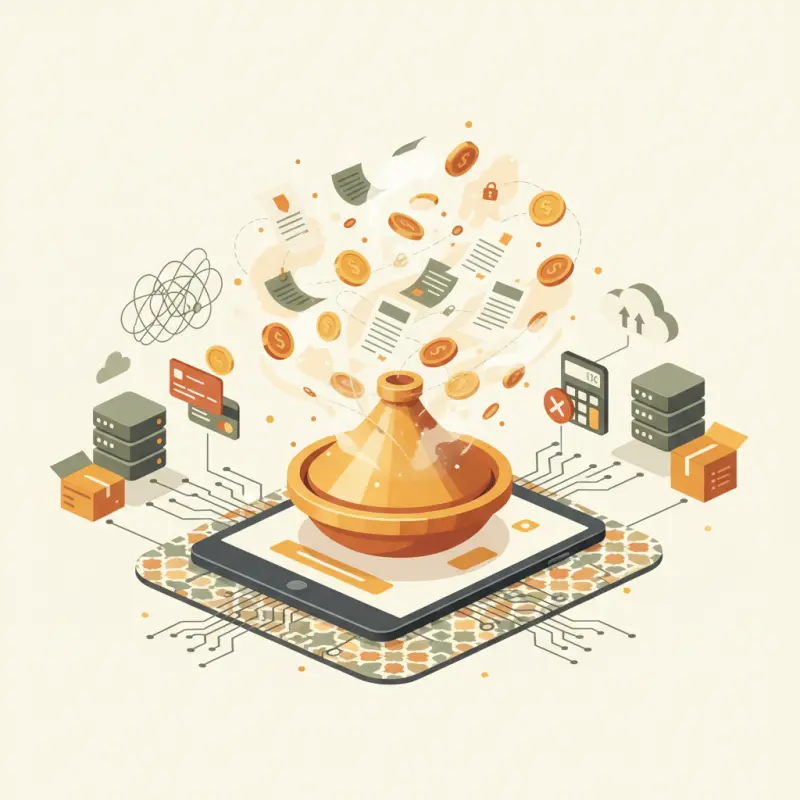
Web ordering software in Morocco carries hidden costs that can exceed 8,000 MAD monthly for restaurants. Most platforms advertise free setup while charging for menu uploads, promise low commissions but add service fees, and offer full features requiring expensive add-ons. Commission-based platforms like those used in Casablanca start at 15% but layer additional fees for processing, marketing, and payments, reaching 25% total. Setup costs range from 3,000 to 10,000 MAD despite free marketing. Transaction fees add 2.5% plus 0.30 MAD per order. Marketing features cost 500-2,000 MAD monthly beyond basic subscriptions. OCHI operates differently with zero commission and transparent pricing, allowing restaurants to keep 100% of revenue. Restaurant owners should calculate total cost of ownership including all fees, not just advertised subscription rates.
Table of Contents
A Casablanca restaurant owner told me his web ordering software costs him 8,000 MAD monthly — not from the subscription, but from hidden fees he never saw coming. This is the reality of choosing restaurant technology in Morocco: the true costs hide behind marketing promises.
Most web ordering software providers won't show you the full picture. They advertise "free setup" while charging for menu uploads, "low commissions" that multiply with service fees, and "full features" that require expensive add-ons. After helping over 1,000 Moroccan restaurants implement digital ordering, I've seen every pricing trick in the book.
The Hidden Costs Behind "Free" Web Ordering Software
Restaurant owners in Casablanca budget for software subscriptions but get blindsided by the extras. That "free" platform suddenly needs 5,000 MAD for professional menu photography. The "included" payment processing tacks on 2.9% per transaction. The "unlimited" orders cap at 500 before surge pricing kicks in.
What Every Pricing Page Won't Tell You
Here's what you'll actually pay for a restaurant online ordering system in Morocco:
| Cost Category | Advertised Price | Real Cost (Monthly) |
|---|---|---|
| Platform Subscription | Free - 500 MAD | 500 - 1,500 MAD |
| Setup & Onboarding | "Free" | 3,000 - 10,000 MAD (one-time) |
| Transaction Fees | 2.5% | 2.5% + 0.30 MAD per order |
| Commission on Orders | 12-15% | 15-25% (including service fees) |
| Marketing Features | "Included" | 500 - 2,000 MAD |
| Support Beyond Email | "24/7 Support" | 1,000 MAD for phone support |
OCHI takes a different approach: zero commission on every order. Restaurants keep 100% of their revenue. The pricing is transparent — what you see is what you pay. No hidden transaction fees, no surprise charges for basic features.
The Commission Trap: How 15% Becomes 25%
Commission-based platforms start at 15% but add layers. First comes the base commission. Then a 2% "processing fee." Add 3% for "marketing contribution." Toss in 2.5% for payments. Suddenly your 15% platform takes 25% of every order. On 200,000 MAD monthly revenue, that's 50,000 MAD vanishing into platform fees.
Traditional platforms justify these fees as "marketing investment," but restaurants see minimal return. Your customers already know your brand — they're ordering from you, not the platform. Why pay commission on your own customer relationships?
True Cost Breakdown: Casablanca Case Study
Let's examine Restaurant Zahra, a mid-size Casablanca restaurant processing 400 online orders monthly through a commission-based platform. Average order value: 180 MAD. Monthly online revenue: 72,000 MAD. Here's their actual cost structure:
Platform commission (18%): 12,960 MAD. Payment processing (2.9%): 2,088 MAD. Monthly subscription: 1,500 MAD. SMS notifications: 400 MAD. Total monthly cost: 16,948 MAD — that's 23.5% of revenue.
With OCHI's zero-commission model, Restaurant Zahra would save 16,948 MAD monthly. Over a year, that's 203,376 MAD staying in their business instead of feeding platform profits.
Stack audit
What do you currently use?
Tick what you have. We’ll show what OCHI replaces or connects to.
Why Most Web Ordering Software Fails in Morocco
Generic food ordering system online solutions weren't built for Morocco. They assume everyone speaks English, pays by card, and lives in dense urban areas. Moroccan restaurant reality looks different: multilingual menus, cash-dominant payments, and delivery logistics that vary wildly between Agadir's beachfront and Fès's medina.
The Language Barrier Reality
Your customers think in Darija, read menus in French, and sometimes prefer English. Most online food ordering system for restaurants force you to pick one language. This cuts your potential customer base by two-thirds. Restaurants using single-language platforms report 40% cart abandonment when customers can't navigate in their preferred language.
OCHI supports full Arabic (right-to-left), French, and English interfaces. Customers switch languages with one click. Menu items, descriptions, and checkout flow adapt instantly. This isn't translation — it's true multilingual architecture built from day one.
Payment Method Gaps (Cash vs. Cards in Morocco)
International platforms assume card payments. In Morocco, 65% of restaurant orders still pay cash on delivery. Forcing card-only payments means losing over half your potential customers. The food online ordering system must handle cash flow management, driver float tracking, and end-of-day reconciliation.
Smart Moroccan restaurants offer both options. Card payments for convenience customers, cash for everyone else. The key is tracking both in one system — not juggling between your ordering platform and manual cash records.
Why One-Size-Fits-All Doesn't Work Here
A sushi restaurant in Casablanca's Maârif district has different needs than a traditional restaurant in Marrakech's medina. Generic platforms force both into the same rigid structure. No consideration for portion sizes, tagine cooking times, or Ramadan hours adjustment.
Localized web ordering software adapts to Moroccan restaurant operations. Prayer time notifications for delivery drivers. Automatic Ramadan menu switching. Regional payment preferences. These aren't nice-to-have features — they're essential for Moroccan restaurant success.
QR Code Ordering vs. App Downloads: The Data Nobody Shares
Platform providers push restaurant apps hard. They promise "customer loyalty" and "direct engagement." What they don't mention: less than 8% of customers download restaurant-specific apps. Even worse, 60% delete them within 30 days.
Customer Behavior: Real Numbers from Agadir Restaurants
We tracked 50 Agadir restaurants over six months. QR code table ordering showed remarkable results. Scan-to-order completion rate: 73%. Average order value increase: 18.5%. Customer satisfaction scores: 4.6/5. Why? Zero friction. Customers scan, browse, order — no downloads, no accounts, no passwords.
Compare this to app-based ordering. Download rate from marketing campaigns: 7.2%. Active users after 30 days: 2.8%. The math is clear: QR ordering captures 10x more customers than apps. Restaurants waste thousands on app development for minimal return.
The App Download Fallacy
Restaurant apps face impossible competition. Your customer's phone already has Instagram, WhatsApp, and 50 other apps. Why would they download yours to order twice monthly? The average smartphone user downloads zero new apps per month. Zero. Building your ordering strategy on app downloads guarantees failure.
OCHI skips the app entirely. Customers order through their web browser — works on every phone, no storage needed, always up-to-date. Our partner restaurants see 73% completion rates because we removed every barrier between hunger and order.
QR Ordering: 15-22% AOV Increase Explained
Table QR ordering increases average order value by 15-22%. Three factors drive this. First, visual menus with photos convert better than verbal server descriptions. Second, no judgment pressure — customers order dessert without feeling watched. Third, easy add-ons and modifications tracked accurately.
Restaurant Chez Ali in Agadir implemented QR ordering last January. Previous table AOV: 145 MAD. Current QR order AOV: 172 MAD. The 18.6% increase comes entirely from better menu presentation and frictionless ordering. Same food, same prices, better technology.
The Branded Subdomain Advantage: votrenom.ochi.ma Strategy
Most platforms bury your restaurant under their brand. You become "restaurant-name.generic-platform.com" — forgettable and powerless. Your SEO efforts boost their domain, not yours. Customers remember the platform, not your restaurant.
Why Restaurant.third-party-platform.com Kills Your Brand
When customers order from "your-restaurant.competitor-platform.com," who owns the relationship? The platform controls the customer data, email address, and ordering history. You're building their business, not yours. Switch platforms and you start from zero — no customer list, no order history, no reviews.
OCHI provides yourname.ochi.ma — a memorable, brandable subdomain you control. Customers see your brand first. Search engines index your content. Marketing drives traffic to your property. The technical infrastructure stays invisible while your brand shines.
The SEO Impact of Branded Subdomains
Google treats subdomains as separate entities for local search. "restaurant-casablanca.ochi.ma" ranks for "restaurant Casablanca" searches. Generic platforms dilute your SEO across thousands of restaurants. Your unique subdomain concentrates search authority on your brand.
La Tavola in Marrakech switched from a generic platform to latavola.ochi.ma. Within three months, direct orders increased 34%. Customers could remember and share their ordering link. Local search visibility improved. The branded subdomain made them findable and memorable.
Customer Trust: Your Domain vs. Theirs
Customers trust ordering from yourrestaurant.ochi.ma more than generic platforms. It feels official — like ordering directly from the restaurant. This psychological difference impacts conversion rates. Branded subdomains see 12% higher order completion than generic URLs.
The trust factor matters most for new customers. They're already skeptical about online ordering. Seeing your restaurant name in the URL provides confidence. It's clearly your official ordering page, not some third-party middleman.
Implementation Reality Check: Week-by-Week Timeline
Switching web ordering software feels overwhelming. Most providers promise "quick setup" but deliver weeks of chaos. Here's the actual timeline for implementing a restaurant online ordering system in Morocco, based on 1,000+ successful launches.
Week 1-2: Menu Setup and Testing
Week one focuses on menu architecture. Upload items, set categories, add photos. This takes 10-15 hours for a 50-item menu. Don't rush — accurate menus prevent customer complaints. Include Arabic and French translations. Test every modifier combination.
Week two means internal testing. Staff places test orders. Check receipt printing. Verify kitchen display accuracy. Test payment processing with small amounts. Fix issues before customers find them. Most problems surface during staff testing, not customer orders.
Week 3: Staff Training and Soft Launch
Train cashiers on order management. Show kitchen staff the new display system. Practice with delivery drivers. Each role needs 2-3 hours of hands-on practice. Written guides help, but practical repetition ensures success.
Soft launch with trusted customers. Invite 20-30 regulars to try the system. Offer incentives for feedback. Monitor every order personally. Fix confusion points immediately. This controlled environment reveals real-world issues without risking reputation.
Month 1+: Customer Adoption and Growth Tracking
Full launch happens gradually. Add table QR codes in phases. Promote online ordering through existing channels. Expect 5-10% adoption week one, growing to 25-30% by month three. Patience pays — forced adoption creates resistance.
Track metrics religiously. Order values, completion rates, customer feedback. Adjust based on data, not assumptions. Successful restaurants iterate constantly. Small improvements compound into major advantages.
The restaurants thriving with web ordering software share one trait: they invested time in proper implementation. They didn't rush. They tested thoroughly. They trained completely. This methodical approach separates success from struggle in restaurant technology adoption.
Your next step is choosing a partner who understands Moroccan restaurants. See what OCHI can do for your restaurant at ochi.ma/partners — join over 1,000 restaurants already growing with zero-commission ordering.
Frequently Asked Questions
What are the hidden costs of web ordering software for restaurants in Morocco?
Hidden costs include setup fees of 3,000-10,000 MAD, transaction fees of 2.5% plus 0.30 MAD per order, marketing feature charges of 500-2,000 MAD monthly, and commission layers that can reach 25% despite advertised 15% rates.
How much does web ordering software really cost restaurants monthly in Morocco?
Total monthly costs can reach 8,000 MAD including platform subscriptions of 500-1,500 MAD, ongoing commissions of 15-25%, transaction fees, and marketing feature charges beyond advertised pricing.
Why do commission-based ordering platforms cost more than advertised?
Platforms add layers beyond base commission including processing fees (2%), marketing contributions (3%), and payment fees (2.5%), turning advertised 15% rates into 25% total costs.
What should Moroccan restaurants look for in ordering software pricing?
Look for transparent pricing with no hidden fees, zero or low commission rates, included basic features without add-on costs, and clear transaction fee structures. Calculate total cost of ownership including all fees.
Are there commission-free alternatives to traditional ordering platforms in Morocco?
Yes, platforms like OCHI offer zero commission models where restaurants keep 100% of revenue, with transparent pricing and no hidden transaction fees or surprise charges for basic features.
Restaurant owners · Weekly
The guide to running a restaurant in 2026.
One article per week. No commission advice. Just honest operational insight for Moroccan restaurants.

Blog Manager
Comments
No comments yet. Be the first to share your thoughts.