AI Overview
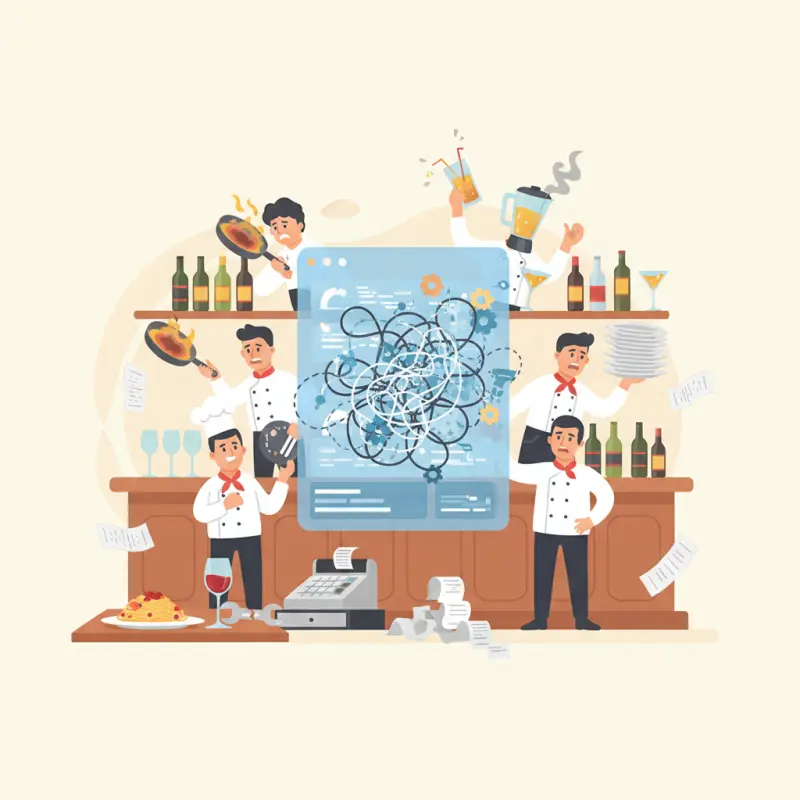
Most bar and restaurant management software fails because it applies restaurant workflows to bar operations. Bar and restaurant management software designed for table service assumes customers sit for an hour and need complex order modifications, but bars pour 30 drinks in the time it takes to serve one dinner. Traditional restaurants operate on course sequencing with 90-minute table turns, while bars need speed over modification options. Generic POS systems create bottlenecks when bartenders navigate through table selection screens during happy hour rushes. Cafes need different features than cocktail bars, which need different tools than food trucks. Square and Toast built restaurant-first systems that force bars into inappropriate workflows. Choose specialized software that matches your venue's operational model rather than forcing your operations to match generic restaurant software.
Table of Contents
Why Most Bar Management Software Fails in Real Operations
A busy Casablanca bar serves 200 drinks on a Saturday night. The bartender switches between three different screens — one for orders, another for payments, a third for inventory. By closing time, the cash drawer is short 300 MAD and nobody knows why. This happens because most bar and restaurant management software treats every venue the same, ignoring the fundamental differences between a cocktail bar, a coffee shop, and a food truck.
The operational reality gap kills efficiency. Software built for table service restaurants assumes you have time for complex order modifications. It assumes customers sit for an hour. It assumes your biggest concern is kitchen timing. None of this applies when you're mixing drinks at 2 AM or serving espresso to a morning rush.
The Three Operational Models That Need Different Solutions
Traditional restaurants operate on course sequencing. Orders flow from appetizers to mains to desserts. Tables turn every 90 minutes. The kitchen needs fire times and hold capabilities. Your software must coordinate multiple stations working on the same table's order.
Bar-focused venues face different challenges. You pour 30 drinks in the time it takes to serve one dinner. Cash handling becomes critical when 80% of transactions happen in bills. Inventory shrinkage from over-pouring costs more than food waste. Speed matters more than modification options.
Cafes and food trucks need something else entirely. A cafe POS system handles hundreds of small transactions with minimal modifications — milk type, sugar level, cup size. Food trucks need point of sale systems that work without stable internet. Space constraints mean every screen tap counts.
Why Generic POS Systems Create Workflow Bottlenecks
Watch a bartender use restaurant software during happy hour. They navigate through table selection screens designed for seated service. They hunt for the cocktail menu buried under food categories. Every order takes 30 seconds longer than it should. Those seconds multiply into lost revenue and frustrated customers.
POS systems for food trucks fail when they require constant cloud connectivity. Park your truck in Agadir's beach district and watch your "cloud-based" system freeze when the mobile network drops. Meanwhile, the lunch line grows longer and customers walk away.
Cafe accounting software designed for restaurants tracks food cost percentages that don't apply to coffee shops. A restaurant worries about protein costs. A cafe worries about milk waste and coffee bean yield. The metrics that matter are fundamentally different.
Stack audit
What do you currently use?
Tick what you have. We’ll show what OCHI replaces or connects to.
The Real Cost Math:
Commission vs. Subscription Models
Let's calculate what a typical Marrakech bar actually pays for order management. Real numbers, not marketing promises.
Commission Model Reality Check
Your bar processes 200 orders daily at 150 MAD average ticket. That's 30,000 MAD in daily revenue. A 15% commission platform takes 4,500 MAD every single day. By month's end, you've paid 135,000 MAD in commissions. Annually? 1.6 million MAD disappears to a platform that adds no value beyond order transmission.
| Metric | Daily | Monthly | Annual |
|---|---|---|---|
| Orders | 200 | 6,000 | 72,000 |
| Revenue | 30,000 MAD | 900,000 MAD | 10.8M MAD |
| Commission (15%) | 4,500 MAD | 135,000 MAD | 1.62M MAD |
Subscription Model Breakdown
Compare this to subscription pricing. A comprehensive cafe POS system costs 500-2,000 MAD monthly. Bar inventory management adds 300-800 MAD. Accounting integration runs 200-500 MAD. Even with premium features, you're looking at 3,000 MAD monthly maximum — or 36,000 MAD annually.
The math is clear. Commission models cost 45 times more than subscription fees for a moderately busy venue. Yet most bar and restaurant management software still pushes the commission model because it's more profitable for them, not you.
Essential Features That Actually Matter in Daily Operations
Forget the feature lists packed with capabilities you'll never touch. Here's what actually prevents those 3 AM inventory disasters and cash register shortfalls.
For Bar Operations
Real-time liquor inventory tracking saves more money than any other feature. When your system alerts that you've poured 35 shots from a bottle that holds 33, you catch over-pouring immediately. Not at month-end inventory when you've already lost thousands.
Split payment handling needs to work fast. Five friends dividing a 750 MAD tab shouldn't require manager overrides or complex calculations. Your system should split by items, by amounts, or equally with one touch. Cash drawer reconciliation with variance reporting shows you exactly where shortages happen — specific shifts, specific staff, specific payment types.
For Cafe POS System Needs
Quick modifier buttons matter more than menu depth. Your barista needs "Oat Milk," "Extra Shot," and "Decaf" accessible without scrolling. Building these modifier sets correctly cuts order time from 20 seconds to five seconds. Multiply that efficiency across 400 daily coffees.
Loyalty integration for repeat customers drives real revenue. When Ahmed orders his usual flat white, the system should recognize him, apply his points, and suggest his preferred pastry. Mobile order-ahead capabilities let the morning rush place orders before arriving, smoothing out service bottlenecks.
For Food Truck Operations
Offline transaction processing isn't optional — it's survival. Your point of sale systems for food trucks must queue orders locally and sync when connectivity returns. No lost sales because the beach wifi is down. GPS-based menu availability lets you update offerings based on location. Serving seafood by the port? Different menu than when you're parked at the business district.
Battery optimization seems minor until your tablet dies during lunch rush. Efficient point of sale systems for food trucks run eight hours on a single charge with screen brightness that works in direct sunlight.
How OCHI Adapts to Your Specific Venue Type
OCHI's modular approach means a cocktail bar in Rabat and a coffee shop in Fès use the same platform configured completely differently. No paying for restaurant features in your bar. No missing cafe-specific tools in your coffee shop.
Modular Configuration Examples
Set up OCHI for bar operations and you get intelligent inventory alerts when liquor runs low. Happy hour pricing activates automatically at configured times. Age verification prompts appear for restricted items. The interface strips away unnecessary options, leaving only what speeds service.
Configure the same platform for a cafe and it transforms. Loyalty points calculate on every transaction. Mobile ordering opens through your branded domain. Ingredient tracking monitors coffee bean usage and milk waste. The morning rush interface differs from the afternoon study crowd setup.
Food truck mode simplifies further. Location services update your votrenom.ochi.ma menu based on GPS coordinates. Offline sync ensures no lost orders. The interface enlarges for gloved hands and outdoor visibility.
The votrenom.ochi.ma Advantage
Your branded ordering experience at votrenom.ochi.ma keeps customers connected to your venue, not a third-party platform. They bookmark your direct link. They remember your name. The zero commission structure means every dirham stays in your business. A restaurant group can manage their steakhouse, cocktail bar, and coffee kiosk from one dashboard, each configured for its specific operation.
Common Implementation Mistakes That Cost Money
Most venues choose bar and restaurant management software based on comparison charts instead of workflow reality. They count features instead of measuring efficiency. Here's what actually matters.
The Feature Trap
That 200-feature system looks impressive in demos. Six months later, you use 20% of its capabilities while your staff struggles with complexity. Advanced analytics mean nothing if basic order entry takes twice as long. Multi-location franchise tools don't help your single venue.
Over-complex interfaces slow service during rush periods. Every extra screen, every additional confirmation, every nested menu costs seconds. Those seconds become minutes. Those minutes become lost customers who won't wait.
The Integration Reality
Most venues end up juggling multiple systems. Order management in one platform. Inventory in another. Accounting in a third. Staff manages different logins, customers get inconsistent experiences, and data never quite syncs correctly. When your Friday night bartender can't access the inventory system, you're flying blind during your busiest service.
The promise of "seamless integration" rarely delivers. APIs break. Sync delays cause overselling. You need systems built as unified platforms from the start, not cobbled together through third-party connectors.
Ready to see how bar and restaurant management software should work? Set up your branded ordering system at votrenom.ochi.ma and keep 100% of your revenue. Browse our blog for more insights on optimizing your venue operations, or explore the complete platform at ochi.ma/partners.
Frequently Asked Questions
What makes bar management software different from restaurant POS systems?
Bar management software prioritizes speed and cash handling over complex order modifications. Bars serve 30 drinks in the time restaurants serve one meal, requiring different inventory tracking and workflow design.
Why do generic restaurant POS systems slow down bar operations?
Generic systems force bartenders through table selection screens and complex menu navigation designed for seated service. This creates bottlenecks during high-volume periods when speed matters most.
What features should bar management software prioritize?
Fast order entry, efficient cash handling, accurate pour tracking, and inventory shrinkage controls. The software should minimize screen taps and eliminate unnecessary navigation steps.
Can the same management software work for bars, restaurants, and cafes?
Each venue type has different operational needs. Bars need speed, restaurants need course coordination, and cafes need high-volume transaction handling. One size fits all approaches create inefficiencies.
Restaurant owners · Weekly
The guide to running a restaurant in 2026.
One article per week. No commission advice. Just honest operational insight for Moroccan restaurants.

Blog Manager
Comments
No comments yet. Be the first to share your thoughts.