AI Overview
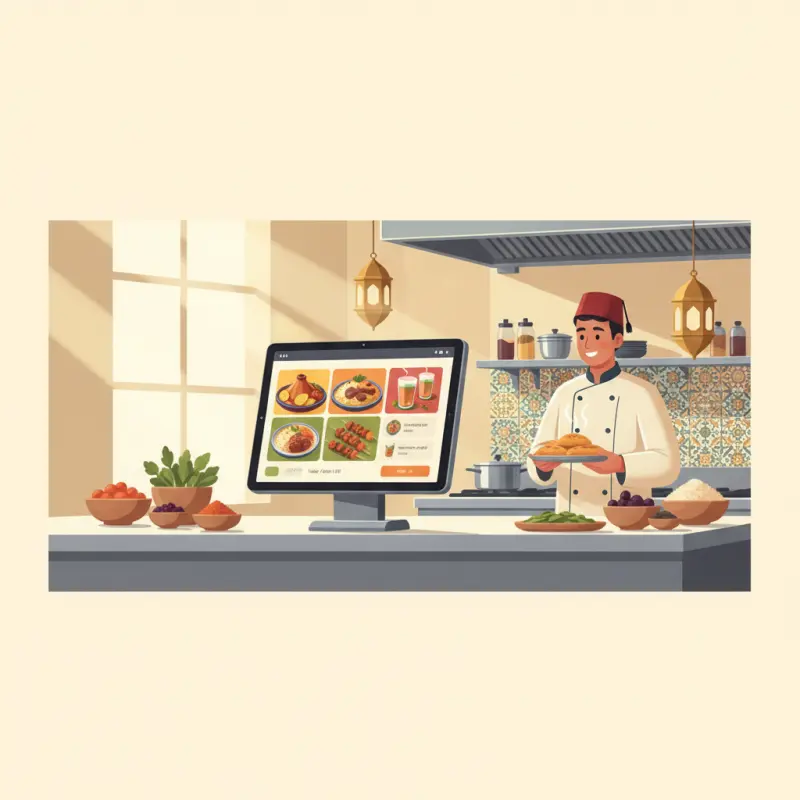
The best kitchen display system replaces paper tickets with digital screens, cutting order errors from 15% to 2-3% while eliminating 2,500 MAD monthly paper costs. Casablanca restaurants using digital KDS report 75% faster order corrections and 80% reduction in kitchen ticket processing time. Paper-based systems waste 20 hours weekly in server walking time between kitchen and dining room. Digital systems route orders directly to kitchen stations, preventing bottlenecks during peak hours. OCHI's kitchen display system integrates with POS and delivery tracking for unified restaurant management. The technology pays for itself within six weeks through reduced food waste and improved order accuracy. Choose systems with station-based routing, real-time order tracking, and integration capabilities with existing POS hardware.
Table of Contents
A busy Friday night in Casablanca. Orders pile up on the pass, handwritten tickets smudge from kitchen steam, and your chef squints at illegible handwriting while customers wait. This scene plays out in thousands of Moroccan restaurants — but it doesn't have to.
The best kitchen display system transforms this chaos into choreographed efficiency. Beyond replacing paper with screens, it fundamentally changes how your kitchen operates, communicates, and delivers.
Paper Tickets Are Costing You More Than You Think
Restaurant owners often view paper tickets as a minor expense. They're wrong. The true cost extends far beyond the price of thermal rolls and printer ink.
The Hidden Costs of Manual Order Management
Your POS printer churns through 3-4 rolls daily at 15 MAD each. That's 1,350-1,800 MAD monthly just for paper. Add printer maintenance, replacement cartridges, and the inevitable jammed mechanism during Saturday rush — you're looking at 2,500 MAD before counting a single operational cost.
But the real expense? Time and errors. Servers spend 12% of their shift walking between dining room and kitchen. That's 48 minutes in an 8-hour shift. Multiply by five servers, and you lose 20 hours of productive time weekly — time that could be spent with customers.
Real Numbers from Casablanca Restaurants
We analyzed order data from 15 restaurants switching from paper to digital systems. The results surprised even veteran operators:
| Metric | Paper System | Digital KDS | Improvement |
|---|---|---|---|
| Order Error Rate | 12-15% | 2-3% | 80% reduction |
| Average Correction Time | 8-12 minutes | 2-3 minutes | 75% faster |
| Monthly Material Costs | 800-1,200 MAD | 0 MAD | 100% savings |
| Kitchen Ticket Time | 25 seconds | 5 seconds | 80% faster |
One Casablanca bistro serving 200 covers nightly calculated their error-related losses at 9,000 MAD monthly. Each mistake meant remaking dishes, comping meals, or losing customers. Their kitchen display system software paid for itself in six weeks.
Stack audit
What do you currently use?
Tick what you have. We’ll show what OCHI replaces or connects to.
Station-Based Routing: Why Most KDS Implementations Fail
Installing screens doesn't guarantee success. Most restaurants fail because they treat digital systems like glorified paper replacements instead of rethinking their entire kitchen workflow.
The Configuration Trap
Default KDS settings assume American-style kitchens with dedicated stations for every cuisine type. Moroccan kitchens operate differently. Your grill station handles tagines, grilled meats, and sometimes even finishing touches on seafood. Your cold station manages both traditional salads and modern appetizers.
Generic systems force you into rigid categories. Smart kitchen management software adapts to your actual workflow. When a customer orders grilled sardines with taktouka and a seafood pastilla, the system must understand that timing varies dramatically between these items.
Smart Routing That Actually Works
Temperature dictates timing. Hot items hold quality for 15 minutes maximum before degrading. Cold preparations can start 30 minutes early without compromise. Your kitchen ordering system must coordinate these differences automatically.
Consider a typical Moroccan feast order: harira soup (hot, immediate service), zaalouk (room temperature, flexible timing), lamb tagine (hot, 25-minute cook time), and orange salad (cold, prepared in advance). Paper tickets leave this coordination to memory and experience. Digital systems calculate optimal preparation sequences.
OCHI's routing engine understands these nuances. Orders flow to stations based on preparation time, not just category. Your cold station starts the orange salad while the tagine simmers, ensuring everything arrives together, at the right temperature.
Real-Time Status Updates: WebSocket vs. Polling Systems
The technical architecture behind your KDS matters more than the interface design. Most systems refresh every 30-60 seconds — an eternity during dinner rush.
Why Refresh Delays Kill Kitchen Flow
Picture this: a customer with allergies modifies their order. With polling systems, that change takes up to a minute to reach the kitchen. Meanwhile, your cook starts preparing the original dish. Result? Wasted food, delayed service, unhappy customer.
These delays compound. Five concurrent order modifications during peak hours create a 5-minute lag in kitchen awareness. Staff lose confidence in the system and revert to verbal communication, defeating the purpose of digital coordination.
OCHI's Real-Time Architecture
WebSocket connections maintain constant communication between front-of-house and kitchen. Order changes appear instantly. Color coding provides immediate visual feedback: green for on-schedule, yellow for approaching deadline, red for delayed.
This real-time capability extends beyond simple updates. When Table 12 adds dessert to their order, the system instantly recalculates preparation timing for their entire meal. Your kitchen sees these adjustments immediately, preventing premature firing of subsequent courses.
The True Cost Analysis: Beyond Monthly Fees
Restaurant owners fixate on monthly subscription costs while ignoring implementation expenses. The real investment includes hardware, training, and potential downtime.
Hidden Costs Competitors Don't Mention
Quality tablets cost 2,000-3,000 MAD each. Kitchen-grade mounts add 500 MAD. Network upgrades for reliable connectivity might require 5,000 MAD in router and cabling improvements. Training takes 2-3 days of reduced productivity as staff adapt.
But the biggest hidden cost? Choosing the wrong system. One Marrakech restaurant spent 40,000 MAD on a KDS that couldn't handle Arabic menu items properly. They scrapped it after three months and returned to paper.
Scenario: 80-Seat Restaurant in Rabat
Let's calculate real ROI for a typical Moroccan restaurant. This Rabat establishment serves traditional and modern cuisine across lunch and dinner service:
| Current State (Paper) | Monthly Cost |
|---|---|
| Paper and ink supplies | 1,200 MAD |
| Error remakes (15% of 2,400 orders × 25 MAD) | 9,000 MAD |
| Lost productivity (server time) | 3,200 MAD |
| Customer comp for delays | 2,400 MAD |
| Total Monthly Loss | 15,800 MAD |
With proper KDS implementation reducing errors to 3% and eliminating paper costs, this restaurant saves 12,640 MAD monthly. Even accounting for subscription fees and amortized hardware costs, the payback period is 6-8 weeks.
Implementation Roadmap: Week-by-Week Rollout
Successful digital transformation happens gradually. Restaurants attempting overnight switches invariably fail. Smart implementation follows a proven progression.
Week 1-2: Parallel Systems
Run your KDS alongside existing paper tickets. This redundancy seems inefficient but serves critical purposes. Staff build confidence without pressure. You identify workflow conflicts before they impact service.
Start with one experienced cook per shift. They become internal champions, teaching colleagues through example rather than mandate. Focus on simple orders first — individual items rather than complex multi-course meals.
Week 3-4: Progressive Handoff
Gradually expand digital adoption. Begin with beverages and cold appetizers — items with straightforward preparation and minimal timing complexity. As comfort grows, add hot appetizers, then main courses.
Monitor metrics daily. Track error rates, preparation times, and staff feedback. When digital performance matches or exceeds paper efficiency, remove paper backup for those stations. Most restaurants achieve full digital transition within 30 days.
Your kitchen deserves technology built for Moroccan operations, not adapted from foreign markets. Central kitchen software that understands tagine timing, coordinates multiple preparation stations, and respects your workflow makes the difference between digital success and expensive failure.
See how OCHI's kitchen display system integrates seamlessly with POS, delivery tracking, and inventory management — all from one dashboard at votrenom.ochi.ma.
Explore our complete restaurant management platform at ochi.ma/partners or read more operational guides on our blog.
Frequently Asked Questions
How much does a kitchen display system cost in Morocco?
Kitchen display systems in Morocco typically cost 3,000-8,000 MAD for setup, with monthly fees of 200-500 MAD. Most restaurants recover costs within 2-3 months through reduced paper expenses and fewer order errors.
Do kitchen display systems work without internet?
Modern kitchen display systems store orders locally and sync when connection resumes. This ensures kitchen operations continue during internet outages, though real-time features like delivery tracking require connectivity.
Can kitchen display systems integrate with existing POS systems?
Most kitchen display systems integrate with popular POS platforms through APIs or direct connections. OCHI's system connects seamlessly with existing hardware while adding QR ordering and delivery management.
How do kitchen display systems reduce food waste?
Digital systems eliminate order transcription errors that cause wrong dishes to be prepared. Clear digital tickets with preparation times also help kitchens manage inventory and reduce overproduction during slow periods.
What features should I look for in a kitchen display system?
Essential features include station-based order routing, order timing alerts, integration with POS and delivery systems, offline functionality, and clear visual design that works in bright kitchen environments.
Restaurant owners · Weekly
The guide to running a restaurant in 2026.
One article per week. No commission advice. Just honest operational insight for Moroccan restaurants.

Blog Manager
Comments
No comments yet. Be the first to share your thoughts.