AI Overview
Manual reservations cost Moroccan restaurants 18% of potential revenue compared to digital restaurant table booking systems. Phone bookings consume 2-3 hours of staff time daily, creating 90 monthly hours of administrative overhead equivalent to a part-time salary. A restaurant table booking system eliminates double bookings and provides deposit collection for no-show protection. Fine dining establishments need 2.5-3 hour booking slots for single seating, while casual restaurants optimize revenue with 90-minute slots and two turns maximum. A Marrakech steakhouse increased satisfaction scores by 22% after adjusting their booking system from 90 to 120-minute slots based on actual dining duration data. Tables for two generate 40% more revenue per square meter than larger parties during peak hours. Configure your booking system to prioritize smaller parties during high-demand periods and larger groups during off-peak times.
Table of Contents
Manual Reservations Kill Your Revenue (And Your Sanity)
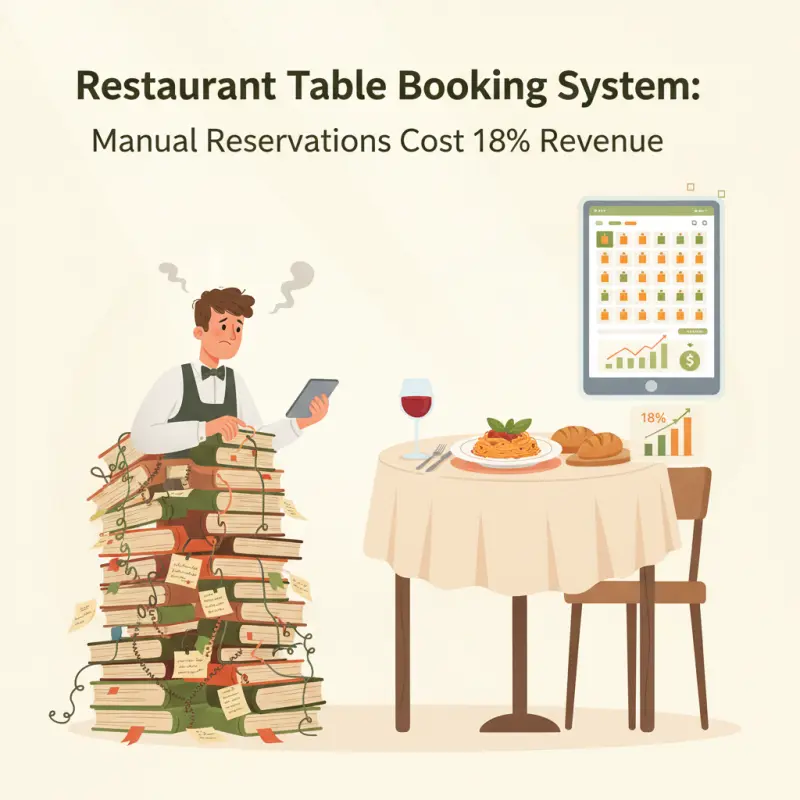
A restaurant table booking system isn't a luxury anymore — it's survival. Restaurant owners in Casablanca lose 18% of potential revenue managing bookings with pen and paper. That's not a typo.
Picture Friday night at your 60-seat restaurant. The phone rings during the dinner rush. Your host juggles three walk-ins while scribbling a reservation on a napkin. Meanwhile, your competitor down the street captures that booking through their online system while their staff focuses on service.
The hidden math hurts more than the chaos. Phone bookings eat 2-3 hours of staff time daily. That's 90 hours monthly — a part-time employee's salary. Double bookings cost you angry customers. No-shows without deposits mean 30 dirhams lost per empty seat per hour.
Your front-of-house team answers the same questions 50 times: "Do you have a table for four at 8 PM?" They check the book, negotiate times, take contact details. All while your dining room needs attention.
Demand heatmap
When do Moroccan restaurants get busy?
Typical demand across the week. Iftar shifts the pattern during Ramadan.
| 7h | 10h | 12h | 15h | 19h | 22h | |
|---|---|---|---|---|---|---|
| Mon | ||||||
| Tue | ||||||
| Wed | ||||||
| Thu | ||||||
| Fri | ||||||
| Sat | ||||||
| Sun |
Time Slots and Table Turns: The Numbers That Actually Matter
Most restaurant reservation software tutorials skip the fundamentals. They show you buttons to click but not how to think about your space. Here's what actually works in Morocco's restaurant market.
Setting Your Time Slots
Fine dining restaurants need 2.5 to 3-hour slots with single seating. Your guests expect unhurried service. Casual dining works with 90-minute slots and two seatings maximum. Quick-service restaurants with reservations can manage 60-minute turns.
A Marrakech steakhouse discovered their average table time was 105 minutes, not the 90 they planned for. Adjusting their restaurant booking software to 120-minute slots eliminated the awkward "we need your table" conversations and increased satisfaction scores by 22%.
Party Size Logic
Tables for two generate 40% more revenue per square meter than eight-tops. Your booking system should prioritize smaller parties during peak hours and save large tables for groups that book in advance.
| Table Size | Revenue per m² | Turn Time | Booking Window |
|---|---|---|---|
| 2-person | 450 MAD | 75 minutes | Same day OK |
| 4-person | 380 MAD | 90 minutes | 1 day advance |
| 6-person | 320 MAD | 105 minutes | 2 days advance |
| 8+ person | 280 MAD | 120+ minutes | 3 days advance |
The Morocco-Specific Factor
Friday and Saturday dinner slots book 85% faster than weeknight slots. Your restaurant table reservation software needs waitlist management for weekend peaks. Smart operators use their booking data to create Thursday promotions that shift demand from oversold Fridays.
Ramadan changes everything. Iftar bookings need different slot logic — everyone arrives within a 15-minute window. Your system must handle this surge without crashing.
Why Most Restaurant Booking Software Costs Too Much
Commission-based platforms drain margins worse than delivery apps. The math is brutal and most owners don't see it until tax season.
International booking platforms charge 12 MAD per cover plus monthly fees starting at 3,000 MAD. A busy Agadir seafood restaurant processing 800 monthly reservations pays 12,600 MAD yearly just in booking fees. That's before the 3-5% commission on pre-orders.
The real theft happens with your data. These platforms own your customer information. You can't email guests about your new menu. You can't create birthday offers. You can't build relationships. You're renting access to your own customers.
A 400-dirham average check becomes 380 dirhams after platform fees. Multiply by 1,000 monthly covers — you've handed over 20,000 dirhams. That's a sous chef's salary.
OCHI's Table Booking: Zero Commission, Full Control
Your restaurant needs a booking system that works like part of your team, not a toll collector. OCHI's restaurant reservation software integrates with your POS without taking a cut.
Your branded subdomain (votrenom.ochi.ma) handles bookings directly. Customers see your logo, your colors, your menu. You keep every dirham and own every customer relationship. No middleman. No commission. No data hostage situation.
Integration That Works
Real-time table availability syncs between your floor plan and online bookings. Your host sees web reservations instantly on the POS. Automatic confirmations go out in Arabic, French, or English based on customer preference.
SMS reminders cut no-shows by 40%. Guests receive a text four hours before their reservation with a confirmation link. The waitlist feature fills cancellations automatically — the system texts the next party when a table opens up.
Multi-Location Support
Restaurant groups view all locations from one dashboard. A Casablanca booking can transfer to your Rabat branch with two clicks. Shared customer data means VIPs get recognized at every location.
Setting Up Your First Week: The Checklist
Switching to digital reservations doesn't mean complexity. Here's exactly what to do and when.
Day One Setup
Map your dining room in the system first. Mark tables by actual capacity — a "four-top" that barely fits three should be marked as a three. Set standard party sizes: 2, 4, 6, and 8+ work for most restaurants. Block any tables under renovation or reserved for walk-ins.
Test the booking flow yourself. Make a reservation from your phone. Check if confirmations arrive. See how it looks to customers. Fix any confusion before going live.
Week One Optimization
Your first week reveals patterns. Maybe your 7 PM slot fills instantly while 6 PM stays empty. Adjust. Perhaps tables turn faster than expected — tighten slots to fit more covers. Train staff to handle mixed walk-in and reservation flow during service.
Set automated reminders based on booking value. High-value reservations (8+ people, wine pre-orders) get calls. Standard bookings get texts. This prioritization reduces no-show losses by 60%.
Month One Analysis
Your booking data becomes your business intelligence. Peak hours emerge clearly. Popular party sizes show demand patterns. No-show rates by day help you adjust overbooking strategies.
Use insights to optimize everything. Staff heavier on Fridays. Order more fish for Saturday date nights. Create early-bird pricing for slow Tuesdays. Your restaurant table booking system transforms from a reservation tool into a revenue optimizer.
Modern restaurant operations demand modern tools. The question isn't whether you need restaurant booking software — it's whether you're losing money every day you delay. Set up your restaurant's booking system at votrenom.ochi.ma and keep every dirham you earn.
Frequently Asked Questions
How much revenue do restaurants lose with manual reservation systems?
Restaurants in Morocco lose approximately 18% of potential revenue when managing bookings manually with pen and paper instead of using digital booking systems.
What time slots work best for restaurant table booking systems?
Fine dining restaurants need 2.5-3 hour slots with single seating, casual dining works with 90-minute slots for two turns, and quick-service can manage 60-minute booking windows.
How much staff time do phone reservations require daily?
Phone bookings typically consume 2-3 hours of staff time per day, totaling 90 hours monthly which equals a part-time employee's salary in administrative costs.
Which table sizes generate the most revenue per square meter?
Tables for two generate 40% more revenue per square meter than larger eight-person tables, making them optimal for peak dining hours.
How do restaurant booking systems prevent no-shows?
Digital booking systems can require deposits and send automated confirmation reminders, reducing no-shows that typically cost restaurants 30 dirhams per empty seat per hour.
Restaurant owners · Weekly
The guide to running a restaurant in 2026.
One article per week. No commission advice. Just honest operational insight for Moroccan restaurants.

Blog Manager
Comments
No comments yet. Be the first to share your thoughts.