AI Overview
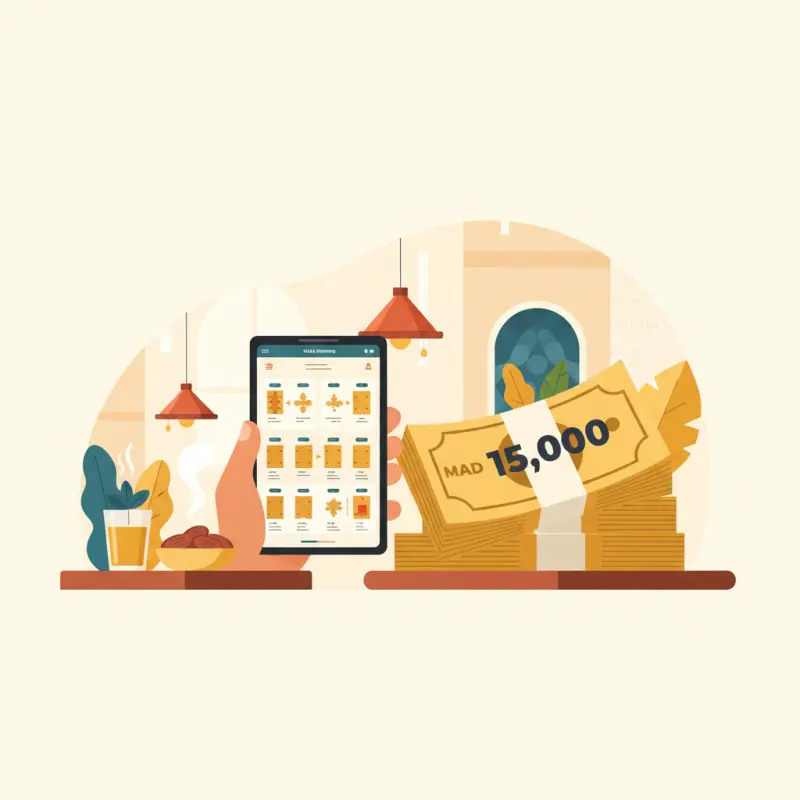
Manual table booking costs Moroccan restaurants an average of MAD 15,000 monthly through no-shows, staff time, and missed reservations. A digital table booking system reduces no-show rates from 15-20% to 5-8% by requiring deposits and sending automated confirmations. Phone reservations consume 80 minutes of staff time during peak service in cities like Casablanca and Marrakech, costing MAD 1,200 monthly in direct labor. Language barriers with French and English tourists compound these losses. Modern booking platforms integrate with POS systems to track customer preferences and dining history. Restaurants using automated table booking systems report 30-40% higher table turnover during peak hours. The payback period for implementing a table booking system averages three months for restaurants serving 100+ covers daily.
Table of Contents
Your restaurant loses MAD 15,000 every month from missed phone reservations during peak hours. That's the average cost of manual table booking in Morocco — and it's just the beginning.
Modern restaurants operate on razor-thin margins. Every empty table during dinner rush represents lost revenue you can't recover. Yet most Moroccan restaurant owners still manage reservations through phone calls, handwritten books, and memory. The real question isn't whether you need a table booking system — it's how much your current approach costs you.
The Real Cost of Manual Table Management in Moroccan Restaurants
Walk into any busy restaurant in Casablanca during lunch service. The phone rings constantly. Staff members juggle orders, service, and reservation calls. Each interruption creates a cascade of delays that customers notice.
The economics are brutal. Phone reservations take three to four minutes on average. During a four-hour dinner service, 20 calls mean 80 minutes of staff time — over an hour of productive work lost. At MAD 40 per hour for skilled staff, that's MAD 1,200 monthly just in direct labor costs.
The Phone Booking Time Trap
Language barriers compound the problem in tourist-heavy cities like Marrakech. Your Arabic-speaking staff struggles with English bookings. French-speaking tourists need translation. Each miscommunication risks a bad review or lost customer. Staff stress increases. Service quality drops.
The hidden costs multiply during Ramadan. Special iftar timings require precise coordination. Large family bookings need accurate headcounts. One miscommunication about party size means turning away walk-ins for tables that sit half-empty.
No-Show Economics
No-shows devastate restaurant economics. Without deposits or confirmations, Moroccan restaurants average 15-20% no-show rates. For a 50-seat restaurant, that means 10 empty seats during peak hours.
| Restaurant Size | No-Show Rate | Lost Revenue/Night | Monthly Impact |
|---|---|---|---|
| Small (30 seats) | 15% | MAD 900 | MAD 27,000 |
| Medium (50 seats) | 18% | MAD 1,800 | MAD 54,000 |
| Large (100 seats) | 20% | MAD 4,000 | MAD 120,000 |
These numbers assume MAD 200 average check per seat. Premium restaurants in Rabat or Casablanca see double these losses. Family gatherings amplify the problem — a no-show party of 12 wipes out an entire evening's profit.
Demand heatmap
When do Moroccan restaurants get busy?
Typical demand across the week. Iftar shifts the pattern during Ramadan.
| 7h | 10h | 12h | 15h | 19h | 22h | |
|---|---|---|---|---|---|---|
| Mon | ||||||
| Tue | ||||||
| Wed | ||||||
| Thu | ||||||
| Fri | ||||||
| Sat | ||||||
| Sun |
Table Reservation Software That Actually Works for Morocco
Effective restaurant table reservation software addresses Morocco's unique dining culture. Multi-generational family meals require flexible seating. Tourist seasons demand dynamic capacity. Religious holidays need special scheduling.
The basics matter most. Your system must handle Arabic names correctly, including right-to-left text display. French accents need proper rendering. Phone numbers must accept Moroccan formats. These aren't features — they're requirements.
Essential Features for Moroccan Markets
Language switching must be seamless. A tourist books in English. Your staff sees the reservation in Arabic or French. Confirmation messages go out in the customer's preferred language. No manual translation. No confusion.
Party size flexibility matters more here than in European markets. Moroccan dining means extended families. Your restaurant reservation software must handle groups from intimate couples to 25-person celebrations. Table combining logic needs to work automatically.
Seasonal scheduling saves hours of manual adjustment. Ramadan hours differ from regular service. Summer tourist season extends closing times. Your system should switch schedules automatically based on dates you set once.
Advanced Features That Separate Winners from Losers
Waitlist management turns cancellations into revenue. When a party of six cancels, your system immediately notifies waiting customers. The table fills within minutes instead of sitting empty.
Weather integration seems frivolous until you manage outdoor seating in Agadir. When rain threatens, automatically moving terrace bookings inside prevents day-of chaos. Your staff focuses on service, not logistics.
Tourist season optimization adjusts table turnover times. August in Marrakech means longer dining times. Your restaurant booking software should account for this, preventing overbooking during peak tourist months.
Why Free Restaurant Booking Software Usually Costs More
Free platforms make money somewhere. Usually from you, just not upfront. Understanding the true cost structure helps you make informed decisions about your restaurant's digital infrastructure.
The Hidden Fee Structure
Commission-based "free" platforms charge two to five percent per booking. A MAD 500 table for four becomes MAD 475 in your pocket. Over a month, that's thousands in fees you don't see itemized.
Credit card processing adds another 2.9% typically. Premium features hide behind paywalls — SMS confirmations, advanced reporting, API access. When you want to switch providers, data export costs appear. Your customer database becomes hostage to escalating fees.
Integration Tax
Separate systems create operational friction. Your POS doesn't talk to your booking platform. Staff enters reservations twice — once online, once at the terminal. Errors multiply. Time wastes.
Training complexity increases with each platform. New staff need days to learn multiple interfaces. Mistakes during service cost customer satisfaction. The "free" system becomes expensive in ways that don't show on invoices.
Restaurant Table Reservation Software: The OCHI Difference
Integration changes everything. When your table booking system connects directly to your POS, operations flow naturally. OCHI builds this integration from the ground up — reservations, orders, and payments in one platform.
Complete Integration at Zero Commission
Your branded subdomain (votrerestaurant.ochi.ma) gives customers a professional booking experience. No third-party logos. No commission fees. Every dirham from every reservation stays in your business.
POS integration eliminates double entry. Reservations appear automatically on your service screen. Table status updates in real-time. Your host station sees exactly what's available without checking multiple systems.
Multi-branch restaurants get centralized control. Manage all locations from one dashboard. See combined availability. Move reservations between branches when needed. Staff permissions follow their assignments.
Moroccan Restaurant Reality
Different dining areas need different management. Your terrace might close at sunset. The VIP section requires manager approval. Garden seating depends on weather. OCHI's dining area management handles these complexities automatically.
Staff roles match real operations. Hosts manage bookings. Servers see their assigned tables. Managers override when needed. The system adapts to your workflow, not the reverse.
Implementation: Your First 30 Days
Launching a table booking system doesn't require disrupting service. Smart implementation happens gradually, building staff confidence while maintaining operations.
Week 1-2: System Setup and Staff Training
Start with accurate floor plans. Map every table, noting capacity and combinations. Configure your dining areas — indoor, terrace, VIP sections. Set seasonal schedules including Ramadan hours.
Train your host staff first. They'll handle most reservations and need complete confidence. Practice common scenarios — large parties, special requests, modifications. Build muscle memory before going live.
Week 3-4: Customer Migration and Optimization
Deploy QR codes on existing tables for future bookings. Customers finishing meals can reserve their next visit immediately. Include your booking URL on receipts and social media.
Communicate the change positively. Emphasize convenience — book anytime, get confirmations, modify easily. Early adopters appreciate the professionalism. Word spreads naturally in Moroccan dining circles.
Track performance daily. Monitor no-show rates, peak booking times, popular party sizes. Adjust table combinations and timing based on real data, not assumptions.
Your table booking system becomes a competitive advantage when it matches your operational reality. See how your restaurant would look with professional online reservations at ochi.ma/partners.
Frequently Asked Questions
How much does a table booking system cost for restaurants in Morocco?
Table booking systems in Morocco typically cost MAD 200-800 monthly depending on restaurant size and features. Most systems pay for themselves within three months through reduced no-shows and increased efficiency.
Do table booking systems work for traditional Moroccan restaurants?
Yes, table booking systems adapt to traditional dining patterns including extended family meals and special occasions like iftar. Many platforms support Arabic interface and local payment methods.
Can table booking systems reduce no-show rates?
Table booking systems reduce no-show rates from 15-20% to 5-8% through automated confirmations, deposit requirements, and reminder messages sent 24 hours before reservations.
How do staff learn to use table booking systems?
Modern table booking systems require minimal training. Staff typically master basic functions within two hours. Most platforms offer Arabic language support and phone assistance.
Do customers prefer online booking over phone reservations?
75% of diners under 40 prefer online booking according to Morocco restaurant surveys. Phone booking remains popular for large groups and special occasions requiring menu customization.
Restaurant owners · Weekly
The guide to running a restaurant in 2026.
One article per week. No commission advice. Just honest operational insight for Moroccan restaurants.

Blog Manager
Comments
No comments yet. Be the first to share your thoughts.