AI Overview
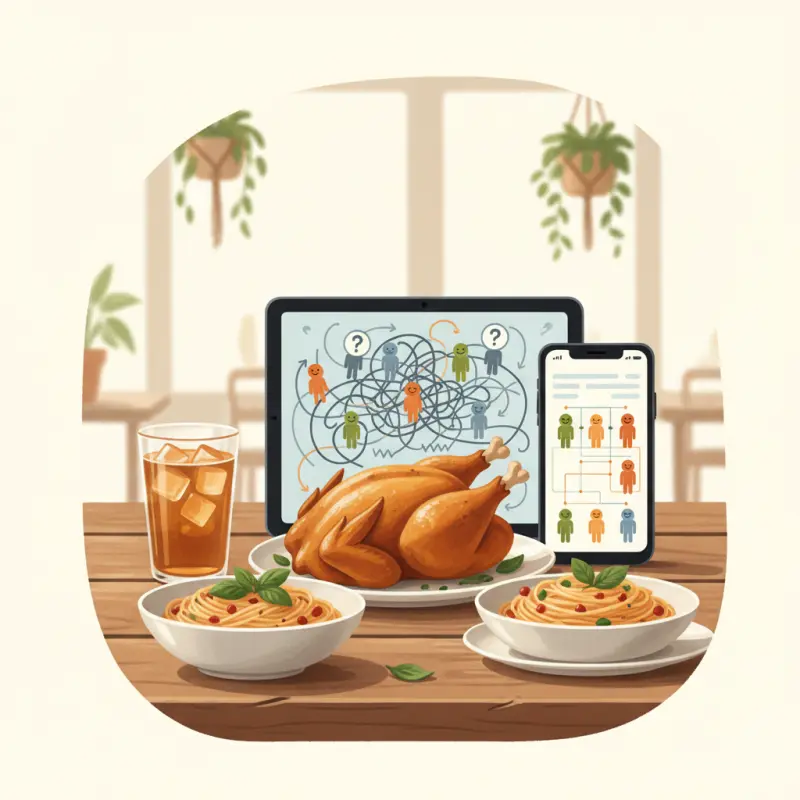
The best restaurant scheduling app isn't a standalone scheduling tool at all. Most restaurant owners spend eight hours every week managing schedules across fragmented systems that don't communicate with each other. The average Moroccan restaurant uses six to eight different software systems, creating reconciliation work that consumes 40 hours monthly for a 20-employee operation across two locations. Standalone scheduling apps like Deputy or When I Work charge 500-1,500 MAD monthly but can't sync with POS systems or payroll, forcing managers to manually reconcile data across multiple platforms. Integrated restaurant management platforms eliminate this fragmentation by handling scheduling, POS, payroll, and staff management in one unified system. Look for platforms that offer role-based access beyond simple manager permissions and provide real-time synchronization between scheduling and actual clock-in data.
Table of Contents
Most restaurant owners spend eight hours every week on scheduling. Eight hours that could be spent perfecting recipes, training staff, or actually running their business. The dirty secret about finding the best restaurant scheduling app? The "best" ones often make things worse.
Walk into any restaurant in Casablanca at 2pm on a Tuesday. You'll find the owner hunched over a laptop, three browser tabs open: scheduling software in one, POS system in another, payroll calculator in the third. Manual copy-paste. Double-checking numbers. Triple-checking who actually showed up for their shift last week.
Why Most Restaurant Scheduling Apps Create More Problems Than They Solve
The average Moroccan restaurant uses between six and eight different software systems. Each promises to solve one specific problem. Each creates two new ones. Your scheduling app doesn't talk to your POS. Your POS doesn't sync with payroll. Your payroll system has no idea what your inventory looks like.
This fragmentation costs more than money. It costs sanity.
The Hidden Cost of Fragmented Systems
Here's what actually happens when you use standalone restaurant HR software. You schedule Ahmed for the Friday dinner rush. He clocks in through your POS. But your scheduling app shows him as absent because the systems don't communicate. Come payday, you're manually reconciling three different reports.
Now multiply this by 20 employees across two locations. That's 40 hours of reconciliation work every month. That's a full-time job just to figure out who worked when.
The math gets uglier. A typical restaurant workforce management software charges 500-1,500 MAD per month. Add your POS fees. Add your payroll service. Add the hours spent making these systems talk to each other. You're looking at 5,000+ MAD monthly for a disconnected mess.
The Role-Based Access Problem Nobody Talks About
Most scheduling apps treat permissions like a light switch: manager or not manager. But restaurants don't work that way. Your head chef needs different access than your shift supervisor. Your accountant shouldn't see the same data as your cashier.
OCHI understands this through an eight-role permission system: Admin, Branch Manager, POS Operator, Waiter, Chef, Delivery Boy, Cashier, and Staff. Each role sees exactly what they need. Nothing more.
Last month, a restaurant in Agadir discovered their evening shift manager had been issuing fake refunds for six months. How? Their scheduling app showed who was working. Their POS showed the refunds. But neither system connected the dots. With integrated role-based tracking, every action has a name attached. Every refund has an audit trail.
What Actually Makes a Restaurant Scheduling App "Best" (It's Not What You Think)
Forget drag-and-drop interfaces. Forget color-coded shift blocks. The best restaurant scheduling software isn't about pretty calendars. It's about preventing the 15% labor cost overrun that kills restaurant profits.
Integration Beats Features Every Time
A Casablanca restaurant group recently discovered they were losing 22,000 MAD monthly to scheduling fraud. Employees would clock in for friends. Managers would approve overtime that never happened. The scheduling app showed one story. The POS told another. Nobody caught the discrepancy for eight months.
When scheduling integrates directly with your POS and kitchen display system, lies become impossible. Clock in at 9am? Your first order better show up by 9:15. Claim you worked the dinner rush? The transaction logs will confirm or deny.
This isn't about not trusting employees. It's about creating systems where trust isn't required. Where data tells the truth automatically.
Audit Trails: The Unsexy Feature That Saves Money
Every shift swap. Every schedule change. Every clock-in adjustment. These micro-decisions add up to macro-losses when nobody's tracking them. The best payroll software for restaurants doesn't just calculate wages — it shows you exactly how those wages accumulated.
OCHI's approach: every action leaves a fingerprint. Waiter removes an item from a bill? Logged. Manager approves a shift swap? Recorded. Someone clocks in from an unusual location? Flagged. This granular tracking turns scheduling from guesswork into science.
The Economics: How Much Restaurant Scheduling Software Actually Costs
Let's talk real numbers. Not the fantasy pricing on software websites. The actual cost of running restaurant scheduling in Morocco.
The True Cost Breakdown
| Solution Type | Monthly Cost | Hidden Costs | Total Real Cost |
|---|---|---|---|
| "Free" scheduling apps | 0 MAD | 40 hours reconciliation (8,000 MAD labor) | 8,000 MAD |
| Premium standalone scheduler | 1,500 MAD | 20 hours integration work (4,000 MAD) | 5,500 MAD |
| Per-employee pricing (25 staff) | 2,000 MAD | Limited features force additional tools | 4,000+ MAD |
| Integrated platform (OCHI) | Included in operations suite | Zero integration needed | Part of complete system |
The best restaurant scheduling software isn't the cheapest on paper. It's the one that eliminates hidden costs.
ROI Calculator for Restaurant Owners
A 50-seat restaurant in Marrakech switched from standalone scheduling to an integrated system. Results after three months:
Time saved on scheduling: 8 hours weekly (32 hours monthly). Labor cost optimization through accurate tracking: 12% reduction. Eliminated scheduling fraud and buddy punching: 18,000 MAD recovered. Reduced no-shows through automated reminders: 7 shifts saved monthly.
Total monthly impact: 31,000 MAD in savings and recovered revenue. From a scheduling system.
Quick check · 3 questions
Is OCHI right for your restaurant?
Step 1 of 3
How do you currently take online orders?
Why Casablanca Restaurant Owners Are Moving Beyond Standalone Scheduling
Casablanca's restaurant scene doesn't play by Silicon Valley rules. Multi-location operations. High staff turnover. Three languages minimum. Cash and card and mobile payments. Traditional scheduling apps weren't built for this reality.
The Multi-Location Challenge
Managing staff across three branches in Casablanca means tracking who can work where, when, and why. Your best breakfast chef works at the Maarif location but lives near Ain Diab. Can she cover a shift there? Which manager approves it? Who tracks the transport allowance?
OCHI's multi-branch architecture handles this natively. Staff profiles include branch permissions. Managers see consolidated views across locations. Shift trades happen in-app with automatic approval workflows. No spreadsheets. No WhatsApp groups. No confusion.
Local Market Realities
Moroccan restaurants face 40% annual staff turnover. That's not a scheduling problem — it's a data management nightmare. Every three months, you're onboarding new staff, updating permissions, recalculating labor costs.
The language factor compounds this. Your kitchen staff might prefer Arabic. Your front-of-house speaks French with customers. Your reports need English for investors. Most restaurant workforce management software offers one, maybe two languages. Full trilingual support? That's rare.
Integration with local requirements matters too. Moroccan payroll rules. CNSS calculations. Tax withholdings. The best payroll software for restaurants in Morocco isn't American software with Google Translate slapped on top. It's purpose-built for local compliance.
Smart Casablanca restaurant owners stopped searching for the best restaurant scheduling app. They started looking for complete operations platforms where scheduling is one integrated component of a unified system. Where every feature talks to every other feature. Where data flows freely and insights emerge naturally.
See how integrated scheduling transforms restaurant operations at ochi.ma/partners.

Digital menu ROI
How much are paper menus costing you?
Saved per month
1.2K MAD
Saved per year
14K MAD
Frequently Asked Questions
What makes a restaurant scheduling app the best choice for restaurants?
The best restaurant scheduling app integrates directly with your POS system and payroll, eliminating manual reconciliation work. Look for platforms that sync real-time clock-in data with scheduled shifts and offer role-based permissions for different staff levels.
How much should restaurants budget for scheduling software in Morocco?
Standalone restaurant scheduling apps typically cost 500-1,500 MAD monthly in Morocco. However, integrated restaurant management platforms often provide scheduling as part of a complete system, reducing total software costs while eliminating data fragmentation.
Why do most restaurant scheduling apps create more problems?
Most scheduling apps operate in isolation from POS systems and payroll software. This forces restaurant managers to manually reconcile data across multiple platforms, often requiring 40+ hours monthly for multi-location operations with 20+ employees.
What features should restaurant owners prioritize in scheduling software?
Prioritize direct POS integration, automated clock-in synchronization, role-based access controls, and multi-location support. These features eliminate the manual work that consumes eight hours weekly for most restaurant owners.
Can restaurant scheduling apps handle complex staff roles and permissions?
Most scheduling apps only offer basic manager versus non-manager permissions. The best restaurant scheduling solutions provide granular role-based access, allowing different permission levels for floor managers, kitchen supervisors, and administrative staff.

Blog Manager
Comments
No comments yet. Be the first to share your thoughts.