AI Overview
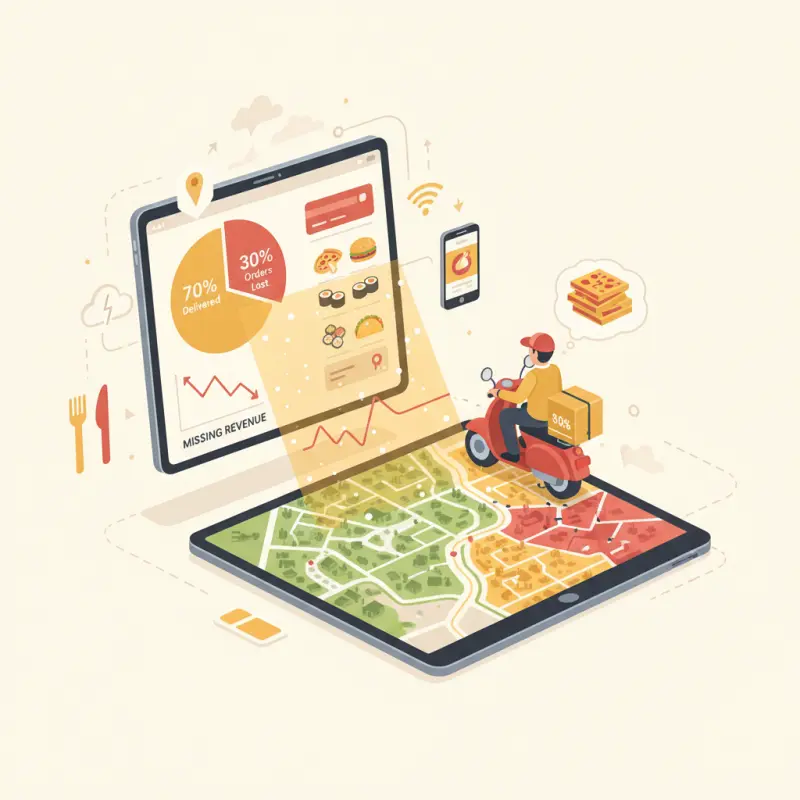
Most delivery restaurant POS systems in Morocco lose 30% of potential orders through poor zone mapping that doesn't match real geography. Traditional systems use circular radius zones that include undeliverable areas like the Atlantic Ocean while excluding reachable neighborhoods. A delivery restaurant POS with polygon mapping technology captures 20-30% more addressable orders by following actual streets and districts. Restaurants in Agadir, Casablanca, and Marrakech see dramatic improvements when switching from radius-based to polygon-based delivery zones. The data shows polygon zones achieve 89% coverage efficiency compared to 62% for radius zones, while reducing missed orders from 28% to 9%. Smart driver assignment logic that considers real-time location, order value, and delivery complexity further optimizes fleet utilization. Set your delivery zones using polygon mapping that follows neighborhood boundaries instead of arbitrary circles.
Table of Contents
Most restaurant owners in Morocco lose 30% of potential delivery orders before they even know it. The culprit isn't food quality or pricing — it's how their delivery restaurant POS handles the invisible geography of order fulfillment.
Your POS might process payments perfectly and track inventory down to the last olive. But if it can't map delivery zones intelligently or assign drivers based on real-time logic, you're bleeding revenue through technical gaps competitors won't mention.
The Hidden Geography Problem: Why Zone Setup Makes or Breaks Delivery Revenue
Walk into any restaurant in Agadir using a basic delivery setup, and you'll find the same mistake: circular radius zones drawn on a map like a child with a compass. The Atlantic Ocean takes up half their delivery area. Potential customers in Hay Mohammadi get "outside delivery zone" messages while the restaurant's drivers sit idle.
This isn't just bad mapping. It's bad business.
Polygon vs. Radius: The 30% Revenue Difference
Radius-based delivery zones assume your restaurant sits at the center of a perfect circle. But Moroccan cities don't work that way. Agadir curves along the coast. Casablanca sprawls irregularly around the port. Marrakech's medina creates delivery dead zones that circular mapping can't navigate.
Polygon mapping lets you draw precise delivery boundaries that follow actual streets and neighborhoods. A restaurant in Agadir's Marina can extend coverage along Boulevard Mohammed V without promising impossible ocean deliveries. The result: 20-30% more addressable orders with the same delivery fleet.
| Zone Type | Coverage Efficiency | Missed Order Rate | Driver Utilization |
|---|---|---|---|
| 5km Radius | 62% | 28% | 71% |
| Custom Polygon | 89% | 9% | 85% |
The numbers come from actual restaurant data across Morocco. Polygon zones capture more real customers while reducing impossible delivery promises.
Driver Assignment Logic That Actually Works
Traditional restaurant delivery software assigns drivers in rotation: Ahmad delivers order one, Youssef takes order two, repeat until closing. This kindergarten logic ignores geography, traffic patterns, and basic efficiency.
Smart assignment considers three factors: driver location, active orders, and route optimization. When two orders come in from the same neighborhood, batch them to one driver. When a driver finishes a delivery in Talborjt, assign them the next Talborjt order — not one across town in Bensergao.
The 15-minute rule changes everything: proximity matters less than time. A driver two kilometers away in moving traffic takes longer than one four kilometers away on Boulevard Hassan II. Your delivery restaurant POS needs real-time traffic data, not just distance calculations.
Stack audit
What do you currently use?
Tick what you have. We’ll show what OCHI replaces or connects to.
The Commission Trap: What Traditional Platforms Don't Tell You About POS Integration
Here's what commission-based delivery platforms pitch: "seamless integration" with your existing systems. Here's what they don't mention: every order costs you 15-30% in commissions, plus hidden fees that compound monthly.
The Real Cost of "Seamless" Integration
A typical restaurant in Casablanca processes 1,000 delivery orders monthly at 120 MAD average. Traditional platforms take their cut:
| Fee Type | Rate | Monthly Cost (MAD) |
|---|---|---|
| Platform Commission | 25% | 30,000 |
| Payment Processing Markup | 2.5% | 3,000 |
| Marketing Fees | 3% | 3,600 |
| POS Integration | Fixed | 500 |
| Total Platform Costs | 30.5% | 37,100 |
That "free" POS integration costs you 37,100 MAD monthly — enough to hire two full-time delivery drivers and still save money. The math gets worse when platforms increase commissions after your trial period ends.
Zero-Commission Alternative: The Morocco Model
OCHI flips this model. Restaurants keep 100% of delivery revenue. No commission on orders. No markup on payments. No hidden monthly surprises.
Instead of routing customers through a marketplace, you get a branded subdomain — yourname.ochi.ma — where customers order directly. You own the relationship. You see their data. You control the experience.
This food delivery management software approach means a restaurant saving 37,100 MAD monthly on eliminated commissions. That's 445,200 MAD yearly staying in your business instead of funding platform profits.
GPS Tracking Reality Check: What Customers Actually Want vs. What Systems Deliver
Your customer places an order at 19:00. By 19:08, they're checking their phone. By 19:15, they're calling your restaurant. Not because they're impatient — because silence creates anxiety.
The 8-Minute Window Problem
Restaurant data shows customer satisfaction drops 40% when order status stays static beyond eight minutes. They don't need constant updates. They need proof their order exists in your system.
Real-time GPS tracking solves half this problem. Customers see their driver moving on a map, watch the estimated arrival countdown, and stop calling to ask "where's my food?" But GPS alone isn't enough.
Smart status updates at key moments maintain confidence: order confirmed, preparation started, driver assigned, pickup complete, approaching delivery address. Each update resets the eight-minute anxiety clock. This food ordering and delivery platform psychology reduces support calls by 70%.
Delivery Radius Economics: The Casablanca Case Study
Bigger delivery zones don't mean better business. Data from 200 Casablanca restaurants reveals the complexity:
| Delivery Radius | Avg. Delivery Time | On-Time Rate | Customer Retention |
|---|---|---|---|
| 3km | 22 minutes | 87% | 73% |
| 5km | 31 minutes | 64% | 52% |
| 7km | 43 minutes | 41% | 31% |
The sweet spot for Moroccan cities sits between 3-4km. Traffic patterns, customer expectations, and driver efficiency converge at this range. Expand beyond it, and your restaurant delivery software promises what your operations can't deliver.
Building Your Delivery POS Stack: Implementation Order That Prevents Chaos
Most restaurants implement delivery backwards. They hire drivers first, then figure out zones. They launch delivery, then realize their POS can't handle it. Here's the sequence that actually works.
Week 1: Foundation Setup
Map your delivery zones before anything else. Use polygon mapping to cover your natural customer base without overcommitting. In Agadir, this means following Boulevard du 20 Août inland while respecting the coastal geography.
Set delivery pricing that reflects true costs. If dine-in tagine costs 70 MAD, delivery might be 75 MAD to cover packaging and fuel. Transparent pricing beats hidden fees every time.
Configure basic tracking and automated status updates. Customers need confirmation their order exists, updates when preparation starts, and notification when drivers depart. An online food ordering and delivery platform handles this automatically, but manual systems need deliberate setup.
Week 2-3: Driver Management and Optimization
Now add drivers with proper onboarding. Each driver needs the mobile app configured, zone boundaries understood, and batch delivery rules clear. Two orders going to the same area ship together. Three orders stretch capacity too thin.
Track metrics that matter: order completion rate, average delivery time, and customer ratings. Speed without satisfaction destroys retention. A driver completing orders in 18 minutes with 3-star ratings hurts more than one taking 25 minutes with 5-star reviews.
Connect delivery operations to your main POS for unified management. Orders from dine-in, takeaway, and delivery flow through one system. Inventory updates automatically. Reports show complete revenue pictures. Your delivery restaurant POS becomes a single source of truth.
The restaurants winning in Morocco's delivery market don't have secret recipes or perfect locations. They have POS systems configured for delivery reality — polygon zones that match city geography, zero-commission models that preserve margins, and driver assignment logic that respects both efficiency and customer experience. The technology exists today. The question is whether you'll implement it before competitors figure out the same advantages.
See how OCHI's zero-commission delivery platform helps Moroccan restaurants keep 100% of their delivery revenue at ochi.ma/partners.
Frequently Asked Questions
What is polygon mapping in delivery restaurant POS systems?
Polygon mapping lets restaurants draw precise delivery boundaries that follow actual streets and neighborhoods instead of circular zones. This captures more real customers while avoiding impossible deliveries to areas like bodies of water.
How much revenue do restaurants lose with circular delivery zones?
Restaurants using radius-based delivery zones typically miss 20-30% of potential orders due to geographical inefficiencies. Circular zones often include undeliverable areas while excluding reachable neighborhoods.
Why don't circular delivery zones work in Moroccan cities?
Moroccan cities like Agadir curve along the coast, Casablanca sprawls around the port, and Marrakech has medina dead zones. Circular mapping can't navigate these irregular urban layouts effectively.
What driver assignment features should delivery restaurant POS include?
Smart delivery restaurant POS systems assign drivers based on real-time location, order value, delivery complexity, and traffic conditions. This reduces delivery times and increases driver utilization compared to simple rotation systems.
How does better zone mapping affect driver efficiency?
Polygon-based delivery zones increase driver utilization from 71% to 85% on average. Drivers spend more time delivering orders instead of traveling to impossible locations or turning away valid customers.
Restaurant owners · Weekly
The guide to running a restaurant in 2026.
One article per week. No commission advice. Just honest operational insight for Moroccan restaurants.

Blog Manager
Comments
No comments yet. Be the first to share your thoughts.