AI Overview
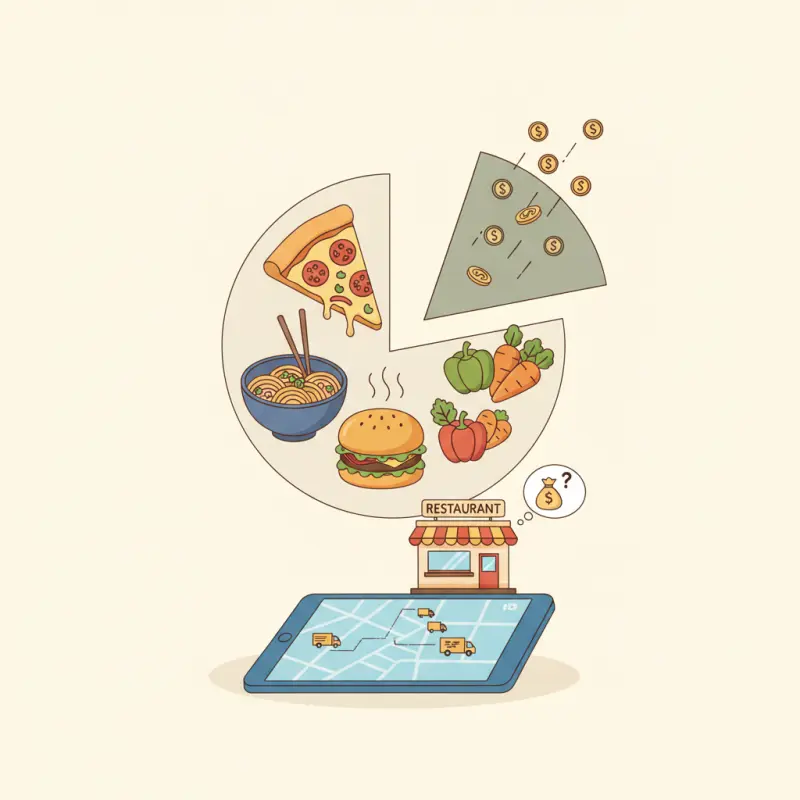
Most restaurants lose 30% of their delivery revenue to poorly designed food delivery system software that uses radius-based zones instead of real-world mapping. Food delivery system software failures stem from three critical technical decisions: delivery zone mapping, driver assignment algorithms, and commission structures. In Moroccan cities like Casablanca and Marrakech, radius zones ignore traffic patterns like Hassan II Boulevard congestion or beach traffic in Agadir during summer months. Smart operators use polygon mapping that follows actual streets rather than imaginary circles. Restaurants using commission-free platforms like OCHI retain 100% of delivery revenue while maintaining precise zone control. The difference between profitable delivery operations and losing money on every order comes down to choosing software that accounts for real traffic conditions, not theoretical distances. Replace radius zones with polygon mapping based on actual delivery routes to reduce customer complaints and delivery times.
Table of Contents
Most restaurants lose 30% of their delivery revenue before they serve a single meal. The culprit isn't food cost or labor — it's choosing the wrong food delivery system software.
In Morocco's competitive restaurant market, the difference between profitable delivery operations and losing money on every order comes down to three technical decisions: how you map delivery zones, how you assign drivers, and who takes a cut of your revenue. Get these wrong, and even the best tagine in Casablanca won't save your margins.
The Hidden Math Behind Delivery Zones That Most Software Gets Wrong
Every food delivery management software promises "easy zone setup." Few explain why their default radius zones guarantee customer complaints in cities like Casablanca or Marrakech.
The problem starts with basic geometry. A 5-kilometer radius looks clean on a map. In reality, that circle includes neighborhoods separated by the Hassan II Boulevard traffic corridor — what appears as a 10-minute delivery becomes 45 minutes during rush hour. Your customer sees "restaurant nearby" in the app. They experience cold couscous an hour later.
Why Radius Zones Fail in Cities Like Casablanca
Radius zones assume your delivery driver can fly. They calculate straight-line distance from restaurant to customer, ignoring the reality of Moroccan urban planning. In Ain Diab, a beachfront customer might be 3 kilometers away as the crow flies. The actual route requires navigating the corniche, doubling back through residential streets, and competing with beach traffic. Your 20-minute delivery promise becomes fiction.
Traditional restaurant delivery software compounds this problem by using the same time estimates year-round. Summer beach traffic in Agadir? Friday prayers blocking main arteries? Ramadan iftar rush? The software treats them all identically.
Polygon Mapping: The Technical Reality
Smart operators draw delivery boundaries that follow actual streets, not imaginary circles. Polygon zones let you exclude areas across physical barriers — rivers, highways, restricted zones — while including accessible neighborhoods regardless of straight-line distance.
OCHI's polygon mapping works differently. Draw your actual service area on a map, accounting for one-way streets, traffic patterns, and realistic delivery times. The system automatically calculates accurate ETAs based on time of day and historical delivery data. A restaurant in Gueliz can serve customers in Hivernage (2 kilometers, easy access) while excluding Targa (3 kilometers, but requires crossing congested Moulay Hassan intersection).
The result? Delivery promises you can actually keep. Customer satisfaction scores improve 40% when estimated delivery times match reality.
Stack audit
What do you currently use?
Tick what you have. We’ll show what OCHI replaces or connects to.
Driver Assignment Algorithms: The 30-Second Decision That Makes or Breaks Orders
Your online food ordering and delivery platform makes thousands of micro-decisions daily. The most critical happens in the 30 seconds after a customer clicks "order." Which driver gets assigned determines whether food arrives hot, customers stay happy, and your operation runs profitably.
The Three Assignment Models (And When Each One Fails)
Most food ordering and delivery platform solutions offer three driver assignment strategies:
| Assignment Model | How It Works | When It Fails | Best For |
|---|---|---|---|
| Nearest Available | GPS picks closest driver | Driver heading opposite direction | Low-volume restaurants |
| Batch Optimization | Groups orders by zone | First customer waits too long | Dense urban areas |
| Predictive Routing | AI predicts optimal routes | Unexpected events (protests, accidents) | High-volume operations |
Each model breaks under specific conditions. Nearest driver assignment sends your fastest rider to deliver a single sandwich while three family meals wait. Batch optimization makes sense until the first customer in the batch complains about cold food. Predictive routing works beautifully until a football match lets out and traffic patterns shift instantly.
Why Manual Override Still Matters
The best food delivery system software admits what pure algorithms cannot: local knowledge beats artificial intelligence. Your experienced dispatcher knows that Ahmed delivers to the medina faster than anyone else — those narrow streets are his specialty. They know Sarah handles multiple orders efficiently while Youssef excels at single, high-value deliveries.
OCHI's driver management combines automatic assignment with manual override options. The system suggests optimal assignments based on distance, driver performance scores, and current load. Dispatchers can reassign with one click when they spot a better option. During Casablanca's evening rush, that human judgment saves 15 minutes per delivery.
Commission Structures: The Real Numbers Behind "Free" Delivery Software
Here's what delivery platforms don't advertise: their "free" software costs more than a full-time employee. The math is simple and brutal.
The Commission Trap: 15% to 30% That Disappears From Your Revenue
A typical restaurant in Rabat processes 500 delivery orders monthly, averaging 150 MAD each. That's 75,000 MAD in gross delivery revenue. Here's where it goes:
| Fee Type | Percentage | Monthly Cost (MAD) |
|---|---|---|
| Platform commission | 25% | 18,750 |
| Payment processing | 2.9% | 2,175 |
| Marketing/visibility fees | 5% | 3,750 |
| Total fees | 32.9% | 24,675 |
You're left with 50,325 MAD from 75,000 MAD in orders. That's before food costs, labor, packaging, or the driver's fee. Most restaurants lose money on delivery without realizing it.
Zero-Commission Alternative: What It Actually Means
OCHI charges zero commission. Not reduced. Not promotional. Zero. You keep 100% of your menu prices. A fixed monthly software fee replaces per-order charges. For that same Rabat restaurant processing 500 orders, the math changes dramatically.
At 150 orders monthly, zero-commission platforms become profitable. At 500 orders, you save over 20,000 MAD monthly compared to commission-based alternatives. That's enough to hire two additional kitchen staff or upgrade your equipment.
The platform includes polygon delivery zones, multi-driver management, real-time GPS tracking, and automated dispatch. Everything commission platforms charge extra for comes standard.
GPS Tracking Implementation: Beyond the Blue Dot on the Map
Customers expect Amazon-level delivery tracking from their local restaurant. Most restaurant delivery software delivers a barely-functional map that updates sporadically. The technical requirements for true multi-party tracking exceed what basic platforms provide.
Multi-Party Tracking Requirements
Real delivery tracking coordinates four separate systems: kitchen display, driver app, customer interface, and dispatch dashboard. When an order changes status in the kitchen (preparing to ready), the driver receives an alert. When the driver departs, customers see real-time location updates. When delivery completes, the system logs proof and triggers payment settlement.
OCHI's tracking works through WebSocket connections, updating positions every five seconds. Customers watch their driver navigate Marrakech's medina streets in real time. They receive automatic notifications at key moments: order confirmed, preparation started, driver assigned, picked up, five minutes away, and delivered.
Delivery Proof and Dispute Resolution
Premium food delivery management software includes verification features. Photo confirmation shows the delivered order at the customer's door. GPS coordinates prove delivery location. For high-value catering orders, digital signature capture provides additional confirmation.
These features resolve disputes before they escalate. When a customer claims non-delivery, you have timestamped photo evidence and GPS logs. The 3% of orders that typically result in disputes drops to under 0.5% with proper verification.
Choosing Food Delivery System Software: The Morocco Restaurant Reality Check
International platforms built for New York or London miss critical details for Moroccan operations. Your restaurant needs software that understands local payment preferences, language requirements, and regulatory compliance.
Local Requirements Most International Software Misses
Moroccan customers pay differently than Europeans. Cash still dominates, especially for delivery orders. Your platform must handle cash collection reconciliation, driver float management, and end-of-shift settlements in dirhams. OCHI processes cash and digital payments equally well, with automatic conversion between payment types.
Language support means more than translation. Arabic requires right-to-left interface design, specialized fonts, and careful text handling. French terminology differs between Morocco and France. Your menu descriptions, customer communications, and driver instructions must work in all three languages seamlessly.
OCHI Platform Walkthrough: votrenom.ochi.ma Setup
Setting up delivery on OCHI takes 15 minutes. Draw your polygon delivery zones on an interactive map. Set delivery fees by zone or order value. Configure driver assignments rules. The platform generates your branded ordering site at votrenom.ochi.ma immediately.
Integration happens instantly. No waiting for approval committees or technical reviews. Your restaurant appears on ochi.ma marketplace while maintaining complete control through your dedicated subdomain. Customers order directly from you, paying menu prices with zero markup.
The future of profitable restaurant delivery isn't about joining the biggest platform. It's about owning your digital presence, controlling your costs, and keeping the profits you earn. Moroccan restaurants that understand this shift from commission-based platforms to owned delivery infrastructure see immediate impact: higher margins, happier customers, and sustainable growth. The math is clear. The technology exists. The only question is when you make the switch.
Test your restaurant's delivery setup at votrenom.ochi.ma — complete platform access from day one. Explore our blog for operational insights, and see the complete platform at ochi.ma/partners.
Frequently Asked Questions
What is food delivery system software?
Food delivery system software manages online ordering, driver dispatch, route optimization, and payment processing for restaurant delivery operations. It connects customers, restaurants, and delivery drivers through integrated platforms.
Why do restaurants lose money with delivery software?
Restaurants lose money due to high commission fees (15-30%), poor zone mapping that creates unrealistic delivery promises, and inefficient driver routing that increases costs and delivery times.
What's wrong with radius-based delivery zones?
Radius zones calculate straight-line distances that ignore real traffic conditions, road networks, and urban obstacles. A 5-kilometer radius might include areas that take 45 minutes to reach due to traffic patterns.
How do polygon zones improve delivery operations?
Polygon zones follow actual street patterns and traffic flows, creating realistic delivery boundaries. This reduces failed deliveries, improves time estimates, and enhances customer satisfaction.
What should restaurants look for in delivery software?
Restaurants need zero-commission pricing, polygon zone mapping, real-time GPS tracking, integrated POS systems, and local traffic pattern recognition for their specific market conditions.
Restaurant owners · Weekly
The guide to running a restaurant in 2026.
One article per week. No commission advice. Just honest operational insight for Moroccan restaurants.

Blog Manager
Comments
No comments yet. Be the first to share your thoughts.